Finally feel in control of your emotions
DBT Skills Lab teaches you the exact evidence-based techniques therapists use in clinic — Mindfulness, Distress Tolerance, Emotion Regulation, and Interpersonal Effectiveness — so you can interrupt anxiety spirals, stop emotional overwhelm in its tracks, and build resilience that holds up in real life.

"A skill you can't use on a hard Tuesday morning isn't much of a skill at all — everything I teach is designed for real life, not ideal conditions."— Audra N. Gillis, LCSW-C, LICSW, CBT, CHT
What you'll learn
What you'll be able to do
- Use TIPP and paced breathing techniques to interrupt acute anxiety spirals within minutes
- Apply Radical Acceptance to stop fighting uncontrollable stressors and reduce emotional suffering
- Build a personal distress tolerance toolkit with at least 5 personalised crisis-survival strategies
- Practise Mindfulness 'What' and 'How' skills to stay present and reduce rumination in daily life
- Identify and name emotion triggers using DBT's emotion regulation framework to prevent escalation
- Set and maintain interpersonal boundaries using DEAR MAN scripts without guilt or conflict
How it works
A school that adapts to you
This isn't a set of static videos. Every lesson is generated live and tuned to where you actually are.
We learn your level
A quick placement check tailors your starting point so you're never bored or lost.
Lessons adapt as you go
Each lesson is written for your pace and your goal, adjusting as your skills grow.
Your AI coach keeps you moving
Checkpoints, feedback, and gentle nudges turn progress into a real result.
The curriculum
What's inside your school
6 modules · 26 lessons

DBT Foundations & the Stress-Anxiety Connection
Orients learners to DBT's core philosophy, the biosocial model, and how chronic stress and anxiety interact with emotional dysregulation.
- 1.1What Is DBT and Why It WorksIncluded
- 1.2The Biosocial Model: Why You Feel So MuchIncluded
- 1.3The Four DBT Skill Modules at a GlanceIncluded
- 1.4Building Your Personal Baseline: Stress & Anxiety AuditIncluded
Mindfulness — The Core Skill
Develops foundational mindfulness through DBT's 'What' and 'How' skills to reduce rumination and anchor learners in the present moment.
- 2.1Observing and Describing: The 'What' SkillsIncluded
- 2.2Non-Judgementally, One-Mindfully, Effectively: The 'How' SkillsIncluded
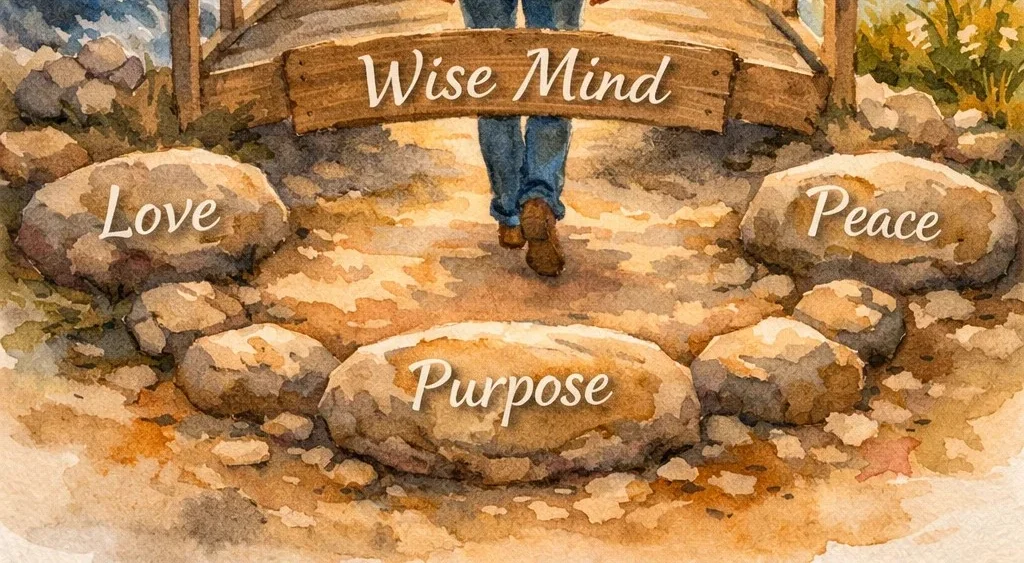
- 2.3Wise Mind: Finding the Balance Between Emotion and LogicIncluded
- 2.4Daily Mindfulness Habits That Actually StickIncluded
Distress Tolerance — Surviving the Crisis Moment
Equips learners with immediate, body-based and cognitive tools to endure acute distress without making situations worse.
- 3.1TIPP: Your Fast-Acting Anxiety First AidIncluded
- 3.2Paced Breathing and the Dive Reflex ExplainedIncluded
- 3.3ACCEPTS and Self-Soothe: Riding Out the WaveIncluded
- 3.4Radical Acceptance: Stop Fighting What You Can't ControlIncluded
- 3.5Building Your Personal Distress Tolerance ToolkitIncluded
Emotion Regulation — Understanding and Taming Your Emotions
Teaches learners to identify, name, and reframe emotions using DBT's emotion regulation framework to prevent escalation.
- 4.1How Emotions Work: The DBT Emotion ModelIncluded
- 4.2Identifying and Naming Your Emotion TriggersIncluded
- 4.3Reducing Vulnerability with PLEASE SkillsIncluded
- 4.4Opposite Action: Changing Emotions by Changing BehaviourIncluded
- 4.5Check the Facts: Challenging Anxiety's False AlarmsIncluded
Interpersonal Effectiveness — Boundaries Without Guilt
Builds assertive communication skills using DEAR MAN and related scripts so learners can set boundaries and maintain healthy relationships.
- 5.1Why Relationships Fuel Stress — and How DBT HelpsIncluded
- 5.2DEAR MAN: Asking for What You Need ConfidentlyIncluded
- 5.3GIVE and FAST: Keeping Relationships and Self-Respect IntactIncluded
- 5.4Setting and Holding Boundaries Without GuiltIncluded
Integration — Your Lifelong DBT Practice
Consolidates all four skill modules into a personalised, sustainable daily practice plan for lasting emotional resilience.
- 6.1The DBT Diary Card: Tracking Skills and ProgressIncluded
- 6.2Combining Skills: Which Tool for Which Situation?Included
- 6.3Building Your Personal Resilience PlanIncluded
- 6.4Maintaining Progress and Navigating SetbacksIncluded
Who it's for
Is this you?

The Chronic Overthinker
You replay conversations, catastrophise quietly, and can't seem to switch off — the Mindfulness and Check the Facts skills were made for exactly this.

The People-Pleaser
You say yes when you mean no and feel guilty setting any boundary — DEAR MAN and the FAST skills will give you a practical, guilt-free way to change that.

The High-Functioning Anxious
You hold everything together on the outside while managing constant internal noise — TIPP and paced breathing give you fast, discreet tools for the moments nobody sees.

The Therapy-Curious
You've thought about therapy but want accessible, practical psychology you can work through at your own pace without a clinical setting.

The Emotionally Exhausted Parent or Carer
Giving everything to others has left your own emotional resources depleted — the PLEASE skills and Resilience Plan help you rebuild from the inside out.

The Stress-Saturated Professional
Work pressure and always-on culture have made chronic stress your baseline — Radical Acceptance and the DBT Diary Card offer a structured way back to steadiness.
Questions
Frequently asked
Your teacher
A note from your teacher

Audra N. Gillis, LCSW-C, LICSW, CBT, CHT
If you're reading this, I'd guess you're someone who feels things deeply — maybe more deeply than people around you seem to. You might describe yourself as a worrier, a people-pleaser, or someone who gets "too in their head." Stress doesn't just visit you; it moves in. And even when life is objectively fine, your nervous system doesn't always seem to get the memo.
I want you to know: that's not weakness. That's not a personality flaw. There's actually a model for why some of us experience emotions more intensely than others — and one of the first things we cover in this course is exactly that. Because understanding why you feel the way you do is the first step to doing something genuinely useful about it.
I came to DBT the way a lot of people do — by watching it change lives. Dialectical Behavior Therapy has one of the strongest evidence bases in modern psychology, but for years it was only accessible inside clinical settings. Group DBT programs, when you can find them, often have long waitlists, significant costs, and a level of formality that can feel intimidating when you're just trying to get through the week. I built DBT Skills Lab because I believe these tools belong to everyone. Not a watered-down version — the real skills, taught properly, in language that respects your intelligence without drowning you in clinical terminology.
This isn't a course where you watch videos and hope something sticks. You'll do a Stress & Anxiety Audit at the start, build your own Distress Tolerance Toolkit, work with the DBT Diary Card to track your real progress, and finish with a personalised Resilience Plan you'll actually use. Every skill has a practical application — because a skill you can't use in the middle of a hard Tuesday morning isn't much of a skill at all.
The goal isn't perfection. It isn't becoming someone who never feels anxious or overwhelmed. It's building the internal resources to move through hard moments with a little more steadiness — and the self-knowledge to know exactly which tool to reach for when things get difficult. That's what DBT does. And I genuinely can't wait to share it with you. Come on in.
— Audra N. Gillis, LCSW-C, LICSW, CBT, CHT
Start your journey today
Join get instant access — learn at your own pace with an AI coach in your corner.
$39/mo
Recurring billing · cancel anytime
Secure checkout · Instant access
- 6 modules, 26 lessons
- AI-adaptive lessons tuned to your level
- Quizzes & checkpoints to lock in progress
- Your own AI learning coach
- Learn on any device, at your pace
- Full access for as long as you're subscribed