Care for your loved one with knowledge, calm, and confidence
This school walks you through every stage of Alzheimer's and dementia caregiving — from understanding the diagnosis to protecting your own health — with plain-language guidance that turns overwhelm into a clear path forward.
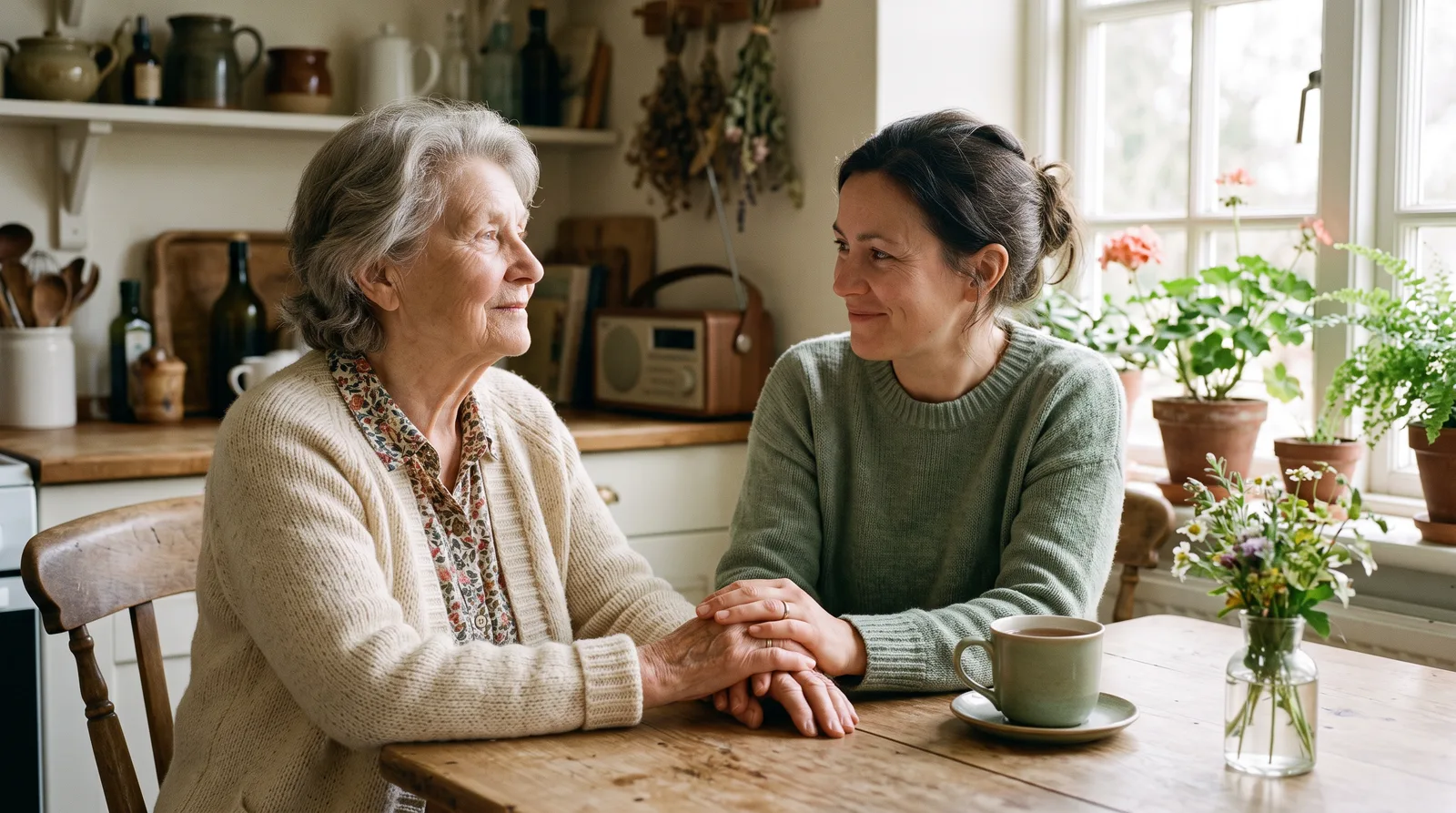
"The caregivers who struggle most aren't the ones who love least — they're the ones who were handed an impossible role without preparation, and that's exactly what this school is here to change."
— Gary R Uremovich MS DMin PhD PA (Emeritus)
What you'll learn
What you'll be able to do
- Understand the stages of Alzheimer's and dementia and know what to expect at each one
- Respond to challenging behaviors — agitation, wandering, sundowning — with proven, calming strategies
- Adapt your home environment to maximize safety and independence for your loved one
- Communicate effectively with doctors, specialists, and care teams to advocate confidently
- Protect your own mental and physical health to avoid caregiver burnout
- Plan ahead for legal, financial, and long-term care decisions before a crisis hits
How it works
A school that adapts to you
This isn't a set of static videos. Every lesson is generated live and tuned to where you actually are.
We learn your level
A quick placement check tailors your starting point so you're never bored or lost.
Lessons adapt as you go
Each lesson is written for your pace and your goal, adjusting as your skills grow.
Your AI coach keeps you moving
Checkpoints, feedback, and gentle nudges turn progress into a real result.
The curriculum
What's inside your school
6 modules · 28 lessons

Understanding Alzheimer's and Dementia
Builds a clear foundation of what dementia is, how it progresses, and what caregivers can realistically expect at every stage.
- 1.1Dementia vs. Normal Aging: What's Actually DifferentIncluded
- 1.2Types of Dementia: Alzheimer's and BeyondIncluded
- 1.3The Stages of Alzheimer's: A Roadmap for CaregiversIncluded
- 1.4How the Brain Changes and Why Behavior FollowsIncluded
- 1.5Processing the Diagnosis: For You and Your FamilyIncluded
Communicating with Confidence
Equips caregivers with practical language and listening skills for connecting with their loved one and advocating effectively with medical teams.
- 2.1How Dementia Changes CommunicationIncluded
- 2.2Techniques for Calm, Effective Daily CommunicationIncluded
- 2.3Navigating Doctor Visits and Specialist AppointmentsIncluded
- 2.4Building and Leading Your Care TeamIncluded
Managing Challenging Behaviors
Provides evidence-based, calming strategies for the most common and distressing dementia behaviors caregivers face.
- 3.1Understanding Why Behaviors HappenIncluded
- 3.2Handling Agitation, Anger, and ResistanceIncluded
- 3.3Responding to Wandering and Getting LostIncluded
- 3.4Sundowning: Causes, Patterns, and Calming RoutinesIncluded
- 3.5Handling Hallucinations, Paranoia, and Repetitive BehaviorsIncluded
Creating a Safe and Supportive Home
Guides caregivers through practical home modifications that protect their loved one while preserving as much independence as possible.
- 4.1Assessing Your Home for Hidden HazardsIncluded
- 4.2Mobility, Falls Prevention, and Bathroom SafetyIncluded
- 4.3Securing the Home: Locks, Alarms, and Safe ZonesIncluded
- 4.4Adapting Daily Routines for Comfort and PredictabilityIncluded
Legal, Financial, and Long-Term Care Planning
Prepares caregivers to make proactive legal and financial decisions before a crisis removes those options.
- 5.1Essential Legal Documents Every Family Needs NowIncluded
- 5.2Understanding the Costs of Dementia CareIncluded
- 5.3Navigating Medicare, Medicaid, and Other BenefitsIncluded
- 5.4Evaluating Care Options: Home Care, Memory Care, and Nursing FacilitiesIncluded
- 5.5Having the Hard Conversations: Wishes, Transitions, and End-of-Life PlanningIncluded
Protecting Yourself: Caregiver Health and Sustainability
Gives caregivers the tools and permission to prioritize their own well-being so they can sustain care for the long haul.
- 6.1Recognizing Caregiver Burnout Before It Breaks YouIncluded
- 6.2Building a Realistic Support NetworkIncluded
- 6.3Managing Grief, Guilt, and Complicated EmotionsIncluded
- 6.4Respite Care: Finding Relief Without GuiltIncluded
- 6.5Sustaining Your Physical Health and Daily RhythmsIncluded
Who it's for
Is this you?

The adult daughter managing from afar
She's coordinating her mom's care across state lines and needs a clear framework for what's happening and what decisions are coming.
The devoted spouse-caregiver
He's been caring for his wife at home for over a year and wants concrete strategies for the difficult behaviors that are wearing him down.
The newly diagnosed family
Her husband just received a diagnosis and she needs honest, grounded guidance on what the road ahead actually looks like — before fear fills the silence.

The adult son handling the paperwork
He's been tasked with the legal and financial side of his father's care and wants to understand Medicare, Medicaid, and care costs before a crisis forces his hand.

The family caregiver approaching burnout
She's been the primary caregiver for two years with little support and needs permission — and a plan — to protect her own health without guilt.
The proactive planner
Her parent has early-stage dementia and she wants to get ahead of every stage — home safety, communication strategies, and long-term care decisions — while there's still time to plan calmly.
Questions
Frequently asked
Your teacher
A note from your teacher
Gary R Uremovich MS DMin PhD PA (Emeritus)
If you're reading this, you're probably holding more than most people can see. You're managing appointments and medications and sleepless nights. You're watching someone you love change in ways that are hard to name. You're Googling things at 2 a.m. that frighten you. And through all of it, you're trying to show up with patience and grace — even on the days when you have nothing left.
I built this school because that experience — that particular kind of exhaustion and love and uncertainty — deserves real, honest guidance. Not a pamphlet from a waiting room. Not a checklist that doesn't account for your actual family. Practical, human knowledge that helps you understand what's happening and know what to do next.
Here's what I want you to know: the caregivers who struggle most aren't the ones who love least. They're the ones who were handed an impossible role without adequate preparation. When you understand why your loved one is agitated at dusk, or why they repeat the same question twenty times, or why they suddenly don't recognize you — everything changes. You stop reacting and start responding. That shift doesn't make caregiving easy, but it makes it steadier. And steadier is everything.
This school covers the full journey: what dementia is and how it progresses, how to communicate when words stop working the way they used to, how to handle the behaviors that catch you off guard, how to make your home safe without making it feel institutional, and how to plan ahead for the legal, financial, and care decisions that can't wait for a crisis. And because none of that is possible if you're running on empty, there's an entire section on protecting yourself — your health, your emotions, your ability to sustain this over the long haul.
You don't have to be a medical professional to do this well. You just need the right knowledge, delivered with honesty and care. That's what I've tried to give you here. I'm glad you found this place — and I'm honored to walk this with you.
— Gary R Uremovich MS DMin PhD PA (Emeritus)
Start your journey today
Get instant access — learn at your own pace with an AI coach in your corner.
$39/mo
Recurring billing · cancel anytime
Secure checkout · Instant access
- 6 modules, 28 lessons
- AI-adaptive lessons tuned to your level
- Quizzes & checkpoints to lock in progress
- Your own AI learning coach
- Learn on any device, at your pace
- Full access for as long as you're subscribed