Master the History Demons Were Never Meant to Have
Six modules. Four thousand years of primary sources. From Sumerian Lamashtu to LaVey's Satanic Bible — the intellectual history that separates serious demonological scholarship from Halloween mythology.
I've spent years digging through forbidden texts so you can finally call the demons by their true names.— Andrew Wheeler
What you'll learn
What you'll be able to do
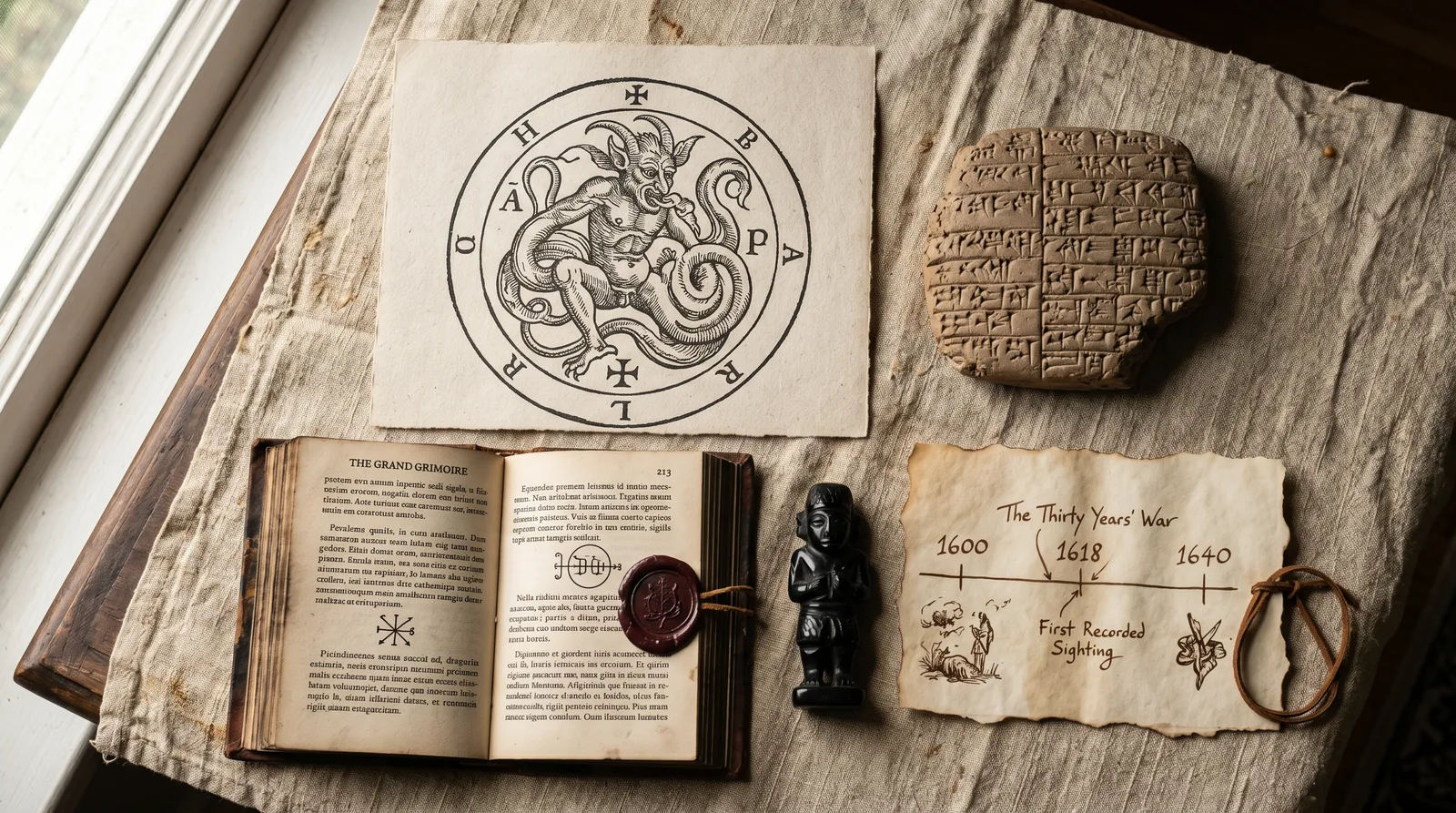
- Trace the earliest documented demon figures from Sumerian, Akkadian, and Egyptian sources and explain how they fed into later traditions
- Analyze how Judeo-Christian theology formalized demonology — from Second Temple texts like 1 Enoch through Aquinas and the medieval grimoire tradition
- Interpret the Church's institutional role in codifying demonic hierarchies, exorcism rites, and inquisitorial frameworks
- Compare Eastern and Western demonological systems, identifying cross-cultural archetypes and regional divergences
- Critically evaluate Anton LaVey's The Satanic Bible and the broader Church of Satan as a modern philosophical and cultural reframing of demonic imagery
- Situate contemporary demonology — including neo-pagan, Left-Hand Path, and pop-culture manifestations — within its deep historical lineage
How it works
A Demonology school that actually adapts to you
This isn't a set of static videos. Every lesson is generated live and tuned to where you actually are.
We learn your level
A quick placement check tailors your starting point so you're never bored or lost.
Lessons adapt as you go
Each lesson is written for your pace and your goal, adjusting as your skills grow.
We keep you moving
Checkpoints, feedback, and gentle nudges turn progress into a real result.
The curriculum
What's inside your school
8 modules · 27 lessons
Introduction
Please download the attached PDF in lesson 1 and read it thoroughly. Welcome aboard to this School of Hidden Knowledge.
- 1.1Feet Firmly on the GroundIncluded
Spirits Before Satan: Ancient Demonology in the Near East and Egypt
This foundational module establishes the deep prehistory of demonology by grounding students in the earliest documented supernatural traditions. Students will examine Sumerian, Akkadian, Babylonian, and Egyptian sources, learning to identify recurring demonic archetypes and understand how ancient cosmologies framed malevolent forces. The module closes with a dedicated lesson on transmission and diffusion — an essential prerequisite for tracing continuities in later modules.
- 2.1Mesopotamian Origins: Sumerian and Akkadian Demon FiguresIncluded
- 2.2Babylonian Cosmology and the Demonic PantheonIncluded
- 2.3Egyptian Demonology: Isfet, Apep, and the Ambiguous DivineIncluded
- 2.4Cross-Cultural Transmission: How Ancient Demon Lore TraveledIncluded
The Biblical Turn: Hebrew, Second Temple, and Early Christian Demonology
This module tracks the pivotal transformation of ancient demonic traditions into the theologically coherent frameworks that would shape Western demonology for millennia. Beginning with the Hebrew Bible's surprisingly spare and ambiguous use of demonic figures, the module traces an explosive elaboration in Second Temple literature before arriving at the New Testament's demonology and its formative reception in early Christianity. A dedicated lesson on Eastern demonological parallels ensures comparative coverage required by course outcomes.
- 3.1Demons in the Hebrew Bible: Ha-Satan, Shedim, and AzazelIncluded
- 3.2The Second Temple Explosion: 1 Enoch, Jubilees, and the WatchersIncluded
- 3.3Satan Crystallizes: New Testament Demonology and the Early ChurchIncluded
- 3.4Eastern Demonologies: Persian, Hindu, and Buddhist CounterpartsIncluded
Scholasticism, Grimoires, and the Institutional Church
This module examines the medieval and early modern period in which the Catholic Church transformed inherited demonic traditions into a formal theological system, a bureaucratic hierarchy of hell, and a set of institutional practices — exorcism rites, canon law, and inquisitorial procedure — for managing demonic threat. Students also encounter the Protestant Reformation's disruption of this monopoly, a critical development for understanding how demonological authority fragmentizes into the modern period.
- 4.1Aquinas, Augustine, and the Scholastic Architecture of EvilIncluded
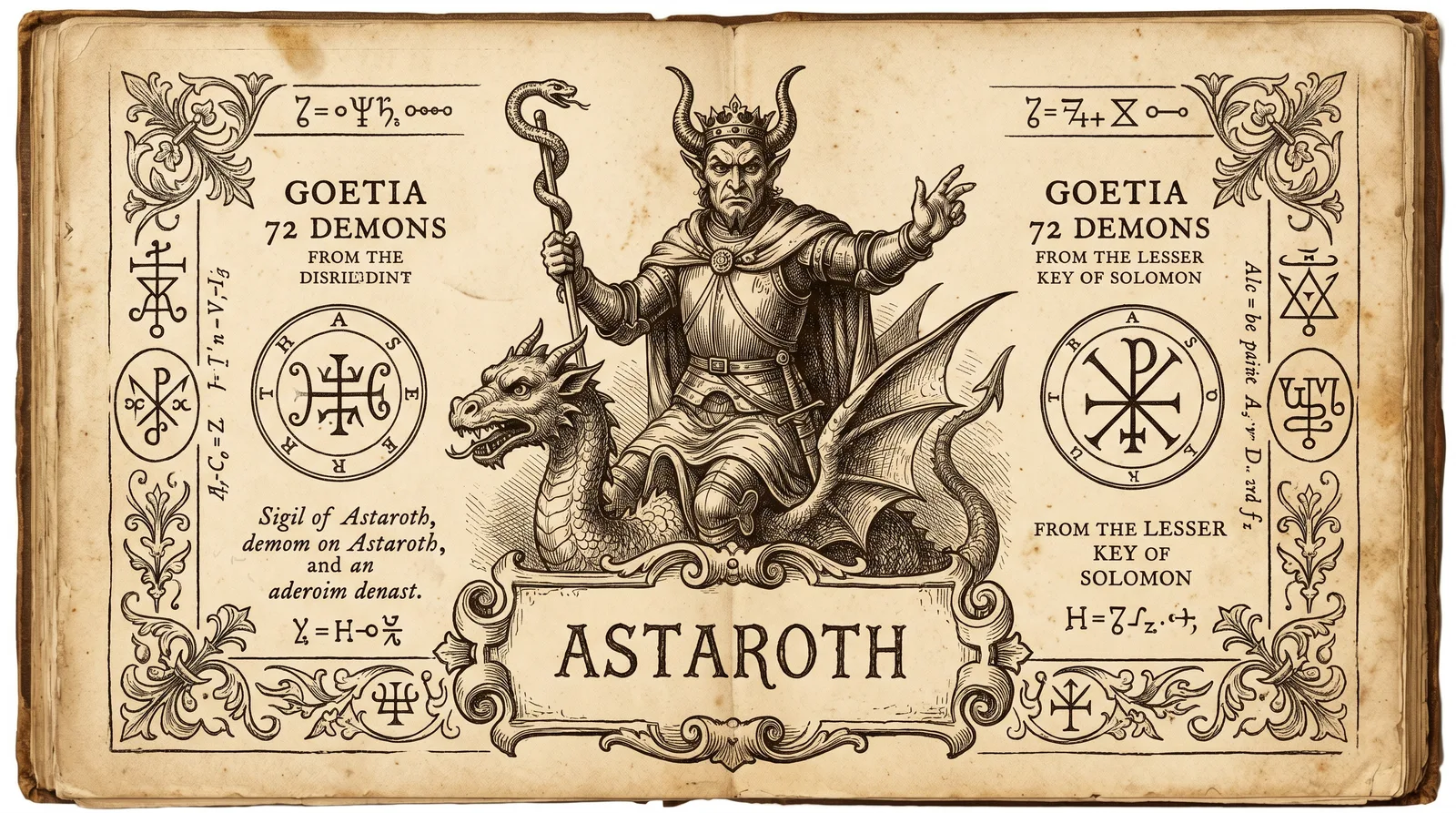
- 4.2Hierarchies of Hell: Grimoires and the Cataloguing of DemonsIncluded
- 4.3The Church's Institutional Response: Exorcism, Canon Law, and the InquisitionIncluded
- 4.4The Protestant Reformation and the Fracturing of Demonic AuthorityIncluded
Enlightenment, Occult Revival, and the Modernizing Demon
This module covers the long arc from Enlightenment rationalism's challenge to demonic belief through the Romantic rehabilitation of Satan as a literary and philosophical figure, to the late-19th and early-20th century occult revival that directly precedes LaVey. A new introductory lesson on the Enlightenment's internal complexity — which the draft omitted as a standalone foundation — ensures students understand both the forces that tried to kill demonology and the cultural currents that kept it alive, setting up LaVey's synthesis in Module 5.
- 5.1The Enlightenment Challenge: Rationalism, Skepticism, and the Survival of DemonsIncluded
- 5.2Romantic Satanism and the Occult Revival: Blake to the Golden DawnIncluded
- 5.3Crowley, Spare, and the Left-Hand Path Before LaVeyIncluded
Anton LaVey, the Church of Satan, and the Satanic Bible
This module provides a rigorous, critically informed, and contextualized study of Anton LaVey's founding of the Church of Satan in 1966, The Satanic Bible (1969) as a philosophical and rhetorical text, and the institutional structure LaVey built. Students are expected to approach this material with the same scholarly rigor applied to ancient and medieval sources — neither sensationalizing nor uncritically celebrating — using the deep historical lineage established across prior modules as their analytical lens.
- 6.1LaVey in Context: Biography, San Francisco, and the Cultural MomentIncluded
- 6.2The Satanic Bible as Text: Philosophy, Rhetoric, and the Demonic ReimaginedIncluded
- 6.3Ritual, Hierarchy, and Institution: The Church of Satan as OrganizationIncluded
Contemporary Demonology: Neo-Paganism, Left-Hand Path, Pop Culture, and Living Traditions
The final module situates contemporary demonological traditions within the deep historical lineage traced across the entire course. Students examine the post-LaVey divergence into the Satanic Temple, Luciferianism, and theistic Satanism; neo-pagan and chaos magic engagements with the demonic; and the massive proliferation of demonic imagery in horror, metal music, and digital culture. The module closes with a methodological lesson on demonology as a scholarly field, ensuring students leave with both substantive knowledge and critical research tools.
- 7.1Post-LaVey Divergence: The Satanic Temple, Luciferianism, and Theistic SatanismIncluded
- 7.2Neo-Pagan and Chaos Magic Engagements with DemonologyIncluded
- 7.3Demons in Popular Culture: Horror, Metal, and Digital MythologyIncluded
- 7.4Demonology as a Scholarly Field: Methods, Ethics, and Open QuestionsIncluded
Grimoires, Screens, and Sewers: Demonology Between the Archive and Pop Culture
Welcome to The Demonology Archive. In this introductory module, we'll trace the restless afterlife of demonological texts and iconography as they migrate from cuneiform tablets and monastic scriptoria into film, television, YouTube rabbit holes, and paperback occultism. Students will examine how serious editorial scholarship — Joseph Peterson's critical editions of ancient grimoires, the contested textual lineage of the Necronomicon — coexists with, and often quietly feeds, the popular imagination. The goal is not to flatten the distinction between rigorous history and cultural myth-making, but to understand exactly how that boundary gets negotiated, exploited, and occasionally dissolved. So, before we go ancient, let's take the temperature of today's take on the demonic in everyday life.
- 8.1The Living Grimoire: Critical Editions, Forgeries, and the Necronomicon ProblemIncluded
- 8.2Jinn, Pazuzu, and the Demonic Screen: Islam, Babylon, and Horror CinemaIncluded
- 8.3As Above, So Below: Catacombs, Sacred Geography, and the Underworld as Demonological SpaceIncluded
- 8.4Paperback Covens and Prestige Television: Demonology in Contemporary Narrative FictionIncluded
Who it's for
Is this you?

The Religious-History Enthusiast
You devour early Christianity and Second Temple Judaism and want to finally follow the full intellectual genealogy of demonic theology from cuneiform tablets to canon law.

The Seminary Student
You need a serious, academically grounded account of Christian demonology's origins — including the awkward pre-Christian sources your coursework quietly skips.

The Occult Researcher
You work with grimoires, Chaos Magic, or Left-Hand Path traditions and want the full scholarly context behind the systems you're already practicing or studying.

The Horror & Dark-Culture Writer
You write fiction, criticism, or analysis in the horror or dark-fantasy space and need historically accurate, non-clichéd demonic source material that goes well beyond the usual tropes.

The Comparative Religion Scholar
You're drawn to the cross-cultural methodology — tracing how Persian dualism, Hindu yaksha traditions, and Mesopotamian cosmology all feed the same deep human impulse to name what threatens us.

The Seriously Curious Adult
You have no formal background in theology or history, but you're intellectually serious, allergic to pop-mythology, and ready to do the actual reading.
Questions
Frequently asked
Your teacher
A note from your teacher

Andrew Wheeler
Let me guess where you are. You have a genuine, serious interest in the occult, demonology and all things spooky — as history, as theology, as cultural phenomenon — and you have spent some time looking for material that meets you where you actually are intellectually. What you mostly find is one of two things: breathless pop-occult content that treats every demon name as a revelation, or dismissive secular debunking that refuses to take the subject seriously enough to understand it. Neither is useful to you. Neither is what this course is.
The Demonology Archive is built on a straightforward conviction: that this subject has a real, recoverable intellectual history, and that it deserves to be taught with the same rigor you would bring to the history of philosophy, early Christianity, or comparative religion — because it is all of those things. The demon figures of Mesopotamia are not precursors to horror films. They are windows into how ancient cultures mapped the boundary between order and chaos, health and disease, the known and the terrifying unknown. The scholastic arguments of Aquinas about angelic and demonic nature are not medieval superstition to be condescended to. They are precise, internally coherent philosophical positions that shaped Western thought for centuries. LaVey's Satanic Bible is not a curiosity. It is a text — with sources, with rhetoric, with a legible argument — and it can be read as one.
I designed this curriculum because that kind of treatment did not exist in one place. What you'll find here is six modules built from primary sources wherever possible, with careful attention to how ideas actually traveled — across cultures, across centuries, across the messy borders between religion, philosophy, and magic. We do not skip the hard parts. We do not sanitize the Inquisition. We do not pretend the grimoire tradition is simpler than it is. And we do not treat LaVey as either a prophet or a joke.
There is a moment in this material — it tends to arrive somewhere around the Second Temple sources, when you begin to see exactly how the figure of Satan was assembled from pre-existing parts — when the whole intellectual history snaps into focus. That is the moment I am building toward with you. When you stop seeing "demonology" as a monolithic thing and start seeing it as a set of arguments, borrowings, anxieties, and institutional decisions made by real people across real time. That is when this subject becomes genuinely interesting.
Come prepared to read carefully, to sit with complexity, and to entertain the possibility that the most unsettling thing about demons is not their supernatural dimension but their deeply, stubbornly human one. I'll see you in the archive.
— Andrew Wheeler
Start your journey today
Join get instant access — learn at your own pace with an AI coach in your corner.
$14.99/mo
Recurring billing · cancel anytime
Secure checkout · Instant access
- 8 modules, 27 lessons
- AI-adaptive lessons tuned to your level
- Quizzes & checkpoints to lock in progress
- Your own AI learning coach
- Learn on any device, at your pace
- Full access for as long as you're subscribed