Go to the source of Christian contemplative life
Through primary sources, rigorous history, and close theological reading, this school takes you deep into the desert movement — from the collapse of Roman persecution to the Sayings that still shape Christian formation today.
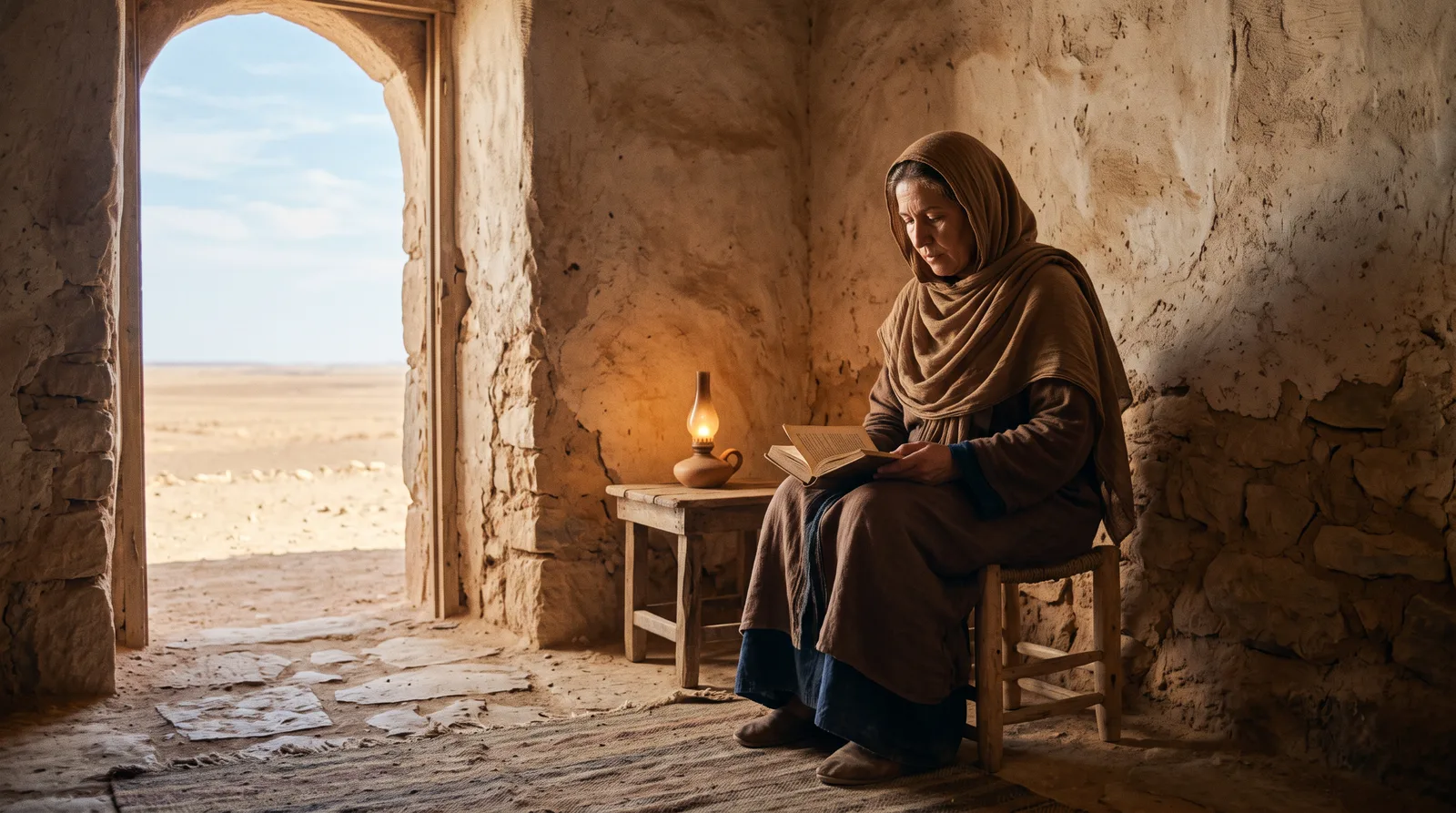
"The desert teachers were not fleeing the world — they were learning to see it clearly, and that is precisely what I want this school to help you do."
— Theoria
What you'll learn
What you'll be able to do
- Trace the historical circumstances — including the end of Roman persecution and the Church's new relationship with empire — that gave rise to the desert movement in the third through fifth centuries.
- Analyze the lives and spiritual contributions of key figures including Anthony the Great, Pachomius, Macarius the Great, Evagrius Ponticus, Syncletica of Alexandria, Amma Sarah, and Amma Theodora.
- Interpret selections from the Sayings of the Desert Fathers within their historical and theological context, identifying core themes such as humility, silence, discernment, and spiritual warfare.
- Evaluate the theological and philosophical foundations of desert asceticism, including its relationship to Scripture and the influence of Greek philosophical traditions.
- Distinguish healthy spiritual discipline from extreme or misunderstood practices, and articulate the desert tradition's enduring relevance to Christian formation today.
- Explain the lasting legacy of the Desert Fathers and Mothers on Eastern and Western monasticism, contemplative prayer, pastoral ministry, and the broader history of Christian spirituality.
How it works
A school that adapts to you
This isn't a set of static videos. Every lesson is generated live and tuned to where you actually are.
We learn your level
A quick placement check tailors your starting point so you're never bored or lost.
Lessons adapt as you go
Each lesson is written for your pace and your goal, adjusting as your skills grow.
Your AI coach keeps you moving
Checkpoints, feedback, and gentle nudges turn progress into a real result.
The curriculum
What's inside your school
6 modules · 25 lessons

The World That Made the Desert
Examines the historical, political, and ecclesial conditions that drove Christians into the Egyptian, Palestinian, and Syrian deserts in the third through fifth centuries.
- 1.1From Persecution to Privilege: The Church and the Roman EmpireIncluded
- 1.2Why the Desert? Geography, Symbolism, and the Biblical WildernessIncluded
- 1.3Roots of Christian Asceticism Before the Desert MovementIncluded
- 1.4Greek Philosophy and the Ascetic ImaginationIncluded
Founding Figures: Anthony, Pachomius, and the Two Paths of Monasticism
Studies the two defining models of early monasticism — solitary and communal — through the lives and legacies of their most influential founders.
- 2.1Anthony the Great: The Father of MonksIncluded
- 2.2The Anchorite Tradition: Solitude, Cell, and Spiritual CombatIncluded
- 2.3Pachomius and the Birth of Cenobitic MonasticismIncluded
- 2.4Macarius the Great and the Desert of ScetisIncluded
The Desert Mothers: Women of the Ascetic Tradition
Recovers the voices, wisdom, and spiritual authority of the Ammas — the women who shaped the desert movement and whose teachings are preserved in the Sayings.
- 3.1Recovering the Ammas: Women in the Early Ascetic MovementIncluded
- 3.2Syncletica of Alexandria: Wisdom, Suffering, and the Interior LifeIncluded
- 3.3Amma Sarah, Amma Theodora, and Other Desert MothersIncluded
- 3.4The Legacy of the Desert Mothers in Christian SpiritualityIncluded
The Sayings and the Themes: Reading the Apophthegmata Patrum
Guides learners through careful reading of the Sayings of the Desert Fathers, unpacking their literary form and the core spiritual themes they carry.
- 4.1What Are the Sayings? Form, Transmission, and How to Read ThemIncluded
- 4.2Humility, Silence, and the Guarding of the HeartIncluded
- 4.3Temptation, Spiritual Warfare, and the LogismoiIncluded
- 4.4Discernment, Obedience, and the Role of the Spiritual GuideIncluded
- 4.5Hospitality, Forgiveness, and the Desert's Unexpected Social VisionIncluded
Theology and Practice: The Spiritual Architecture of Desert Asceticism
Examines the theological foundations and concrete daily disciplines that structured the desert way of life, from prayer to labor to Scripture.
- 5.1Scripture, Meditation, and the Monastic Use of the PsalmsIncluded
- 5.2Prayer, Hesychasm, and the Pursuit of StillnessIncluded
- 5.3Fasting, Labor, and the Discipline of the BodyIncluded
- 5.4Apatheia, Virtue, and the Goal of TransformationIncluded
Legacy and Living Tradition: The Desert's Enduring Influence
Traces how the desert movement shaped Eastern and Western Christianity and considers how its wisdom speaks to Christian formation and spirituality today.
- 6.1From Desert to Monastery: Cassian, Benedict, and the Western TraditionIncluded
- 6.2The Desert and the Eastern Church: Hesychasm and Orthodox SpiritualityIncluded
- 6.3Misconceptions, Extremes, and Discerning the TraditionIncluded
- 6.4The Desert Tradition and Christian Formation TodayIncluded
Who it's for
Is this you?

Seminarians & theology students
Seeking rigorous, primary-source-grounded coverage of the desert tradition to complement patristics and church history coursework.

Spiritual directors
Wanting a deep theological framework for the contemplative practices and formational language they draw on with directees.

Clergy & pastors
Looking to understand the historical and theological roots of Christian asceticism and bring that depth into preaching and pastoral care.

Committed lay contemplatives
Drawn to the desert tradition through prayer or reading, and ready to move beyond introductory texts into serious historical and theological study.

Oblates & monastic associates
Deepening their understanding of the monastic sources — from Anthony and Pachomius through Cassian and Benedict — that underlie their rule of life.

Independent scholars of Christian history
Pursuing a comprehensive, critically honest study of the desert movement as a pivotal chapter in the history of Christian spirituality.
Questions
Frequently asked
Your teacher
A note from your teacher

Theoria
If you have ever picked up a collection of the Desert Fathers' sayings and felt simultaneously drawn in and slightly at sea — struck by the wisdom, uncertain about the world behind it — then I wrote this school for you.
The desert tradition is one of the most generative and most misunderstood movements in the history of Christianity. Anthologies of colorful apophthegms are easy enough to find. What is harder to find is a guide who can take you behind the sayings — into the historical crisis that produced them, the theological convictions that shaped them, the philosophical currents that ran beneath them, and the living tradition that carried them forward into both Eastern and Western Christianity. That is what this school sets out to provide.
I love these texts and these figures. I love Anthony's fierce interiority and Pachomius's genius for community. I love the desert mothers — Syncletica, Sarah, Theodora — whose voices deserve far more than the brief mentions they usually receive. I love the way the Apophthegmata Patrum works as a literary and theological form, and I love the moment when a student realizes that Evagrius's analysis of the logismoi is not just ancient curiosity but a precise map of interior territory they recognize from their own lives. That recognition — that the desert teachers were onto something permanent about human nature and the life of prayer — is what I want every student in this school to experience.
I also believe that genuine reverence for a tradition requires honest engagement with it. We will not look away from the hard questions: What do we do with ascetic extremes? How do we account for the influence of Greek philosophy on a movement that understood itself as purely biblical? How do we responsibly recover the voices of women in a corpus dominated by male transmission? These questions make the tradition more interesting, not less, and this school takes them seriously.
What I am offering you is not a devotional experience, though I hope the material moves you. It is rigorous, historically grounded, theologically rich engagement with one of the most important chapters in the story of Christian spirituality — taught with the care it deserves. If you are ready to go deep, I am ready to take you there. Come into the desert.
— Theoria
Start your journey today
Get instant access — learn at your own pace with an AI coach in your corner.
$39/mo
Recurring billing · cancel anytime
Secure checkout · Instant access
- 6 modules, 25 lessons
- AI-adaptive lessons tuned to your level
- Quizzes & checkpoints to lock in progress
- Your own AI learning coach
- Learn on any device, at your pace
- Full access for as long as you're subscribed