Design curricula little learners actually love
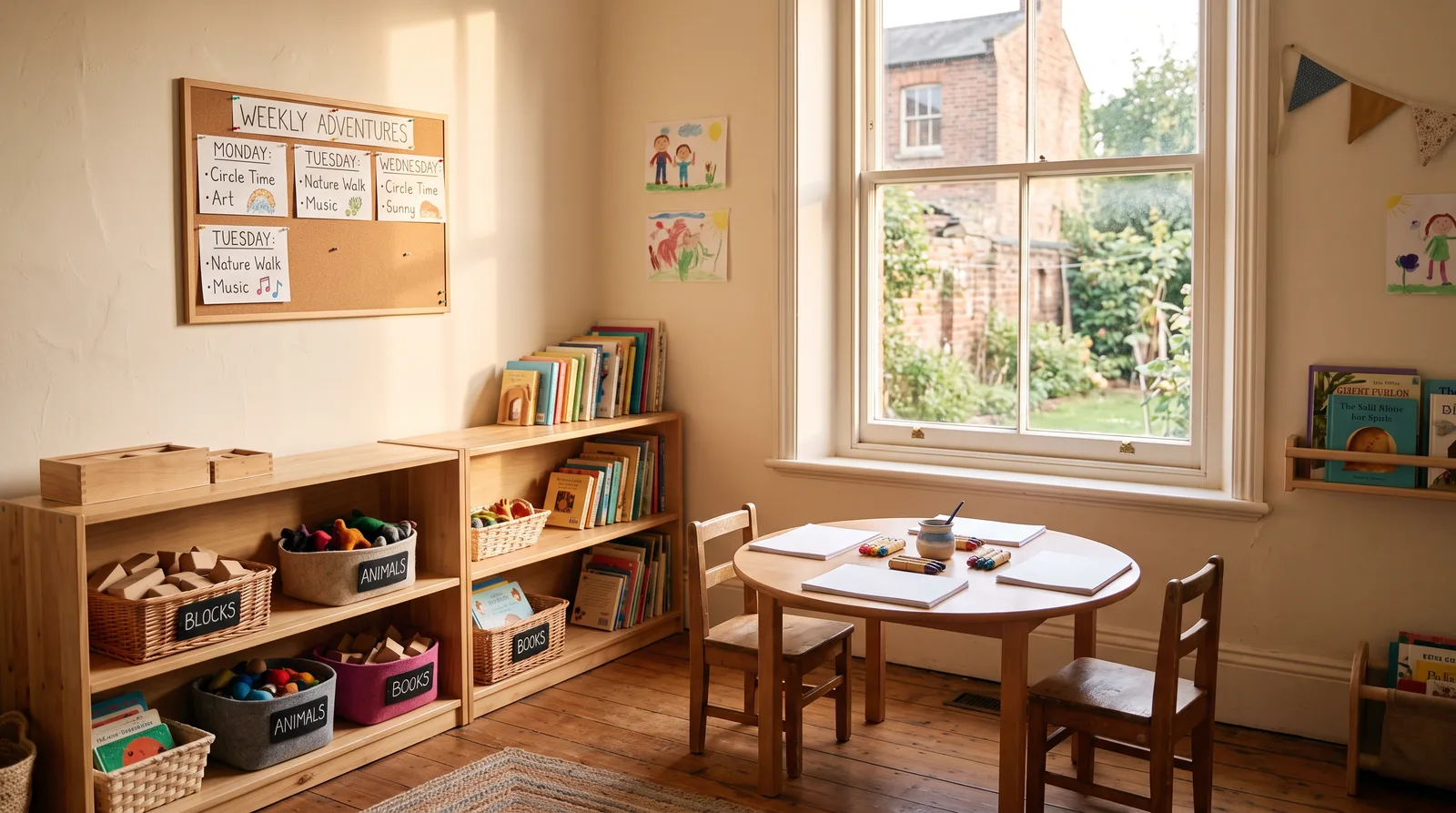
Turn your early childhood know-how into a structured, play-based curriculum framework — one that meets licensing standards, spans a full year, and works for every child in your room, from infants to preschoolers.
Your expertise is already in the room — I'm just here to help you get it onto paper in a way that's professional, purposeful, and built to last.
— Wanda Holmes
What you'll learn
What you'll be able to do
- Design a full-year, developmentally appropriate curriculum framework aligned to early learning standards for ages 0–5
- Write clear, measurable learning objectives tied to cognitive, social-emotional, language, and motor domains
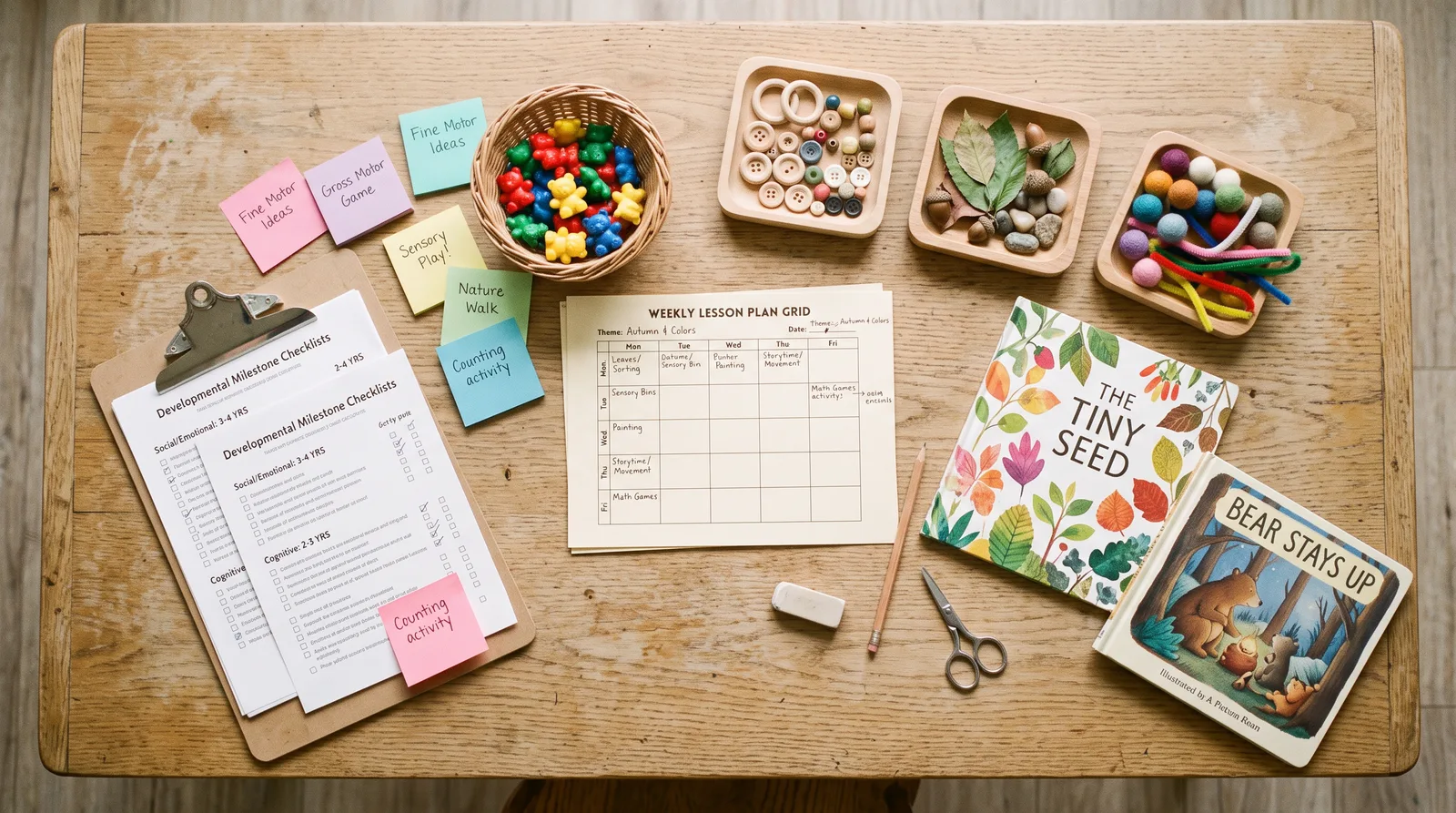
- Build a weekly lesson plan template that integrates play-based learning, circle time, and sensory exploration
- Select and sequence hands-on activities and materials that scaffold skills from one age band to the next
- Create authentic assessment tools — observation checklists, portfolios, and anecdotal notes — to track each child's progress
- Adapt curriculum plans to meet diverse needs, including dual-language learners and children with developmental delays
How it works
A school that adapts to you
This isn't a set of static videos. Every lesson is generated live and tuned to where you actually are.
We learn your level
A quick placement check tailors your starting point so you're never bored or lost.
Lessons adapt as you go
Each lesson is written for your pace and your goal, adjusting as your skills grow.
Your AI coach keeps you moving
Checkpoints, feedback, and gentle nudges turn progress into a real result.
The curriculum
What's inside your school
6 modules · 28 lessons

Foundations of Developmentally Appropriate Practice
Establishes the research-backed principles and early learning standards that every curriculum decision in this course will be built upon.
- 1.1How Young Children Learn: Ages 0–5 Developmental OverviewIncluded
- 1.2Early Learning Standards and Licensing FrameworksIncluded
- 1.3The Case for Play-Based LearningIncluded
- 1.4Age Bands in Practice: Infants, Toddlers, and PreschoolersIncluded
Writing Clear Learning Objectives
Teaches educators to craft precise, measurable objectives tied to the four developmental domains so every activity has intentional purpose.
- 2.1The Four Developmental Domains: A Curriculum LensIncluded
- 2.2Anatomy of a Measurable Learning ObjectiveIncluded
- 2.3Aligning Objectives to StandardsIncluded
- 2.4Sequencing Objectives Across a YearIncluded
Building Your Curriculum Framework
Guides educators through designing the full structural backbone of a year-long, developmentally sound curriculum for their setting.
- 3.1Choosing Themes, Units, and Big IdeasIncluded
- 3.2Designing the Weekly Lesson Plan TemplateIncluded
- 3.3Sequencing and Pacing a Full-Year ScopeIncluded
- 3.4Selecting and Sequencing Hands-On MaterialsIncluded
- 3.5Designing the Learning Environment as a Third TeacherIncluded
Crafting Engaging, Play-Based Activities
Equips educators to plan and write specific, repeatable activities across all domains that feel joyful to children and purposeful to teachers.
- 4.1Writing an Activity Plan: Structure and ComponentsIncluded
- 4.2Sensory and Hands-On Exploration ActivitiesIncluded
- 4.3Circle Time, Read-Alouds, and Language-Rich RoutinesIncluded
- 4.4Outdoor and Gross-Motor Learning ExperiencesIncluded
- 4.5Building Activity Libraries You Can Reuse or ShareIncluded
Authentic Assessment and Progress Tracking
Develops practical, relationship-based assessment tools that document each child's growth without disrupting natural learning.
- 5.1Principles of Authentic Assessment in Early ChildhoodIncluded
- 5.2Observation Checklists: Design and Daily UseIncluded
- 5.3Anecdotal Notes: Capturing Meaningful MomentsIncluded
- 5.4Building and Maintaining Child PortfoliosIncluded
- 5.5Using Assessment Data to Refine Your CurriculumIncluded
Adapting Curriculum for Every Child
Prepares educators to modify plans inclusively so children with diverse language backgrounds and developmental needs thrive in the same classroom.
- 6.1Universal Design for Learning in Early Childhood SettingsIncluded
- 6.2Supporting Dual-Language LearnersIncluded
- 6.3Adapting Plans for Children with Developmental DelaysIncluded
- 6.4Collaborating with Families and SpecialistsIncluded
- 6.5Finalizing and Packaging Your Complete CurriculumIncluded
Who it's for
Is this you?

Preschool classroom teachers
She wants a structured, standards-aligned curriculum she can actually hand to a substitute — not a folder of Pinterest ideas loosely held together.
Home daycare providers
She's been running a warm, loving home program for years and is finally ready to give it the professional curriculum framework it deserves.

Childcare center directors
He needs a repeatable, licensable curriculum system his whole teaching staff can implement consistently across classrooms.
Dual-language program leads
She supports multilingual children and needs a curriculum framework that intentionally weaves in strategies for dual-language learners from day one.

Early childhood entrepreneurs
He's turning his ECE expertise into a curriculum product — a packaged framework he can sell to other educators or childcare programs.
New lead teachers stepping up
She just got her first lead-teacher role and wants to build her curriculum with confidence, not just inherit whatever the last teacher left behind.
Questions
Frequently asked
Your teacher
A note from your teacher

Wanda Holmes
If you're reading this, I'm guessing you already love working with young children — and you probably know more about child development than most people realize. You can spot a toddler in a parallel-play phase from across the playground. You know why sensory play isn't just "messy fun." You understand, at a gut level, what a child needs before they're ready to sit and listen.
What you might not have — and what so many talented early childhood educators tell me they're missing — is a system. A curriculum that's written down, organized, aligned to standards, and ready to hand to someone else if you need to. Something that looks as professional on paper as your practice already is in the room.
That gap is exactly what I built Little Minds by Design to close. I wanted to create a school that honors the deep expertise early childhood educators already carry, and gives them the frameworks, templates, and vocabulary to make that expertise visible and transferable. Every lesson in this school is designed around a real scenario — the kind of thing that actually happens in your classroom — because abstract theory alone doesn't help you plan for Tuesday morning.
Here's what I want you to know: building a professional curriculum doesn't mean turning your warm, play-based classroom into something stiff or scripted. The framework you'll build here is intentional and joyful. You'll write clear learning objectives without losing sight of the child. You'll align to standards without teaching to a checklist. And you'll create assessment tools that actually capture the magical, meaningful moments that happen every single day — not just what shows up on a developmental milestone chart.
Whether you're building a curriculum for your home daycare, your preschool classroom, your childcare center, or a program you plan to package and share, this school meets you where you are. Come in with your experience. Leave with your framework. The little learners in your life — and the educators who'll one day learn from you — deserve both.
— Wanda Holmes
Start your journey today
Get instant access — learn at your own pace with an AI coach in your corner.
$79/mo
Recurring billing · cancel anytime
Secure checkout · Instant access
- 6 modules, 28 lessons
- AI-adaptive lessons tuned to your level
- Quizzes & checkpoints to lock in progress
- Your own AI learning coach
- Learn on any device, at your pace
- Full access for as long as you're subscribed