Foundations: A Journey Through the Early Church
"From the Empty Tomb to the Fall of Rome: The First Four Centuries of the Christian Faith"
"I'm not here to tell you what to conclude about Jesus — I'm here to make sure you've actually met the world he lived in before you conclude anything at all."— Bishop Andy Lewter
What you'll learn
What you'll be able to do
- Trace the full sweep of the Church's first four centuries — from its Jewish roots and rival messianic movements, through Roman persecution and imperial conversion, to the fall of Rome — and explain how each turning point shaped the Christianity we have today.
- Identify and explain the major Jewish sects and rival messianic movements of Second Temple Judaism — and articulate how that charged religious landscape directly shaped the world into which Jesus was born and the Church first emerged.
- Explain how the destruction of Jerusalem in 70 AD simultaneously fractured Second Temple Judaism and redirected the early Christian movement, identifying the specific theological and institutional shifts that resulted from this pivotal historical rupture.
- Identify the key Apostolic and Post-Apostolic Fathers by name, explain how each transmitted and defended Christian teaching in the absence of the original apostles, and trace the chain of faith from the first generation to the era of mounting imperial pressure.
- Trace the Church's journey from persecuted minority to imperial faith — connecting the brutality of Early Church Persecutions to the dramatic reversal of Rome's conversion and the landmark doctrinal decisions of the First Ecumenical Council.
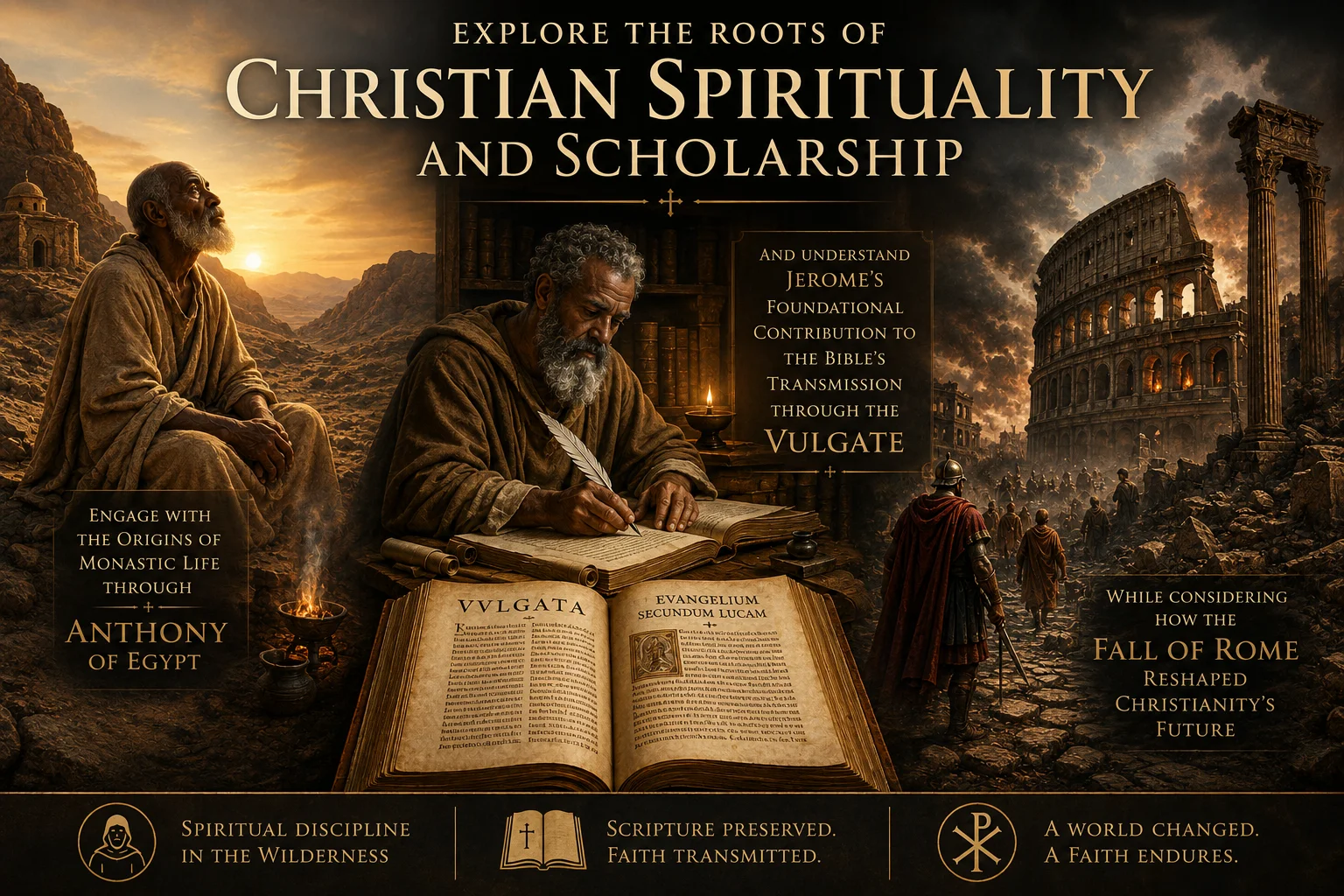
- Trace the origins of Christian spirituality and biblical scholarship — from Anthony of Egypt's pioneering monastic life to Jerome's landmark translation of the Vulgate — and explain how the fall of Rome fundamentally redirected the course of Christian history.
How it works
A school that adapts to you
This isn't a set of static videos. Every lesson is generated live and tuned to where you actually are.
We learn your level
A quick placement check tailors your starting point so you're never bored or lost.
Lessons adapt as you go
Each lesson is written for your pace and your goal, adjusting as your skills grow.
Your AI coach keeps you moving
Checkpoints, feedback, and gentle nudges turn progress into a real result.
The curriculum
What's inside your school
10 modules · 42 lessons

The World That Made Messiahs
Establishes the political, economic, and religious conditions of Roman-occupied Judea that made messianic movements nearly inevitable.
- 1.1Rome, Herod, and the Anatomy of OccupationIncluded
- 1.2Taxation, Census, and the Economics of ResentmentIncluded
- 1.3What Did 'Messiah' Mean? Defining a Contested ConceptIncluded
- 1.4Reading the Sources: Josephus, Roman Records, and the Dead Sea ScrollsIncluded
The Death of a King and the Explosion of Claimants (c. 4 BCE)
Investigates the immediate power vacuum created by Herod's death and the wave of kingly and messianic claimants it unleashed.
- 2.1Herod's Death and the Power VacuumIncluded
- 2.2Simon of Peraea: The Slave Who Burned a PalaceIncluded
- 2.3Athronges: The Shepherd KingIncluded
- 2.4Judas, Son of Hezekiah: Raiding the Armory at SepphorisIncluded
The Ideological Insurgents: Tax Revolt and the Seeds of Zealotry
Traces the militant ideological tradition from Judas of Galilee's census revolt through the rise of the Zealot movement.
- 3.1Judas of Galilee: God Alone Is KingIncluded
- 3.2From Revolt to Movement: The Zealot Ideology Takes ShapeIncluded
- 3.3Menahem: Grandson, Warlord, and Would-Be KingIncluded
- 3.4The Road to 66 CE: Zealotry and the First Jewish-Roman WarIncluded
Prophets of the Desert: John the Baptist and the Teacher of Righteousness
Examines two foundational prophetic figures whose distinct models of messianic identity shaped the world Jesus and his contemporaries inhabited.
- 4.1The Teacher of Righteousness: The Scrolls and the Sectarian VisionIncluded
- 4.2John the Baptist: Prophet, Baptizer, Political ThreatIncluded
- 4.3Two Models of the Prophetic: Comparing John and the TeacherIncluded
Signs and Wonders: The Prophet-Messiahs of the 40s–60s CE
Investigates the wave of sign-prophets who gathered mass followings in the decades after Jesus by promising miraculous divine intervention.
- 5.1Theudas: The Man Who Would Part the JordanIncluded
- 5.2The Egyptian Prophet: Walls, Mountains, and Thirty Thousand FollowersIncluded
- 5.3The Pattern of the Sign-Prophet: Miracle, Crowd, and Roman ResponseIncluded
Jesus Among the Claimants
Situates Jesus of Nazareth within the full landscape of messianic figures examined in the course, inviting rigorous historical comparison.
- 6.1How Would First-Century Jews Have Seen Jesus?Included
- 6.2What Made Jesus Different — and What Didn'tIncluded
- 6.3The Afterlives of Failed Movements: Why Some Messiahs Are RememberedIncluded
- 6.4Reading History, Not Doctrine: What This Inquiry ChangesIncluded
Sects, Factions, and the Fractured House of Israel
First-century Judea was not one Judaism — it was a volatile ecosystem of competing sects, each with its own reading of Torah, its own theology of history, and its own answer to the crushing fact of Roman rule. This module examines the Pharisees, Sadducees, Essenes, and Zealots as distinct intellectual and social movements, traces the fault lines between them, and shows how that internal fracture shaped the soil in which messianic claimants — Jesus included — took root.
- 7.1Four Movements, One CrisisIncluded
- 7.2The Pharisees and the Sadducees: A Rivalry at the Heart of JudaismIncluded
- 7.3The Essenes and the Dead Sea Scrolls: Dissent in the DesertIncluded
- 7.4Women, the Overlooked, and the Edges of Sectarian LifeIncluded
- 7.5New lessonIncluded
Jerusalem, The First Organized Church of Christianity
This module offers an in-depth study of the first Christian community in Jerusalem, born on the Day of Pentecost as recorded in the Book of Acts. Long before Christianity became an institution, it was a living community bound together by shared conviction, radical fellowship, and the expectation that history itself was about to turn a corner. Students will trace the church's rapid growth from a small band of believers into a movement that reshaped Jerusalem's religious landscape, examining how it functioned as a covenant community rather than a formal institution — sharing possessions, meeting in homes, and organizing itself around apostolic authority rather than bureaucratic structure. The course gives close attention to the leadership and governance of the early church, including the pivotal role of the Apostolic Council under James the Just, and the broader infrastructure that allowed a leaderless, persecuted movement to sustain itself and multiply. You'll also explore the church's complex relationship with the various strands of Jewish Sectarianism active at the time — Pharisees, Sadducees, Essenes, and others — and consider how the Jerusalem church understood itself both within and apart from these competing visions of Jewish identity. Key figures in the early leadership will be studied in depth, alongside the community's evolving and often contested attitude toward Gentile inclusion, and its animating hope in the imminent return of Jesus Christ. Together, these threads reveal a community wrestling in real time with questions of identity, authority, and mission — questions that would shape the trajectory of Christianity for centuries to come.
- 8.1Born in Fire: Pentecost and the Founding of the Jerusalem CommunityIncluded
- 8.2The Common Life: Community Structure, Shared Economy, and Daily PracticeIncluded
- 8.3Pillars and Bishops: The Leadership of the Jerusalem ChurchIncluded
- 8.4The Apostolic Council: Jerusalem, Gentiles, and the Question That Split the MovementIncluded
- 8.5The Imminent End: Eschatology, Temple, and the Destruction That Changed EverythingIncluded
Scattered to the Nations: The Apostolic Expansion (30–100 CE)
After Pentecost, the apostles didn't stay in Jerusalem — they scattered across the known world, carrying the gospel into synagogues, port cities, and empires far beyond Judea. This course traces what happened to each of the original disciples once their stories fade from the pages of Acts, drawing on every available strand of evidence: the New Testament itself, early patristic testimony from writers like Eusebius and Irenaeus, apocryphal Acts and regional church traditions, and, where it exists, archaeological corroboration. For each apostle, you'll examine where they are said to have traveled, which churches they're credited with founding or strengthening, and how they are traditionally said to have died — while learning to distinguish solid historical footing from legend and pious tradition. Along the way, the course explores the strategies that shaped the mission's spread, the crucial role of the Jewish diaspora, the transformative impact of Gentile inclusion through Paul, and what competing claims among churches and regions reveal about how the apostolic memory was preserved and embellished over time. By the end of this course, you'll be equipped not just to know where the apostles went, but to critically evaluate the sources behind those claims — separating documented history from cherished legend, and understanding how the missionary work of a single generation laid the foundation for a faith that would soon reshape an empire.
- 9.1The Mission Begins: Pentecost, Strategy, and the Shape of Apostolic ExpansionIncluded
- 9.2Peter, James, and the Jerusalem Circle: Leadership, Martyrdom, and the Palestinian MissionIncluded
- 9.3Paul and the Gentile Horizon: Canon, Chronology, and the Reshaping of the MissionIncluded
- 9.4To the Edges of the World: The Apostles Beyond the CanonIncluded
- 9.5What the Apostles Built: Institutions, Absences, and the World They Left BehindIncluded
The First Jewish Revolt and its Impact Upon the Emerging Church
In 66 CE, decades of political tension, religious factionalism, and Roman oppression erupted into open rebellion — a war that would end with the Temple in ashes and the ancient world forever changed. This course examines the First Jewish Revolt not simply as a military conflict, but as a hinge point in the history of both Judaism and the emerging Christian church. You'll trace the causes of the revolt and the fractured landscape of Jewish factionalism that shaped it, with close attention to the Zealot movement and the rival rebel leaders — John of Gischala, Simon bar Giora, and Eleazar ben Yair — whose infighting proved as consequential as their resistance to Rome. The course follows the war's course from early rebel victories through Vespasian and Titus's campaign to the fall of Jerusalem and the destruction of the Second Temple, culminating in a critical examination of the last stand at Masada. Was it truly a mass suicide, as Josephus claims, or does the archaeological and historical record tell a more complicated story? You'll weigh the evidence and Josephus's own reliability as a source. Beyond the battlefield, this course explores how the revolt reshaped Christianity itself — severing the church's ties to Jerusalem, accelerating the parting of ways between the emerging church and the synagogue, and shifting the movement's center of gravity to cities like Antioch, Rome, and Alexandria. You'll examine how these upheavals likely influenced the composition and theology of the canonical Gospels, and consider the surviving fragments of non-canonical Jewish-Christian gospel material that didn't make it into the New Testament — offering a window into the diversity of the movement before its canon was fixed. Rigorous yet accessible, this course is designed for clergy and serious students of Church History who want to understand how a devastating war became one of the most consequential turning points in the story of the Christian faith.
- 10.1A Province on the Edge: The Road to RevoltIncluded
- 10.2Leaders, Factions, and the War Within the WarIncluded
- 10.3Siege, Fire, and the Fall of the TempleIncluded
- 10.4Masada and the Limits of Our SourcesIncluded
- 10.5Aftermath: The Church Remade by the RuinsIncluded
Who it's for
Is this you?

Theology students & seminarians
You've studied the texts — now you want the historical world behind them, including the figures Josephus spent more time on than most seminary curricula ever will.

Secular history enthusiasts
You're drawn to the ancient world on its own violent, fascinating terms, and you're ready to engage first-century Judea with the same rigor you'd bring to any other period of Roman provincial history.

Biblical scholars & researchers
You need a structured, source-critical investigation into the messianic landscape that goes beyond the usual footnotes and actually engages the primary evidence in depth.

Thoughtful believers asking hard questions
Your faith is strong enough to want the full historical picture — you'd rather understand Jesus in his real, complicated context than in a sanitized one.

Skeptics & secular philosophers
You approach religious history empirically, and you want a curriculum that reads Josephus and the Dead Sea Scrolls as evidence rather than received truth — without an agenda in either direction.

Lifelong learners & autodidacts
You've read popular histories and felt they only went halfway — this is the course that goes the rest of the way, treating you as the intellectually serious adult you are.
Questions
Frequently asked
Your teacher
A note from your teacher
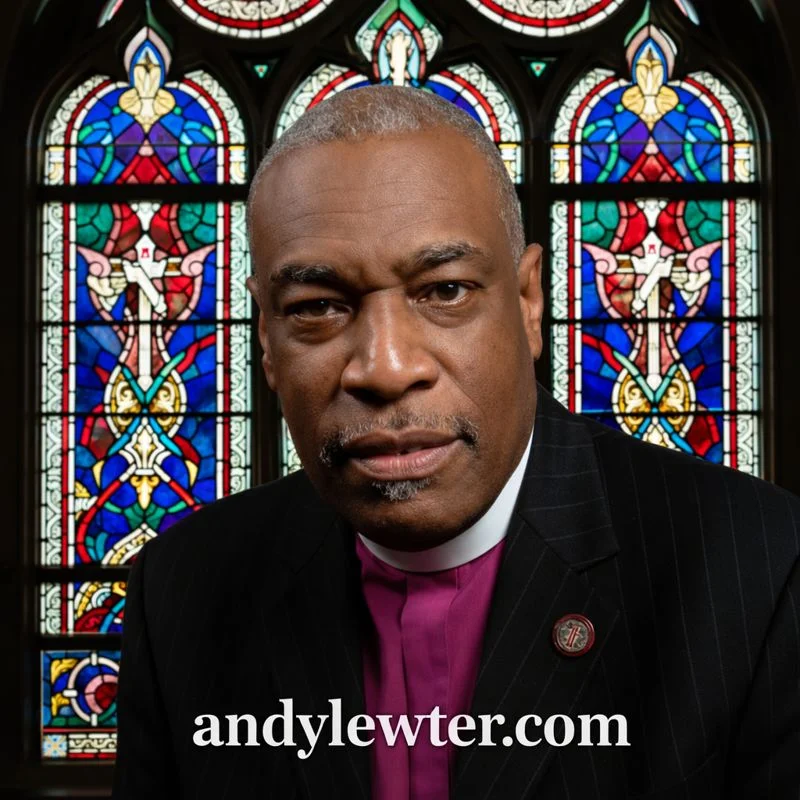
Bishop Andy Lewter
If you're here, you've probably had the experience of reading something about the New Testament — a scholarly commentary, a popular history, even a serious biography of Jesus — and feeling that the world around him remained frustratingly thin. A few lines about "Roman occupation." A paragraph on "messianic expectation." And then, almost immediately, back to the main event. As if the men who were doing the same things, drawing the same crowds, and dying the same deaths in the same decades were merely scenery.
They weren't scenery. They were the context. And I believe that until you know them — really know them, by name and method and fate — you don't yet have the tools to think rigorously about any of this.
That conviction is what this school exists to address. We begin not with Jesus but with the world that made figures like Jesus possible: the crushing mathematics of Roman taxation, the catastrophic power vacuum that followed Herod's death, and the ancient concept of "messiah" itself, which was far more contested, political, and dangerous than most modern readers realize. We then work through the claimants themselves — Simon of Peraea, Athronges, Judas of Galilee, Theudas, the Egyptian Prophet, and others — as subjects worthy of serious historical investigation in their own right, not merely as background color. We sit with Josephus long enough to understand what he's doing when he writes about them, and what he might be hiding.
I won't pretend this material is religiously neutral for everyone who encounters it. For some of you, it will sit comfortably alongside existing faith. For others, it will raise hard questions. What I can promise is that the school itself takes no position on those questions — my job is to equip you with the same sources, the same methodological tools, and the same historical discipline that professional ancient historians bring to this period, and then trust you to think for yourself. I have no interest in converting you to any position. I have a great deal of interest in giving you the intellectual equipment to hold your own position, whatever it is, with genuine rigor.
By the end of this school, you will be able to pick up Josephus's Jewish War and read it as a critical historian, not a passive recipient. You'll be able to place John the Baptist and the Teacher of Righteousness within their distinct prophetic traditions, understand why Rome killed the men it killed and ignored the men it ignored, and engage the final question — what, historically, set Jesus of Nazareth apart from his contemporaries — with the seriousness it deserves, rather than the reflexive answers, from any direction, that serious questions so rarely receive.
The ancient world was violent, complicated, and electrifying. Come see it whole.
— Bishop Andy Lewter
Start your journey today
Join get instant access — learn at your own pace with an AI coach in your corner.
$39/mo
Recurring billing · cancel anytime
Secure checkout · Instant access
- 10 modules, 42 lessons
- AI-adaptive lessons tuned to your level
- Quizzes & checkpoints to lock in progress
- Your own AI learning coach
- Learn on any device, at your pace
- Full access for as long as you're subscribed