Join Communities in a School
Epicenter Microschool – Grade 8 is a fully online school for students across the United States. Students learn the core subjects, African history and cultures, American history, French (Level 3), and Spanish or Hebrew, with Tai Chi PE, through AI-adaptive lessons and an AI tutor. $99 a month.
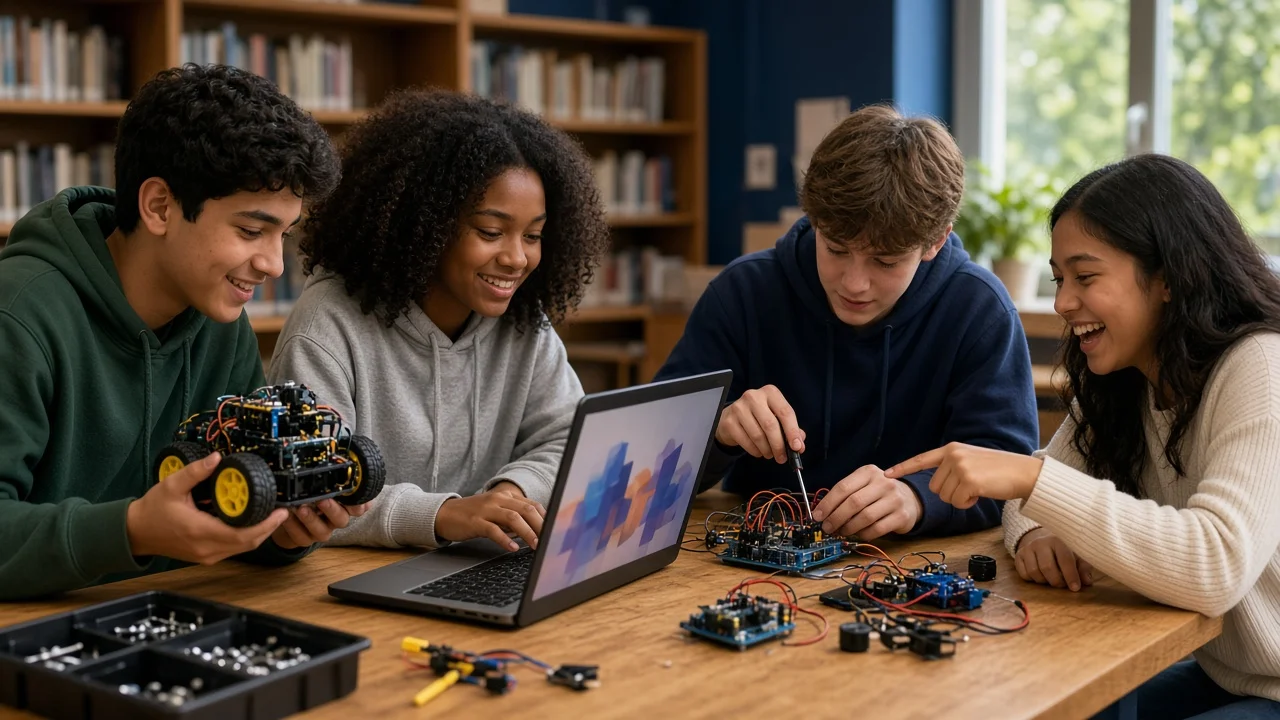
Great schools are communities. Here every student is known, challenged, and celebrated, and every culture adds to what we learn together.
— Dr. Chioma Adaku-Griffin
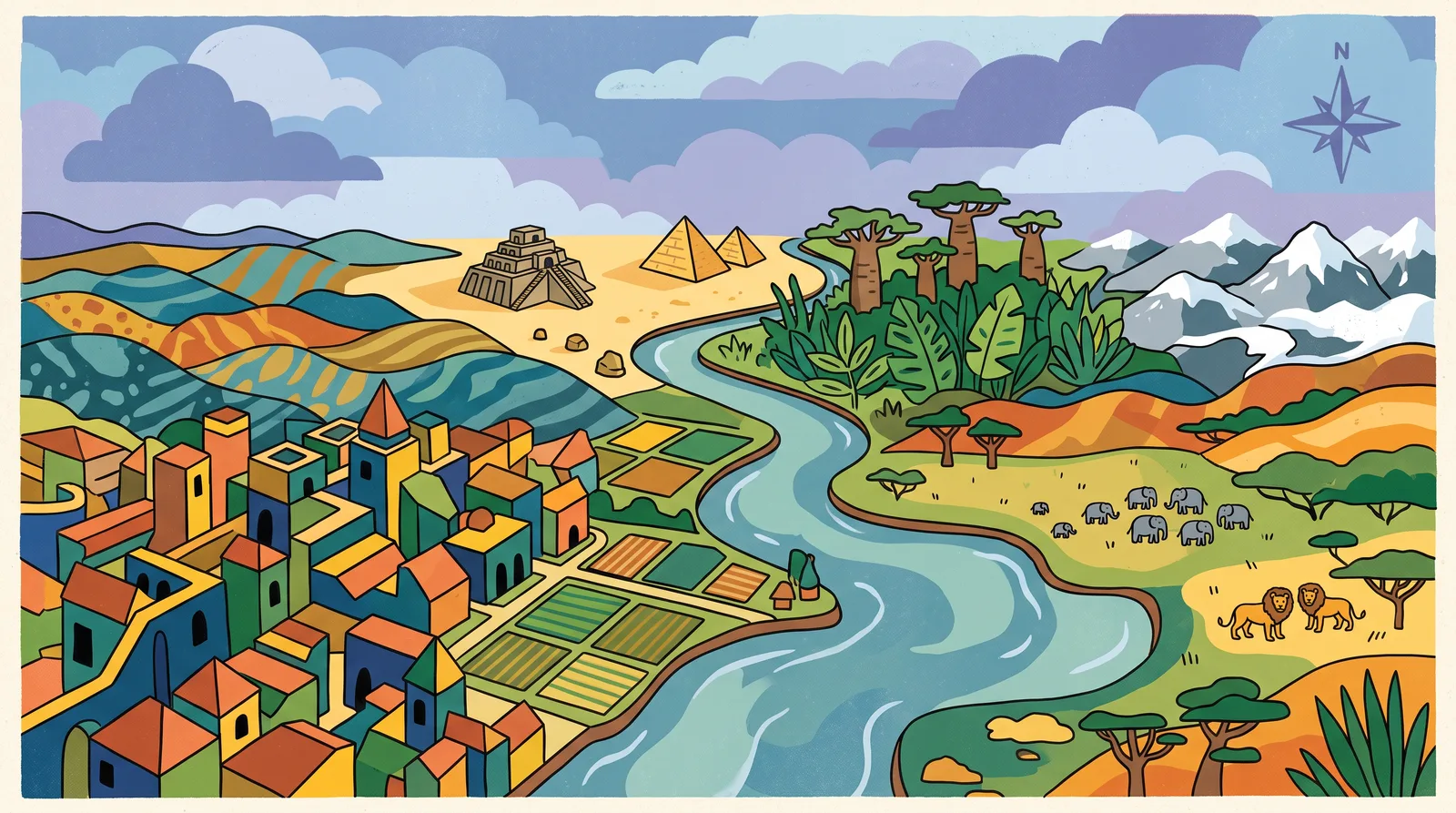
What you'll learn
What you'll be able to do
- Build Grade 8 math skills: prime factors, factorizing, rates and percent change, and statistics and probability
- Explore Grade 8 science: cells, respiration, heat and light, and acids and bases
- Read and write with confidence: verb tenses, phrases and clauses, punctuation, and the book report
- Learn African history, including Oyo, Dahomey, Asante, Kongo, and the Mutapa state, and American history, including the Jim Crow era, Ida B. Wells, Booker T. Washington, and W. E. B. Du Bois
- Speak, read, and write French at Level 3, and build skills in Spanish or Hebrew
- Build technology and business skills: algorithms, flowcharts, and first programs in Python, plus record keeping, interest, business partnerships, and a micro-business fair
How it works
A school that adapts to you
This isn't a set of static videos. Every lesson is generated live and tuned to where you actually are.
We learn your level
A quick placement check tailors your starting point so you're never bored or lost.
Lessons adapt as you go
Each lesson is written for your pace and your goal, adjusting as your skills grow.
Your AI coach keeps you moving
Checkpoints, feedback, and gentle nudges turn progress into a real result.
The curriculum
What's inside your school
19 modules · 80 lessons

Grade 8 — English Language and Literature
Grade 8 focus: verb tenses, phrases and clauses, apostrophes and quotation marks, writing a book report, and the Mythology and Folklore unit on Mami Wata, the flying Africans, and sky stories. Grade 7 covered nouns, sentence types, subject–verb agreement, paragraph types, autobiography, and Sundiata, so this class does not repeat them.
- 1.1Verb Tenses: Talking About TimeIncluded
- 1.2Phrases and ClausesIncluded
- 1.3Apostrophes and Quotation MarksIncluded
- 1.4Writing a Book ReportIncluded
- 1.5Mythology and Folklore Unit: Mami Wata, the Flying Africans, and Sky StoriesIncluded
Grade 8 — French as a Foreign Language (Level 3)
French Level 3 is for grade 8 (CEFR A2, first half). Topics: asking questions in three ways, regular -ir and -re verbs with the verb faire, making plans and invitations with pouvoir and devoir, and comparing places with a focus on Québec. Students build on grade 7 work with aller, vouloir, prendre, and the partitive.
- 2.1Asking Questions: Intonation, Est-ce que, and InversionIncluded
- 2.2New Verb Groups: Regular -ir and -re Verbs and the Verb FaireIncluded
- 2.3Making Plans: Pouvoir, Devoir, and InvitationsIncluded
- 2.4Québec and Comparisons: More, Less, and As ... AsIncluded
Grade 8 — Mathematics
Grade 8 focus: prime factors and rational numbers, expanding and factorizing expressions and using formulas, rates and percent change, statistics and probability, and the Ethnomathematics unit on fractals in African design. Grade 7 covered integers, exponents and square roots, an introduction to algebra, geometry, and Kuba cloth and Great Zimbabwe, so this class does not repeat them.
- 3.1Prime Factors and Rational NumbersIncluded
- 3.2Expanding Brackets, Factorizing, and Using FormulasIncluded
- 3.3Rates, Speed, and Percent ChangeIncluded
- 3.4Statistics and Probability: Averages and ChanceIncluded
- 3.5Ethnomathematics Unit: Fractals in African DesignIncluded
Grade 8 — Science
Grade 8 focus: cells, respiration, heat and light, and acids, bases, and indicators. Grade 7 covered measurement, matter, forms of energy, and the structure of the Earth, and Grade 8 Agriculture covers soil and livestock, so this class does not repeat them.
- 4.1Cells: The Building Blocks of LifeIncluded
- 4.2Respiration: How Living Things Release EnergyIncluded
- 4.3Heat Transfer and the Behavior of LightIncluded
- 4.4Acids, Bases, and IndicatorsIncluded
Grade 8 — Pan-African History: All 54 Nations
Grade 8 focus: forest and savanna kingdoms from 1400 to 1900: Oyo and Dahomey, Asante and the Akan states, the Kingdom of Kongo, and the Mutapa state. Grade 7 covered Ghana, Mali, Songhai, Kanem-Bornu, and the Hausa states, so this class does not repeat them.
- 5.1The Oyo Empire and the Kingdom of DahomeyIncluded
- 5.2Asante and the Akan StatesIncluded
- 5.3The Kingdom of KongoIncluded
- 5.4The Mutapa State and Its NeighborsIncluded
Grade 8 — Civic Education and Social Studies
Grade 8 focus: the constitution as the supreme law, democracy and elections, local government, and taxes and public services. Grade 6 covered citizenship, human rights, laws, and the three branches of government, and Grade 7 covered the family, work, traditional leadership, and culture, so this class does not repeat them.
- 6.1The Constitution: The Supreme Law of the LandIncluded
- 6.2Democracy and ElectionsIncluded
- 6.3Local Government: Counties, Districts, and CouncilsIncluded
- 6.4Taxes and Public ServicesIncluded
Grade 8 — Geography and Environment of Africa
Grade 8 focus: the location, size, and neighbors of Liberia, the weather and climate of Liberia and coastal West Africa, natural and mineral resources, and population. Grade 6 covered Africa's landforms and climate zones, and Grade 7 covered the solar system, latitude and longitude, relief, and map skills, so this class does not repeat them.
- 7.1Liberia and Its Neighbors: Location, Size, and BordersIncluded
- 7.2Weather and Climate of Liberia and Coastal West AfricaIncluded
- 7.3Natural and Mineral Resources of Liberia and Its NeighborsIncluded
- 7.4The Population of Liberia: Census, Distribution, and UrbanizationIncluded
Grade 8 — Economics
Grade 8 focus: advertising and consumer choice, why countries trade, prices over time and inflation, and insurance and managing risk. Grade 7 covered producers and consumers, consumer rights, markets, demand and supply, work and income, and banks and mobile money, and Grade 8 Entrepreneurship covers record keeping and investing, so this class does not repeat them.
- 8.1Advertising and Consumer ChoiceIncluded
- 8.2Why Countries Trade: Imports, Exports, and the Balance of TradeIncluded
- 8.3Prices Over Time: Inflation and the Cost of LivingIncluded
- 8.4Insurance and Managing RiskIncluded
Grade 8 — Computer Technology and AI
Grade 8 focus (part of the grades 6–8 Intro to Tech strand): algorithms and flowcharts, moving from Scratch to Python, decisions and loops in Python, and data in everyday life. Grade 7 covered word processing, spreadsheets, how the internet works, and Scratch animation, so this class does not repeat them.
- 9.1Algorithms and FlowchartsIncluded
- 9.2From Scratch to Python: Variables, Input, and OutputIncluded
- 9.3Decisions and Loops in PythonIncluded
- 9.4Data in Everyday Life: How Apps Collect and Use DataIncluded
Grade 8 — Second Language (Spanish or Hebrew)
Grade 8 focus (beginner level 3): daily routine verbs, the home, weather and seasons, and hobbies and free time. Each lesson gives the same phrases in Modern Hebrew (Hebrew script with a Latin-letter guide) and Mexican Spanish. Students study the one language they chose. Grade 6 covered greetings, introductions, numbers, and classroom objects, and Grade 7 covered family, dates, food, and time, so this class does not repeat them.
- 10.1My Daily RoutineIncluded
- 10.2My HomeIncluded
- 10.3Weather and SeasonsIncluded
- 10.4Hobbies and Free TimeIncluded
Grade 8 — Agriculture and Food Science
Grade 8 focus: raising poultry, goats, sheep, and cattle, crop pests and diseases with integrated pest management, and fish farming. Grade 6 covered soil, growing a crop from seed, food groups, and basic food preservation, and Grade 7 covered major crops, tools, composting, and garden planning, so this class does not repeat them.
- 11.1Raising PoultryIncluded
- 11.2Goats, Sheep, and CattleIncluded
- 11.3Crop Pests, Diseases, and Integrated Pest ManagementIncluded
- 11.4Fish Farming (Aquaculture)Included
Grade 8 — Values, Ethics, and Moral Education
Grade 8 focus: stewardship of time, money, and talents, fairness and justice, moral courage, and integrity in public life. Grade 6 covered respect, honesty, resolving conflicts, and Ubuntu, and Grade 7 covered duties to family, peacebuilding, friendship, and respect for different faiths, so this class does not repeat them.
- 12.1Stewardship: Using Time, Money, and Talents WellIncluded
- 12.2Fairness and JusticeIncluded
- 12.3Moral Courage: Standing Up for What Is RightIncluded
- 12.4Integrity and Fighting CorruptionIncluded
Grade 8 — American History
Grade 8 focus: the end of Reconstruction and the Jim Crow era, Ida B. Wells and the fight for truth, Booker T. Washington and W. E. B. Du Bois, and Black inventors and the builders of Greenwood. U.S. events appear as context for the Black American story. Grade 7 covered Tubman, Douglass, the Civil War, and Reconstruction, so this class does not repeat them.
- 13.1The End of Reconstruction and the Jim Crow EraIncluded
- 13.2Ida B. Wells: Journalist and Crusader for JusticeIncluded
- 13.3Booker T. Washington and W. E. B. Du Bois: Two Paths to ProgressIncluded
- 13.4Black Inventors and the Builders of GreenwoodIncluded
Grade 8 — Music Appreciation
Grade 8 focus: regional popular and classical styles from many parts of Africa: North African music (the oud, Umm Kulthum, and Gnawa), taarab of the Swahili coast, Congolese rumba, and highlife and Afrobeat. Grade 6 covered the elements of music, instruments, anthems, and listening skills, and Grade 7 covered drumming, choral music, griots, and music in ceremonies, so this class does not repeat them.
- 14.1Music of North Africa: The Oud, Umm Kulthum, and GnawaIncluded
- 14.2Taarab: Sung Poetry of the Swahili CoastIncluded
- 14.3Congolese RumbaIncluded
- 14.4Highlife and AfrobeatIncluded
Grade 8 — Art History
Grade 8 focus: the art and architecture of ancient Egypt, Ethiopian illuminated manuscripts, Makonde sculpture of East Africa, and modern African painters and art movements. Grade 6 covered looking at art, rock art and Nok, kente, and Ndebele painting, and Grade 7 covered Ife and Benin, masks, pottery, and traditional architecture, so this class does not repeat them.
- 15.1The Art and Architecture of Ancient EgyptIncluded
- 15.2Ethiopian Illuminated ManuscriptsIncluded
- 15.3Makonde Sculpture of Tanzania and MozambiqueIncluded
- 15.4Modern African Painters: Enwonwu, the Zaria Art Society, and El-SalahiIncluded
Grade 8 — STEM
Grade 8 focus: simple electric circuits, a model wind turbine, a water wheel and hydropower, and a rain gauge and school weather station with spreadsheet data. Grade 6 covered the design process, a paper bridge, a water filter, and plant growth data, and Grade 7 covered levers and pulleys, paper rockets, a solar oven, and a community survey, so this class does not repeat them.
- 16.1Simple Electric Circuits: Build a TorchIncluded
- 16.2Wind Energy: Build a Model Wind TurbineIncluded
- 16.3Water Power: Build a Water WheelIncluded
- 16.4Build a Rain Gauge and School Weather StationIncluded
Grade 8 — Entrepreneurship and Wealth Building
Grade 8 focus: record keeping and simple accounts, simple and compound interest, teamwork and business partnerships, and a micro-business fair. Grade 6 covered what entrepreneurs do, susu and cooperatives, product design, and cost and profit, and Grade 7 covered business opportunities, market research, marketing, and the one-page business plan, so this class does not repeat them.
- 17.1Record Keeping: The Cash Book and Simple AccountsIncluded
- 17.2Interest: How Money Grows and How Debt GrowsIncluded
- 17.3Teamwork and Business PartnershipsIncluded
- 17.4Micro-Business Fair: Run, Record, and ReflectIncluded
Grade 8 — Studio Arts and Textile Design
Grade 8 focus: one-point perspective drawing, basketry by coiling and plaiting, portrait drawing and the proportions of the face, and building an art portfolio. Grade 6 covered design elements, adinkra stamping, upcycled sculpture, and paper weaving, and Grade 7 covered color and natural dyes, resist dyeing, clay sculpture, and mask making, so this class does not repeat them.
- 18.1Perspective Drawing: Draw a Street SceneIncluded
- 18.2Basketry: Coiling and PlaitingIncluded
- 18.3Portrait Drawing: Proportions of the FaceIncluded
- 18.4Building an Art PortfolioIncluded
Grades 6–12 — Physical Education: Tai Chi Movement and Fitness
One shared optional class for Grades 6–12. At-home movement based on tai chi (taijiquan), the slow, flowing Chinese movement art, plus warm-ups, stances, breathing, balance, stretching, and everyday nutrition for active bodies. Movement, breathing, and nutrition only. No partner contact.
- 19.1What Is Tai Chi? History, Styles, and PrinciplesIncluded
- 19.2Warm-Up, Posture, and the Opening MovementIncluded
- 19.3Stances and Stepping: Rooting and Moving Your WeightIncluded
- 19.4Flowing Forms: Wild Horse's Mane, White Crane, and Cloud HandsIncluded
- 19.5Breathing, Stretching, and Balance for MovementIncluded
- 19.6Eating for Active Bodies: Food, Water, and Tai Chi PracticeIncluded
Who it's for
Is this you?

The Curious Explorer
She asks big questions and wants a Grade 8 school that lets her dig into history, science, and the cultures of the world.

The Homeschool Family
They want a complete, structured curriculum their children can follow from home or on the road.

The Language Lover
He wants to start French at Level 3 and add Spanish or Hebrew while he builds strong reading and writing skills.

The Young Maker
She loves to build and create, and she is excited for hands-on STEM projects and a computer class covering algorithms, flowcharts, and first programs in Python.

The Fast-Moving Learner
He finishes his work early and wants lessons that adapt to his pace instead of holding him back.

The Active Learner
She learns best when study is balanced with movement, and she looks forward to Tai Chi PE.
Questions
Frequently asked
About the Founder
A note from your teacher

Dr. Chioma Adaku-Griffin, Founder and Principal Administrator
Welcome to Epicenter Microschool. I started this school because I believe every student deserves a rigorous education that opens up the whole world, and a community where they are known, challenged, and celebrated.
In Grade 8, your student takes 18 classes, from English, mathematics, and science to economics, music, and art. Alongside the core subjects, students study African history and cultures, American history, French at Level 3, and a choice of Spanish or Hebrew, with Tai Chi PE to keep body and mind active.
Every lesson adapts to your student. An AI tutor explains new ideas, answers questions at any hour, and adjusts the pace, and every lesson ends with a short quiz. Essays and projects let students show what they can really do.
Students of every background are welcome here. If you are looking for a school that is serious about learning and generous in spirit, I would be honored to have your student join our community this year.
Dr. Chioma Adaku-Griffin is the founder and Principal Administrator of Epicenter Microschool. She also founded and leads Here for You, LLC, serves as an Ambassador of the Pan African Chamber of Commerce, and is an author, advocate, and philanthropist.
— Dr. Chioma Adaku-Griffin, Founder and Principal Administrator
Start your journey today
Get instant access — learn at your own pace with an AI coach in your corner.
$99/mo
Recurring billing · cancel anytime
You'll add your student right after signing up.
Secure checkout · Instant access
- 19 modules, 80 lessons
- AI-adaptive lessons tuned to your level
- Quizzes & checkpoints to lock in progress
- Your own AI learning coach
- Learn on any device, at your pace
- Full access for as long as you're subscribed