Give your child the operating system that makes every subject easier
The Mind OS is a hands-on cognitive skills system for ages 8–18 that builds focus, planning, working memory, and self-direction — the thinking tools no AI can replace and no single subject can teach.

I don't teach kids what to think — I teach them how their thinking actually works, and then I hand them the controls.— Leigh Baumann
What you'll learn
What you'll be able to do
- Direct and sustain focused attention on a task even in a distraction-filled environment
- Apply working memory strategies to hold, organize, and use information while actively thinking
- Select, switch, and adjust learning strategies when an approach isn't working
- Break any goal into a sequenced, executable plan and track progress independently
- Use structured self-monitoring protocols to catch errors and adapt in real time
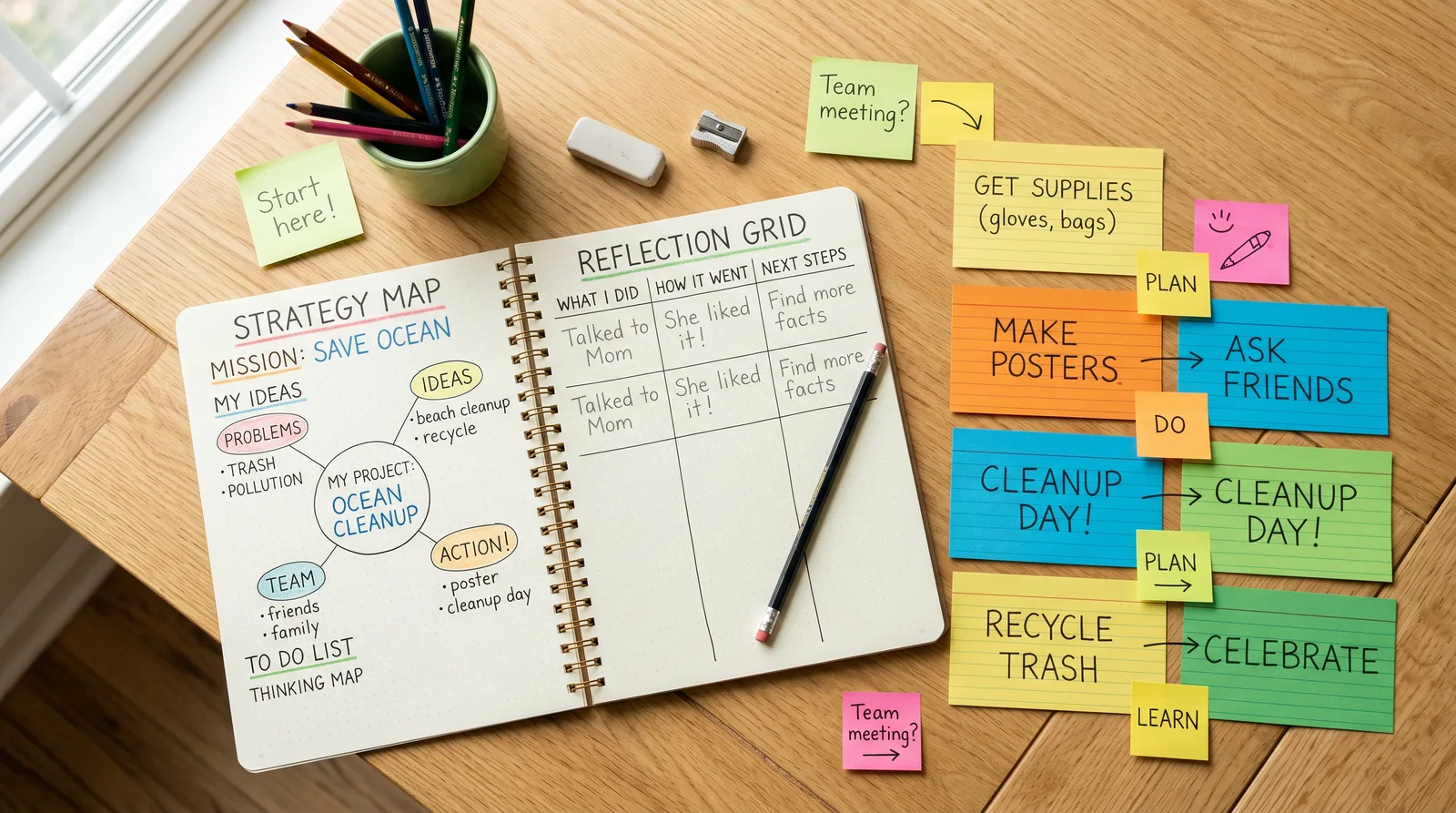
- Complete a Thinking Portfolio—journal, strategy map, and project artifact—that makes cognitive growth visible and measurable
How it works
A school that adapts to you
This isn't a set of static videos. Every lesson is generated live and tuned to where you actually are.
We learn your level
A quick placement check tailors your starting point so you're never bored or lost.
Lessons adapt as you go
Each lesson is written for your pace and your goal, adjusting as your skills grow.
Your AI coach keeps you moving
Checkpoints, feedback, and gentle nudges turn progress into a real result.
The curriculum
What's inside your school
6 modules · 16 lessons

Attention & Awareness
Establishes the foundational skill of the entire system: the ability to direct, sustain, and intentionally shift attention. Students first understand what attention is and why it is trainable, then build directed focus on command, and finally apply attention to purposeful observation—laying the perceptual groundwork for every subsequent module.
- 1.1What Is Attention (and Where Does Yours Go)?Included
- 1.2Focus on Command: Building Directed AttentionIncluded
- 1.3Pattern Recognition and Intentional NoticingIncluded
Working Memory & Question Formation
Develops the mental workspace students rely on while actively thinking—holding information, manipulating it, and connecting it to new input—then channels that capacity into disciplined question formation. Question formation is treated as a prerequisite for planning: you cannot build a good plan without a well-framed goal or problem. A new prerequisite lesson on emotional regulation for cognitive load is added here because working memory collapses under stress; this closes a critical gap in the original draft.
- 2.1Your Mental Workspace: How Working Memory WorksIncluded
- 2.2Emotional Regulation for Cognitive LoadIncluded
- 2.3From Observation to Question: The Art of FramingIncluded
Planning Systems & Strategy Selection
Builds the full planning and strategy infrastructure students need to move from a question or goal to an executable plan—and to keep adapting that plan when conditions change. Sequencing is preserved from the user's draft: goal-breakdown and sequencing come first, strategy selection second, and cognitive flexibility (switching) third, which is the correct procedural order.
- 3.1Breaking Goals Into Steps: The Sequencing EngineIncluded
- 3.2Choosing Your Strategy: The Cognitive ToolboxIncluded
- 3.3Cognitive Flexibility: Shifting Strategies and PerspectivesIncluded
Execution, Self-Monitoring & Error Detection
Closes the gap between planning and outcome. Students develop the psychological and procedural skills to enter and sustain productive execution, and—critically—to monitor their own performance in real time so they catch errors and drift before they compound. The two lessons in the user's draft are preserved and deepened.
- 4.1Execution Mode: Focus, Persistence, and Managing FrustrationIncluded
- 4.2Self-Monitoring: Catching Errors and Tracking Progress in Real TimeIncluded
Reflection & Metacognition
Develops the reflective capacity that transforms experience into lasting learning. Students move beyond surface-level review to genuine metacognition—analyzing the quality of their own thinking processes, not just their outputs. The Thinking Portfolio is assembled here as the capstone artifact of reflection, making cognitive growth visible and measurable. Both user-defined lessons are preserved and enriched.
- 5.1Thinking About Thinking: The Metacognition ToolkitIncluded
- 5.2Building the Thinking PortfolioIncluded
Transfer & Real-World Challenge Project
The integrating capstone of the entire system. Students apply every executive function skill developed across the course to a self-chosen real-world challenge, executing it independently with structured support, and then publicly defend their process—making their thinking visible and demonstrating transfer. All three user-defined lessons are preserved and enriched with sequenced, rigorous activities.
- 6.1Designing Your Challenge: Choosing a Transfer TargetIncluded
- 6.2Executing the Challenge: Thinking in the WildIncluded
- 6.3Project Defense: Making Your Thinking VisibleIncluded
Who it's for
Is this you?

The Frustrated Parent
Your child is clearly capable, but homework is a battle and school reports say they 'don't apply themselves' — you want real tools, not more content.

The Homeschool Educator
You've curated a rich academic curriculum but want a dedicated, structured system to build the thinking skills that tie it all together.

The Middle Schooler
You're smart but distracted, and nobody's ever shown you how to actually focus, plan a project, or figure out why a strategy isn't working.

The Classroom Teacher
You see students who lack self-direction and metacognitive habits, and you want a structured supplement that explicitly teaches the executive function your subject assumes they already have.

The High Schooler Eyeing Independence
You're approaching college or a big next step and want to understand how you think, catch your own errors, and self-direct your learning without someone holding your hand.

The Parent of a Twice-Exceptional Kid
Your child has a sharp, curious mind alongside ADHD or learning differences, and you need something that explicitly builds the executive function skills they've never been directly taught.
Questions
Frequently asked
Your teacher
A note from your teacher
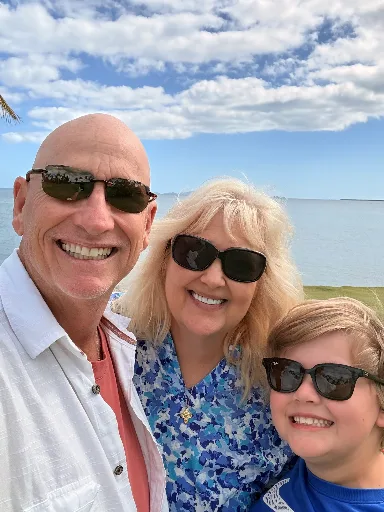
Leigh Baumann
If your child is smart but inconsistent — brilliant in conversation, then scattered on the page — you already know the content isn't the problem. The problem is the infrastructure underneath.
I built The Mind OS because I kept watching the same pattern repeat: capable kids hitting unnecessary ceilings. Not because they lacked knowledge. Because no one had ever explicitly taught them how to direct their own attention, what to do when a strategy stops working, or how to check their own thinking in real time. These aren't mysterious gifts. They're learnable skills. And when kids learn them, everything changes — not just one subject, but all of them.
The curriculum you'll find here is built on the science of executive function, translated into plain language that a ten-year-old can work with and a parent can reinforce without needing a psychology degree. Each module is concrete, sequential, and immediately useful. Students don't just discuss focus — they practice building it on command. They don't just hear about planning — they sequence real goals into executable steps. They don't just reflect — they build a Thinking Portfolio that shows them, in their own handwriting and their own words, how their mind actually works.
I want to be honest with you about what this program is not. It is not a quick fix, and it is not magic. Building cognitive skills takes practice, just like building physical ones. What The Mind OS gives your child is a clear system, repeated practice with real feedback, and a final Transfer Challenge where they apply everything to something that genuinely matters to them. That last part — thinking in the wild — is where the work becomes permanent.
If you're an educator, you'll find this curriculum fits naturally alongside any subject you already teach. If you're a parent, you'll find it gives you a shared language with your child for talking about how they learn, not just what they learn. Either way, you're not just enrolling in a course. You're handing your child a set of tools they'll use for the rest of their thinking life.
That's the promise. Let's build the operating system.
— Leigh Baumann
Start your journey today
Join get instant access — learn at your own pace with an AI coach in your corner.
$39/mo
Recurring billing · cancel anytime
Secure checkout · Instant access
- 6 modules, 16 lessons
- AI-adaptive lessons tuned to your level
- Quizzes & checkpoints to lock in progress
- Your own AI learning coach
- Learn on any device, at your pace
- Full access for as long as you're subscribed