Read all of Scripture on God's redemptive clock
Discover how God's seven appointed feasts are not ancient Jewish customs but precise, prophetic appointments — already fulfilled in Christ's First Advent and still unfolding toward His return. This school gives you the theological, historical, and calendrical tools to read all of Scripture on God's own redemptive clock.
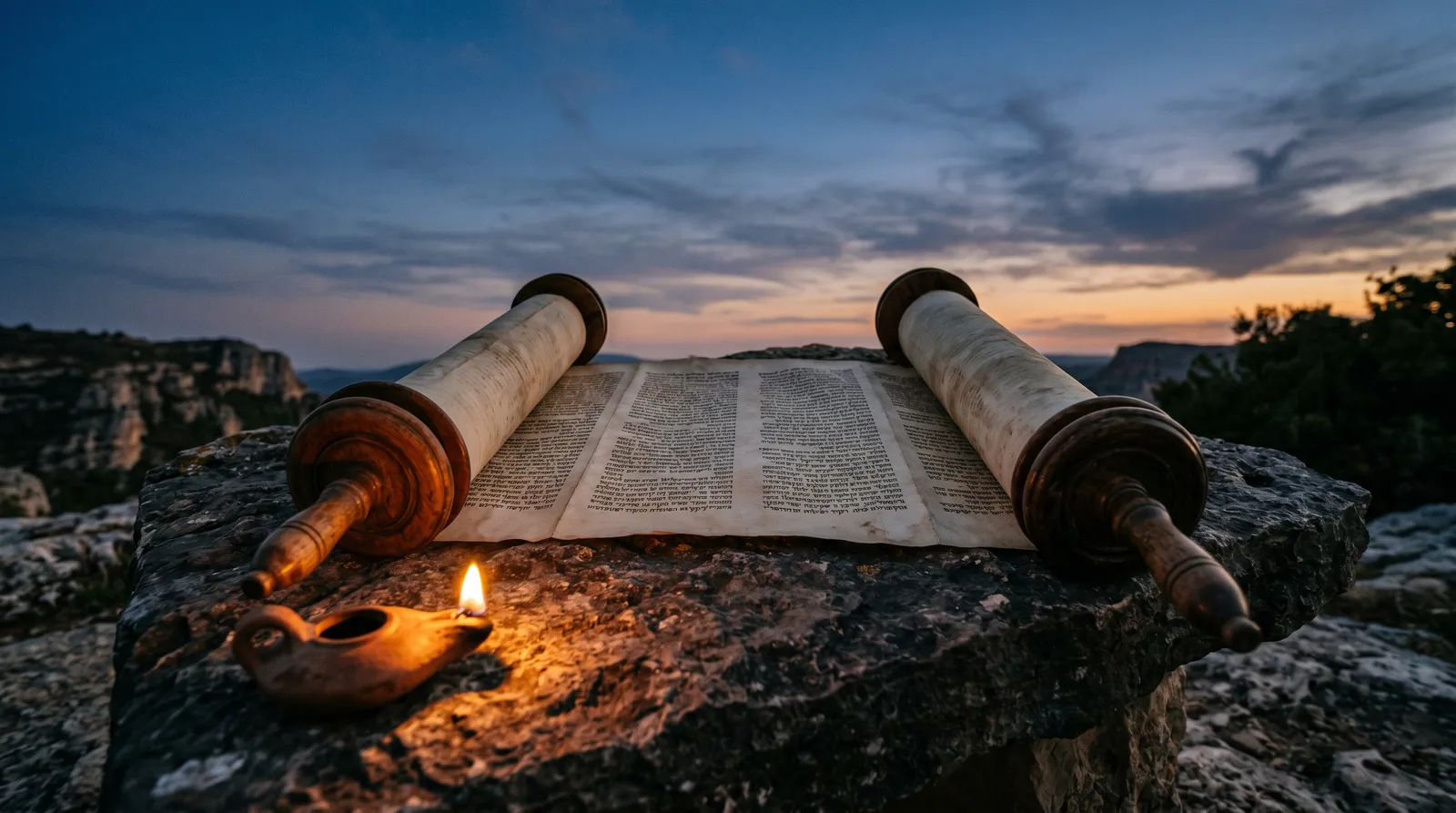
"God set these appointments before the foundation of the world — and once you see how precisely He has kept them, you will never read Scripture the same way again."— Michelle Bell
What you'll learn
What you'll be able to do
- Identify all seven biblical feasts by their Hebrew names, original Torah institution, and exact placement on the Hebrew calendar
- Articulate the precise, day-for-day fulfillment of the three spring feasts in the death, burial, and resurrection of Jesus Christ
- Trace the dual significance of Pentecost (Shavuot) from the giving of Torah at Sinai to the outpouring of the Spirit in Acts 2
- Explain the prophetic meaning of the three fall feasts as unrealized divine appointments pointing to Christ's Second Advent
- Navigate the structure of the Hebrew calendar — including Shemitah, Jubilee, the prophetic 360-day year, and Daniel's Seventy Weeks — as a coherent redemptive framework
- Read any major biblical event against the Hebrew calendar to surface the divine intentionality encoded in its timing
How it works
A school that adapts to you
This isn't a set of static videos. Every lesson is generated live and tuned to where you actually are.
We learn your level
A quick placement check tailors your starting point so you're never bored or lost.
Lessons adapt as you go
Each lesson is written for your pace and your goal, adjusting as your skills grow.
Your AI coach keeps you moving
Checkpoints, feedback, and gentle nudges turn progress into a real result.
The curriculum
What's inside your school
6 modules · 18 lessons

The Foundation: God's Appointed Times and the Hebrew Calendar
This opening module establishes the theological, linguistic, and calendrical foundations that every subsequent module builds on. Students will discover that the feasts are not Jewish customs but divine appointments (moadim) embedded into God's created order — and that the Hebrew calendar is the redemptive clock on which all of Scripture's major events tick. No later module makes full sense without this groundwork.
- 1.1Moedim: Understanding God's Appointed TimesIncluded
- 1.2The Hebrew Calendar: God's Redemptive ClockIncluded
- 1.3The Seasons of the Lord: Spring, Summer, and Fall HarvestsIncluded
The Spring Feasts: Passover, Unleavened Bread, and Firstfruits
With the calendar foundation laid, students now trace the first three spring feasts in precise historical detail — their original Exodus institution, their annual Hebrew observance, and their exact, day-for-day fulfillment in the death, burial, and resurrection of Jesus Christ. A key outcome is that students grasp the word 'exact': Jesus did not loosely fulfill these feasts; He fulfilled them on the precise dates God had rehearsed for fifteen centuries.
- 2.1Passover (Pesach): The Blood That SavesIncluded
- 2.2Unleavened Bread (Chag HaMatzot): The Sinless Body in the TombIncluded
- 2.3Firstfruits (Yom HaBikkurim): The Resurrection as Divine AppointmentIncluded
Pentecost: The Feast That Bridges Both Testaments
Pentecost stands at the midpoint of the feast calendar and the midpoint of redemptive history — the bridge between Sinai and Acts 2, between Law and Spirit, between Israel and the Church. This module ensures students understand Shavuot in its full Old Testament richness before encountering its New Testament fulfillment, avoiding the common error of reading Acts 2 in isolation from its Hebrew roots. A prerequisite thread from Module 2 — the counting of the Omer — is also fully taught here.
- 3.1Counting the Omer: The 49-Day Journey from Firstfruits to PentecostIncluded
- 3.2Shavuot: The Feast of Weeks and the Giving of the TorahIncluded
- 3.3Acts 2 and the Birth of the Church: Pentecost FulfilledIncluded
The Fall Feasts: Prophetic Appointments Yet to Be Fulfilled
The fall feasts — Trumpets, Atonement, and Tabernacles — have not yet been fulfilled in the way the spring feasts were at the First Advent. They are future divine appointments, dress rehearsals for the events surrounding Christ's Second Coming: the resurrection and rapture, the final judgment, and the eternal dwelling of God with His people. This module equips students to articulate these prophetic themes with biblical precision, resisting sensationalism while taking the prophetic calendar seriously.
- 4.1The Feast of Trumpets (Yom Teruah): The Last Trump and the ResurrectionIncluded
- 4.2The Day of Atonement (Yom Kippur): Judgment, Covering, and National Israel's FutureIncluded
- 4.3The Feast of Tabernacles (Sukkot): God Dwelling with His People ForeverIncluded
The Hebrew Calendar in Depth: Cycles, Shadows, and Sacred Time
This module gives dedicated, advanced treatment to the Hebrew calendar beyond the introductory overview in Module 1. Students now engage the calendar at a greater depth — the Sabbath and Sabbatical (Shemitah) cycles, the Jubilee, the significance of biblical numbers in time (7, 50, 70), the prophetic year (360 days) used in Daniel and Revelation, and how the calendar's structure encodes God's redemptive purposes. Positioned after all six feast modules, students can now see the calendar's deeper patterns in light of everything they have learned.
- 5.1The Sabbath and Sabbatical Cycles: Shemitah, Jubilee, and God's 7sIncluded
- 5.2The Prophetic Year and Daniel's Seventy WeeksIncluded
- 5.3God's Redemptive Events and the Hebrew Calendar: A Survey of Key DatesIncluded
The Seamless Story: All Seven Feasts, One Redemptive Narrative
This culminating module steps back from individual feast analysis to see the entire feast calendar as a single, unified, God-authored story — from the Exodus Passover to the eternal Sukkot of Revelation 21. Students synthesize everything learned across the course, practice communicating it to others, and leave equipped not only to understand the feasts but to teach them. A new prerequisite lesson is added before the two original lessons to ensure students have a theological framework for synthesis before moving into communication and application.
- 6.1From Shadow to Substance: Typology, Fulfillment, and the Logic of the FeastsIncluded
- 6.2From Exodus to Eschaton: The Seven Feasts as One StoryIncluded
- 6.3Teaching the Feasts: Building Your Ministry ResourceIncluded
Who it's for
Is this you?

Pastors & Preachers
Equips you to preach the feasts with chronological precision and Christological depth — and to build a whole sermon series from a single, coherent framework.

Bible Study Leaders
Gives you the theological content and teaching structure to guide your group through all seven feasts with confidence, clarity, and ready-made ministry resources.

Devoted Laypeople
For the serious self-taught student who is done with surface-level Bible reading and wants rigorous, text-grounded answers about the feasts' fulfillment and prophetic meaning.

Prophecy Students
The fall feasts module and the Hebrew calendar deep-dive give you a scripturally anchored framework for understanding end-times prophecy — without speculation or sensationalism.

Seminary Students
Fills a gap most seminaries leave open: a precise, integrated treatment of biblical typology, Hebrew calendar chronology, and the Christological fulfillment of the moedim.

Jewish-Roots Explorers
Grounds your exploration of the Hebrew roots of the faith in careful biblical exegesis, so that enthusiasm for the feasts is always anchored in sound theology.
Questions
Frequently asked
Your teacher
A note from your teacher
Michelle Bell
If you have been in serious Bible study for any length of time, you have likely sensed it — a feeling that the Old Testament feasts are important, that they are doing something more than preserving ancient Israelite culture, but that you have never quite had the tools to articulate what. You have read Leviticus 23. You know Passover points to the Cross. But the full architecture — the way all seven feasts interlock, the way the Hebrew calendar runs like a clock underneath the whole of Scripture, the way God has been keeping these appointments with day-for-day precision since the Exodus — that has stayed just out of reach.
That is exactly the gap this school is built to close.
What you will find here is not a devotional overview or a surface-level survey. It is a careful, text-driven study that begins with one Hebrew word — moedim, appointed times — and builds outward from there into the full structure of God's redemptive calendar. We will walk through all seven feasts in their Torah institution, examine the precise chronological fulfillment of the spring feasts in the death, burial, and resurrection of Jesus Christ, trace Pentecost across both Testaments, and then turn our attention to the three fall feasts that remain open, prophetic appointments pointing toward His return. Along the way we will work through the Hebrew calendar in genuine depth: Shemitah cycles, Jubilee, the prophetic 360-day year, and Daniel's Seventy Weeks — not as background trivia, but as an active interpretive framework you will carry into every future Bible study you lead.
I want to speak directly to the reservation I hear most often: "I'm not a scholar. I don't know Hebrew. Is this really for me?" Every technical term in this school is defined the moment it appears — always. The goal is never to impress you with complexity but to hand you real tools and make sure you know how to use them. Pastors and seminary-trained students will find the theological precision they need. Dedicated laypeople and Bible study leaders will find that precision made genuinely accessible. No one is asked to simply take tradition on faith; everything is anchored in the text.
I want you to finish this school and never read your Bible the same way again. I want you to open to a passage, note the date on the Hebrew calendar, and immediately sense the divine intentionality encoded in that timing. I want you to be able to stand before your small group or your congregation and trace the feasts as a single, unbroken story — from the Exodus lamb to the Lamb of God to the wedding feast of the Lamb yet to come. That is the transformation this curriculum is designed to produce.
The appointments God set at Sinai are still on the calendar. Come study them with me.
— Michelle Bell
Start your journey today
Join get instant access — learn at your own pace with an AI coach in your corner.
$49/mo
Recurring billing · cancel anytime
Secure checkout · Instant access
- 6 modules, 18 lessons
- AI-adaptive lessons tuned to your level
- Quizzes & checkpoints to lock in progress
- Your own AI learning coach
- Learn on any device, at your pace
- Full access for as long as you're subscribed