Turn your kitchen into a living pantry
Learn the real science behind lacto-fermentation, wild sourdough, cultured dairy, and fermented drinks — so you can make tangy, gut-friendly food from scratch, troubleshoot anything that goes sideways, and keep a rhythm that actually fits your life.
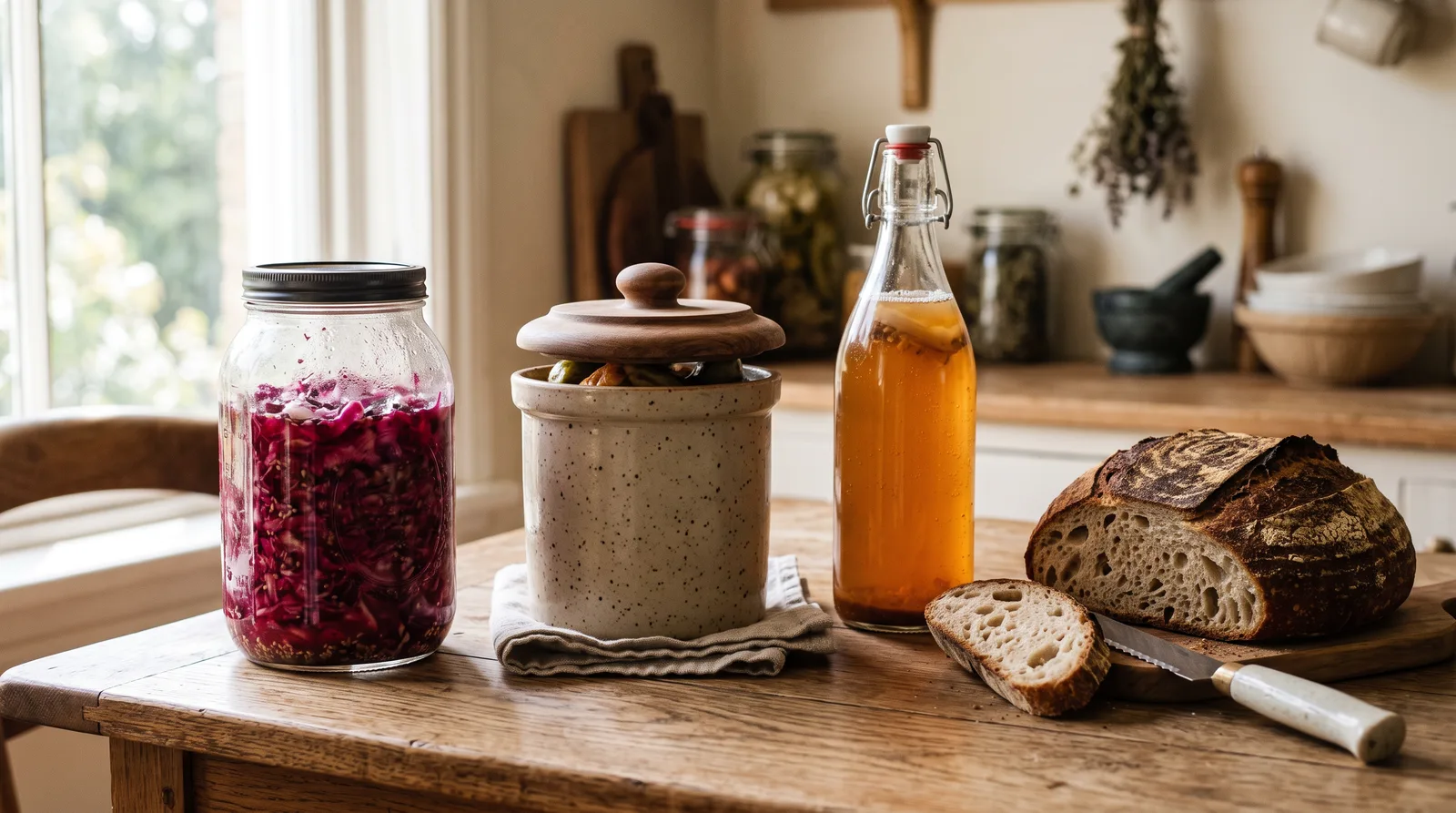
"I'd rather teach you why the salt ratio matters than hand you a recipe to follow blindly — because once you understand the 'why,' you can ferment anything."— Nikola
What you'll learn
What you'll be able to do
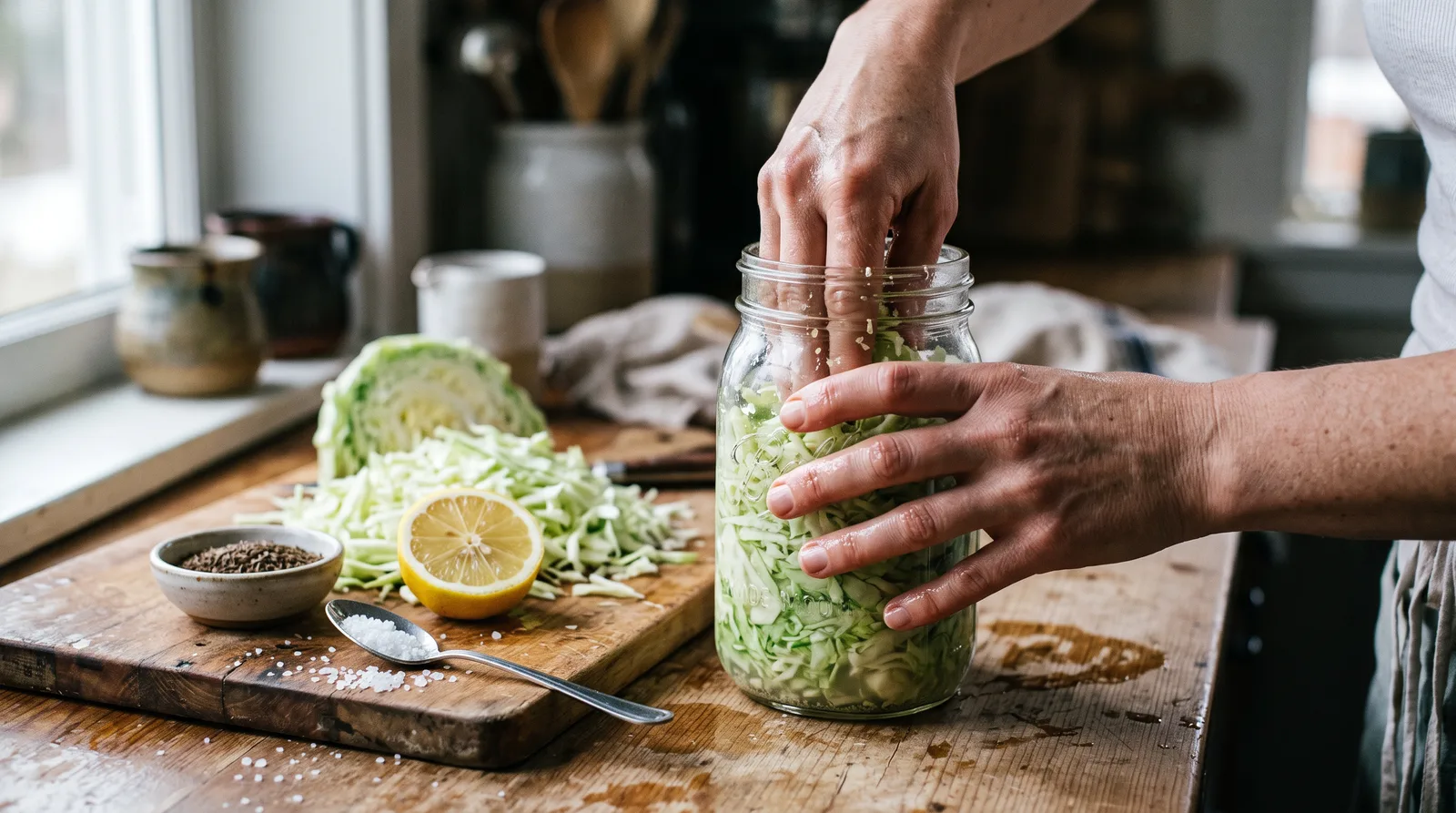
- Safely ferment vegetables using salt-brine and lacto-fermentation methods (sauerkraut, kimchi, pickles)
- Bake a consistent, open-crumb sourdough loaf by maintaining and feeding your own wild starter
- Brew and bottle your own kombucha and water kefir with controlled carbonation
- Culture dairy into yogurt, kefir, and a simple fresh cheese using live active cultures
- Diagnose and fix common fermentation problems — mold, off-smells, failed rises — with confidence
- Build a weekly fermentation rhythm that fits a real home schedule, with a stocked pantry of living foods
How it works
A school that adapts to you
This isn't a set of static videos. Every lesson is generated live and tuned to where you actually are.
We learn your level
A quick placement check tailors your starting point so you're never bored or lost.
Lessons adapt as you go
Each lesson is written for your pace and your goal, adjusting as your skills grow.
Your AI coach keeps you moving
Checkpoints, feedback, and gentle nudges turn progress into a real result.
The curriculum
What's inside your school
6 modules · 22 lessons

The Science of Fermentation
Covers the microbiology, safety principles, and essential equipment that underpin every fermentation method in this course.
- 1.1How Fermentation WorksIncluded
- 1.2Salt, pH, and Food SafetyIncluded
- 1.3Your Fermentation KitchenIncluded
- 1.4Reading Your FermentIncluded
Lacto-Fermented Vegetables
Guides students through salt-brine and dry-salt methods to safely ferment classic vegetables at home.
- 2.1Classic SauerkrautIncluded
- 2.2Kimchi From ScratchIncluded
- 2.3Brine-Fermented PicklesIncluded
- 2.4Flavor Variations and Seasonal SwapsIncluded
Wild Sourdough Bread
Takes students from capturing wild yeast to baking a well-risen, open-crumb sourdough loaf with confidence.
- 3.1Building and Feeding Your StarterIncluded
- 3.2Understanding Starter HealthIncluded
- 3.3Mixing, Folding, and Bulk FermentationIncluded
- 3.4Shaping, Proofing, and BakingIncluded
Cultured Dairy
Teaches students to use live active cultures to transform milk into yogurt, kefir, and fresh cheese at home.
- 4.1Yogurt at HomeIncluded
- 4.2Milk KefirIncluded
- 4.3Simple Fresh CheeseIncluded
Fermented Drinks
Covers brewing and bottling kombucha and water kefir with safe, controlled carbonation.
- 5.1Brewing Kombucha — First FermentIncluded
- 5.2Flavoring and Bottling — Second FermentIncluded
- 5.3Water KefirIncluded
Troubleshooting and Building Your Fermentation Rhythm
Equips students to diagnose and fix common failures, then design a sustainable weekly fermentation routine.
- 6.1Diagnosing Common ProblemsIncluded
- 6.2When to Save It and When to Toss ItIncluded
- 6.3Designing Your Weekly Fermentation ScheduleIncluded
- 6.4Stocking and Rotating Your Fermentation PantryIncluded
Who it's for
Is this you?

The scratch-cooking home cook
You already make things from scratch and fermentation is the natural next frontier — you want techniques that are grounded in real understanding, not just recipes to copy.

The gut-health curious
You've been reading about probiotics and want to make your own living foods at home rather than pay a premium for store-bought versions you can't fully verify.

The nervous first-timer
You're intrigued by fermentation but quietly worried about food safety — this school's science-first approach will replace that anxiety with genuine confidence.

The sourdough obsessive
You've kept a starter alive (or tried to) and want to finally understand bulk fermentation, proofing, and shaping deeply enough to bake a consistent, open-crumb loaf every time.

The zero-waste kitchen keeper
Fermentation is a natural fit for your ethos — extending the life of seasonal produce, reducing waste, and building a rotating pantry of living foods that nothing goes to the back of the shelf.

The flavor-chaser
You cook for the love of bold, complex taste and you want to understand how fermentation — from kimchi to cultured dairy to kombucha — unlocks flavors that no other technique can produce.
Questions
Frequently asked
Your teacher
A note from your teacher
Nikola
If you've ever bought a jar of sauerkraut at the store, turned it over, and thought I wonder if I could just… make this — hi. You're my kind of person, and you're in exactly the right place.
I started fermenting the way most people do: a little bit curious, a little bit skeptical, and with a head full of vague worries about whether I was going to accidentally poison my family. What I didn't have was someone to sit down with me and explain the actual mechanics — the salt ratios, the pH, the difference between a healthy white kahm yeast and something I should be worried about. I had to piece it together from scattered sources, make a lot of mistakes, and waste more than a few jars before things started clicking.
That experience is pretty much the reason this school exists. Fermentation is one of the oldest food practices in the world, and it's not complicated — but it does require understanding the why before the how makes any sense. Once you understand what salt actually does to a vegetable at a microbial level, or why a sourdough starter behaves differently in summer versus winter, the whole thing stops feeling like guesswork. It becomes intuitive. You start to read your ferments instead of just watching them nervously.
What we cover here spans the full range of home fermentation: lacto-fermented vegetables (sauerkraut, kimchi, brine pickles with seasonal variations), wild sourdough from a starter you build yourself, cultured dairy (yogurt, kefir, fresh cheese), and fermented drinks (kombucha with a proper second ferment for carbonation, plus water kefir). There's also a dedicated section on troubleshooting — because weird smells and flat starters happen to everyone, and confidence comes from knowing how to handle them, not from hoping they never show up.
The goal isn't to turn you into someone who spends every weekend tending fermentation vessels. It's to give you a real understanding of the process so you can build a simple, sustainable rhythm — a living pantry that hums along in the background of your regular life and quietly makes your food better.
If you're curious, a little science-minded, and ready to get your hands into something that's been nourishing humans for thousands of years — I'd genuinely love to have you here. Pull up a jar, and let's get into it.
— Nikola
Start your journey today
Join get instant access — learn at your own pace with an AI coach in your corner.
$39/mo
Recurring billing · cancel anytime
Secure checkout · Instant access
- 6 modules, 22 lessons
- AI-adaptive lessons tuned to your level
- Quizzes & checkpoints to lock in progress
- Your own AI learning coach
- Learn on any device, at your pace
- Full access for as long as you're subscribed