Understand your brain. Reclaim your life after trauma.
A science-grounded school teaching firefighters, paramedics, police officers, and emergency workers how the traumatized brain actually works — and what to do about it.
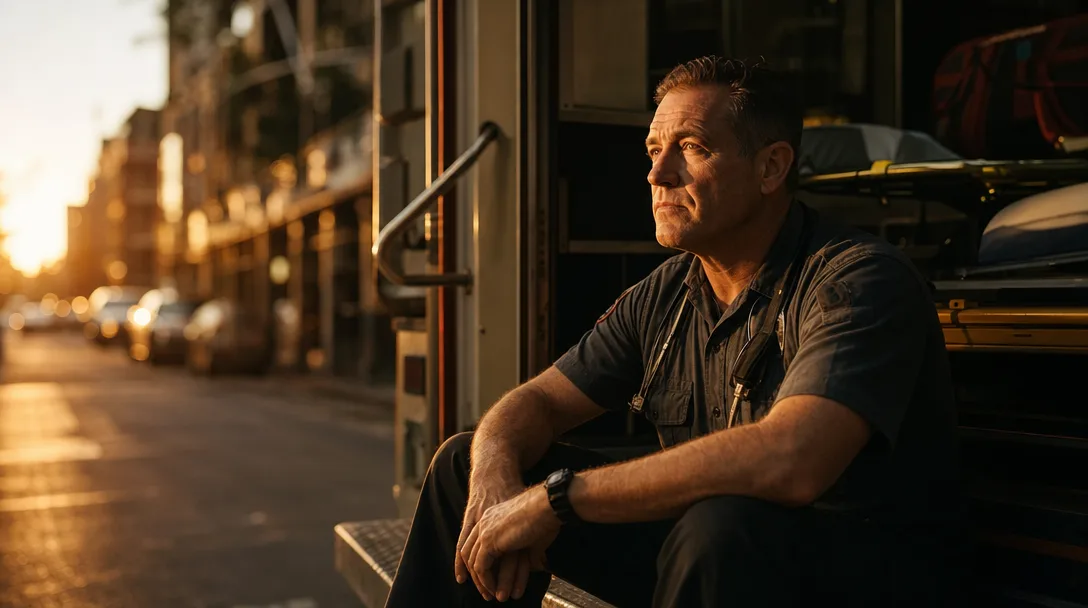
"The job doesn't break you — but it does change your brain, and you deserve to understand exactly how."— jgoodson824
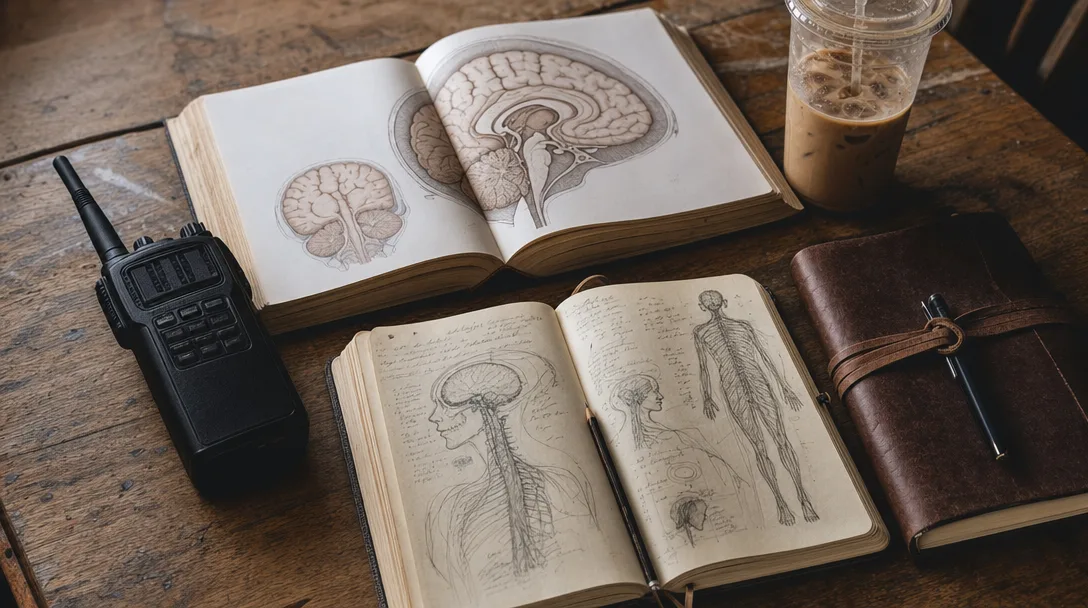
What you'll learn
What you'll be able to do
- Explain in plain language how repeated critical-incident exposure physically alters brain structure and stress-response systems
- Identify your own nervous system patterns — hyperarousal, hypoarousal, and shutdown — using a self-assessment framework drawn from polyvagal theory
- Apply evidence-based regulation techniques (breathwork, somatic grounding, cognitive reappraisal) that fit into shift-work schedules and high-noise environments
- Recognize the early neurological and behavioral signs of cumulative trauma and operational stress injury before they escalate
- Have informed, stigma-reducing conversations with partners, supervisors, and mental health professionals using accurate neuropsychological language
- Build a personalized nervous-system maintenance plan that supports long-term resilience and career longevity
How it works
A school that adapts to you
This isn't a set of static videos. Every lesson is generated live and tuned to where you actually are.
We learn your level
A quick placement check tailors your starting point so you're never bored or lost.
Lessons adapt as you go
Each lesson is written for your pace and your goal, adjusting as your skills grow.
Your AI coach keeps you moving
Checkpoints, feedback, and gentle nudges turn progress into a real result.
The curriculum
What's inside your school
6 modules · 19 lessons

The Traumatized Brain: What's Actually Happening in There
Establish a rigorous, plain-language neuropsychological foundation. Responders leave this module able to explain — not just feel — what repeated critical-incident exposure does to their brain structure, stress-response architecture, and baseline physiology. This is the science that replaces shame with understanding.
- 1.1Your Brain on the Job: Structure, Stress, and the First Responder PremiumIncluded
- 1.2The HPA Axis and the Cortisol Hangover: Stress Hormones Over a CareerIncluded
- 1.3Memory, the Hippocampus, and Why Trauma Doesn't Store Like a Normal MemoryIncluded
Reading Your Own Nervous System: Polyvagal Theory in Turnout Gear
Translate polyvagal theory from academic framework into a practical self-assessment tool. Responders develop the vocabulary and body-literacy to identify in real time whether they are in a regulated, hyperaroused, or hypoaroused/shutdown state — and to understand the physiological ladder that moves between them.
- 2.1The Three-State Model: Safe, Mobilized, and ShutdownIncluded
- 2.2Hyperarousal Patterns: Recognizing the Engine Running HotIncluded
- 2.3Hypoarousal and Shutdown: When the System Goes OfflineIncluded
Regulation Tools That Actually Work on Shift
Deliver evidence-based nervous system regulation techniques that are operationally realistic — usable in a firehouse bathroom, a patrol car, or a break room, without equipment, extended time, or visible performance. Every technique is grounded in its neurophysiological mechanism so responders know why it works, not just that it does.
- 3.1Breathwork as a Neuroscience Tool: The Physiology of the ExhaleIncluded
- 3.2Somatic Grounding: Bringing the Body Back OnlineIncluded
- 3.3Cognitive Reappraisal: Rewiring the Story Without Toxic PositivityIncluded
- 3.4Sleep as a Neurological Non-Negotiable: Repair Protocols for Shift WorkersIncluded
Early Warning: Recognizing Operational Stress Injury Before It Escalates
Train responders to detect the neurological and behavioral early-warning signatures of cumulative trauma and operational stress injury (OSI) in themselves and colleagues — transforming the current culture of retrospective crisis recognition into one of prospective, low-stigma monitoring.
- 4.1The OSI Spectrum: From Normal Stress Reactions to Clinical ThresholdIncluded
- 4.2Early Behavioral Signatures: What the Data Says Before You Feel ItIncluded
- 4.3Moral Injury: The Wound the PTSD Model Doesn't Fully CoverIncluded
Talking About It: Stigma-Reducing Conversations with the Right Words
Equip responders with the neuropsychological language and conversational frameworks to have effective, stigma-reducing discussions with partners, supervisors, peer supporters, and mental health professionals — transforming the knowledge from previous modules into interpersonal action.
- 5.1Why First Responders Don't Ask for Help: The Neuroscience of StigmaIncluded
- 5.2Talking to Partners and Families: Translating the Science into ConnectionIncluded
- 5.3Navigating the Mental Health System: Finding the Right Help and Speaking Its LanguageIncluded
Building Your Nervous System Maintenance Plan
Integrate everything from the previous five modules into a personalized, operationally realistic long-term maintenance plan. Responders leave with a living document — not a generic wellness checklist — that reflects their individual nervous system profile, career stage, schedule, and risk factors, and that can grow with them across their career.
- 6.1Your Neurological Baseline: Synthesizing Five Modules of Self-DataIncluded
- 6.2Designing Your Maintenance Plan: Daily, Weekly, and Post-Incident ProtocolsIncluded
- 6.3Carrying It Forward: Peer Culture, Career Longevity, and the Responder You Want to BeIncluded
Who it's for
Is this you?

The Veteran Firefighter
Fifteen-plus years in the station and the weight of accumulated calls is starting to show up at home — this school gives him the science to understand why, without any therapy-speak.

The Paramedic Burning Out
She loves the work but her nervous system is constantly in overdrive; she needs a practical, evidence-based framework before she walks away from her career.

The Law Enforcement Officer
Hypervigilance off-duty is straining his marriage and he wants a science-grounded explanation he can trust — not a hotline number.

The Emergency Dispatcher
Vicarious trauma from years of high-stakes calls is real and rarely acknowledged; she's looking for validation, language, and tools built for her role too.

The Newly Certified EMT
Early in his career and smart enough to want a neuropsychological foundation now, before cumulative stress quietly accumulates into injury.

The Trauma Nurse
She operates in a clinical world but nobody taught her what repeated exposure to mass-casualty events does to her own brain — and she's ready to find out.
Questions
Frequently asked
Your teacher
A note from your teacher
jgoodson824
I want to start by saying something I wish someone had said to me earlier in my career: what's happening in your head after years on this job is not a character flaw. It is a predictable, documented, neurobiological response to an extraordinary occupational demand. And once you understand it — really understand it, at the level of brain systems and nervous system states — something shifts. Not magically. But meaningfully.
I've spent years working at the intersection of neuropsychology and first responder wellness. I've sat with paramedics who couldn't sleep, with officers who felt like strangers in their own homes, with firefighters who were absolutely fine on scene and falling apart in the grocery store. The pattern is consistent. And the research explaining it is compelling, accessible, and almost entirely unavailable to the people who need it most, in a form they can actually use.
That gap is what this school exists to close.
What I've built here isn't a lecture series about trauma in the abstract. It's a structured, science-grounded education about your nervous system, your stress-response architecture, and the specific ways that emergency work shapes both over time. I'll walk you through what the polyvagal research actually says, what we know about trauma memory consolidation, why hypervigilance can feel completely normal after years in the field, and — critically — what the evidence says you can do about it.
The tools in this school aren't borrowed from civilian wellness culture and repackaged. They're selected and adapted for operational realities: shift work, sleep disruption, high-stimulus environments, and a professional culture that still, too often, treats self-knowledge as weakness.
I built this for the person who wants to understand before they act. Who trusts evidence over platitudes. Who is ready to look at the science of what the job does to a human nervous system — and use that knowledge to take back some control.
If that's you, I'm glad you're here. Let's get to work.
— jgoodson824
Start your journey today
Join get instant access — learn at your own pace with an AI coach in your corner.
- 6 modules, 19 lessons
- AI-adaptive lessons tuned to your level
- Quizzes & checkpoints to lock in progress
- Your own AI learning coach
- Learn on any device, at your pace
- Full access for as long as you're subscribed