Protect the Person Behind the Badge
A no-nonsense mental health education program built from the ground up for first responders — covering the 4 core pillars of MHE so you can recognize the signs, drop the stigma, and build real resilience that holds up on shift and off it.
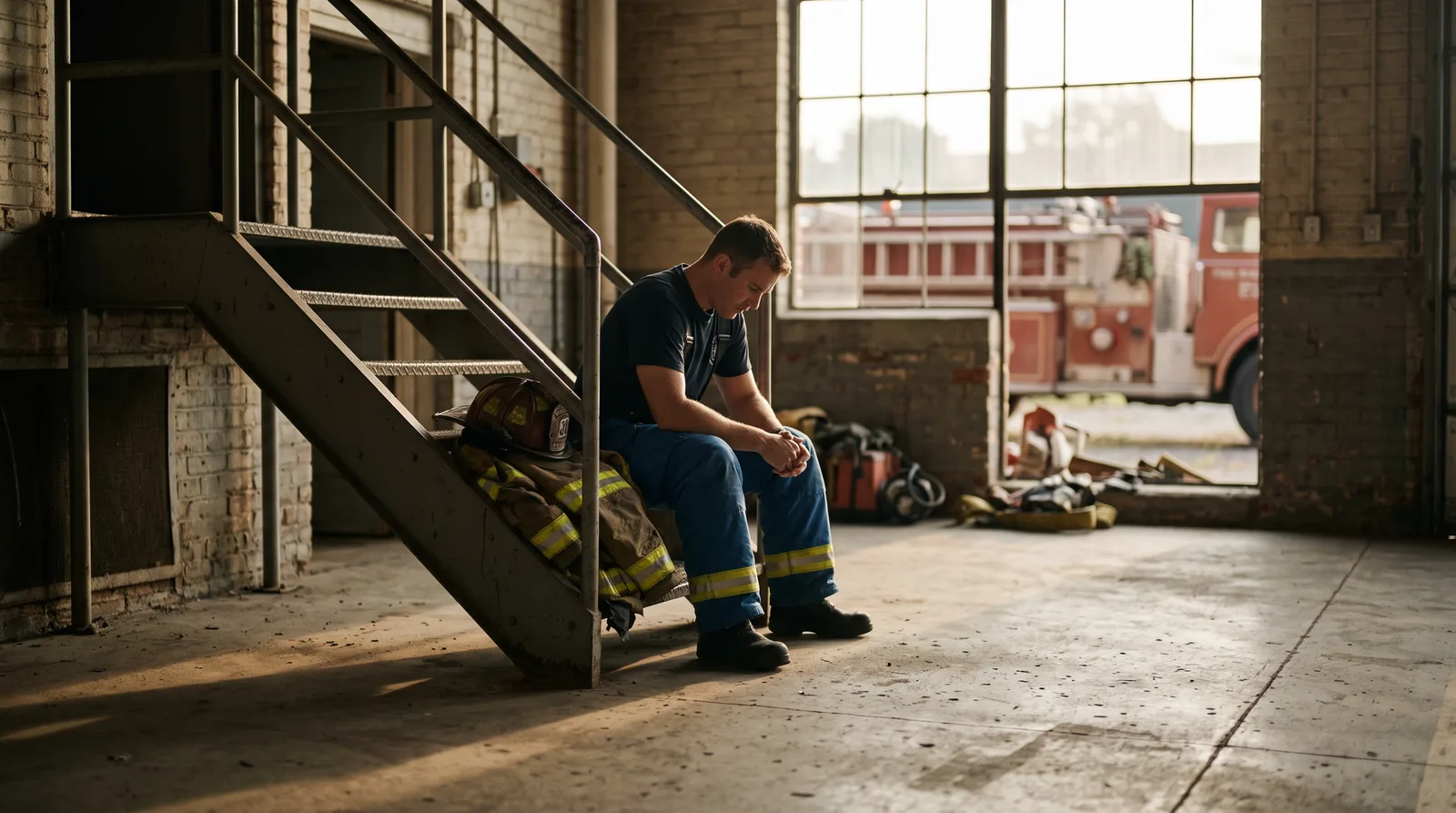
You were trained for the job — I built this program to train you for what the job does to you.— Terrance Randolph
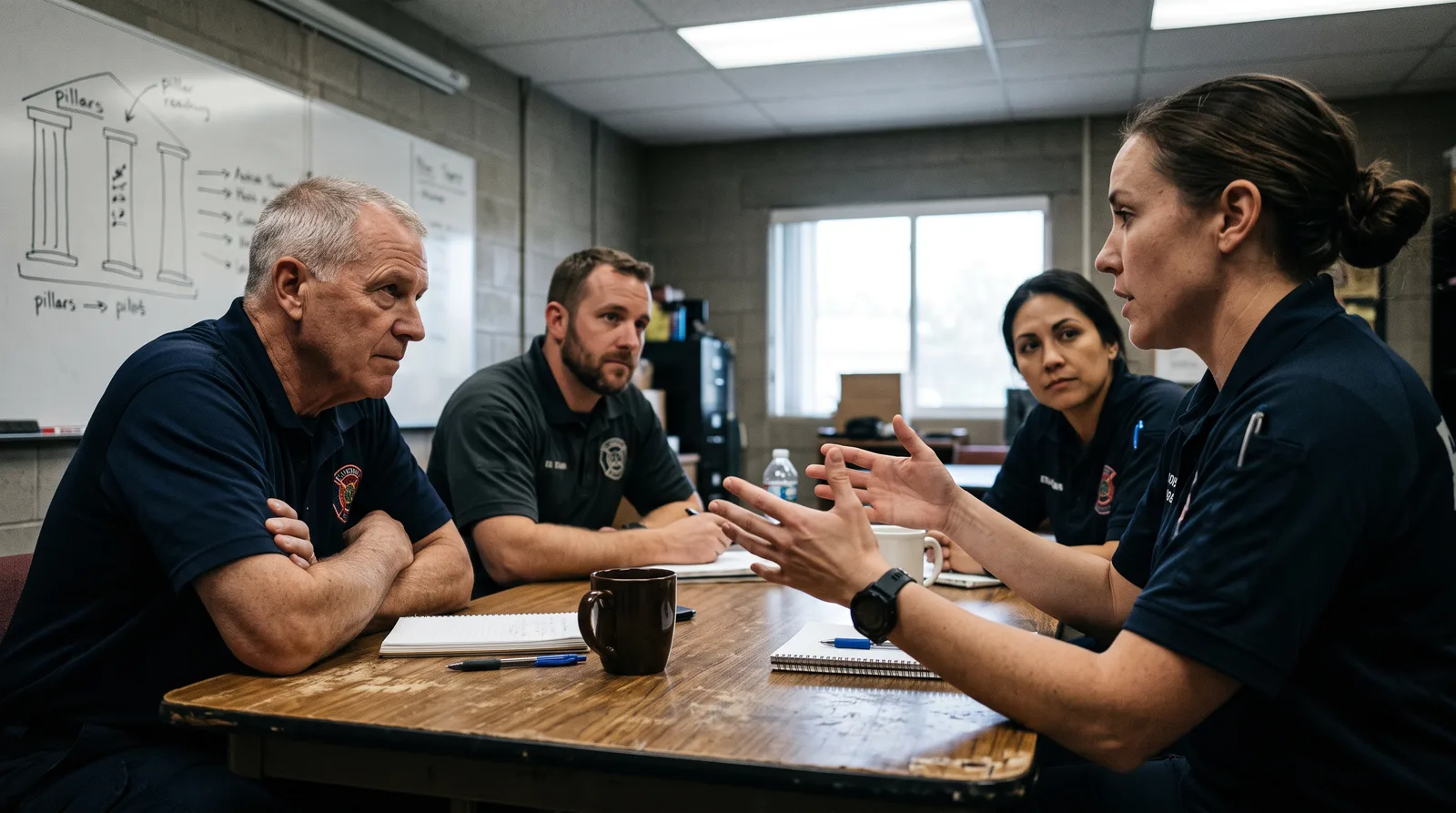
What you'll learn
What you'll be able to do
- Identify and explain the 4 pillars of Mental Health Education (MHE) and articulate how each pillar applies specifically to first responder and law enforcement culture.
- Recognize the early warning signs of mental health strain — including cumulative stress, moral injury, and operational trauma — before they escalate into crisis.
- Apply pillar-based frameworks to assess personal mental health status and communicate needs clearly to supervisors, peers, or clinicians.
- Dismantle stigma around mental health help-seeking within paramilitary and first responder cultures using evidence-based language and peer advocacy strategies.
- Build a personalized, pillar-aligned resilience plan that accounts for shift schedules, critical incident exposure, and the unique stressors of the first responder lifestyle.
- Support colleagues and subordinates by facilitating peer conversations grounded in MHE principles, and connect them to appropriate departmental or community resources.
How it works
A school that adapts to you
This isn't a set of static videos. Every lesson is generated live and tuned to where you actually are.
We learn your level
A quick placement check tailors your starting point so you're never bored or lost.
Lessons adapt as you go
Each lesson is written for your pace and your goal, adjusting as your skills grow.
Your AI coach keeps you moving
Checkpoints, feedback, and gentle nudges turn progress into a real result.
The curriculum
What's inside your school
6 modules · 26 lessons

The 4 Pillars of Mental Health Education — A First Responder Foundation
Introduces the 4 core MHE pillars and anchors each one in the lived reality of first responder and law enforcement culture.
- 1.1Why MHE Was Built for People Like YouIncluded
- 1.2Pillar 1 — Understanding Mental Health as a ContinuumIncluded
- 1.3Pillar 2 — Recognizing the Signs and SymptomsIncluded
- 1.4Pillar 3 — Reducing Stigma and Barriers to Help-SeekingIncluded
- 1.5Pillar 4 — Pathways to Support and RecoveryIncluded
The Mental Load of the Badge — Stress, Trauma, and Moral Injury
Deep-dives into the specific psychological stressors unique to first responder and law enforcement roles and how they interact with each MHE pillar.
- 2.1Cumulative Stress vs. Critical Incident TraumaIncluded
- 2.2Moral Injury in First Responder CultureIncluded
- 2.3The Nervous System Under Dispatch — Hypervigilance On and Off DutyIncluded
- 2.4Secondary Trauma and the Dispatcher ExperienceIncluded
Spotting the Drift — Early Warning Signs Before Crisis Hits
Trains responders to identify personal and peer warning signs across the 4 pillars before strain escalates into crisis.
- 3.1Reading Your Own Signals — The Personal Warning Sign InventoryIncluded
- 3.2Watching the Shift — Behavioral Changes That Signal Peer DistressIncluded
- 3.3The Language of Masking — How First Responders Hide DistressIncluded
- 3.4From Yellow to Red — Knowing When a Situation Requires EscalationIncluded
Dismantling Stigma — Culture Change From the Inside Out
Equips first responders with evidence-based language and peer advocacy strategies to actively erode the stigma around mental health help-seeking.
- 4.1Where the Stigma Comes From — History, Culture, and IdentityIncluded
- 4.2The Cost of Silence — Data, Suicides, and the Price of Untreated StressIncluded
- 4.3Evidence-Based Language That Opens Doors, Not Shuts ThemIncluded
- 4.4Peer Advocacy in Action — Being the Person Someone Comes ToIncluded
Building Your Pillar-Aligned Resilience Plan
Guides each learner to construct a personalized, actionable resilience strategy built around the 4 pillars and the realities of first responder life.
- 5.1Resilience Is Not Toughness — Redefining the Term for First RespondersIncluded
- 5.2Shift Work, Sleep, and the Biology of RecoveryIncluded
- 5.3Micro-Practices for High-Demand SchedulesIncluded
- 5.4Building Your Personal Resilience BlueprintIncluded
Supporting Your Team — Peer Conversations and Departmental Resources
Develops the practical skills to facilitate peer support conversations and connect colleagues to the right resources at the right time.
- 6.1The Peer Support Role — What It Is and What It Isn'tIncluded
- 6.2How to Start the Hard ConversationIncluded
- 6.3Mapping Your Department's Mental Health EcosystemIncluded
- 6.4Supervisor and Coordinator Responsibilities Under MHEIncluded
- 6.5Carrying the Work Forward — Sustaining MHE Principles Beyond This CourseIncluded
Who it's for
Is this you?

Active Patrol Officers
You're running calls, absorbing daily cumulative stress, and nobody in your department talks about it — this gives you the framework and language to change that, starting with yourself.

Firefighters & EMS Personnel
From critical incident trauma to moral injury after difficult calls, this program maps the psychological demands of your specific role and builds a resilience plan around your shift reality.

Dispatchers
Secondary trauma and hypervigilance get dedicated, specific coverage here — because your mental load is real, documented, and finally treated as such.

Supervisors & Shift Commanders
You're responsible for the people under your command — this program equips you to recognize behavioral drift, start hard conversations, and fulfill your responsibilities under MHE.

Peer Support Team Members
You're already the person people come to — now you'll have evidence-based language, structured frameworks, and clear guidance on what the peer support role is and isn't.

Veteran & Retired Responders
Years of accumulated exposure deserve to be understood, not minimized — this course helps you name what you've been carrying and build a path forward grounded in real evidence.
Questions
Frequently asked
Your teacher
A note from your teacher

Terrance Randolph
If you're reading this, there's a decent chance you've already been doing this job long enough to feel something shifting. Maybe it's the sleep. Maybe it's the way you scan a room even when there's no threat. Maybe it's the colleague you've been quietly worried about for months but haven't said anything — because in this culture, you don't say anything.
I get it. I've spent my career sitting at the intersection of clinical mental health and first responder culture, and the single most consistent thing I've heard from officers, firefighters, dispatchers, and EMS personnel is this: nobody taught us any of this. You were trained for the job. You were never trained for what the job does to you over time. That gap isn't a personal failing. It's a systemic one — and it's one we can actually close.
That's what this program is. It's the education that should have been part of your academy training. The 4 pillars of Mental Health Education aren't soft concepts I borrowed from a wellness brochure — they're a framework for understanding mental health as something you actively manage, the same way you manage your physical fitness or your gear. Pillar by pillar, we work through what mental health actually looks like on a continuum, how to read the early warning signs in yourself and the people around you, how to dismantle the stigma that's been costing this profession lives, and how to build real, sustainable resilience that doesn't collapse under a rotating shift schedule.
I wrote this for the person who doesn't think they need it yet. Because that's exactly who needs it most — and because by the time most first responders seek help, they've already been in the red for a long time. You don't have to be there. The warning signs are readable. The tools are learnable. The culture can change — but it changes from the inside, person by person, and it starts with education.
This course is direct. It's honest. It doesn't ask you to be vulnerable in a room full of strangers or buy into concepts that don't match the reality of your job. It asks you to take your mental health as seriously as you take your physical safety — because the data is unambiguous on what happens when you don't. I'm glad you're here. Let's get to work.
— Terrance Randolph
Start your journey today
Join get instant access — learn at your own pace with an AI coach in your corner.
$150/mo
Recurring billing · cancel anytime
Secure checkout · Instant access
- 6 modules, 26 lessons
- AI-adaptive lessons tuned to your level
- Quizzes & checkpoints to lock in progress
- Your own AI learning coach
- Learn on any device, at your pace
- Full access for as long as you're subscribed