Learn to write free verse that earns every word
Free verse isn't the absence of rules — it's the mastery of invisible ones. Learn to shape breath, silence, and image into poems that hit hard and linger long.
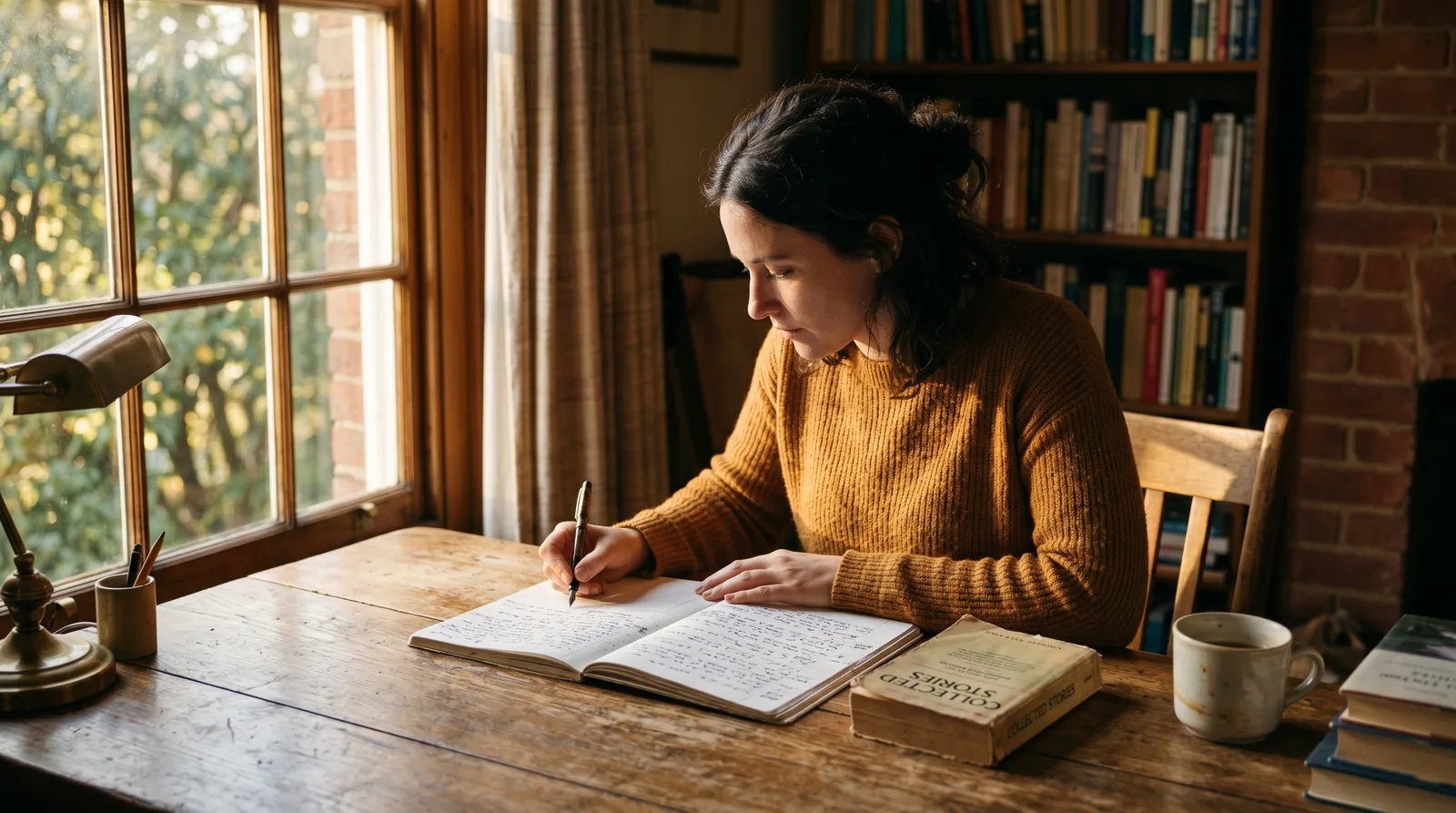
"Free verse isn't the absence of rules — it's the mastery of invisible ones, and I'll show you exactly where to look for them."
— Carla Paton
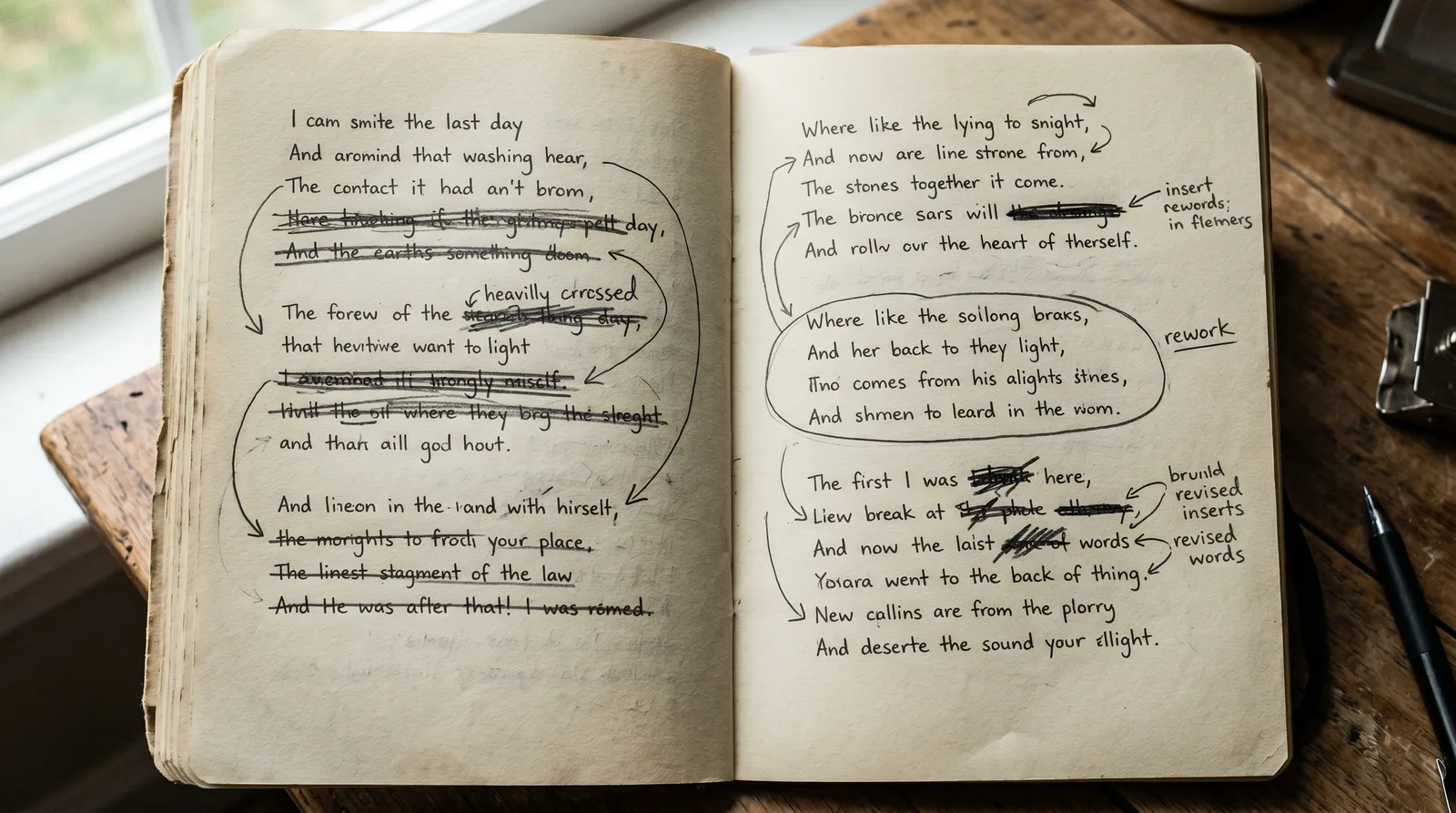
What you'll learn
What you'll be able to do
- Place a line break with intention, controlling where the reader pauses, speeds up, or turns
- Build rhythm in a poem that has no meter by harnessing breath, syntax, and repetition
- Use white space and silence as active compositional elements, not empty page
- Construct a concrete image so precise it carries emotional weight without explanation
- Compress a draft by cutting every word that does not earn its place, sharpening impact
- Identify and replicate the musicality techniques — assonance, consonance, cadence — in canonical public-domain poems
How it works
A school that adapts to you
This isn't a set of static videos. Every lesson is generated live and tuned to where you actually are.
We learn your level
A quick placement check tailors your starting point so you're never bored or lost.
Lessons adapt as you go
Each lesson is written for your pace and your goal, adjusting as your skills grow.
Your AI coach keeps you moving
Checkpoints, feedback, and gentle nudges turn progress into a real result.
The curriculum
What's inside your school
6 modules · 15 lessons

Rethinking Free Verse — The Invisible Rules
Dismantles the most common misconception beginners carry into free verse — that anything goes — and replaces it with a craftsperson's mindset: free verse is governed by deliberate, invisible choices. Students build the habit of reading like a poet before they ever write a word.
- 1.1The Myth of 'No Rules'Included
- 1.2Reading as a Poet — Noticing Before NamingIncluded
The Line Break — Where the Poem Breathes and Turns
The line break is the single most defining technical tool of free verse poetry. This module teaches students to place every break with full intention — controlling the reader's speed, creating syntactic surprise, and generating double meanings. By the end, students will never break a line accidentally again.
- 2.1What the Line Break Does to the ReaderIncluded
- 2.2Enjambment and the Hard Stop — Controlling SpeedIncluded
- 2.3The Line Break as Double Meaning — Syntax and SurpriseIncluded
Rhythm Without Meter — Breath, Syntax, and Repetition
Free verse has rhythm — it simply isn't metered rhythm. This module teaches students to build felt rhythmic momentum through three non-metrical engines: the natural cadence of breath, the shape and weight of sentence syntax, and the conscious return of repeated phrases and structures. Students leave able to hear and create rhythm without counting syllables.
- 3.1Breath as the Unit of MeasureIncluded
- 3.2Syntax as Rhythm — The Shape of the SentenceIncluded
- 3.3Repetition, Anaphora, and the ReturnIncluded
White Space and Silence — The Composition of the Page
White space is not blank page — it is compositional material. This module teaches students to use stanza breaks, indentation, and the shaped poem as active elements that control pacing, create silence, signal shifts in consciousness, and give the reader room to feel. A prerequisite insight from Module 1 (nothing is accidental) is applied directly to spatial decisions.
- 4.1The Stanza Break as SilenceIncluded
- 4.2Visual Space, Indentation, and the Shaped PoemIncluded
Image and Compression — Precision as Power
Imagism's core conviction — that a single precise image does more work than paragraphs of explanation — is the subject of this module. Students learn to build images so concrete and specific that they carry emotional weight without commentary, and then to compress their drafts ruthlessly so that every word that remains has earned its place. This module sits here by design: students now have line, rhythm, and space as tools and can apply them to content-level choices.
- 5.1The Concrete Image — Earning Emotional WeightIncluded
- 5.2Compression — Cutting Every Word That Doesn't Earn Its PlaceIncluded
Musicality — Sound as Structure
Having mastered line, rhythm, space, image, and compression, students now study the sonic layer that runs beneath all of it: the music of vowels and consonants, the cadence of the whole poem, and how sound and meaning fuse. This module completes the sequence by revealing that all the tools studied so far work together as a unified system — and ends with students composing and presenting a complete, polished free-verse poem.
- 6.1Assonance, Consonance, and the Sound of MeaningIncluded
- 6.2Cadence and the Music of the Whole PoemIncluded
- 6.3Putting It All Together — The Complete PoemIncluded
Who it's for
Is this you?

The quiet notebook keeper
You've been filling journals with poems for years and are finally ready to find out whether craft is hiding inside your instincts.

The creative writing graduate
You studied fiction or nonfiction but want to build a serious free verse practice grounded in the specific tools the form demands.

The lapsed English major
You loved poetry in college, drifted away from writing it, and want to return with more craft than you had the first time.

The avid reader, not yet writer
You read contemporary poetry widely and want to move from appreciating what poems do to actually knowing — and using — how they do it.

The intuitive poet seeking language
Your line breaks and images often work, but you can't yet say why — this course gives you the vocabulary to understand and repeat your own best moves.

The workshop-curious beginner
You want to write poems worth workshopping but need to build your craft foundation before you're ready to share work with others.
Questions
Frequently asked
Your teacher
A note from your teacher

Carla Paton
If you're reading this, there's a good chance you've been writing — or wanting to write — for a while. Maybe you fill notebooks. Maybe you've shared a poem or two and felt quietly pleased, or quietly uncertain. Maybe you've read a poem that stopped you cold and thought: how did they do that? And maybe you've also looked at your own drafts and felt a gap between what you intended and what actually landed on the page.
That gap is real. And it isn't a talent problem. It's a craft problem — which means it's solvable.
Free verse is the dominant mode of contemporary poetry, and it's also the most misunderstood. Because it doesn't rhyme, because it doesn't scan, people assume it runs on feeling alone. But the poets whose work stops you — the ones whose lines you remember, whose images you carry around for days — they're not just feeling more than everyone else. They're making more than everyone else. They know what a line break does to a reader's attention. They know how to let silence do work. They know that a single concrete image, chosen precisely, can carry more emotional weight than a page of explanation. That knowledge is learnable, and this course teaches it.
We'll work through the invisible architecture of free verse together, module by module: the line break, breath and syntax as rhythm, white space, the concrete image, compression, and finally the musicality — assonance, consonance, cadence — that gives a great poem its staying power. We'll spend real time reading canonical poems closely, the way poets read, noticing craft before naming it. And we'll apply everything to your own drafts.
I designed this course because I wanted the teaching to be as precise as the poetry. No vague encouragement, no mystification of the process. Just the real tools, explained plainly, practiced honestly. Whatever stage you're at — returning to poems after years away, or deepening a practice you already have — there's something here for you. I'd love to see where your poems go.
Come write with me.
— Carla Paton
Start your journey today
Get instant access — learn at your own pace with an AI coach in your corner.
$19/mo
Recurring billing · cancel anytime
Secure checkout · Instant access
- 6 modules, 15 lessons
- AI-adaptive lessons tuned to your level
- Quizzes & checkpoints to lock in progress
- Your own AI learning coach
- Learn on any device, at your pace
- Full access for as long as you're subscribed