Master the language written in every cell of your body
Genetics Unlocked takes you from the double helix all the way to CRISPR and personalized medicine — with the mechanistic depth and analytical rigor that textbooks gesture at but rarely deliver.
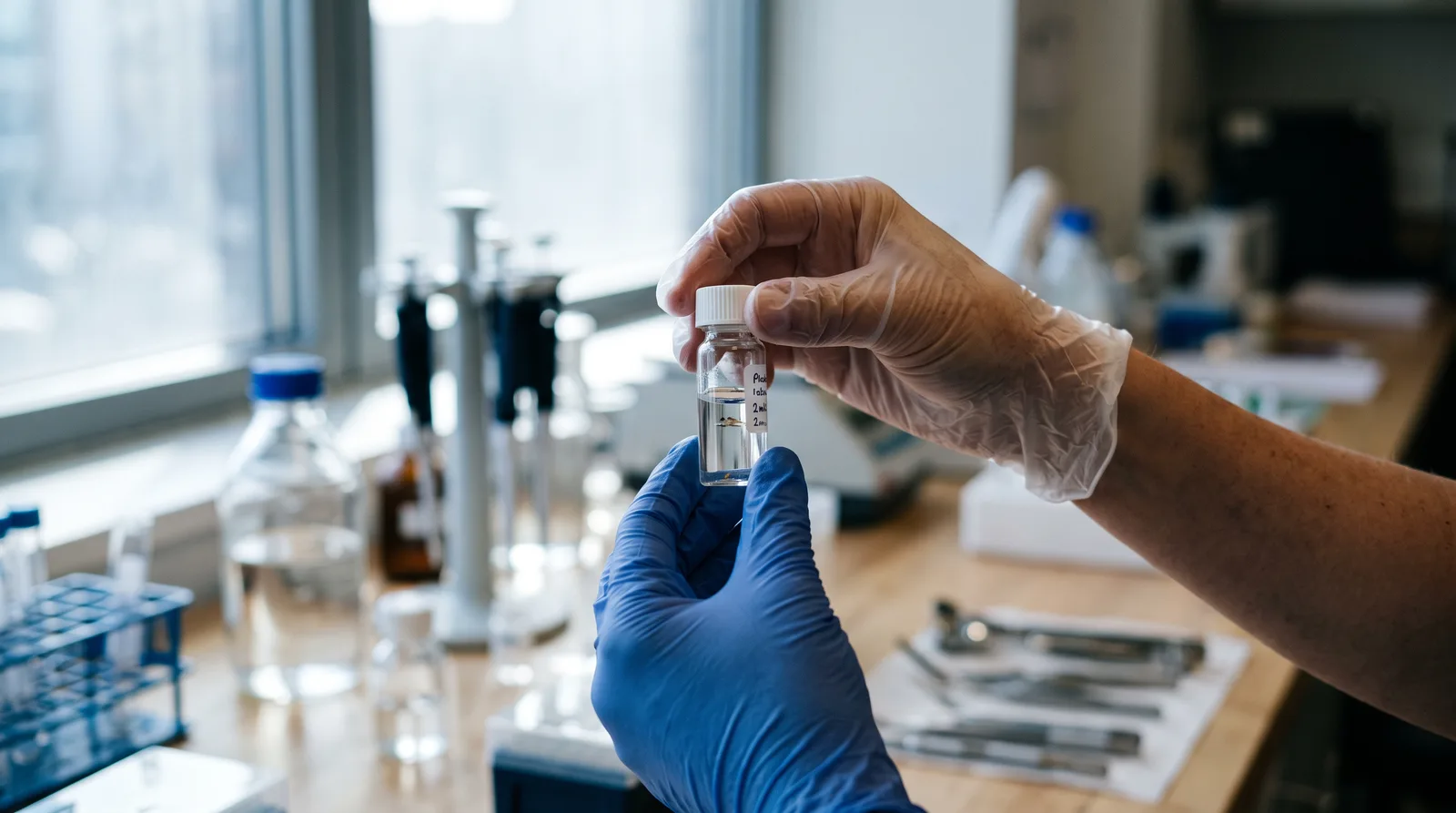
"I'm not here to hand you definitions — I'm here to build you a mental model of genetics you can reason from for the rest of your scientific life."
— Tracy Burke
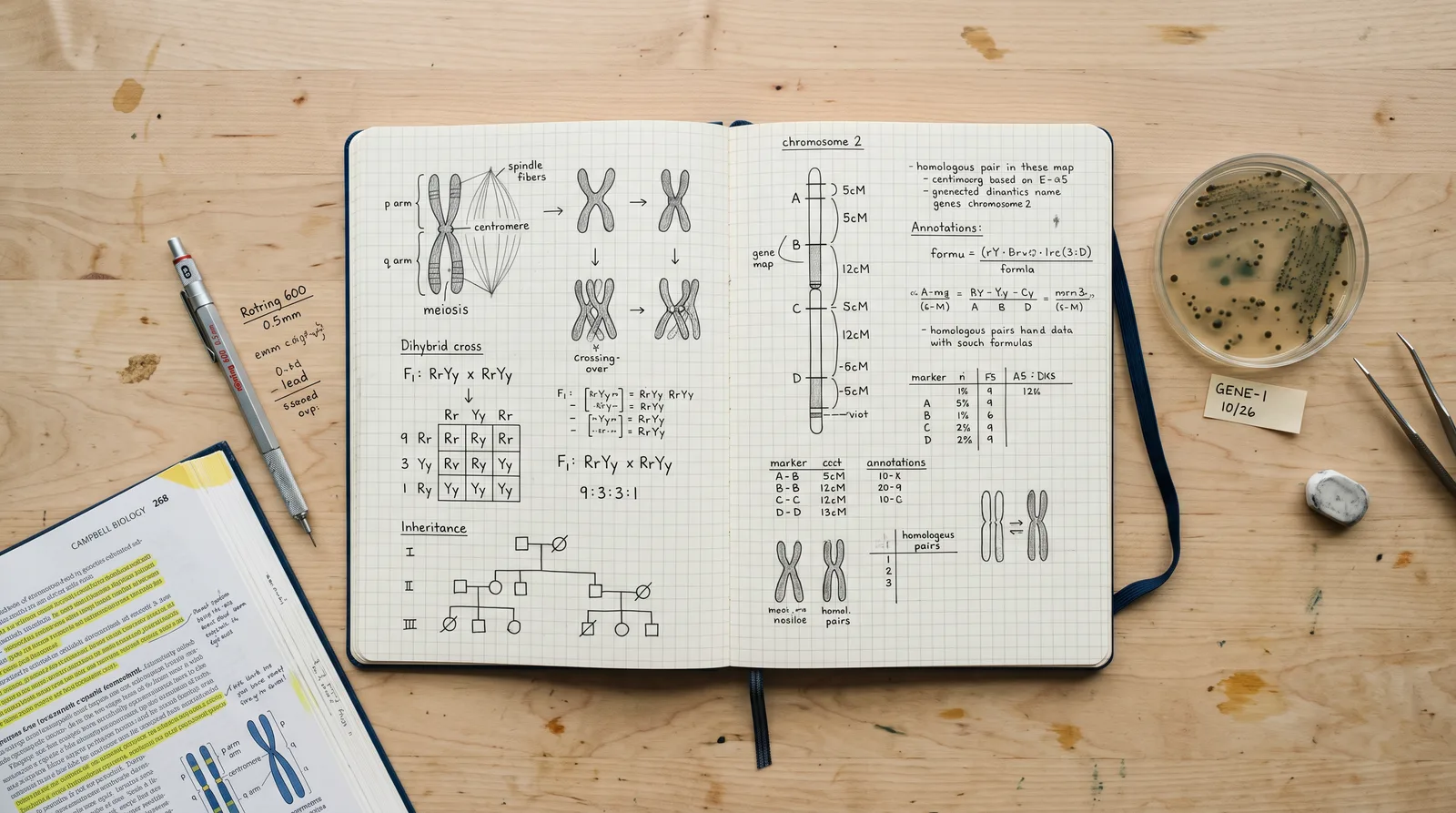
What you'll learn
What you'll be able to do
- Explain DNA replication, transcription, and translation with mechanistic accuracy
- Solve Mendelian and non-Mendelian inheritance problems confidently
- Interpret real genomic data, pedigree charts, and karyotypes
- Understand the molecular basis of mutations and their phenotypic consequences
- Describe how CRISPR and modern gene-editing tools work at a mechanistic level
- Connect classical genetics to current breakthroughs in personalized medicine and genomics
How it works
A school that adapts to you
This isn't a set of static videos. Every lesson is generated live and tuned to where you actually are.
We learn your level
A quick placement check tailors your starting point so you're never bored or lost.
Lessons adapt as you go
Each lesson is written for your pace and your goal, adjusting as your skills grow.
Your AI coach keeps you moving
Checkpoints, feedback, and gentle nudges turn progress into a real result.
The curriculum
What's inside your school
6 modules · 28 lessons

The Molecule of Life: DNA Structure and Organization
Establishes the physical and chemical foundation of genetics by exploring how DNA is built, packaged, and organized in living cells.
- 1.1Nucleotides, Base Pairing, and the Double HelixIncluded
- 1.2Chromosomes, Chromatin, and Genome OrganizationIncluded
- 1.3The Human Genome: Size, Complexity, and Non-Coding RegionsIncluded
- 1.4Prokaryotic vs. Eukaryotic Genome ArchitectureIncluded
Replication, Transcription, and Translation: The Central Dogma
Walks through each step of information flow from DNA to RNA to protein with enzyme-level mechanistic detail.
- 2.1DNA Replication: Enzymes, Origins, and FidelityIncluded
- 2.2Transcription: From DNA Template to Pre-mRNAIncluded
- 2.3RNA Processing: Capping, Splicing, and PolyadenylationIncluded
- 2.4Translation: Ribosomes, tRNA, and the Genetic CodeIncluded
- 2.5Gene Expression Regulation: Operons to EnhancersIncluded
Mendelian and Non-Mendelian Inheritance
Builds problem-solving fluency in classical inheritance patterns and then extends to the complex scenarios Mendel's laws cannot fully explain.
- 3.1Mendel's Laws: Segregation and Independent AssortmentIncluded
- 3.2Monohybrid and Dihybrid Cross Problem SolvingIncluded
- 3.3Dominance Variations: Incomplete, Codominance, and Multiple AllelesIncluded
- 3.4Sex-Linked, Autosomal Linkage, and RecombinationIncluded
- 3.5Polygenic Traits, Epistasis, and Environmental InfluencesIncluded
Reading the Genome: Pedigrees, Karyotypes, and Genomic Data
Trains students to interpret real genetic evidence — family history charts, chromosome images, and sequencing outputs — like a practicing geneticist.
- 4.1Pedigree Analysis: Tracing Inheritance Patterns in FamiliesIncluded
- 4.2Karyotyping and Chromosomal AbnormalitiesIncluded
- 4.3PCR, Gel Electrophoresis, and DNA FingerprintingIncluded
- 4.4DNA Sequencing: From Sanger to Next-Generation MethodsIncluded
- 4.5Interpreting Genomic Variants: SNPs, CNVs, and GWASIncluded
Mutation: Molecular Basis and Phenotypic Consequences
Examines how errors and lesions arise in DNA, how cells respond to them, and how specific mutations drive disease.
- 5.1Types of Mutations: Point, Frameshift, and ChromosomalIncluded
- 5.2Mutagens, DNA Damage, and Repair PathwaysIncluded
- 5.3From Mutation to Phenotype: Loss-of-Function vs. Gain-of-FunctionIncluded
- 5.4Mutations and Cancer: Oncogenes and Tumor SuppressorsIncluded
Modern Genomics: Gene Editing, Epigenetics, and Personalized Medicine
Connects molecular genetics to cutting-edge technologies and clinical applications that are reshaping medicine today.
- 6.1Epigenetics: DNA Methylation, Histone Modification, and Gene SilencingIncluded
- 6.2How CRISPR-Cas9 Works: Guide RNA, Cleavage, and Repair OutcomesIncluded
- 6.3CRISPR Applications: Base Editing, Prime Editing, and CRISPRiIncluded
- 6.4Pharmacogenomics: How Your Genome Shapes Drug ResponseIncluded
- 6.5The Future of Genetics: Gene Therapy, Synthetic Biology, and Ethical FrontiersIncluded
Who it's for
Is this you?

Pre-med undergraduates
Building the mechanistic depth in molecular biology and genetics that the MCAT demands — and that medical school will assume you have.

Biology majors
Supplementing lecture-based coursework with rigorous, step-by-step explanations that finally make the molecular mechanisms click.

Self-taught science learners
Pursuing a university-level understanding of genetics independently, with the same intellectual rigor as a formal degree program.

Graduate school applicants
Solidifying foundational genetics knowledge before entering a research lab or a graduate program in biology, genetics, or bioinformatics.

Healthcare professionals
Nurses, PAs, and clinical staff who want to keep pace with genomic medicine — from interpreting genetic test results to understanding CRISPR-based therapies.

Curious science enthusiasts
People who follow science news about gene therapy, cancer genomics, and personalized medicine and want the rigorous foundation to truly understand it.
Questions
Frequently asked
Your teacher
A note from your teacher

Tracy Burke
If you've ever sat in a genetics lecture — or worked through a textbook chapter — and felt like you were collecting facts without building understanding, I designed this course for you.
Genetics is one of the most conceptually rich fields in all of science. It sits at the intersection of chemistry, cell biology, evolution, and medicine. And yet, far too often, it gets taught as a collection of definitions and diagrams to memorize: the double helix looks like this, transcription produces that, Mendel's laws go here. You learn the nouns without ever really grasping the verbs — the actual molecular events, the logic of inheritance, the reasoning that connects a DNA sequence to a living phenotype.
What I've built in Genetics Unlocked is a course that takes the mechanistic depth of a rigorous university curriculum and makes it genuinely intuitive — not by simplifying, but by explaining. Every enzyme has a reason for its structure. Every inheritance pattern has a molecular explanation. Every modern tool in genomics — CRISPR, next-generation sequencing, pharmacogenomics — emerges logically from the foundational principles we build together from the very first lesson. By the time you're interpreting a GWAS study or tracing the repair outcome of a CRISPR cut, you won't feel like you're learning something new. You'll feel like you arrived somewhere you were always heading.
I want to be honest with you about what this course demands: it asks you to think carefully. You'll solve inheritance problems methodically. You'll trace molecular pathways step by step. You'll look at a pedigree and reason your way to an inheritance mode. That rigor is not a bug — it's the whole point. Genetics is a discipline where genuine understanding is an enormous asset, whether you're heading into medicine, research, graduate school, or simply want to read the scientific literature and actually follow it.
If you're ready for a course that respects your intelligence, rewards your curiosity, and leaves you with a mental model of genetics you can reason from — not just recall — I'd love to have you in the course. Let's decode this together.
— Tracy Burke
Start your journey today
Get instant access — learn at your own pace with an AI coach in your corner.
$49.99/mo
Recurring billing · cancel anytime
Enrolling a child? Sign up as a parent — you'll add your student right here after.
Secure checkout · Instant access
- 6 modules, 28 lessons
- AI-adaptive lessons tuned to your level
- Quizzes & checkpoints to lock in progress
- Your own AI learning coach
- Learn on any device, at your pace
- Full access for as long as you're subscribed