Train BJJ for Decades, Not Just Months
A no-nonsense system built specifically for grapplers 50 and older — covering the techniques, mobility work, injury management, and mindset shifts that let you train hard, stay healthy, and keep showing up for years.
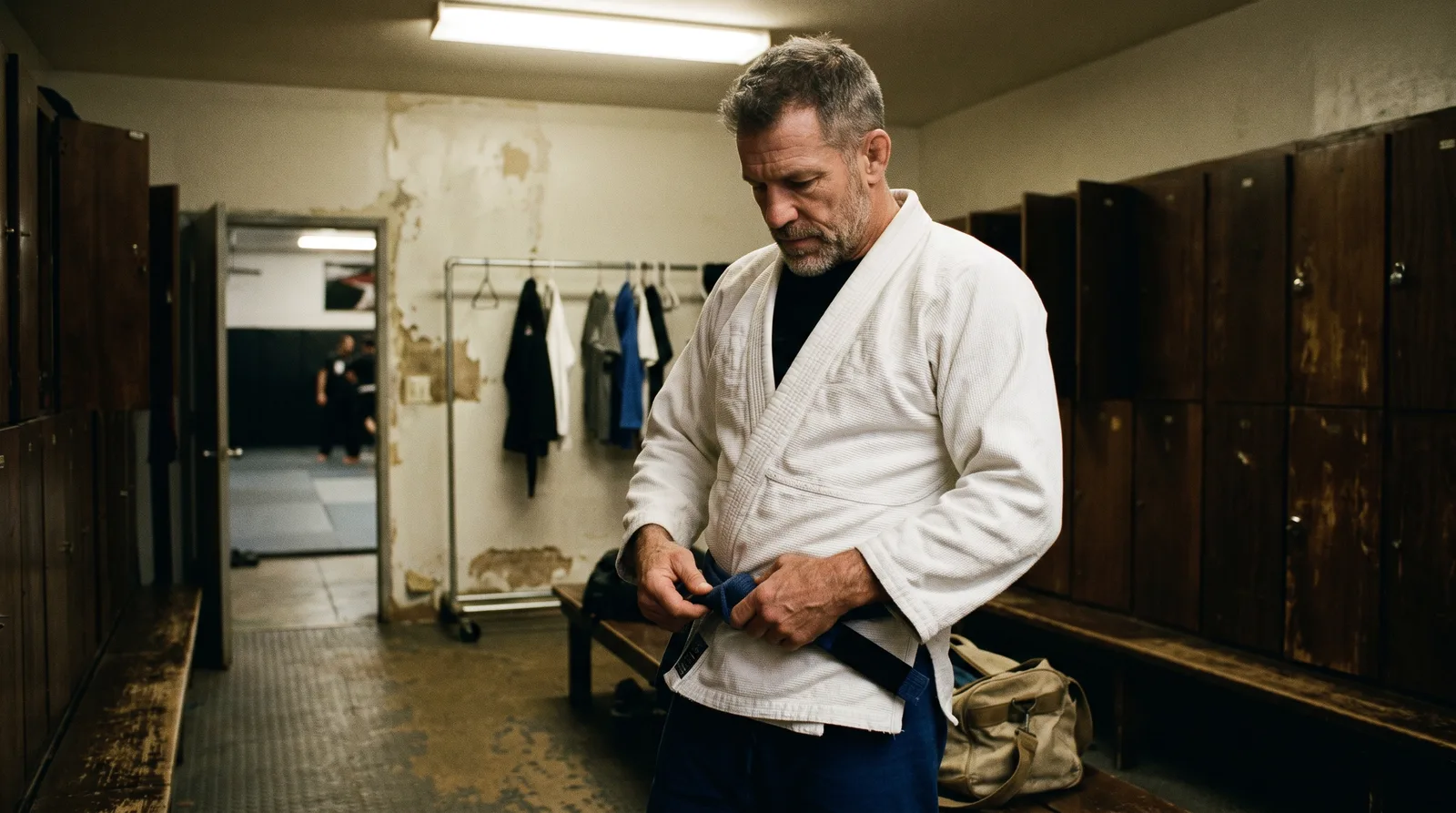
The goal isn't to train like you're 25 — it's to still be training when you're 65.— Scott Ducharme
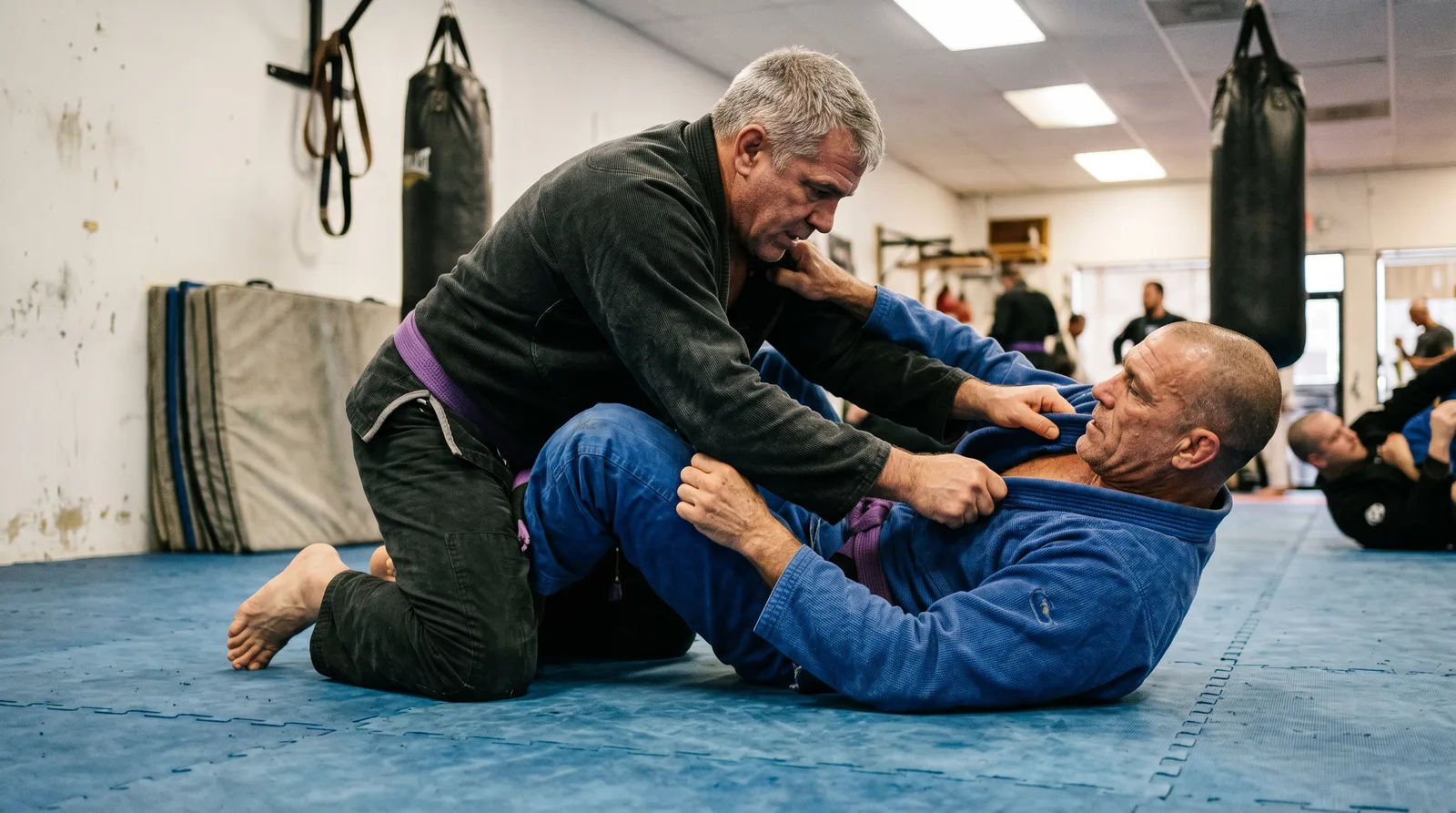
What you'll learn
What you'll be able to do
- Design a weekly BJJ training schedule that balances intensity with recovery for an aging body
- Identify and apply the highest-percentage techniques that rely on leverage and timing rather than strength or speed
- Build a targeted mobility and prehab routine that protects the neck, shoulders, hips, and knees
- Decode gym culture and mat etiquette so you train safely and earn respect regardless of your age or rank
- Recognize and manage the most common BJJ injuries in older athletes before they become chronic problems
- Track your progress and set realistic belt-rank goals that keep you motivated for the long haul
How it works
A school that adapts to you
This isn't a set of static videos. Every lesson is generated live and tuned to where you actually are.
We learn your level
A quick placement check tailors your starting point so you're never bored or lost.
Lessons adapt as you go
Each lesson is written for your pace and your goal, adjusting as your skills grow.
Your AI coach keeps you moving
Checkpoints, feedback, and gentle nudges turn progress into a real result.
The curriculum
What's inside your school
5 modules · 19 lessons

Starting Smart — Mindset, Mat Culture & Your First 30 Days
Sets the foundation before a single technique is learned. Covers the unique psychological and social landscape of starting BJJ in your 50s, including the mental reframe that turns perceived disadvantages into assets, the unwritten rules of the mat, and how to structure those critical first weeks without burning out or getting hurt.
- 1.1The 50+ Beginner's AdvantageIncluded
- 1.2Decoding Gym Culture & Mat EtiquetteIncluded
- 1.3Building Your First Weekly ScheduleIncluded
The Older Athlete's Body — Mobility, Prehab & Recovery
Addresses the physiological realities of training in your 50s before technique volume increases. Students build a personalized baseline, construct a pre-training mobility routine, and develop targeted prehab work for the four highest-risk joints in BJJ. The module closes with a full recovery framework so students know how to treat training recovery as a skill, not an afterthought.
- 2.1Know Your Body — Baseline Assessment & Risk MappingIncluded
- 2.2The 15-Minute Pre-Training Mobility RoutineIncluded
- 2.3Targeted Prehab — Neck, Shoulders, Hips & KneesIncluded
- 2.4Recovery Is Training — Sleep, Load Management & Knowing When to Stay HomeIncluded
Leverage Over Strength — High-Percentage Techniques for the Older Grappler
The technical core of the curriculum. Teaches the most durable, leverage-based positions and submissions in BJJ, sequenced from positional understanding through guard play, top game, and finishing, before finishing with the meta-skill of timing and sensitivity. Every technique is selected and framed through the lens of what works when strength and speed are no longer your primary tools.
- 3.1Positional Hierarchy & The Older Grappler's Game PlanIncluded
- 3.2Guard Play — Closed Guard, Half Guard & Defensive FundamentalsIncluded
- 3.3Passing, Top Position & Controlling Without MusclingIncluded
- 3.4Submissions That Age Well — Chokes, Armbars & Joint Locks for Leverage GrapplersIncluded
- 3.5Timing, Sensitivity & Reading Your OpponentIncluded
Injury Awareness & Management for the 50+ Grappler
Equips students with the knowledge to distinguish normal training discomfort from genuine injury, respond appropriately in the moment, manage the most common BJJ injuries specific to older athletes, and build the professional support network that keeps them on the mat for the long term. Positioned after the technical module so students can contextualize injuries within movements they now recognize.
- 4.1The Difference Between Soreness, Strain & InjuryIncluded
- 4.2The Most Common BJJ Injuries Over 50 — Recognition & First ResponseIncluded
- 4.3Training Around Injuries — Modifications & Return-to-Mat ProtocolsIncluded
- 4.4Working With Your Coach & Medical TeamIncluded
The Long Game — Progress Tracking, Belt Goals & Staying Motivated for Years
Closes the curriculum by zooming out to the multi-year arc of a masters BJJ journey. Students build robust systems for tracking non-obvious progress, calibrate realistic belt-rank timelines, and develop the psychological and community tools that sustain motivation through plateaus, injuries, and the inevitable identity shifts that come with aging on the mat.
- 5.1Tracking Progress When Wins Are Hard to SeeIncluded
- 5.2Realistic Belt Goals & the Masters TimelineIncluded
- 5.3Community, Ego & The Identity of a Masters GrapplerIncluded
Who it's for
Is this you?

The Fresh 50+ White Belt
Just started BJJ for the first time and needs a smart on-ramp that won't end in a pulled something before week three.

The Returning Grappler
Trained years ago, took a long break, and is back on the mat realizing their body has strong opinions about that now.

The Chronically Injured
Keeps getting derailed by nagging shoulders, knees, or hips and needs a system for training around — not through — the damage.

The Strength-First Athlete
Spent decades in other sports or the gym and needs to rewire their instincts toward leverage and timing instead of muscling everything.

The Long-Haul Competitor
Has their eye on Masters competition and wants a realistic belt-progression plan they can actually stick to over years.

The Skeptical Spouse / Late Joiner
Was finally talked into trying BJJ and wants to know this is something they can do safely and sustainably before fully committing.
Questions
Frequently asked
Your teacher
A note from your teacher
Scott Ducharme
Let me guess. You found BJJ a little later in life — or you're coming back to it — and the first thing you noticed is that nobody in the room seems to have designed any of this with you in mind. The warm-ups are brutal, the young guys roll like they're auditioning for something, and the instruction moves fast. You're keeping up, mostly, but you're also quietly wondering how long your body is going to cooperate.
I've been there. I know what it's like to love this art and also to wake up the morning after a hard training session doing a damage assessment before you even get out of bed. I know the frustration of missing two weeks because of something that would have been a non-event at 30. And I know the specific kind of stubbornness it takes to keep showing up anyway — because once BJJ gets into you, it doesn't let go.
What I also know is that training over 50 doesn't have to be an exercise in damage control. It requires a different approach — smarter scheduling, techniques that run on leverage instead of horsepower, a genuine commitment to prehab and recovery, and an honest relationship with your own body. That's not a limitation. That's actually how the art is supposed to work. The older grappler who's still on the mat in year ten beats the explosive young guy every time, because the young guy burned out or blew out a year three.
That's exactly what this course is built around. Five modules, everything in plain language, nothing theoretical that doesn't connect directly to what you're doing on the mat. We cover your first 30 days, your body's specific needs, the techniques that hold up as you age, how to manage and recognize injury before it gets chronic, and how to think about this as a years-long pursuit rather than a sprint. No filler. No inspiration porn. Just the practical stuff a good coach would tell you if they had enough time and cared enough to be honest.
If you're ready to train consistently, protect your body, and still be on the mat — tapping people half your age — five years from now, this is where we start.
— Scott Ducharme
Start your journey today
Join get instant access — learn at your own pace with an AI coach in your corner.
$39/mo
Recurring billing · cancel anytime
Secure checkout · Instant access
- 5 modules, 19 lessons
- AI-adaptive lessons tuned to your level
- Quizzes & checkpoints to lock in progress
- Your own AI learning coach
- Learn on any device, at your pace
- Full access for as long as you're subscribed