Master the Science of Gratitude — From the Inside Out
Go beyond journaling prompts: study the landmark psychology, neuroscience, and philosophy behind why gratitude transforms lives — then build a evidence-based practice that actually sticks.

"Understanding why gratitude works — at the level of neurons, philosophy, and human story — is what turns a practice into a conviction."— Pedro Miguel Rocha

What you'll learn
What you'll be able to do
- Explain the neuroscience and psychology behind gratitude using landmark research from Emmons, Seligman, and other leading scientists.
- Distinguish between evidence-based gratitude practices and superficial trends, applying only methods proven to produce lasting well-being.
- Design a personalized, sustainable gratitude system rooted in behavioral science and habit formation principles.
- Analyze how history's greatest philosophical traditions — Stoicism, Buddhism, and positive psychology — converge on gratitude as a cornerstone of a good life.
- Apply gratitude-based interventions in professional and social contexts — leadership, teaching, therapy, and relationships — with measurable outcomes.
- Articulate and teach the science of gratitude to others, confidently referencing international authors and research to inspire evidence-driven change.
How it works
A school that adapts to you
This isn't a set of static videos. Every lesson is generated live and tuned to where you actually are.
We learn your level
A quick placement check tailors your starting point so you're never bored or lost.
Lessons adapt as you go
Each lesson is written for your pace and your goal, adjusting as your skills grow.
Your AI coach keeps you moving
Checkpoints, feedback, and gentle nudges turn progress into a real result.
The curriculum
What's inside your school
6 modules · 19 lessons

The Foundations of Gratitude: Definitions, History, and Why It Matters
Establishes the conceptual bedrock of the entire course. Students first clarify exactly what gratitude is — and isn't — before tracing its roots across civilizations and understanding how modern positive psychology gave it scientific legitimacy. This module is intentionally placed first because every subsequent module (neuroscience, philosophy, habit design, and application) depends on a shared, precise definition and a clear sense of why the topic deserves rigorous study.
- 1.1What Gratitude Actually Is — and What It Isn'tIncluded
- 1.2Gratitude Across Civilizations: Stoicism, Buddhism, and Indigenous WisdomIncluded
- 1.3The Birth of Positive Psychology and Gratitude's Place in ItIncluded
The Neuroscience and Psychology of Gratitude
Delivers the mechanistic 'why it works' layer that separates this course from popular self-help content. Students examine what happens inside the brain and body during gratitude experiences, explore the major psychological theories that explain gratitude's effects on well-being and resilience, and analyze gratitude's uniquely powerful social and relational functions. Sequenced second so that students bring a solid definitional foundation and can immediately connect mechanisms to the practices evaluated in Module 3.
- 2.1Inside the Grateful Brain: Neural Mechanisms and NeurochemistryIncluded
- 2.2Psychological Effects: Well-Being, Resilience, and the Broaden-and-Build TheoryIncluded
- 2.3Social and Relational Gratitude: Find, Remind, and BindIncluded
Evidence-Based Practices: What Works, What Doesn't, and Why
Translates neuroscience and psychology into rigorous practice. Students learn to critically evaluate gratitude interventions — separating those with strong empirical support from those that are trendy but ineffective — and acquire a full toolkit of evidence-based methods with optimal protocols. Crucially, this module also addresses when and for whom gratitude practices can backfire, building the critical discernment that distinguishes expert practitioners from enthusiastic amateurs. Sequenced after the science modules so students can evaluate practices on mechanistic grounds.
- 3.1The Research on Gratitude Journals: Power, Pitfalls, and Optimal ProtocolsIncluded
- 3.2Beyond Journaling: Letters, Visits, Meditation, and Micro-PracticesIncluded
- 3.3When Gratitude Backfires: Toxic Positivity, Obligation, and Cultural NuanceIncluded
Philosophical Convergence: Ancient Wisdom Meets Modern Science
Achieves the course's most intellectually ambitious outcome: demonstrating that Stoicism, Buddhism, Existentialism, and modern positive psychology independently converge on gratitude as foundational to a flourishing life. Sequenced after the science modules so students can read ancient texts through a neuropsychological lens — enriching both directions of interpretation. This module answers the 'so what?' of the entire history of human wisdom traditions and gives students the philosophical authority to teach gratitude not merely as a wellness trend but as a perennial truth.
- 4.1Stoic Gratitude: Amor Fati, Memento Mori, and the Discipline of AppreciationIncluded
- 4.2Buddhist Gratitude: Impermanence, Interbeing, and the Gift of AwarenessIncluded
- 4.3Existentialism, Meaning, and the Gratitude ParadoxIncluded
Behavioral Science and Habit Formation: Building Gratitude That Lasts
Bridges deep understanding into durable personal practice. Students learn the science of habit formation (James Clear, BJ Fogg, Wendy Wood, Charles Duhigg) and apply it specifically to designing a gratitude system that overcomes the well-documented problems of hedonic adaptation and motivational decay. This module closes the gap between knowing what works and actually doing it — a gap that is the primary reason most gratitude practices fail. Sequenced fifth so students design habits with full scientific and philosophical context already internalized. A critical gap filled here is identity-based habit change (Clear) and motivation science (Deci & Ryan's Self-Determination Theory), which were missing from the draft.
- 5.1The Neuroscience and Psychology of Habit FormationIncluded
- 5.2Designing Your Personal Gratitude SystemIncluded
Applied Gratitude: Leadership, Therapy, Education, and Teaching Others
The course's action-oriented culmination. Students move from personal mastery to professional application, learning to design and deliver evidence-based gratitude interventions in leadership, therapy and coaching, education, and community contexts. The module is sequenced last because it requires the full architecture of prior modules: only students who deeply understand the science, philosophy, evidence base, and habit design can responsibly apply gratitude in high-stakes professional and relational contexts. A critical addition from the draft review: a new lesson on gratitude in education and parenting fills a gap in the draft, and the capstone is strengthened with a peer-teaching and real-audience delivery requirement.
- 6.1Gratitude in Leadership and Organizational LifeIncluded
- 6.2Gratitude in Therapy, Coaching, and Healing ContextsIncluded
- 6.3Gratitude in Education, Parenting, and CommunityIncluded
- 6.4Teaching the Science of Gratitude to OthersIncluded
- 6.5Capstone: Design and Deliver a Gratitude-Based InterventionIncluded
Who it's for
Is this you?

Therapists & Counselors
You want evidence-based gratitude interventions you can bring into sessions with confidence, grounded in real psychology rather than pop wellness.

Executive Coaches
You're ready to integrate gratitude into leadership development work and need the research fluency to back it up with skeptical clients.

Educators & Teachers
You want to cultivate gratitude in your classroom or institution and need approaches that go beyond seasonal activities into genuine culture change.

Lifelong Learners
You devour books on psychology, philosophy, and human flourishing — and you want a course that matches your intellectual appetite.

Mindful Professionals
You already have a contemplative practice and want to deepen it with the science and philosophy that explain what's actually happening when you show up with presence and appreciation.

Writers & Speakers on Well-Being
You teach, write about, or speak on human flourishing and need rigorous, citable source material to move your audience beyond surface-level inspiration.
Questions
Frequently asked
Your teacher
A note from your teacher
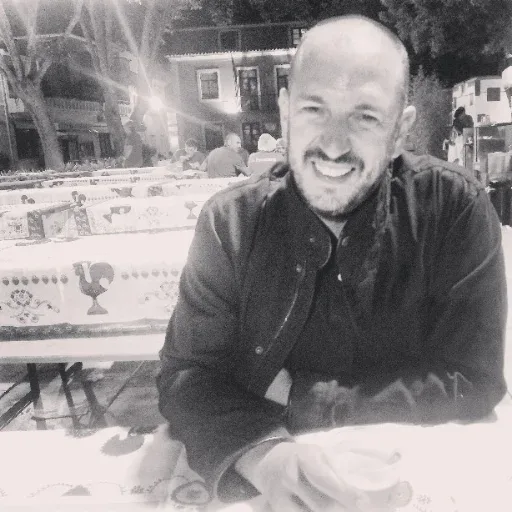
Pedro Miguel Rocha
If you've ever finished a gratitude journal and thought, this feels thin — I want you to know that instinct is worth trusting.
There is something extraordinary happening in the science of gratitude. Researchers like Robert Emmons and Martin Seligman have spent careers documenting how a single psychological orientation can reshape neural pathways, strengthen immune function, deepen relationships, and reframe our relationship with suffering itself. Philosophers from Marcus Aurelius to Thich Nhat Hanh arrived at strikingly similar conclusions centuries before the fMRI machine existed. And yet the cultural conversation about gratitude has somehow been reduced to three bullet points in a five-dollar notebook.
That gap — between what the research actually shows and what most people are actually doing — is exactly why The Gratitude Lab exists.
This course is for people who want the full picture. Who want to understand Barbara Fredrickson's Broaden-and-Build theory not as a buzzword but as a framework for why positive emotions compound. Who want to sit with the Stoic concept of memento mori and understand why contemplating loss sharpens appreciation rather than diminishing it. Who want to know when gratitude journals work brilliantly, when they plateau, and what the studies say about optimal frequency and framing. Who want, frankly, to be able to teach this to someone else — a client, a student, a team, a child — with real confidence and real depth.
I also want to be honest about something the wellness industry often skips: gratitude can be weaponized. Toxic positivity is real. Gratitude as social obligation is real. Cultural assumptions embedded in Western positive psychology are worth examining. We go there, because intellectual honesty is part of what makes any practice sustainable.
If you're a therapist, coach, educator, leader, or simply a person who takes ideas seriously and wants their inner life to reflect that — this is the course I built for you. Come in curious. Leave equipped.
I'll see you in the lab.
— Pedro Miguel Rocha
Start your journey today
Join get instant access — learn at your own pace with an AI coach in your corner.
$39/mo
Recurring billing · cancel anytime
Secure checkout · Instant access
- 6 modules, 19 lessons
- AI-adaptive lessons tuned to your level
- Quizzes & checkpoints to lock in progress
- Your own AI learning coach
- Learn on any device, at your pace
- Full access for as long as you're subscribed