Start Your Sterile Processing Career with Confidence
Haus of Healthcare Academy's comprehensive, self-paced SPT program gives you the clinical knowledge, instrument expertise, and exam-readiness strategies to step into a patient-safety-critical role — built for career-changers and new healthcare entrants who are serious about getting it right.
"Sterile processing is patient safety made tangible — and this program teaches you to do it right, every single time."
— LATISHA COLEMAN
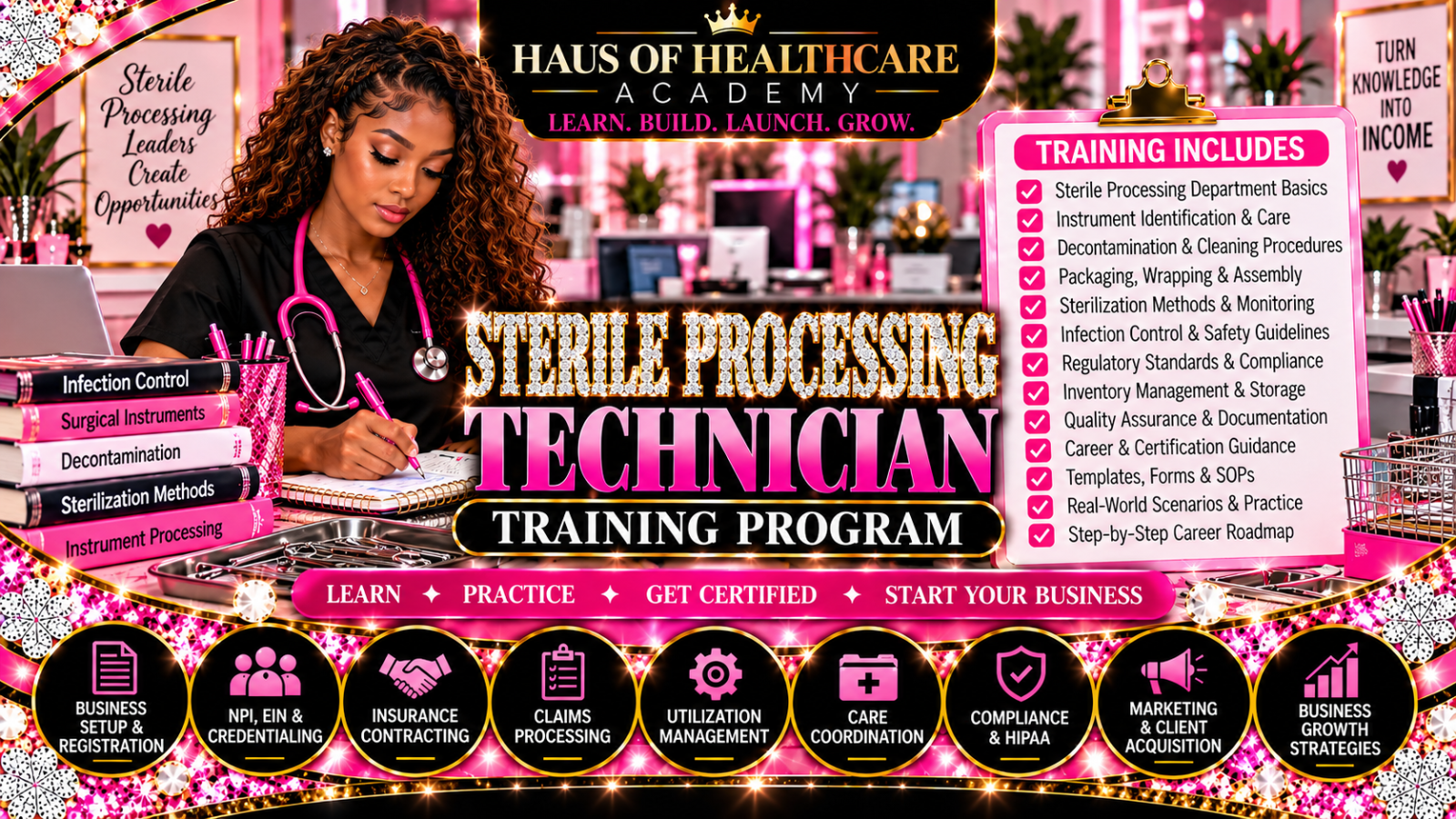
What you'll learn
What you'll be able to do
- Explain the full sterile processing workflow — from decontamination through sterilization to sterile storage and distribution — and describe how each step protects patient safety.
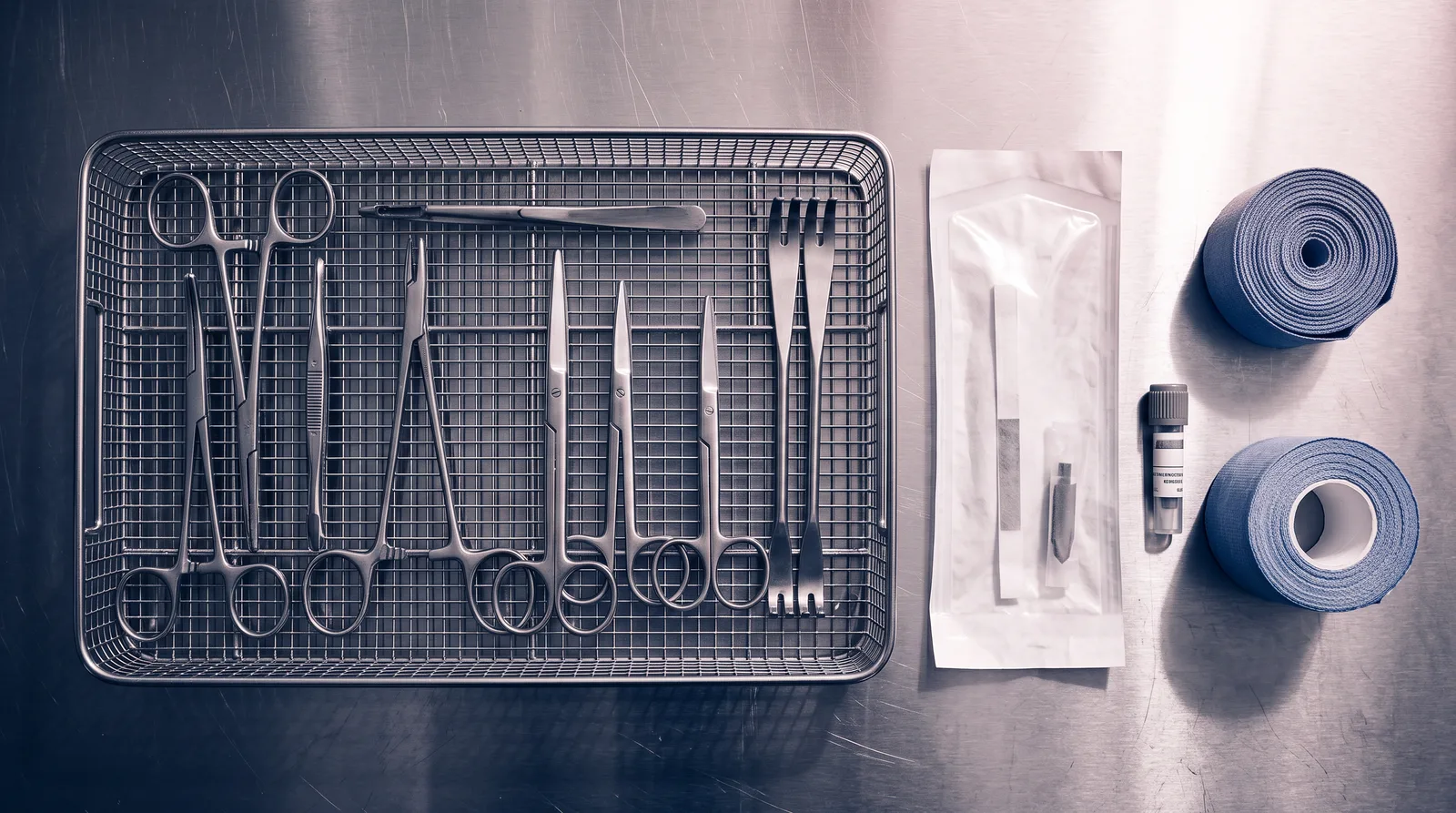
- Correctly identify, classify, inspect, and handle a wide range of surgical instruments, including hinged, lumened, delicate, powered, robotic, and flexible endoscopic devices.
- Apply infection prevention principles, standard and transmission-based precautions, proper PPE selection, and hand hygiene protocols in a sterile processing environment.
- Demonstrate knowledge of all major sterilization methods — including steam and low-temperature processes — and accurately interpret chemical and biological indicator results.
- Apply quality assurance, documentation, tracking, and recall procedures that meet professional and regulatory standards for a sterile processing department.
- Build a career-ready foundation — including relevant medical terminology, OSHA and HIPAA awareness, professional ethics, and exam-preparation strategies — to pursue entry-level SPT roles and a nationally recognized certification exam administered by an external certifying organization.
How it works
A school that adapts to you
This isn't a set of static videos. Every lesson is generated live and tuned to where you actually are.
We learn your level
A quick placement check tailors your starting point so you're never bored or lost.
Lessons adapt as you go
Each lesson is written for your pace and your goal, adjusting as your skills grow.
Your AI coach keeps you moving
Checkpoints, feedback, and gentle nudges turn progress into a real result.
The curriculum
What's inside your school
12 modules · 59 lessons
Introduction to Sterile Processing
Establishes what sterile processing is, who performs it, and what a career in the field looks like.
- 1.1What Is Sterile Processing?Included
- 1.2Role of the Sterile Processing TechnicianIncluded
- 1.3Responsibilities and Scope of PracticeIncluded
- 1.4The Sterile Processing DepartmentIncluded
- 1.5Career Opportunities and ProfessionalismIncluded
Infection Prevention & Control
Builds the foundational microbiology and safety knowledge needed to prevent healthcare-associated infections.
- 2.1Chain of InfectionIncluded
- 2.2Standard and Transmission-Based PrecautionsIncluded
- 2.3Hand HygieneIncluded
- 2.4Personal Protective EquipmentIncluded
- 2.5Infection Prevention Principles and Occupational SafetyIncluded
Medical Terminology for Sterile Processing
Equips students with the healthcare vocabulary — including surgical and anatomical terms — essential for accurate SPD communication.
- 3.1Common Healthcare and Medical TerminologyIncluded
- 3.2Surgical TerminologyIncluded
- 3.3Medical AbbreviationsIncluded
- 3.4Anatomical Terminology and SPD ApplicationIncluded
Decontamination
Covers the complete decontamination workflow — from receiving soiled instruments to verifying cleanliness — using both manual and automated methods.
- 4.1Purpose of Decontamination and Receiving Contaminated InstrumentsIncluded
- 4.2PPE Requirements and Chemical Safety in DecontaminationIncluded
- 4.3Manual Cleaning Principles and TechniquesIncluded
- 4.4Automated Cleaning — Ultrasonic Cleaners and Washer-DisinfectorsIncluded
- 4.5Handling Contaminated Instruments and Decontamination WorkflowIncluded
Surgical Instruments
Develops the ability to identify, classify, inspect, and properly handle the full range of surgical instruments encountered in the SPD.
- 5.1Instrument Identification and ClassificationIncluded
- 5.2Instrument Components and Common Surgical InstrumentsIncluded
- 5.3Instrument Inspection and CareIncluded
- 5.4Hinged and Lumened InstrumentsIncluded
- 5.5Delicate, Powered, and Specialty InstrumentsIncluded
Preparation & Packaging
Teaches students to assemble, wrap, and label instrument sets and packages to maintain sterility through storage and use.
- 6.1Inspection, Assembly, and Instrument SetsIncluded
- 6.2Packaging Materials and SelectionIncluded
- 6.3Wrapping Techniques and Peel PouchesIncluded
- 6.4Rigid Container SystemsIncluded
- 6.5Chemical Indicators, Labeling, and Package IntegrityIncluded
Sterilization
Provides a thorough understanding of all major sterilization methods, monitoring tools, and documentation requirements.
- 7.1Principles of SterilizationIncluded
- 7.2Steam SterilizationIncluded
- 7.3Low-Temperature Sterilization MethodsIncluded
- 7.4Sterilizer Operation and Loading PrinciplesIncluded
- 7.5Chemical and Biological Indicators and Sterilization MonitoringIncluded
- 7.6Sterilization Records and Managing Sterilization FailuresIncluded
Sterile Storage & Distribution
Covers the environmental standards, handling practices, and distribution processes that preserve sterility after processing.
- 8.1Sterile Storage Principles and EnvironmentIncluded
- 8.2Event-Related Sterility and Inventory ManagementIncluded
- 8.3Handling Sterile SuppliesIncluded
- 8.4Case Cart Preparation and DistributionIncluded
- 8.5Transport and Environmental ConsiderationsIncluded
Quality Assurance & Documentation
Develops the skills to monitor, document, and continuously improve SPD processes in compliance with professional and regulatory standards.
- 9.1Quality Control and Documentation FundamentalsIncluded
- 9.2Tracking Systems and Instrument TraceabilityIncluded
- 9.3Biological, Chemical, and Equipment MonitoringIncluded
- 9.4Recall ProceduresIncluded
- 9.5Quality Improvement in the SPDIncluded
Workplace Safety & Professional Practice
Prepares students to work safely, ethically, and professionally in the sterile processing environment.
- 10.1Sharps Safety and ErgonomicsIncluded
- 10.2Chemical Hazards and Emergency ProceduresIncluded
- 10.3OSHA Awareness for Sterile ProcessingIncluded
- 10.4HIPAA Awareness and Professional EthicsIncluded
- 10.5Professional Communication and Workplace ExpectationsIncluded
Specialized Instruments & Equipment
Expands instrument knowledge to include flexible endoscopes, powered systems, robotic instruments, and their specialized processing requirements.
- 11.1Flexible Endoscopes and Endoscope Processing ConceptsIncluded
- 11.2Powered Surgical InstrumentsIncluded
- 11.3Robotic Surgical InstrumentsIncluded
- 11.4Specialty Surgical Instruments and Instrument StorageIncluded
Career Preparation & Exam Readiness
Equips students to enter the job market and prepare to pursue a national certification exam administered by an external certifying organization.
- 12.1Sterile Processing Technician Career PathIncluded
- 12.2Résumé, Job Search, and Interview SkillsIncluded
- 12.3Understanding National Certification ExamsIncluded
- 12.4Exam Preparation StrategiesIncluded
- 12.5Final Assessment and Course CompletionIncluded
Who it's for
Is this you?

The Career-Changer
Ready to leave a non-healthcare job behind and build a stable, meaningful clinical career from the ground up — with a structured program that takes them seriously.

The Healthcare Newcomer
Entering healthcare for the first time and needs a rigorous, self-paced pathway that builds professional vocabulary and clinical knowledge without assuming any prior background.

The Certification Candidate
Targeting the CBSPD C.S.P.D.T. exam and wants a comprehensive knowledge foundation — plus dedicated exam-readiness strategies — to walk in prepared.

The On-the-Job Learner
Has picked up some SPD exposure informally and is ready to formalize and deepen that knowledge with a structured program that fills in the gaps.

The Returning Workforce Professional
Stepping back into the workforce after time away and sees sterile processing as a high-demand, patient-critical field worth entering with proper preparation.

The Allied Health Aspirant
Exploring allied health career paths and drawn to sterile processing's combination of technical precision, patient-safety impact, and real employment opportunity.
Questions
Frequently asked
Your teacher
A note from your teacher
LATISHA COLEMAN
If you are reading this, you are probably standing at an important crossroads. Maybe you have been searching for a healthcare career that is meaningful, in demand, and genuinely within reach — without years of schooling standing between you and your first paycheck. Maybe you already know a little about sterile processing and you are looking for a program that will take the subject as seriously as you do. Or maybe someone pointed you in this direction and you are still trying to figure out whether this field is really for you.
I want to be direct with you: sterile processing is not a backup plan. It is a specialty. Every surgical instrument that reaches a patient has been decontaminated, inspected, assembled, packaged, sterilized, stored, and tracked by a sterile processing technician. That chain of custody is patient safety made tangible — and it requires people who understand what they are doing and why. The Haus of Healthcare Academy SPT program exists because this work deserves to be taught with the rigor and respect it demands.
What I built here is a structured, comprehensive, step-by-step program that does not assume you already know the language of healthcare or the layout of a sterile processing department. We start at the beginning — what sterile processing is, what the role looks like, what the department does — and we build systematically from there. By the time you reach sterilization science, quality assurance, and the documentation standards that regulatory expectations require, you will have the foundational understanding to make sense of all of it. Nothing is dropped in your lap without context.
I also want to address something directly: certification. Preparing you to pursue the CBSPD C.S.P.D.T. exam is a serious objective of this program, and we treat it seriously. The curriculum covers the knowledge domains that exam tests. We close with dedicated exam-readiness content — strategy, review, and the kind of focused preparation that first-time candidates need. At the same time, I will always be honest with you: the CBSPD is an independent organization with its own eligibility requirements, including work-experience criteria, and those are theirs to set. What I can give you is the knowledge foundation to be ready when you meet them.
This program is for people who are committed — to the field, to the patients it ultimately serves, and to doing the work correctly. If that is you, I am glad you are here. Let's get to work.
— LATISHA COLEMAN
Start your journey today
Get instant access — learn at your own pace with an AI coach in your corner.
$497/yr
Recurring billing · cancel anytime
Secure checkout · Instant access
- 12 modules, 59 lessons
- AI-adaptive lessons tuned to your level
- Quizzes & checkpoints to lock in progress
- Your own AI learning coach
- Learn on any device, at your pace
- Full access for as long as you're subscribed