
Read the hive. Rewrite your economics.
Master behavioural economics through the world's most rigorously self-organising system — where 50,000 bees solve incentive design, advanced information markets, and collective decision-making with zero central authority, and every principle maps directly to human markets, firms, and policy.
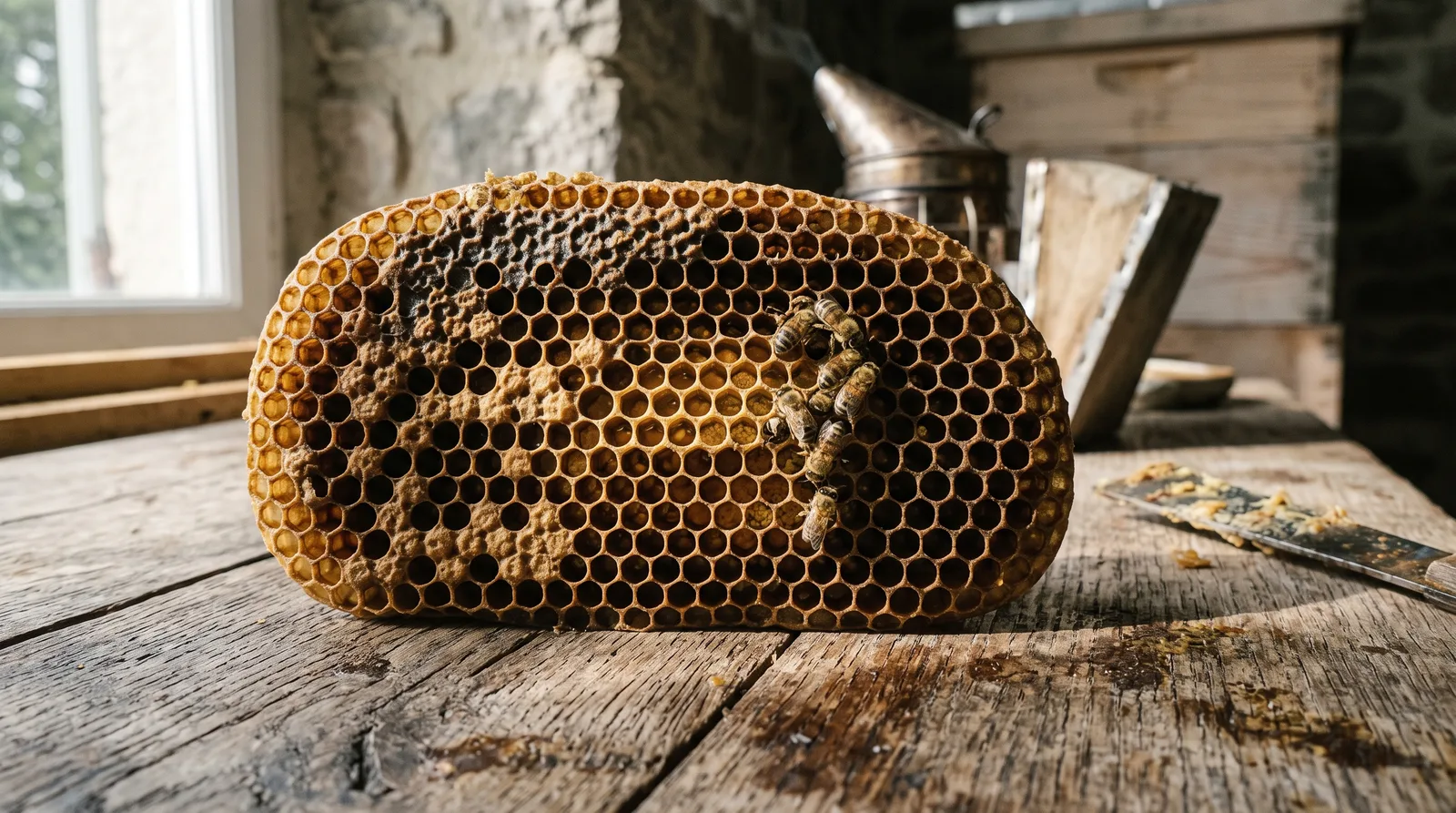
"The hive doesn't simplify economics — it makes the complexity finally legible."
— Val (Valdas) Samonis

What you'll learn
What you'll be able to do
- Explain how a colony of 50,000 bees achieves near-optimal collective decisions without central authority, mapping each mechanism to a recognised behavioural-economics principle.
- Analyse waggle-dance signalling as a real-world information market, identifying how bees price, discount, and aggregate distributed knowledge.
- Apply the concept of quorum sensing to human organisational design — identifying where threshold rules outperform deliberation in firms and institutions.
- Dissect the colony's incentive architecture — queen pheromones, worker role-switching, and reproductive suppression — using principal–agent theory and mechanism design.
- Evaluate how loss aversion, status quo bias, and prospect theory manifest in forager risk-taking and resource allocation across seasons.
- Design a behavioural-economics audit framework for a human team or market, using the hive as a diagnostic benchmark for identifying nudge opportunities and coordination failures.
How it works
A school that adapts to you
This isn't a set of static videos. Every lesson is generated live and tuned to where you actually are.
We learn your level
A quick placement check tailors your starting point so you're never bored or lost.
Lessons adapt as you go
Each lesson is written for your pace and your goal, adjusting as your skills grow.
Your AI coach keeps you moving
Checkpoints, feedback, and gentle nudges turn progress into a real result.
The curriculum
What's inside your school
7 modules · 31 lessons

The Superorganism Primer: Complexity, Cognition, and the Colony
Establishes the beehive as a complex adaptive system and introduces the behavioural-economics vocabulary used throughout the course.
- 1.1What Is a Superorganism? Emergence and Collective IntelligenceIncluded
- 1.2Behavioural Economics in 60 Minutes: The Core ToolkitIncluded
- 1.3Complexity Science and the Hive: Feedback Loops, Tipping Points, and Self-OrganisationIncluded
- 1.4Inside the 50,000: Colony Architecture, Castes, and Life CyclesIncluded
The Waggle Dance as an Information Market
Analyses bee foraging communication as a decentralised price-discovery and knowledge-aggregation system with direct parallels to human markets.
- 2.1Decoding the Dance: Signal, Distance, and DirectionIncluded
- 2.2Pricing the Patch: How Bees Value and Discount Distributed InformationIncluded
- 2.3Aggregating Distributed Knowledge: Hayek's Price System in the HiveIncluded
- 2.4Misinformation, Noise, and Signal Decay in the Dance ArenaIncluded
- 2.5Human Markets Through the Hive Lens: Case Studies in Decentralised DiscoveryIncluded
Quorum Sensing and Threshold Decision-Making
Examines how the colony reaches binding collective decisions through quorum rules, and translates this directly into organisational and institutional design.
- 3.1The Swarm Decision: House-Hunting, Scout Debate, and the Quorum RuleIncluded
- 3.2Quorum Sensing vs. Deliberation: Speed, Accuracy, and the Diversity–Efficiency Trade-offIncluded
- 3.3Designing Quorum Rules for Human OrganisationsIncluded
- 3.4Coordination Failures and False Quorums: When the Hive Gets It WrongIncluded
Incentive Architecture: Principal–Agent Theory and Mechanism Design in the Colony
Dissects the colony's incentive system — pheromones, role-switching, and reproductive suppression — through the formal lenses of principal–agent theory and mechanism design.
- 4.1Queen Pheromones as a Control Mechanism: Chemistry, Compliance, and CoercionIncluded
- 4.2Worker Role-Switching and the Principal–Agent ProblemIncluded
- 4.3Reproductive Suppression and Mechanism Design: Constraining Defection Without a SheriffIncluded
- 4.4Alarm Pheromones, Commitment Devices, and Escalation TrapsIncluded
- 4.5Designing Incentive Systems: From Hive Logic to Organisational ContractsIncluded
Forager Risk-Taking and the Behavioural Economics of Resource Allocation
Evaluates forager decision-making under uncertainty through prospect theory, loss aversion, and status quo bias, then maps findings to seasonal resource strategy.
- 5.1Prospect Theory in the Field: How Foragers Frame Gains and LossesIncluded
- 5.2Loss Aversion and the Marginal Patch: When Bees Quit — and When They Don'tIncluded
- 5.3Status Quo Bias and Seasonal Inertia: Colony Resource Strategy Across the YearIncluded
- 5.4Risk Pooling, Diversification, and the Colony's Portfolio LogicIncluded
The Behavioural-Economics Audit: From Hive Diagnostic to Human Application
Synthesises all course frameworks into a structured audit methodology students apply to a real human team, market, or policy context.
- 6.1Building the Hive Audit Framework: Dimensions, Metrics, and Diagnostic QuestionsIncluded
- 6.2Nudge Design Through the Hive Lens: Identifying and Engineering Choice ArchitectureIncluded
- 6.3Diagnosing Coordination Failures: A Hive-Benchmarked Organisational ReviewIncluded
- 6.4Capstone: Present Your Behavioural-Economics AuditIncluded
Talk Points: Presenting The Hive Mind
- 7.1The Elevator Pitch: Explaining Behavioural Economics Through the Hive in 90 SecondsIncluded
- 7.2The Sceptic's Objections: Fielding Pushback on Swarm Intelligence and Human RelevanceIncluded
- 7.3Making the Case in a Boardroom: Framing Hive Principles for Strategy AudiencesIncluded
- 7.4Public Speaking With Complexity: Keeping a Nuanced Argument AccessibleIncluded
- 7.5Your Signature Hive Talk: Building a 20-Minute Keynote From Your Audit FindingsIncluded
Who it's for
Is this you?

Economics graduates
You know the theory cold — this course makes it visible, testable, and structurally mapped onto an advanced living system that keeps the abstraction honest.

Organisational strategists
You design decision structures and incentive systems for a living — the hive audit framework gives you a rigorous new diagnostic for every coordination problem you encounter.

MBA students
You're building your analytical toolkit before hitting the strategy or consulting floor — the hive gives you a second-order lens that most of your peers won't have.

Policy designers
You work with nudge units, regulatory architecture, or public-sector institutions — quorum rules, mechanism design, and collective action failures are your professional terrain.

Science professionals seeking crossover
You're rigorous, field-grounded, and frustrated by the shallowness of most 'applied behaviour' content — this course meets you at your level and adds serious economic theory.

Curious intellectuals
You read widely, think in systems, and want a course that rewards genuine intellectual effort with genuine conceptual & systemic surprise — this is exactly that.
Questions
Frequently asked
Your teacher
A note from your teacher

Val (Valdas) Samonis
If you've spent time in economics, strategy, or organisational design, you've probably encountered the same frustration I have: the most important concepts — incentive alignment, information aggregation, collective decision-making under uncertainty — are taught through stylised models that feel clean on a whiteboard and slippery in practice. The math is tractable. The real world is not. And somewhere between the model and the meeting room, something gets lost.
I started keeping bees at my ranch for the same reason a lot of people do — almost by accident, with borrowed hives and definitely more curiosity than competence. What I did not expect was how quickly the colony would start talking back to me in the language of economic theory. Not metaphorically. Precisely. The waggle dance is a price-discovery mechanism with measurable signal decay. Queen pheromone gradients are a compliance architecture that solves a principal–agent problem without a contract. Quorum sensing is a threshold decision rule that trades off speed against accuracy in ways that game theorists have formalised but rarely seen running in real time, at scale, without error correction. The hive is not like an economy. In the ways that matter most, it is one!
The Hive Mind is the course I wish had existed when I was building my own understanding of behavioural economics — one that earns its technical vocabulary by grounding it in a system you can actually observe, one where the feedback loops are visible, the incentives are structural, and the failures are as instructive as the successes. We don't skip the hard parts. We spend serious time on coordination failures, false quorums, and the conditions under which the colony's elegant machinery breaks down from time to time. That's where the most transferable insight lives.
What you will build here is not a collection of bee facts or a grab-bag of behavioural nudges. You will build a coherent theory cum praxis analytical framework — one that connects complexity science, mechanism design, prospect theory, and information economics into a single, navigable structure. And then, in the capstone, you will apply that framework to a real human system: a team, a market, an institution. The hive becomes your diagnostic benchmark. The audit you produce is yours to use.
This course is for people who want the rigour and the scientific discovery surprise in the same place. If that's you — welcome to the hive!
— Val (Valdas) Samonis
Start your journey today
Get instant access — learn at your own pace with an AI coach in your corner.
$49/mo
Recurring billing · cancel anytime
Secure checkout · Instant access
- 7 modules, 31 lessons
- AI-adaptive lessons tuned to your level
- Quizzes & checkpoints to lock in progress
- Your own AI learning coach
- Learn on any device, at your pace
- Full access for as long as you're subscribed