The Hormuz Paradox: Energy, Power & Planetary Survival
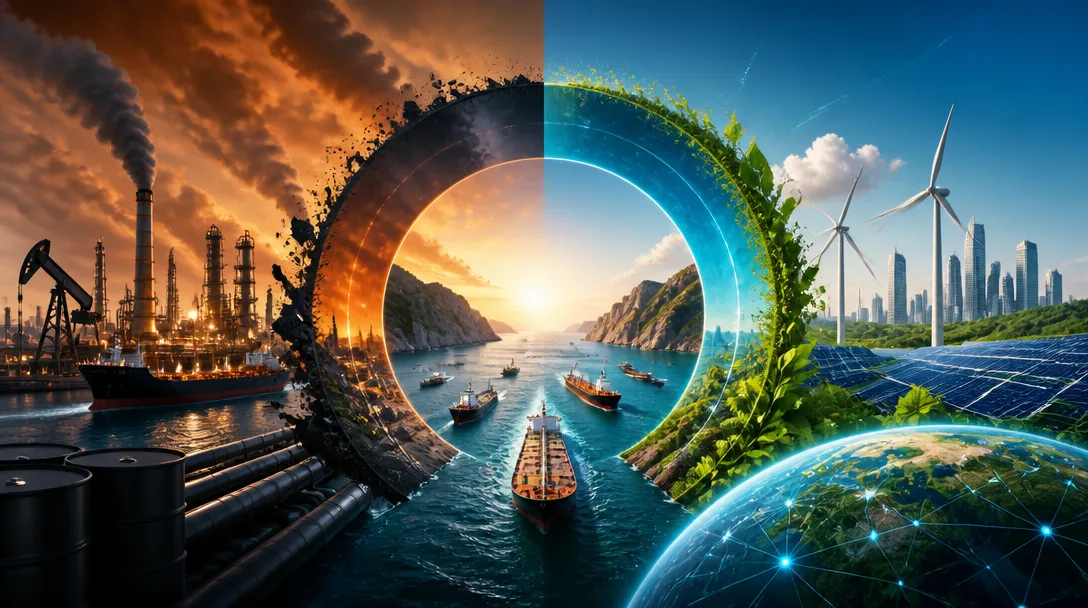
A provocative, eye-opening school based on the landmark book The Hormuz Paradox — challenging you to rethink fossil fuel dependence, understand global energy geopolitics, and become an advocate for a cleaner, more resilient planet before it's too late.
What you'll learn
What you'll be able to do
- Explain why the Strait of Hormuz is the single most strategically dangerous chokepoint in the global energy system — and what that means for everyday life
- Analyze the true economic, environmental, and geopolitical cost of fossil fuel dependence beyond the price at the pump
- Identify the key renewable energy alternatives — solar, wind, green hydrogen, battery storage, and others — and evaluate their real-world scalability
- Understand the timeline and urgency of the global energy transition and why incremental change is no longer sufficient
- Critically assess mainstream energy narratives in the news and distinguish between fossil fuel industry spin and evidence-based reporting
- Apply a 'planetary stewardship' mindset to personal, professional, and civic decisions around energy consumption and advocacy
- Articulate a compelling case for accelerating the shift away from fossil fuels to peers, colleagues, or community leaders
- Connect the dots between energy policy, climate healing, regional conflicts, and long-term human survival on a finite planet
How it works
A school that adapts to you
This isn't a set of static videos. Every lesson is generated live and tuned to where you actually are.
We learn your level
A quick placement check tailors your starting point so you're never bored or lost.
Lessons adapt as you go
Each lesson is written for your pace and your goal, adjusting as your skills grow.
Your AI coach keeps you moving
Checkpoints, feedback, and gentle nudges turn progress into a real result.
The curriculum
What's inside your school
6 modules · 18 lessons

The Chokepoint That Rules the World — Understanding the Strait of Hormuz
Students begin where the book begins: a single, narrow waterway through which nearly 20% of the world's oil flows daily. This module builds a visceral, concrete understanding of why the Strait of Hormuz is the jugular vein of the global economy — and how its fragility ripples into the price of groceries, the cost of heating a home, and the stability of governments worldwide.
- 1.1The 21-Mile Bottleneck: Geography, Traffic, and TerrorIncluded
- 1.2The Power Players: Iran, Saudi Arabia, the US, and the Gulf StatesIncluded
- 1.3From Chokepoint to Your Kitchen Table: The Hidden Cost ChainIncluded
The True Cost of Oil — Economic, Environmental, and Human
This module tears back the curtain on what fossil fuels actually cost society when every externality is counted — health damage, climate disruption, military spending, subsidies, and ecological destruction. Students learn to see past the price at the pump and develop a rigorous, evidence-based vocabulary for the real cost of oil dependence.
- 2.1Counting What Doesn't Appear on the Receipt: Hidden Subsidies and ExternalitiesIncluded
- 2.2Climate Arithmetic: Why Incremental Change Is a Death SentenceIncluded
- 2.3The Human Toll: Petrostates, Resource Conflicts, and Who Pays the PriceIncluded
The Arsenal of Alternatives — Renewables, Storage, and the Tech of Tomorrow
This module provides a rigorous, honest, and inspiring tour of the real-world state of renewable energy — solar, wind, green hydrogen, battery storage, tidal, geothermal, and emerging technologies — evaluating not just their potential but their current scalability, costs, limitations, and the timelines for deployment at civilizational scale.
- 3.1Sun, Wind, and Water: The Big Three and How Far They've ComeIncluded
- 3.2The Storage Revolution: Batteries, Hydrogen, and the 24/7 Clean Energy ProblemIncluded
- 3.3Emerging Frontiers: Tidal, Geothermal, Nuclear Fusion, and the WildcardsIncluded
Decoding the Narrative — Media Literacy, Industry Spin, and How to Find the Truth
This module equips students with the critical thinking and media literacy tools to identify fossil fuel industry spin, greenwashing, manufactured doubt, and misleading statistics in news coverage, corporate communications, and political speech — so they can become informed, unmanipulable advocates for evidence-based energy policy.
- 4.1The Playbook of Doubt: How the Fossil Fuel Industry Shaped Public OpinionIncluded
- 4.2Greenwashing, Net Zero Theater, and How to Spot the DifferenceIncluded
- 4.3Building Your Evidence Toolkit: Sources, Standards, and Staying CurrentIncluded
The Transition Roadmap — Policy, Technology, Finance, and What Must Happen Now
Students move from diagnosis to solution, examining the concrete policy levers, financial mechanisms, international agreements, and technological deployment plans that constitute a credible path away from fossil fuels — and critically evaluating which countries, companies, and coalitions are actually delivering vs. stalling.
- 5.1Policy Levers That Work: Carbon Pricing, Standards, and Industrial PolicyIncluded
- 5.2Following the Money: Climate Finance, Fossil Fuel Divestment, and the $4 Trillion QuestionIncluded
- 5.3International Architecture: Paris, COP, and Why Global Cooperation Keeps Failing and MatteringIncluded
Planetary Stewardship in Action — From Personal Conviction to Public Advocacy
The capstone module transforms understanding into agency. Students internalize a 'planetary stewardship' identity, master the art of communicating the energy transition case to skeptical audiences, and design a concrete personal, professional, or civic action plan that they will carry beyond the course. This is where the book's call to action becomes lived practice.
- 6.1The Stewardship Mindset: Reframing Your Role on a Finite PlanetIncluded
- 6.2Making the Case: Communicating Energy Transition to Skeptical AudiencesIncluded
- 6.3Your Action Plan: Connecting the Dots and Committing to ChangeIncluded
Questions
Frequently asked
Your teacher
A note from your teacher
David Clilverd
I wrote The Hormuz Paradox because I could no longer stay silent. After years of studying the intersection of energy, geopolitics, and environmental collapse, I became convinced that most people — even intelligent, engaged people — are missing the full picture of how precarious our fossil fuel world truly is, and how ready the alternatives already are.
This school is the living extension of that book. My goal is not to frighten you — it's to equip you. I believe that informed people make better decisions, advocate more powerfully, and build more resilient futures. I've designed every lesson to cut through the noise, challenge comfortable assumptions, and leave you with something rare: genuine clarity about one of the most important issues of our lifetime.
I'm glad you're here. The planet needs more people willing to think differently — and act on it.
— David Clilverd
Start your journey today
Get instant access — learn at your own pace with an AI coach in your corner.
$97/mo
Recurring billing · cancel anytime
Secure checkout · Instant access
- 6 modules, 18 lessons
- AI-adaptive lessons tuned to your level
- Quizzes & checkpoints to lock in progress
- Your own AI learning coach
- Learn on any device, at your pace
- Full access for as long as you're subscribed