Care smarter. Stay human.
Master every dimension of modern caregiving — from safe transfers and active listening to smart-home sensors, assistive robotics, and dementia VR — so you're ready for whatever the care setting throws at you, with empathy always leading the way.
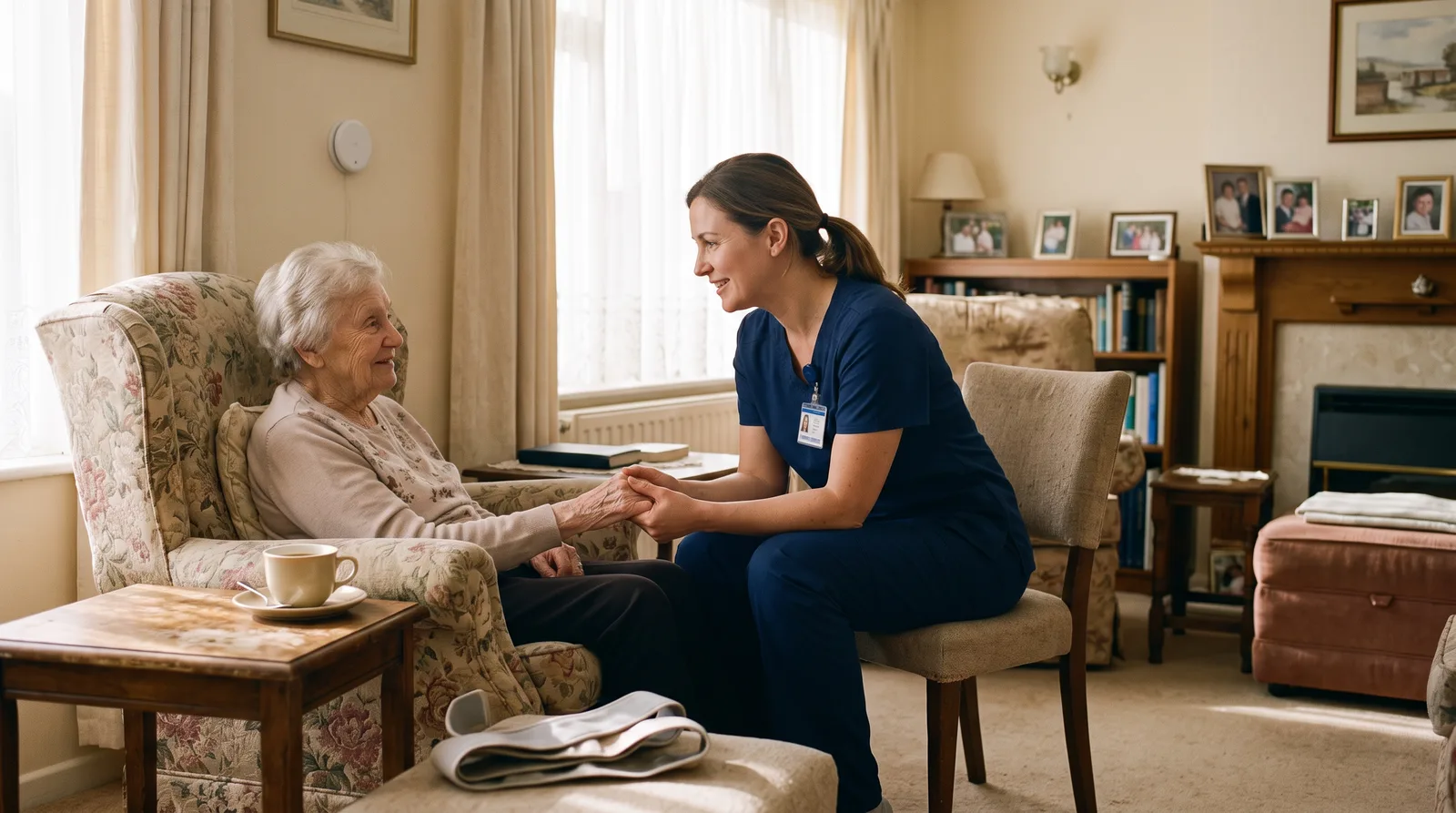
"Technology has a place in the care room — but it walks in behind empathy, every single time."
— Robert Long
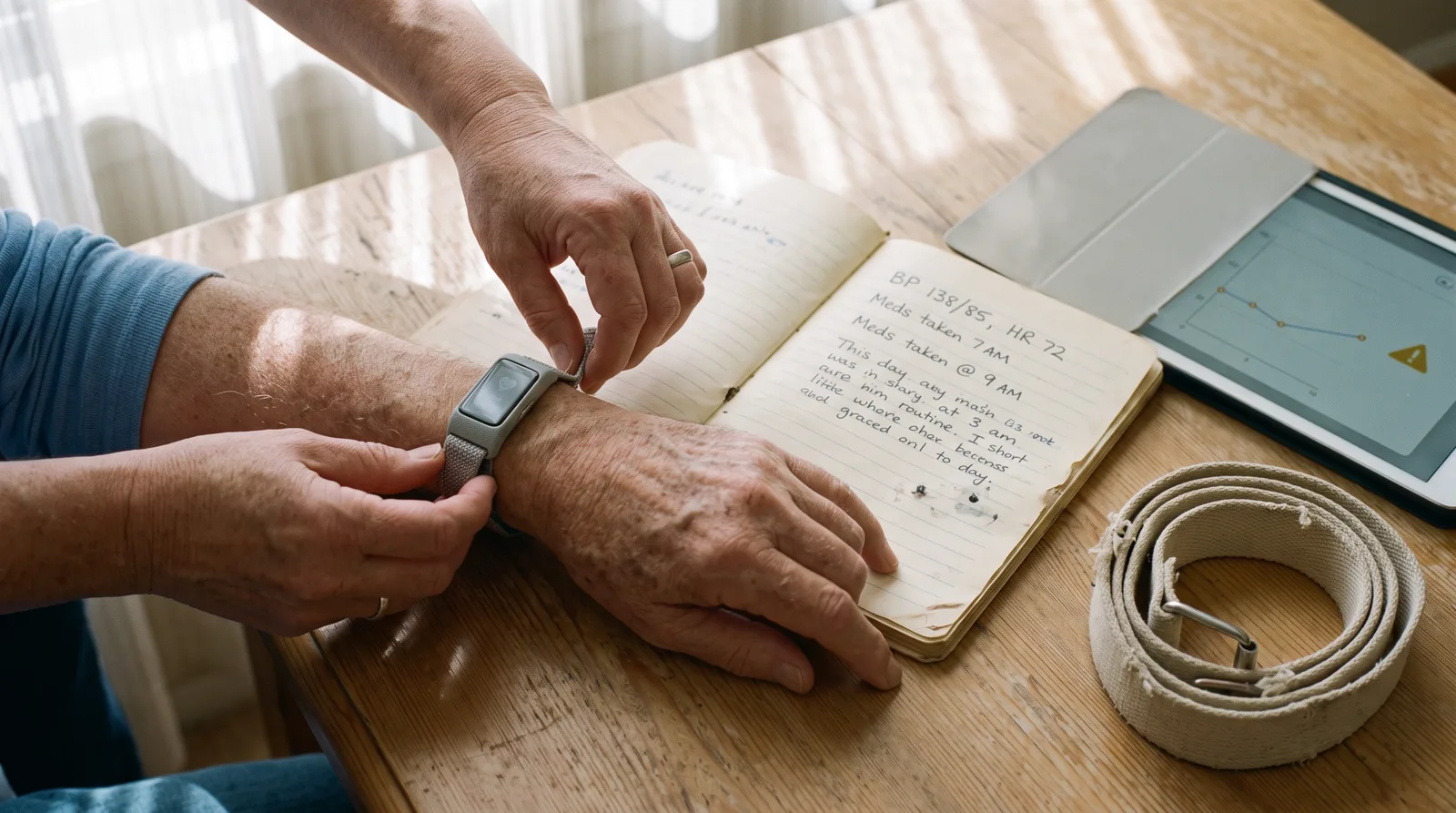
What you'll learn
What you'll be able to do
- Deliver person-centred care that upholds each client's dignity, autonomy, and individual preferences across every interaction
- Interpret live alerts from non-invasive radar and infrared ambient sensors to detect falls, gait changes, and sleep disruption — and hand over calmly to human care
- Safely assist clients using mobility-aid exoskeletons and robotic transfer lifts while protecting both client autonomy and your own body mechanics
- Design and run soothing VR and calm-acoustic sessions for clients with dementia to reduce agitation and stimulate positive nostalgic engagement
- Execute a full grid-downtime care protocol — paper logs, manual transfers, and analog emergency response — when power or internet connectivity fails
- Pass scenario-based module exams that simulate real smart-home emergencies, requiring both technical interpretation and skilled person-centred communication
How it works
A school that adapts to you
This isn't a set of static videos. Every lesson is generated live and tuned to where you actually are.
We learn your level
A quick placement check tailors your starting point so you're never bored or lost.
Lessons adapt as you go
Each lesson is written for your pace and your goal, adjusting as your skills grow.
Your AI coach keeps you moving
Checkpoints, feedback, and gentle nudges turn progress into a real result.
The curriculum
What's inside your school
6 modules · 35 lessons

Caregiving Foundations: Person-Centred Practice
Establishes the human core of caregiving — dignity, communication, safety, infection control, documentation, and emergency response — that underpins every skill in the course.
- 1.1Person-Centred Care: Dignity and Autonomy in Every InteractionIncluded
- 1.2Communication and Active ListeningIncluded
- 1.3Safe Body Mechanics and TransfersIncluded
- 1.4Infection Control in the Care SettingIncluded
- 1.5Documentation, Reporting, and Emergency ResponseIncluded
- 1.6Module Scenario Exam: Responding to a Care CrisisIncluded
Smart-Home Telemetry and Fall AI Monitoring
Teaches caregivers to interpret live alerts from non-invasive radar and infrared ambient sensors that detect falls, gait changes, and sleep disruption — without cameras.
- 2.1How Ambient Sensors Work: Radar and Infrared BasicsIncluded
- 2.2Reading the Dashboard: Alerts, Trends, and FlagsIncluded
- 2.3Interpreting Fall, Gait, and Sleep Disruption SignalsIncluded
- 2.4Alert Triage and the Human Handover ProtocolIncluded
- 2.5Privacy, Consent, and Ethical Use of TelemetryIncluded
- 2.6Module Scenario Exam: Live Alert TriageIncluded
Assistive Robotics and Exoskeleton Safety
Builds the technical and interpersonal competencies needed to operate mobility-assist exoskeletons and robotic transfer lifts safely while preserving client dignity and autonomy.
- 3.1Assistive Robotics in Home and Residential Care: An OverviewIncluded
- 3.2Operating a Robotic Transfer Lift SafelyIncluded
- 3.3Mobility-Assist Exoskeletons: Fitting, Activation, and SupervisionIncluded
- 3.4Preserving Autonomy and Dignity During Assisted MobilityIncluded
- 3.5Troubleshooting, Fault Recognition, and Safe Manual OverrideIncluded
- 3.6Module Scenario Exam: Robotic-Assist TransferIncluded
Dementia Support via VR and AR Immersive Environments
Equips caregivers to design and facilitate VR and calm-acoustic sessions that reduce agitation and foster positive nostalgic engagement in clients living with dementia.
- 4.1Dementia, Agitation, and the Case for Sensory InterventionsIncluded
- 4.2VR and AR Hardware Basics for CaregiversIncluded
- 4.3Selecting and Curating Calming and Nostalgic VR ContentIncluded
- 4.4Running a Calm-Acoustic Session: Music, Sound, and VoiceIncluded
- 4.5Monitoring Wellbeing and Ending Sessions SafelyIncluded
- 4.6Module Scenario Exam: Facilitating a Dementia Sensory SessionIncluded
Resilient Caregiving Methods: Tech, Touch, and Grid-Downtime
Trains caregivers to deliver consistent, high-quality care across three operating modes — tech-augmented, high-touch low-tech, and full grid-downtime — so care never falters regardless of available resources.
- 5.1Method A — Tech-Augmented Home CareIncluded
- 5.2Method B — High-Touch, Low-Tech Human CareIncluded
- 5.3Method C — Grid-Downtime Care ProtocolIncluded
- 5.4Switching Between Methods: Reading the EnvironmentIncluded
- 5.5Module Scenario Exam: Adaptive Care Under Changing ConditionsIncluded
Capstone: Sensor Alert Response and Human Handover
Integrates every course skill in a full-length simulated smart-home emergency — from alert interpretation to calm person-centred communication and manual mobility evaluation.
- 6.1Capstone Briefing: The Integrated Care ScenarioIncluded
- 6.2Receiving and Interpreting a Smart-Home Fall AlertIncluded
- 6.3Approaching the Client: Calm, Respectful First ContactIncluded
- 6.4Manual Mobility Evaluation and Assisted Transfer DecisionIncluded
- 6.5Documentation, Handover, and Post-Incident ReflectionIncluded
- 6.6Final Scenario Exam: End-to-End Alert ResponseIncluded
Who it's for
Is this you?

Aspiring home-care aides
She's just starting out and wants a thorough, practical foundation — one that covers both the timeless skills and the technology she'll encounter on her very first placement.

Residential support workers
He works in a residential facility where robotic lifts and smart sensors are arriving fast, and he needs confident, hands-on guidance to use them safely without losing his person-centred approach.
Family carers at home
She's caring for an aging parent at home and wants to understand the smart-home monitoring tools available — and know exactly what to do when an alert goes off at midnight.

Healthcare assistants upskilling
He's a qualified healthcare assistant who wants formal grounding in assistive robotics and telemetry so he can step confidently into higher-acuity tech-enabled care environments.

Dementia care specialists
She supports clients with dementia daily and is eager to learn how VR and calm-acoustic environments can reduce agitation and restore moments of joy and connection.
Experienced carers future-proofing
He has years of solid care experience and wants to make sure his practice stays relevant and credible as assistive technology reshapes the profession around him.
Questions
Frequently asked
Your teacher
A note from your teacher
Robert Long
If you've been in care for any length of time, you already know the feeling. You're doing your best work — a client is settled, comfortable, trusting you — and then someone mentions sensors, robots, or VR, and it feels like the profession you love is being handed to a machine. I understand that feeling. I've had it myself.
But here's what I've also seen: a radar sensor that catches a gait change before a fall happens. A robotic transfer lift that protects a client's dignity on the hardest mornings. A VR headset that brings a smile to a person with dementia who hasn't smiled in weeks. Technology, used well and kept in its proper place, doesn't replace a good caregiver. It gives a good caregiver more to work with.
That's the whole premise of this school. I built Human-First Caregiving because I wanted a course that refused to choose sides — that took the person-centred foundations of this profession absolutely seriously, and also took seriously the fact that the care setting is changing around us. If you go into the next five years without understanding how to read a sensor dashboard or safely supervise an exoskeleton fitting, you'll be at a disadvantage. If you go in without warmth, communication skills, and steady hands, no amount of technology will save you. You need both. This course teaches both.
What you'll find here is practical, grounded learning — the kind that prepares you for an actual shift, not just a certificate. Every technology module is built on a caregiving foundation. Every scenario exam puts a real person at the centre. And the capstone — where you receive a live fall alert, approach a client calmly, evaluate their mobility, and hand over with full documentation — is designed to feel like the best kind of practise: challenging, human, and deeply connected to why you chose this work in the first place.
Whether you're brand new to caregiving, years into a home-care role, or supporting someone you love at home, I'm glad you're here. The profession needs people who refuse to let technology push empathy out of the room. Let's make sure you're one of them.
— Robert Long
Start your journey today
Get instant access — learn at your own pace with an AI coach in your corner.
$59/mo
Recurring billing · cancel anytime
Secure checkout · Instant access
- 6 modules, 35 lessons
- AI-adaptive lessons tuned to your level
- Quizzes & checkpoints to lock in progress
- Your own AI learning coach
- Learn on any device, at your pace
- Full access for as long as you're subscribed