Mix a full band under control in 10 minutes flat
A field-ready system for live audio beginners and newer FOH engineers to get a full band patched, gain-staged, and sounding controlled in 10 minutes flat — without chasing EQ endlessly. Dynamics first, EQ second: the pro workflow made teachable.
"Dynamics before EQ, every single time — that one discipline will do more for your mixes than any plugin or gear upgrade ever will."— Matt Jones
What you'll learn
What you'll be able to do
- Patch and label a full band's channel list and complete a disciplined gain-staging pass in under 10 minutes
- Apply high-pass filters, gates, expanders, and compression as the first line of defense to stabilize every source before touching EQ
- Build a working fader balance and establish source priority so the mix is intelligible before any EQ is applied
- Execute source-specific dynamics and EQ playbooks for vocals, kick, snare, bass, guitars, keys, and backing tracks
- Use subtractive EQ surgically and correctly — as a second-pass cleanup tool, not a crutch — and control feedback systematically
- Build a repeatable show file and pass a timed 10-minute mix challenge that simulates a real fast changeover under pressure
How it works
A school that adapts to you
This isn't a set of static videos. Every lesson is generated live and tuned to where you actually are.
We learn your level
A quick placement check tailors your starting point so you're never bored or lost.
Lessons adapt as you go
Each lesson is written for your pace and your goal, adjusting as your skills grow.
Your AI coach keeps you moving
Checkpoints, feedback, and gentle nudges turn progress into a real result.
The curriculum
What's inside your school
7 modules · 25 lessons

The 10-Minute Live Mix Workflow
Establishes the mental model and operational framework behind the Fast Live Mix System. Students learn why speed and discipline matter in real-world live audio, map out the full signal chain from source to speaker, and internalize a listening hierarchy and decision-making sequence that every subsequent module builds on. This module is the prerequisite lens through which all technical skills are applied.
- 1.1Why the 10-Minute Standard ExistsIncluded
- 1.2Signal Flow Fundamentals for the Working EngineerIncluded
- 1.3Workflow Mindset: Listening Hierarchy and Decision SpeedIncluded
Patch, Label, Gain Stage, HPF
Covers the first physical and technical actions taken at the start of every show: building a clean channel list, physically patching and labeling inputs, executing a disciplined gain-staging pass, and applying high-pass filters across all channels as the fastest single cleanup step available. By the end of this module, every channel is named, leveled, and filtered — ready for dynamics and fader work — with no guesswork, no unlabeled faders, and no gain fights.
- 2.1Building a Fast, Bulletproof Channel ListIncluded
- 2.2Gain Staging: Setting Levels That Don't Fight YouIncluded
- 2.3High-Pass Filters: Your First and Fastest Cleanup ToolIncluded
- 2.4The 10-Minute Patch and Prep: Putting It All TogetherIncluded
Fader Balance and Source Priority
With channels patched, gained, and filtered, students now build the first working mix using fader position alone — no EQ, no effects, no final dynamics. This module teaches the discipline of establishing a rough but intelligent balance that makes the mix intelligible before any additional processing. Students learn which sources carry the mix, how to set relative levels by priority, and how to monitor the result accurately with ears, meters, and reference points.
- 3.1Source Priority: What the Audience Actually Needs to HearIncluded
- 3.2The Rough Balance Method: Faders Up, Mix WorkingIncluded
- 3.3Monitoring the Mix: Ears, Meters, and Reference PointsIncluded
Dynamics First: Gates, Expanders, and Compression
The core technical module of the Fast Live Mix System. Students learn to apply dynamics processing as the first line of defense — not as a final polish — using gates, expanders, and compressors to stabilize every source before EQ is considered. Covers how each processor works in a live context (not a studio context), starter settings by source, the critical sequencing rule (HPF → gate/expander → compressor → EQ), and how to execute a full dynamics pass on all sources under time pressure. This module directly delivers the course's central doctrine.
- 4.1How Dynamics Processing Works in a Live ContextIncluded
- 4.2Gates and Expanders: Silencing What Shouldn't Be HeardIncluded
- 4.3Compression: Controlling Dynamics Without Killing FeelIncluded
- 4.4The Dynamics Pass: All Sources, All at Once, Under Time PressureIncluded
Source Playbooks: Vocals, Drums, Bass, Guitars, Keys, and Tracks
The applied reference module. Students receive a complete, field-ready playbook for every source type they will encounter: what the source sounds like raw, what it needs in terms of gain staging, HPF, gate/expander, compression, and initial fader position, and what the most common problems and fixes are. This module is designed to be memorized and recalled under pressure, not read during a show. Each playbook follows the same structure — patch and gain, HPF, dynamics, fader priority, common problems — making it fast to internalize across all sources.
- 5.1Lead and Backing VocalsIncluded
- 5.2Kick Drum, Snare, and TomsIncluded
- 5.3Bass Guitar: DI and MicIncluded
- 5.4Electric and Acoustic Guitars, Keys, and TracksIncluded
EQ Second: Subtractive Cleanup and Feedback Control
EQ is applied last, surgically, and only to fix problems that dynamics and fader balance could not resolve. This module teaches the subtractive EQ mindset, source-specific cut targets, and a systematic feedback control process. Students learn to hear a frequency problem before reaching for the EQ, make narrow targeted cuts rather than broad boosts, and leave well enough alone when the mix is already working. This module also delivers the feedback control protocol — the most urgent EQ skill in live audio.
- 6.1The Subtractive EQ Mindset: Cut Before You BoostIncluded
- 6.2Surgical EQ by Source: Cuts, Carves, and NotchesIncluded
- 6.3Feedback Control: Systematic, Fast, and PermanentIncluded
- 6.4EQ Discipline: When Not to Touch ItIncluded
Fast Changeover Drill: Show File and Timed 10-Minute Mix Challenge
The capstone module. Students synthesize every skill from the course into a repeatable, deployable system: a show file template that can be loaded, adapted, and executed under real-world time pressure. The module culminates in the timed 10-Minute Mix Challenge — a simulated fast changeover where students must patch, gain stage, apply HPF and dynamics, build fader balance, and deliver a listenable, controlled mix within 10 minutes. Passing the challenge is the course's proof-of-outcome and the deliverable that earns the student their Fast Live Mix System certification.
- 7.1Building Your Repeatable Show FileIncluded
- 7.2Changeover Communication and Stage ProtocolIncluded
- 7.3The Timed 10-Minute Mix ChallengeIncluded
Who it's for
Is this you?

Church AV volunteers
You're running sound every Sunday without formal training — this system gives you a repeatable, professional workflow you can trust week after week.
Musician-turned-tech
You know the music but not the console — this course translates your musical ear into disciplined FOH decision-making with real technical structure.

New FOH engineers
You've landed your first real gigs but still feel like you're improvising — this workflow ends the guesswork and replaces it with a field-ready system.

AV company crew
You're deployed to fast turnaround events where changeovers are tight and there's no time to experiment — this is the system that lets you deliver every time.

Self-taught engineers
You've pieced together skills from YouTube and trial-and-error, but you have gaps in gain staging and dynamics — this course fills exactly those gaps.
Venue and club techs
You're the house engineer facing a different band every night — the Fast Live Mix System gives you a show-file framework and changeover protocol that holds up under that pressure.
Questions
Frequently asked
Your teacher
A note from your teacher
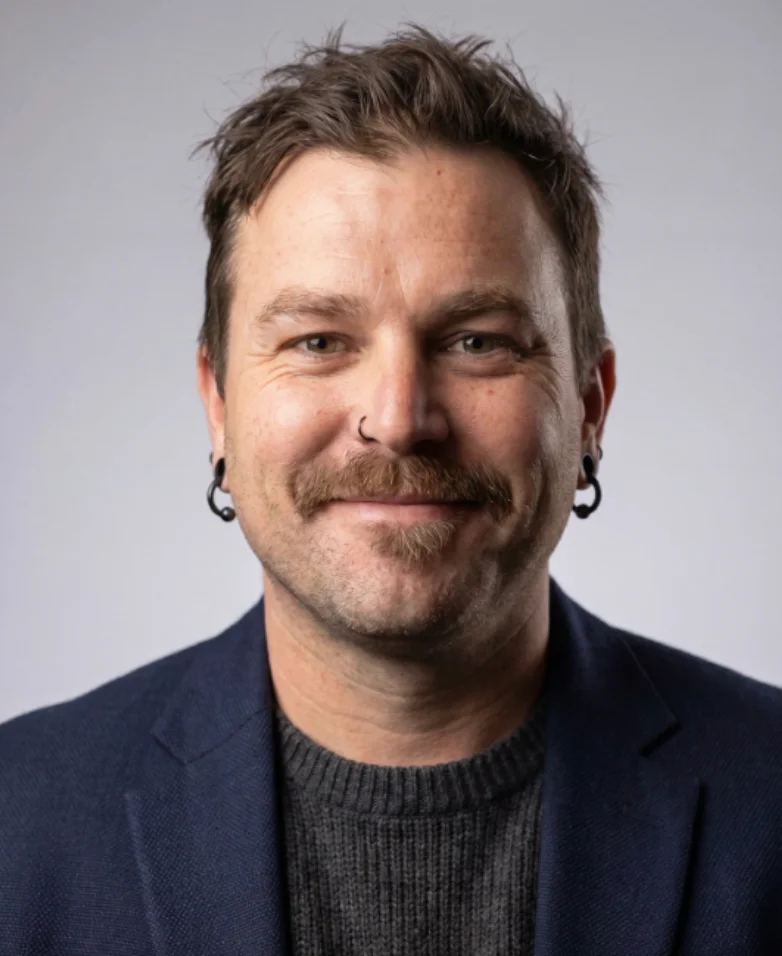
Matt Jones
If you have ever stood behind a console with a band waiting on you, stage crew moving around you, and the room already starting to feel tense, this course is built for that exact moment.
Not the perfect version of live sound people talk about online. The real version.
The version where the drummer is still hitting the kit while you are trying to check vocals. The guitar player moved inputs. The bass DI is not where it was supposed to be. Somebody wants more vocal in a wedge before you even have the vocal in the PA. Doors are open. The next band is ready. Everybody is looking at you like you are supposed to make it all work right now.
That is the job.
This course is built around one goal: get the band live, stable, and sounding good fast.
Not perfect. Controlled. Vocal up. Rhythm section making sense. No runaway feedback. No mystery routing. Subs doing what they are supposed to do. Matrix feeds not wrecking the lobby or delay lines. A mix that is alive instead of falling apart.
Most engineers get into trouble because they fix the wrong thing first.
Something sounds bad, so they grab EQ. Then another EQ band. Then another one. Now the channel is carved up, the gain is still wrong, the gate is opening weird, the compressor is choking the source, and the fader balance was never built.
That is how you burn time.
The fix is order.
Signal flow first. If you cannot trace the signal, you are guessing.
Then gain. If the gain is wrong, everything after it lies to you.
Then HPF. Get rid of low end that does not belong there.
Then dynamics. Gates, expanders, compression. That is the first line of defense.
Then fader balance. Vocal where it needs to be. Kick, snare, bass, and the rest of the band built around that.
Then EQ.
EQ is not the first move. EQ is cleanup. EQ is correction. EQ is what you use after the source is controlled and the balance tells you what is actually wrong.
Dynamics first. EQ second.
I am teaching this like I would talk to you at FOH during a fast changeover: what to touch first, what to ignore, what matters right now, what can wait, and what you are making worse by grabbing the wrong control too early.
This is for church techs, club techs, new FOH engineers, musicians who became the sound person, AV crew, and self-taught engineers who know enough to get through a show but still feel like they are guessing.
You do not need one specific console.
You need a repeatable way to think.
Run the reps. Learn the order. Stop guessing. Stop tone chasing. Get the band live.
— Matt Jones
Start your journey today
Join get instant access — learn at your own pace with an AI coach in your corner.
$49.99/mo
Recurring billing · cancel anytime
Secure checkout · Instant access
- 7 modules, 25 lessons
- AI-adaptive lessons tuned to your level
- Quizzes & checkpoints to lock in progress
- Your own AI learning coach
- Learn on any device, at your pace
- Full access for as long as you're subscribed