Build systems where humans and AI make each other sharper
A rigorous, research-grounded program for technologists, UX researchers, and product leads ready to design, evaluate, and lead hybrid human-AI workflows — the kind that outperform either humans or AI working alone.

The goal is never augmentation as an aspiration — it's complementarity as an engineering requirement, and I'll show you exactly how to build for it.— Dr. J Raymond ABK
What you'll learn
What you'll be able to do
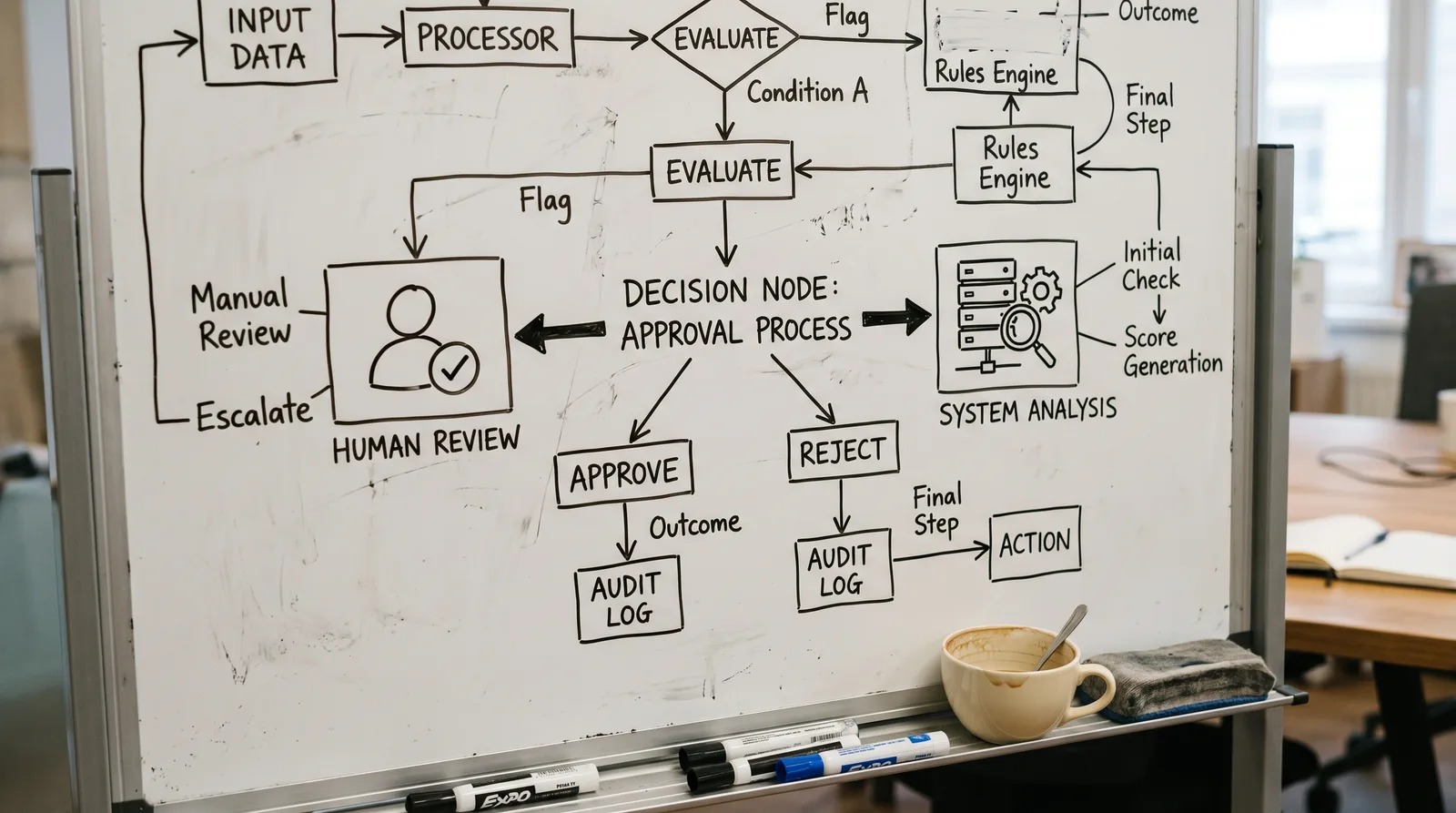
- Design HHAI pipelines that allocate tasks between humans and AI models based on complementary strengths and failure modes
- Apply established frameworks (human-in-the-loop, human-on-the-loop, mixed-initiative) to choose the right collaboration architecture for a given context
- Evaluate hybrid system performance using metrics that capture both machine accuracy and human cognitive load
- Identify and mitigate critical failure points — automation bias, over-reliance, skill erosion — that undermine hybrid team effectiveness
- Conduct interaction audits and participatory design sessions to surface how real users actually engage with AI-assisted tools
- Translate HHAI research findings into actionable product specifications and organizational change strategies
How it works
A school that adapts to you
This isn't a set of static videos. Every lesson is generated live and tuned to where you actually are.
We learn your level
A quick placement check tailors your starting point so you're never bored or lost.
Lessons adapt as you go
Each lesson is written for your pace and your goal, adjusting as your skills grow.
Your AI coach keeps you moving
Checkpoints, feedback, and gentle nudges turn progress into a real result.
The curriculum
What's inside your school
6 modules · 20 lessons

Foundations of Hybrid Human-AI Systems
Establishes the conceptual and cognitive bedrock for the entire course. Students learn why hybrid teams outperform either humans or AI alone, master the shared vocabulary used throughout later modules, and develop a precise mental model of where human cognition and machine inference each break down — the prerequisite insight for every design and evaluation decision that follows.
- 1.1Beyond Replacement — The Complementarity ArgumentIncluded
- 1.2Core Vocabulary and Taxonomy of HHAIIncluded
- 1.3Human Cognition Meets Machine Inference — Where Each BreaksIncluded
Collaboration Architectures — Choosing the Right Structure
Translates foundational concepts into structural decisions. Students learn each major HHAI architecture from the inside out — its mechanics, when it excels, and where it breaks — then practice the judgment call that practitioners face daily: choosing the right architecture for a given context. This module directly delivers the 'apply established frameworks' outcome and lays the structural vocabulary used in Modules 3 and 4.
- 2.1Human-in-the-Loop — When Humans Must Approve Every StepIncluded
- 2.2Human-on-the-Loop — Oversight at ScaleIncluded
- 2.3Mixed-Initiative Interaction — Fluid Turn-Taking Between Human and AIIncluded
- 2.4Architecture Selection — Matching Structure to ContextIncluded
Designing HHAI Pipelines — Task Allocation and Workflow Engineering
Moves from architecture selection to hands-on pipeline construction. Students learn to decompose complex tasks, profile human and AI capabilities against each sub-task, allocate decision rights, and design the handoff interfaces that make transitions seamless. This module directly delivers the 'design HHAI pipelines' outcome and produces artifacts — capability profiles, allocation matrices, handoff specifications — that feed directly into the evaluation module.
- 3.1Task Decomposition and Capability ProfilingIncluded
- 3.2Task Allocation Strategies and Decision RightsIncluded
- 3.3Handoff Interface Design — Making Transitions SeamlessIncluded
Evaluating Hybrid Systems — Metrics That Tell the Whole Truth
Teaches students to measure what actually matters in hybrid systems — not just machine accuracy, but the full joint performance of the human-AI team, including human cognitive load, decision quality, team-level error rates, and long-run behavioral effects. Students design and interpret evaluation frameworks that capture both the machine and the human side of the equation, directly delivering the 'evaluate hybrid system performance' outcome.
- 4.1Beyond Accuracy — A Multi-Dimensional Evaluation FrameworkIncluded
- 4.2Measuring Cognitive Load and Human Performance in the LoopIncluded
- 4.3Running Controlled Hybrid System ExperimentsIncluded
Failure, Trust, and Human Factors — Keeping Hybrid Systems Safe
Directly addresses the outcome of identifying and mitigating critical failure points. Students diagnose the three canonical threats to hybrid team effectiveness — automation bias, over-reliance, and skill erosion — understand their psychological and organizational roots, and learn to design interventions targeting each. The module closes with trust calibration as the integrating concept: the goal is not maximum trust in AI, but appropriate, evidence-based trust.
- 5.1Automation Bias and Over-Reliance — Diagnosing the ProblemIncluded
- 5.2Skill Erosion and Complacency — The Long-Term RisksIncluded
- 5.3Designing for Appropriate Trust CalibrationIncluded
Research, Participatory Design, and Translating HHAI to Product
Closes the curriculum by connecting rigorous research methods to real-world product and organizational impact. Students learn to conduct interaction audits that surface how people actually engage with AI tools, run participatory design sessions that center real users as co-designers, translate findings into actionable HHAI product specifications, and lead the organizational change processes that determine whether thoughtfully designed hybrid systems are actually adopted. This module directly delivers the final two outcomes.
- 6.1Interaction Audits — How People Actually Use AI-Assisted ToolsIncluded
- 6.2Participatory Design for HHAI — Involving Users as Co-DesignersIncluded
- 6.3Writing HHAI Product SpecificationsIncluded
- 6.4Leading Organizational Change for HHAI AdoptionIncluded
Who it's for
Is this you?

ML Engineers
You can build the model — this program teaches you to design the human-AI system around it so it actually performs in deployment.

UX Researchers
You'll move from observing how users interact with AI tools to designing interaction audits, participatory sessions, and handoff interfaces that shape those interactions by intent.

Product Leads
You'll gain a rigorous framework for making architecture decisions, writing HHAI product specifications, and leading adoption — not just shipping AI features.

Data Scientists
You'll learn to build evaluation frameworks that capture cognitive load and trust calibration alongside model accuracy — because accuracy alone doesn't tell you whether the hybrid system is working.

AI Ethics Practitioners
Automation bias, skill erosion, and over-reliance are covered as concrete, diagnosable system failure modes — giving you the precise language and interventions your work demands.

Engineering Managers
You'll develop the technical and organizational vocabulary to lead hybrid system projects — from task allocation decisions to change management for teams integrating AI into existing workflows.
Questions
Frequently asked
Your teacher
A note from your teacher

Dr. J Raymond ABK
If you're reading this, you've probably already watched AI get bolted onto workflows you're responsible for — and noticed that the results were uneven in ways nobody on the team could fully explain. The model performs well on the benchmark, users are technically "in the loop," and yet something is off: people are deferring when they shouldn't, errors are slipping through at the handoff, and no one is quite sure whether the human or the AI is actually accountable for the output. That discomfort is not a soft concern. It's a precise signal that the system wasn't designed — it was assembled.
That's the gap this program is built to close. HHAI is a genuine scientific discipline, and it gives you the vocabulary and the frameworks to stop guessing. You'll learn to reason about human-AI collaboration the way a systems engineer reasons about reliability: by understanding the capability profile and failure modes of each component, and designing the interfaces and decision rights around those realities. That means engaging seriously with the human factors research on cognitive load, automation bias, and trust calibration — not as background reading, but as the foundation for concrete design choices.
The curriculum is structured around the full arc of the problem. We start with the complementarity argument — why the goal isn't to replace human judgment with AI inference, but to construct systems where each compensates for the other's failure modes. We move through the three core collaboration architectures, task allocation and handoff interface design, multi-dimensional evaluation frameworks, and the failure modes that no accuracy metric will surface. We close by connecting everything to the organizational reality: writing product specifications that actually get built, and leading adoption in teams where "we're adding AI" is not self-implementing.
I designed this program because I've seen what happens when capable technologists and researchers try to navigate this space without a shared framework. Every concept in this curriculum is earned — grounded in evidence, tested against real system contexts, and presented with the precision the problem demands. There's no hand-waving about "augmenting human intelligence" without specifying the mechanism.
If you want to understand hybrid human-AI systems at the level where you can design, evaluate, and lead them, I'd like to work with you. The problems in this space are hard, the stakes are high, and the field needs practitioners who are equipped to think clearly about them. Come build that capacity with us.
— Dr. J Raymond ABK
Start your journey today
Join get instant access — learn at your own pace with an AI coach in your corner.
$79/mo
Recurring billing · cancel anytime
Secure checkout · Instant access
- 6 modules, 20 lessons
- AI-adaptive lessons tuned to your level
- Quizzes & checkpoints to lock in progress
- Your own AI learning coach
- Learn on any device, at your pace
- Full access for as long as you're subscribed