
Master IGCSE English — from Form 1 to exam day
A step-by-step, syllabus-aligned programme that builds your reading, writing, and language skills one form at a time — so you walk into the exam room genuinely prepared, not just hopeful.

"I don't want students to just pass IGCSE English — I want them to understand why every mark they earn is theirs by right."
— Renstay College
What you'll learn
What you'll be able to do
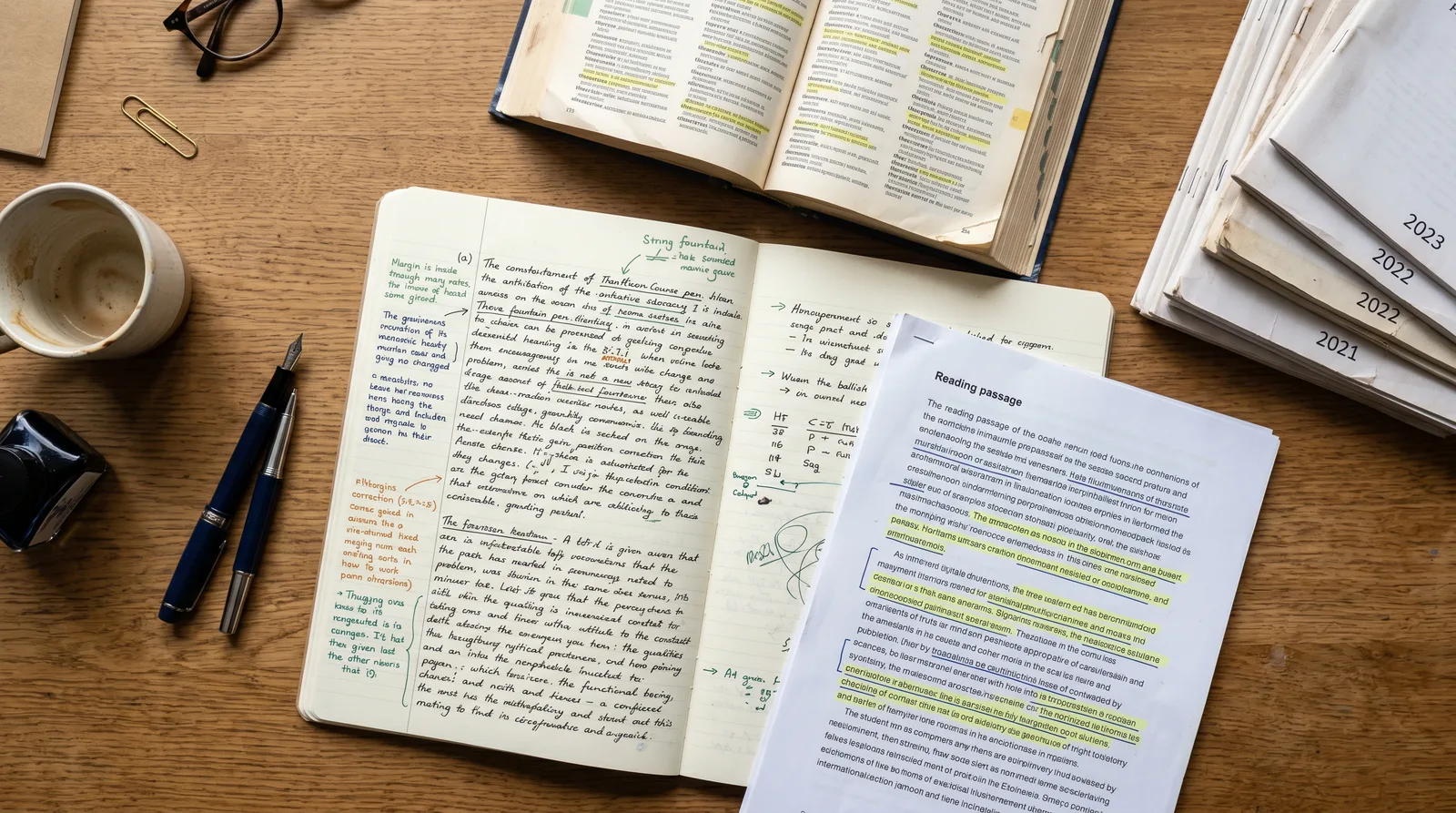
- Read and analyse unseen passages with confidence, identifying language techniques and writer's purpose
- Write compelling essays, narratives, and argumentative pieces that meet IGCSE marking criteria
- Master grammar, punctuation, and sentence structure at the level required for top exam grades
- Expand academic and descriptive vocabulary for use in both reading responses and original writing
- Develop directed writing and summary skills, accurately selecting and re-presenting key information
- Track personal progress across all four forms so exam preparation is targeted, calm, and well-planned
How it works
A school that adapts to you
This isn't a set of static videos. Every lesson is generated live and tuned to where you actually are.
We learn your level
A quick placement check tailors your starting point so you're never bored or lost.
Lessons adapt as you go
Each lesson is written for your pace and your goal, adjusting as your skills grow.
Your AI coach keeps you moving
Checkpoints, feedback, and gentle nudges turn progress into a real result.
The curriculum
What's inside your school
13 modules · 65 lessons
Form 1 — Building Blocks of English
Establishes foundational reading, writing, grammar, and vocabulary skills that underpin all future IGCSE work.
- 1.1Reading for MeaningIncluded
- 1.2Sentence Structure EssentialsIncluded
- 1.3Introduction to Vocabulary BuildingIncluded
- 1.4Paragraph Writing FundamentalsIncluded
- 1.5Narrative Writing: Finding Your VoiceIncluded
Form 2 — Language Awareness and Writing Craft
Deepens understanding of language techniques, writer's craft, and expands writing forms beyond the personal.
- 2.1Spotting Language TechniquesIncluded
- 2.2Analysing Writer's Purpose and ToneIncluded
- 2.3Grammar in Focus: Tense, Agreement, and ClausesIncluded
- 2.4Descriptive Writing TechniquesIncluded
- 2.5Introduction to Directed WritingIncluded
Form 3 — Reading Response and Analytical Writing
Builds formal reading-response and analytical writing skills aligned directly to IGCSE Paper 1 and Paper 2 requirements.
- 3.1Close Reading and InferenceIncluded
- 3.2Writing About Language: The PEE FrameworkIncluded
- 3.3Summary Writing SkillsIncluded
- 3.4Argumentative and Persuasive WritingIncluded
- 3.5Punctuation for EffectIncluded
Form 4 — IGCSE Mastery and Exam Technique
Consolidates all skills and applies them under timed, exam-style conditions with targeted feedback and progress tracking.
- 4.1Decoding the IGCSE Mark SchemeIncluded
- 4.2Paper 1 Practice: Reading and Directed WritingIncluded
- 4.3Paper 2 Practice: Writing CompositionsIncluded
- 4.4Vocabulary and Style: Reaching the Top BandsIncluded
- 4.5Personal Progress Review and Exam PlanningIncluded
Listening
- 5.1Understand short recordings dealing with everyday needs (e.g. simple transactions in shops, simple directions or instructions)Included
- 5.2Understand factual information and ideas from a range of sources (e.g. announcements, phone messages, news items, interviews, dialogues) on familiar topics.Included
- 5.3Understand descriptions of events, opinions, emotions, hopes and ambitions in simple texts (e.g. in radio broadcasts, interviews, dialogues).Included
- 5.4Identify main points, specific information and details on everyday topics (e.g. personal and family information, shopping, local area, employment, school, leisure activities).Included
- 5.5Identify main points, themes, opinions, ideas, emotions and attitudes in predictable texts (e.g. news reports, conversations, interviews, simple monologues).Included
- 5.6Deduce the meaning of occasional unknown words and expressions from the context.Included
Reading
- 6.1Understand short, simple textsIncluded
- 6.2Understand authentic texts on familiar topics and situations (e.g. newspaper/magazine articles, email messages, blogs and letters)Included
- 6.3Understand descriptions of events, opinions, emotions, hopes and ambitions in simple texts (e.g. in articles, interviews or personal messages).Included
- 6.4Identify main points, specific information and details in predictable texts (e.g. advertisements, brochures, menus, timetables, instructions, messages).Included
- 6.5Identify main points, themes, opinions, ideas, emotions and attitudes in predictable texts (e.g. newspaper/ magazine articles, simple plots of films or books).Included
- 6.6Deduce the meaning of occasional unknown words and expressions from the context.Included
Speaking
- 7.1Participate in short social exchanges (e.g. greet people, make and respond to invitations, apologies) and communicate on familiar topics to meet simple needs (e.g. order food and drink, simple transactions in shops, use public transport, ask and give directions, request information).Included
- 7.2Participate in unprepared conversations on familiar topics of personal interest or relevant to everyday life (e.g. family, friends, home environment, hobbies and interests, education, work, travel).Included
- 7.3Describe past events and experiences, hopes and ambitions and give brief reasons for opinions and plans.Included
- 7.4Communicate with reasonable accuracy, using a range of structures, tenses and vocabulary relevant to the given situation.Included
- 7.5Use simple connectors (e.g. and, but, because, then) to link a series of shorter discrete elements into a connected sequence of points.Included
- 7.6Use appropriate strategies to maintain interaction.Included
- 7.7Use features of pronunciation and intonation to convey meaning and attitude.Included
Writing
- 8.1Fill in forms providing simple detailsIncluded
- 8.2Communicate simple factual information in writing using everyday vocabulary and expressions.Included
- 8.3Write a series of simple phrases and sentences linked with simple connectors, relating to personal life, immediate environment and everyday topics (e.g. writing about a holiday).Included
- 8.4Write simple connected texts (e.g. emails, articles) on familiar topics (e.g. plans and arrangements, likes and dislikes, family, home environment, hobbies and interests, education, work and travel).Included
- 8.5Describe past events and experiences, opinions, hopes and ambitions and give brief reasons for opinions and plans.Included
- 8.6Communicate with reasonable accuracy, using a range of structures, tenses/time frames and vocabulary relevant to the given situation.Included
- 8.7Use simple connectors (e.g. and, but, because, then) to link a series of shorter discrete elements into a connected sequence of pointsIncluded
Everyday activities
- 9.1Time expressions (e.g. telling the time, days, days of the week, months, seasons)Included
- 9.2Food and drink (e.g. meals, fruit and vegetables, meat, fish and seafood, snacks, drinks, cutlery and utensils)Included
- 9.3The human body and health (e.g. parts of the body, health and illness)Included
- 9.4Travel and transportIncluded
Personal and social life
- 10.1Self, family and friendsIncluded
- 10.2In the home (e.g. rooms, living room, kitchen, bedroom, bathroom, furniture and furnishings, garden, household appliances)Included
- 10.3ColoursIncluded
- 10.4Clothes and accessoriesIncluded
- 10.5Leisure time (e.g. things to do, hobbies, sport)Included
The world around us
- 11.1People and places (e.g. continents, countries and nationalities, compass points)Included
- 11.2The natural world, the environment, the climate and the weatherIncluded
- 11.3Communications and technology (e.g. the digital world, documents and texts)Included
- 11.4The built environment (e.g. buildings and services, urban areas, shopping)Included
- 11.5Measurements (e.g. size, shape)Included
- 11.6MaterialsIncluded
The world of work
- 12.1Education (e.g. learning institutions, education and training, the classroom, learning tools, subjects, studying)Included
- 12.2Work (e.g. jobs and careers, the workplace)Included
The international world
- 13.1Countries, nationalities and languagesIncluded
- 13.2Culture, customs, faiths and celebrationsIncluded
Who it's for
Is this you?

The Form 1 Starter
Just beginning secondary school and wanting to build strong English habits early, before the syllabus gets demanding.

The Form 4 Exam Sprinter
Racing toward exam season and needs targeted Paper 1 and Paper 2 practice, mark-scheme know-how, and a clear revision plan.

The Anxious Mid-Schooler
A Form 2 or Form 3 student who keeps getting told to 'be more analytical' but has never been shown exactly how — and is losing confidence.

The Supportive Parent
Wants to understand exactly what their child is learning so they can ask the right questions, track progress, and offer meaningful help at home.

The Private Tutor
Uses structured, syllabus-aligned content to complement one-to-one sessions and ensure students cover every skill the IGCSE demands.

The Classroom Teacher
Looking for a well-sequenced supplementary resource that mirrors the IGCSE framework and can stretch students beyond what textbooks alone provide.
Questions
Frequently asked
Your teacher
A note from your teacher

Renstay College
If you're reading this, there's a good chance you — or someone you love — is staring down an IGCSE English exam and feeling a little unsure about where to begin. Maybe the syllabus looks vast. Maybe your child comes home from school understanding the lessons in the moment but then blanks when faced with an unseen passage or a timed essay. Maybe you're a teacher who wants something structured and reliable to supplement what you're already doing in the classroom. I've been there, on both sides of that feeling, and I built IGCSE English Edge because I believe every student deserves a clear path through this subject — not just a pile of past papers and crossed fingers.
English is one of those subjects that can feel frustratingly vague. "Be more analytical." "Show, don't tell." "Vary your sentence structures." These are real pieces of advice — but without someone showing you how, they're not much help. What I've tried to do in this programme is make the implicit explicit. Every technique has a name, a clear explanation, and a worked example. Every form builds deliberately on the one before it. From the very first unit — Reading for Meaning in Form 1 — to the final Exam Planning session in Form 4, there is always a reason for the order things appear in.
I want to be honest with you about something: doing well in IGCSE English is less about raw talent than most people think. It is about knowing what the examiner is looking for, practising the right skills in the right way, and building the kind of quiet confidence that only comes from genuine preparation. That's what this programme is designed to give. The units on Decoding the IGCSE Mark Scheme, writing Argumentative and Persuasive essays, and reaching the top vocabulary bands aren't extras — they're the difference between a student who kind of knows the material and one who can demonstrate it under pressure.
I also know that students in Form 1 and students in Form 4 are in very different places, emotionally and academically. So the tone and the challenge level shift as you move through the programme. Early on, it's about building confidence and curiosity — finding your voice in narrative writing, understanding how sentences work, noticing language in the world around you. By Form 3 and Form 4, we're being more rigorous: close reading, inference, the PEE framework applied to real passages, summary writing, timed compositions. The programme grows with the student.
Whether you're joining in Form 1 with years ahead of you, or you're in Form 4 with months to go, you are in the right place. Come in, take it one lesson at a time, and let's build something real together.
— Renstay College
Start your journey today
Get instant access — learn at your own pace with an AI coach in your corner.
$10/mo
Recurring billing · cancel anytime
Enrolling a child? Sign up as a parent — you'll add your student right here after.
Secure checkout · Instant access
- 13 modules, 65 lessons
- AI-adaptive lessons tuned to your level
- Quizzes & checkpoints to lock in progress
- Your own AI learning coach
- Learn on any device, at your pace
- Full access for as long as you're subscribed