
Crack IGCSE Chemistry — from first principles to final exam
Step-by-step lessons built around the official Cambridge syllabus take you from the particle model all the way through organic chemistry, so every topic clicks before exam day arrives — no gaps, no guesswork.
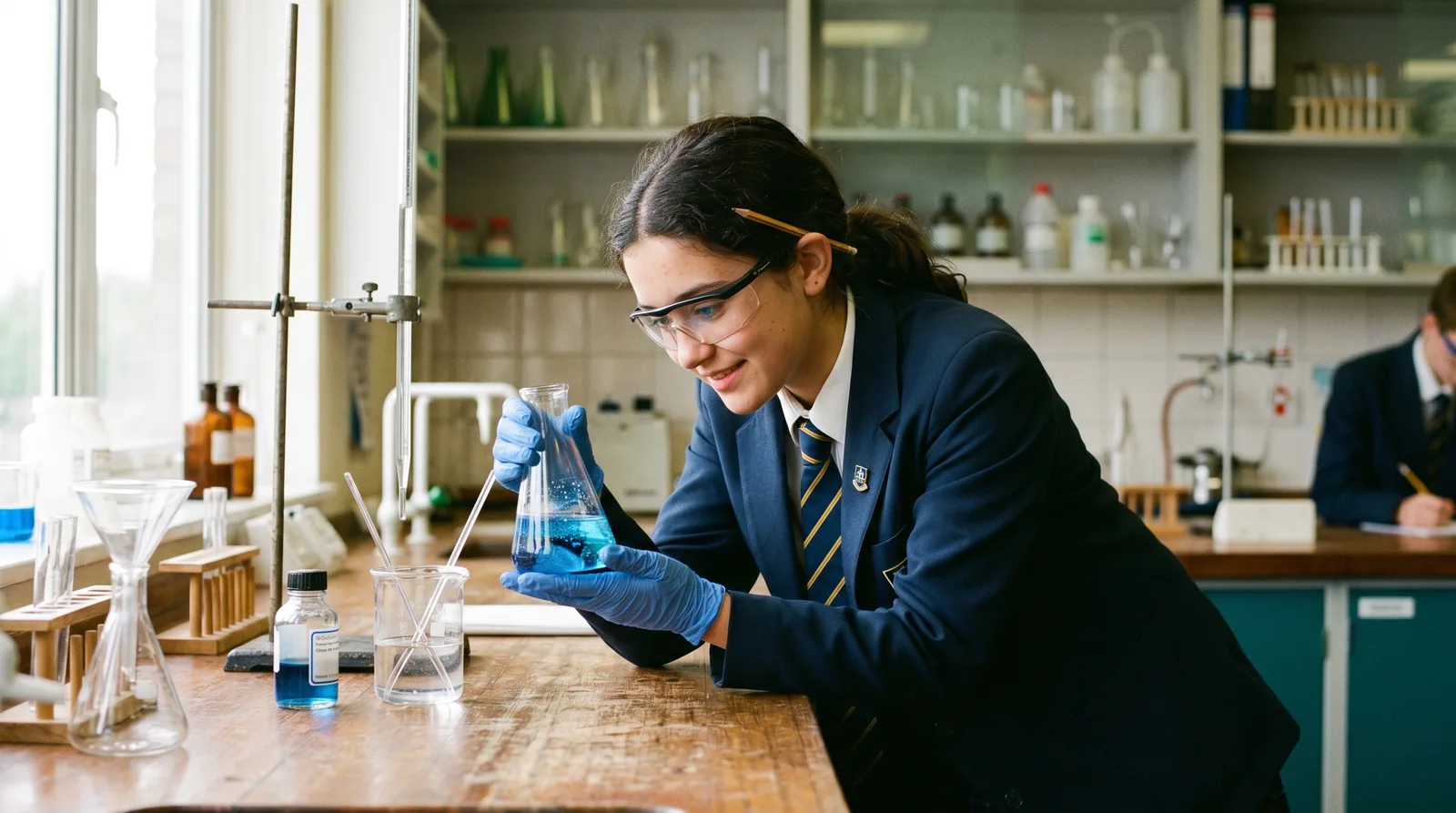
My job isn't just to teach you chemistry — it's to make sure you genuinely understand it, so that when you walk into that exam, you're not hoping the right questions come up, you're ready for all of them.
— Renstay College
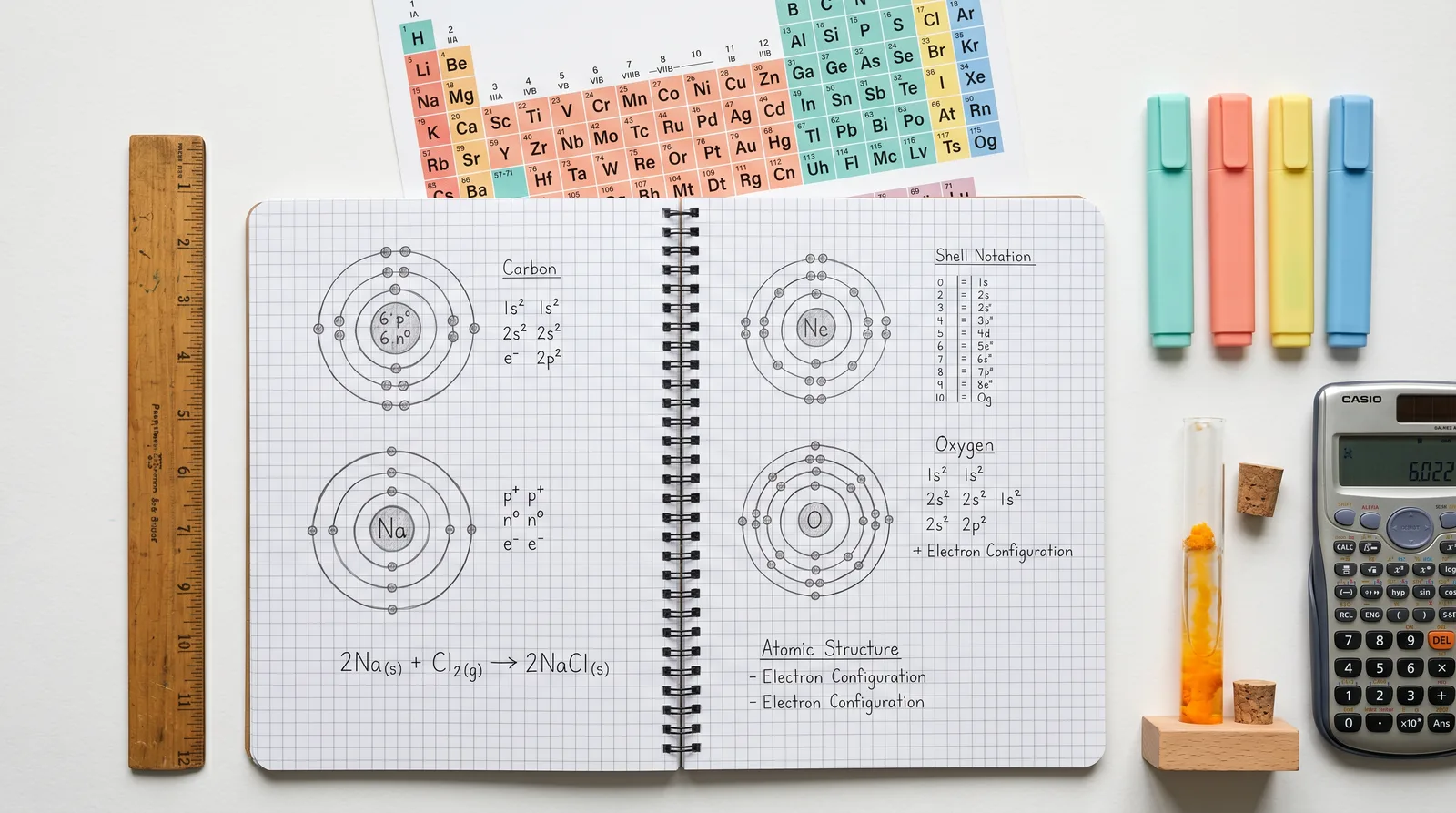
What you'll learn
What you'll be able to do
- Explain and apply core IGCSE Chemistry concepts — from atomic structure to organic chemistry — at exam standard
- Balance chemical equations confidently and perform accurate mole and stoichiometry calculations
- Describe and interpret laboratory experiments, including safety procedures and result analysis, as required by the practical paper
- Identify patterns in the Periodic Table and predict the properties and reactions of elements and compounds
- Write well-structured answers using correct chemical terminology to score maximum marks on Cambridge exam questions
- Track progress across all four forms and arrive at the IGCSE examination fully prepared and exam-strategy ready
How it works
A school that adapts to you
This isn't a set of static videos. Every lesson is generated live and tuned to where you actually are.
We learn your level
A quick placement check tailors your starting point so you're never bored or lost.
Lessons adapt as you go
Each lesson is written for your pace and your goal, adjusting as your skills grow.
Your AI coach keeps you moving
Checkpoints, feedback, and gentle nudges turn progress into a real result.
The curriculum
What's inside your school
21 modules · 93 lessons

The Particle Model & Pure Substances
Establishes the foundational particle theory, states of matter, and methods for separating and identifying pure substances.
- 1.1States of Matter & the Particle ModelIncluded
- 1.2Diffusion, Brownian Motion & Gas PressureIncluded
- 1.3Pure Substances vs. MixturesIncluded
- 1.4Separation TechniquesIncluded
- 1.5Experimental Skills: Safety, Apparatus & ResultsIncluded
Atomic Structure & the Periodic Table
Covers the structure of the atom, isotopes, electron configuration, and the organisation and trends of the Periodic Table.
- 2.1Inside the Atom: Protons, Neutrons & ElectronsIncluded
- 2.2Atomic Number, Mass Number & IsotopesIncluded
- 2.3Electron Configuration & Energy LevelsIncluded
- 2.4The Periodic Table: Structure & TrendsIncluded
- 2.5Group Properties: Alkali Metals, Halogens & Noble GasesIncluded
Chemical Bonding, Structure & Properties
Explains ionic, covalent, and metallic bonding and links bonding type to the physical properties of substances.
- 3.1Ionic Bonding & Giant Ionic StructuresIncluded
- 3.2Covalent Bonding & Simple Molecular StructuresIncluded
- 3.3Giant Covalent Structures: Diamond, Graphite & Silicon DioxideIncluded
- 3.4Metallic Bonding & Properties of MetalsIncluded
- 3.5Drawing Dot-and-Cross DiagramsIncluded
Chemical Formulae, Equations & Stoichiometry
Builds the quantitative skills to write formulae, balance equations, and perform mole and stoichiometry calculations.
- 4.1Writing Chemical FormulaeIncluded
- 4.2Balancing Chemical EquationsIncluded
- 4.3The Mole & Relative Atomic MassIncluded
- 4.4Mole Calculations: Mass, Volume & ConcentrationIncluded
- 4.5Stoichiometry & Limiting ReagentsIncluded
Acids, Bases, Salts & Electrochemistry
Covers the chemistry of acids and bases, salt preparation methods, and the principles and applications of electrolysis.
- 5.1Acids, Bases & the pH ScaleIncluded
- 5.2Reactions of Acids & IndicatorsIncluded
- 5.3Preparing Salts: Neutralisation, Titration & PrecipitationIncluded
- 5.4Introduction to ElectrolysisIncluded
- 5.5Electrolysis Applications: Electroplating & Industrial ProcessesIncluded
Metals, Reactivity & the Environment
Examines the reactivity series, extraction of metals, corrosion, and the environmental impact of industrial chemistry.
- 6.1The Reactivity SeriesIncluded
- 6.2Extracting Metals: Reduction & ElectrolysisIncluded
- 6.3Rusting, Corrosion & Preventing CorrosionIncluded
- 6.4The Haber Process & Industrial ChemistryIncluded
- 6.5Environmental Chemistry: Pollution & Green ChemistryIncluded
Rates of Reaction, Energy Changes & Equilibrium
Investigates the factors controlling reaction rates, energy changes in reactions, and the concept of dynamic equilibrium.
- 7.1Measuring Rates of ReactionIncluded
- 7.2Factors Affecting Reaction RateIncluded
- 7.3Exothermic & Endothermic ReactionsIncluded
- 7.4Bond Energies & Enthalpy CalculationsIncluded
- 7.5Dynamic Equilibrium & Le Chatelier's PrincipleIncluded
Organic Chemistry
Introduces the homologous series of organic compounds, their properties, reactions, and everyday applications.
- 8.1Introduction to Carbon Compounds & HydrocarbonsIncluded
- 8.2Alkanes: Properties, Combustion & CrackingIncluded
- 8.3Alkenes: Addition Reactions & the Bromine TestIncluded
- 8.4Alcohols, Carboxylic Acids & EstersIncluded
- 8.5Polymers: Addition & Condensation PolymerisationIncluded
Exam Preparation & Practical Skills Mastery
Consolidates all four forms of content through exam technique coaching, practical paper preparation, and full-syllabus revision strategies.
- 9.1Practical Paper Skills: Planning & SafetyIncluded
- 9.2Analysing & Evaluating Experimental ResultsIncluded
- 9.3Exam Technique: Command Words & Mark SchemesIncluded
- 9.4Calculation Mastery: Mixed Mole & Stoichiometry PracticeIncluded
- 9.5Full-Syllabus Revision & Exam StrategyIncluded
States of matter
- 10.1Solids, liquids and gasesIncluded
- 10.2DiffusionIncluded
Atoms, elements and compounds
- 11.1Elements, compounds and mixturesIncluded
- 11.2Atomic structure and the Periodic TableIncluded
- 11.3IsotopesIncluded
- 11.4Ions and ionic bondsIncluded
- 11.5Simple molecules and covalent bondsIncluded
- 11.6Giant covalent structuresIncluded
- 11.7Metallic bondingIncluded
Stoichiometry
- 12.1FormulaeIncluded
- 12.2Relative masses of atoms and moleculesIncluded
- 12.3The mole and the Avogadro constantIncluded
Electrochemistry
- 13.1ElectrolysisIncluded
- 13.2Hydrogen–oxygen fuel cellsIncluded
Chemical energetics
- 14.1Exothermic and endothermic reactionsIncluded
Chemical reactions
- 15.1Physical and chemical changesIncluded
- 15.2Rate of reactionIncluded
- 15.3Reversible reactions and equilibriumIncluded
- 15.4RedoxIncluded
Acids, bases and salts
- 16.1The characteristic properties of acids and basesIncluded
- 16.2OxidesIncluded
- 16.3Preparation of saltsIncluded
The Periodic Table
- 17.1Arrangement of elementsIncluded
- 17.2Group I propertiesIncluded
- 17.3Group VII propertiesIncluded
- 17.4Transition elementsIncluded
- 17.5Noble gasesIncluded
Metals
- 18.1Properties of metalsIncluded
- 18.2Uses of metalsIncluded
- 18.3Alloys and their propertiesIncluded
- 18.4Reactivity seriesIncluded
- 18.5Corrosion of metalsIncluded
- 18.6Extraction of metalsIncluded
Chemistry of the environment
- 19.1WaterIncluded
- 19.2FertilisersIncluded
- 19.3Air quality and climateIncluded
Organic chemistry
- 20.1Formulae, functional groups and terminologyIncluded
- 20.2Naming organic compoundsIncluded
- 20.3FuelsIncluded
- 20.4AlkanesIncluded
- 20.5AlcoholsIncluded
- 20.6Carboxylic acidsIncluded
- 20.7PolymersIncluded
Experimental techniques and chemical analysis
- 21.1Experimental designIncluded
- 21.22 Acid–base titrationsIncluded
- 21.3ChromatographyIncluded
- 21.4Separation and purificationIncluded
- 21.5Identification of ions and gasesIncluded
Who it's for
Is this you?

Form 1 Starters
Beginning their IGCSE journey and want to build a rock-solid foundation from day one — the particle model, atoms, and bonding done properly from the start.

Form 4 Exam Sprinters
In the final stretch before Cambridge exams and need to sharpen exam technique, nail mole calculations, and revise the full syllabus with confidence.

Home-schooled Learners
Studying independently without a classroom teacher and need a structured, self-paced school that covers every Cambridge syllabus topic clearly and completely.

Gap-fillers
Keeping up in class overall but struggling with specific topics — stoichiometry, equilibrium, organic chemistry — and want targeted lessons that actually fix the confusion.

Practical Paper Worriers
Comfortable with theory but anxious about the practical paper, and want step-by-step guidance on planning experiments, evaluating results, and writing up findings exam-style.

Supportive Parents
Looking for a thorough, trustworthy resource to sit alongside their child's school lessons and give them the extra clarity and practice that makes all the difference.
Questions
Frequently asked
Your teacher
A note from your teacher
Renstay College
If you've ever stared at a chemistry question and felt your mind go completely blank — even though you know you revised it — you're in exactly the right place.
So many students find IGCSE Chemistry overwhelming not because they aren't smart enough, but because the concepts were never explained in a way that actually made sense to them. Someone rattled through atomic structure, bonding, and the mole in a few lessons, and now everything feels shaky. You sit in class nodding along, but the moment the textbook closes, you're not sure you could explain it back. I've seen it happen again and again, and it's not your fault.
That's why I built IGCSE Chem Lab the way I did. Every single topic — from the very first lesson on states of matter and the particle model, all the way through to polymers and Le Chatelier's Principle — is taught in small, connected steps. I use analogies and everyday examples to make abstract ideas feel concrete, and I never move on until the foundation is solid. Because here's the thing about chemistry: it's actually a beautifully logical subject once someone shows you the threads that tie it all together.
This school covers everything on the Cambridge IGCSE syllabus across all four forms, but it's about much more than ticking syllabus boxes. By the time you reach the exam preparation unit, you won't just know the content — you'll know how to use it. You'll understand what Cambridge's command words are really asking, how to read a mark scheme, how to structure a high-scoring answer, and how to stay calm and systematic under exam pressure. The practical paper, mole calculations, Periodic Table trends, organic reactions — nothing gets glossed over.
Whether you're a Form 1 student just starting your chemistry journey, a Form 4 student in the final sprint before exams, or a home-schooled learner working through the syllabus on your own schedule, IGCSE Chem Lab is designed to meet you exactly where you are. Come in curious, work through it at your own pace, and I promise you — chemistry will start to make sense in a way it never quite has before. I'll be with you every step of the way.
— Renstay College
Start your journey today
Get instant access — learn at your own pace with an AI coach in your corner.
$10/mo
Recurring billing · cancel anytime
Enrolling a child? Sign up as a parent — you'll add your student right here after.
Secure checkout · Instant access
- 21 modules, 93 lessons
- AI-adaptive lessons tuned to your level
- Quizzes & checkpoints to lock in progress
- Your own AI learning coach
- Learn on any device, at your pace
- Full access for as long as you're subscribed