Write poems readers can see, smell, and feel
Learn to write poems that readers can see, smell, and feel — by mastering the visual craft of imagery before anything else. From sharp observation to extended metaphor, you'll build poems grounded in the concrete world.
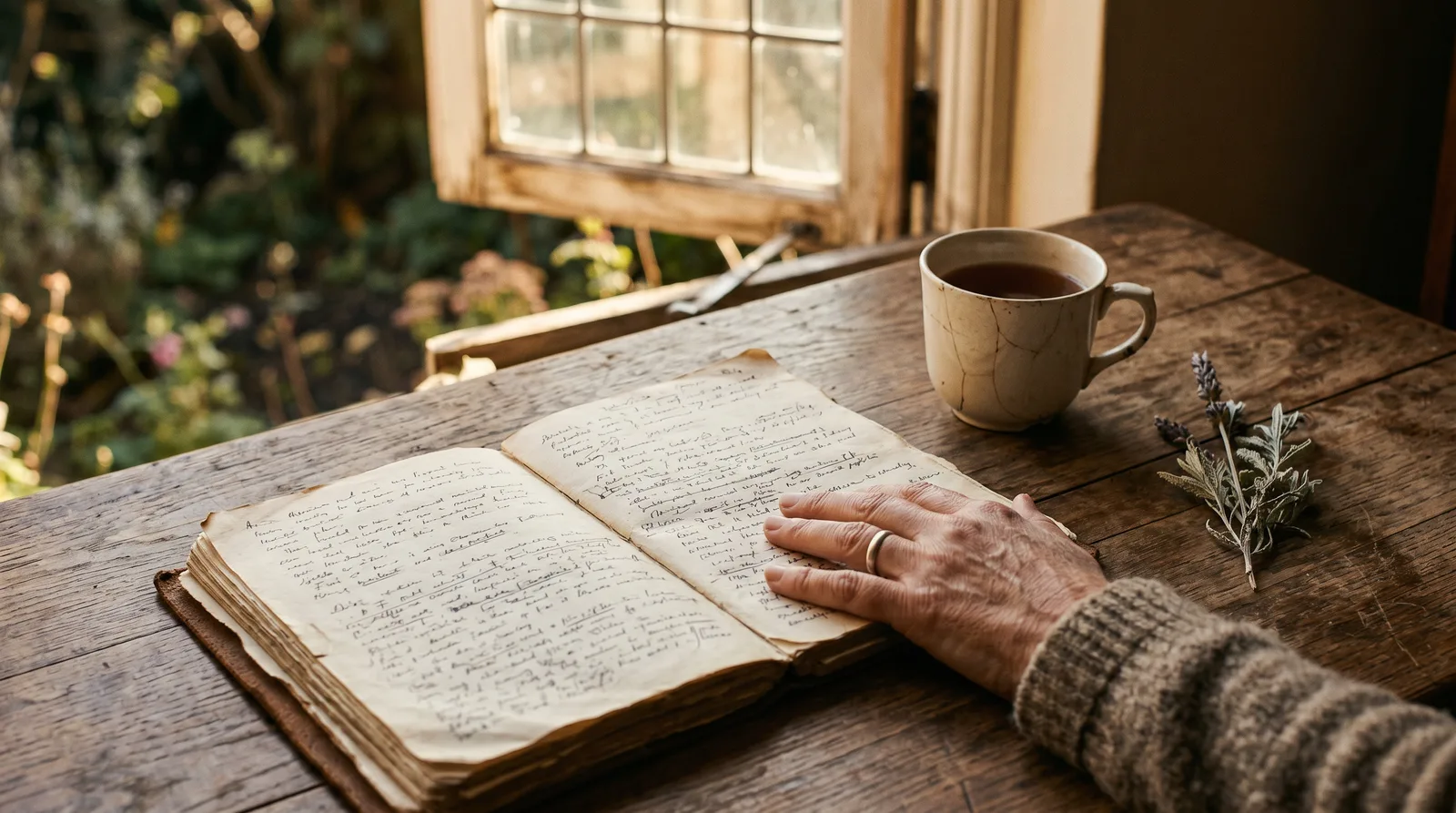
"Every poem I've ever loved gives me something to hold — my job is to teach you how to put that thing in the reader's hands."
— Carla Paton
What you'll learn
What you'll be able to do
- Observe the physical world with a poet's eye and capture specific, concrete details that make lines come alive
- Replace vague abstractions with precise concrete nouns and charged sensory language across all five senses
- Deploy symbolism naturally — letting objects carry emotional weight without stating a theme outright
- Construct extended metaphors that sustain a single image across an entire poem without collapsing
- Identify and build image clusters that create an internal visual logic and emotional arc in a poem
- Revise your own drafts using image-first diagnostic questions, cutting abstractions and sharpening every line
How it works
A school that adapts to you
This isn't a set of static videos. Every lesson is generated live and tuned to where you actually are.
We learn your level
A quick placement check tailors your starting point so you're never bored or lost.
Lessons adapt as you go
Each lesson is written for your pace and your goal, adjusting as your skills grow.
Your AI coach keeps you moving
Checkpoints, feedback, and gentle nudges turn progress into a real result.
The curriculum
What's inside your school
6 modules · 14 lessons

Seeing Like a Poet: The Art of Observation
Before students can write powerful imagery, they must first learn to see differently. This foundational module trains the poet's eye — slowing down perception, resisting the urge to generalize, and learning to trust the physical world as raw material. All five target skills depend on the quality of observation practiced here.
- 1.1What Poets Actually SeeIncluded
- 1.2The Specific vs. The GeneralIncluded
- 1.3Noticing in the Wild: Keeping an Image NotebookIncluded
The Concrete Noun and the Charged Line
With observation skills in place, students now focus on the line itself — the unit of energy in a poem. This module teaches them that concrete nouns are the load-bearing walls of a poem and that sensory language across all five senses is the difference between a line that is read and a line that is felt. Students also discover how word choice at the level of connotation and sound ('charged language') turns an accurate image into one that detonates on contact.
- 2.1Concrete Nouns Do the Heavy LiftingIncluded
- 2.2All Five Senses, Not Just the EyesIncluded
- 2.3Charged Language: Choosing Words That DetonateIncluded
Objects That Mean More: Symbolism Without Statement
Students are now ready to let their concrete images do double duty. This module teaches symbolism not as a literary device imposed from the outside but as something that grows organically from intense attention to an object. The key discipline is restraint: the poet never announces what the symbol means. Students learn to trust the image and the reader. Two lessons are the right scope — over-structuring this module risks teaching students to reach for symbols artificially.
- 3.1How Symbols Grow from ObjectsIncluded
- 3.2Restraint: When Not to ExplainIncluded
Extended Metaphor: One Image, An Entire Poem
Students now scale up from the single charged image to the governing metaphor that can sustain an entire poem. This module teaches them to choose a metaphor capacious enough to hold the poem's full emotional and intellectual weight, and to develop it with internal logic, escalating pressure, and earned surprise — without allowing it to collapse into absurdity or inconsistency. Prerequisites are the concrete noun skills from Module 2 and the symbolic thinking from Module 3.
- 4.1Choosing a Metaphor That Can Go the DistanceIncluded
- 4.2Sustaining the Metaphor: Logic, Pressure, and SurpriseIncluded
Image Clusters and the Visual Logic of a Whole Poem
Individual strong images are not enough — a finished poem needs an internal visual logic, a sense that its images have been chosen and arranged to create a coherent emotional and visual world. This module teaches students to recognize and build image clusters: constellations of related images that generate meaning through their relationships, not just their individual power. It also addresses the emotional arc that well-clustered images naturally create — prerequisite for the revision module that follows.
- 5.1What Is an Image Cluster?Included
- 5.2Visual Logic and Emotional ArcIncluded
Revision: Diagnosing and Sharpening Every Line
The final module integrates every skill developed in the course into a systematic, image-first revision practice. Students are equipped with a diagnostic toolkit — specific questions to ask of every line — and guided through a complete revision cycle from rough draft to finished poem. Crucially, revision here is not proofreading: it is re-seeing. This module fulfills the course's culminating outcome and confirms that the image-first approach is a permanent habit of craft, not a one-time technique.
- 6.1The Image-First Diagnostic: Reading Your Draft Like a SurgeonIncluded
- 6.2From Draft to Finished Poem: The Full Revision CycleIncluded
Who it's for
Is this you?

The abstract-poet
They write with genuine feeling but keep hearing 'too vague' — this school gives them the concrete tools to make that feeling land.

The fiction writer crossing over
They know how to write a scene but not a poem, and want to understand how imagery works at the line level.

The workshop participant
They've been in writing groups long enough to know what's missing in their work — a systematic, image-first foundation to rebuild from.

The journaling diarist
They fill notebooks with observations and feelings, and are ready to learn how to compress that raw material into poems with real precision and power.

The curious beginner
They've loved poetry for years and finally want to write it — starting with the most foundational, generative skill in the craft.

The returning writer
They wrote poetry in school or college, stepped away for years, and want to come back with a more rigorous, image-driven eye than they had before.
Questions
Frequently asked
Your teacher
A note from your teacher

Carla Paton
If you've ever finished a poem and felt that it almost works — that there's something real in it, but it keeps slipping away from the reader before they can grasp it — I want you to know that feeling is not a signal to write less. It's a signal to see more precisely.
That's the thing no one tells you early enough: poetry is a visual art before it's anything else. Not visual the way a painting is, but visual in the sense that readers need something to hold. They need to be able to see it, smell it, feel the temperature of it. The moment a poem retreats into abstraction — into "longing" instead of "the coat still on the hook," into "grief" instead of "the cup she rinsed and put away" — it loses the reader. Not because the reader is unsophisticated. Because the human brain reaches for images the way hands reach for a railing in the dark.
That insight is the foundation of everything I teach in Image First Poetry. Every module asks the same essential question — but what does it look like? — and builds a more precise answer. We start with observation, because most of us have been trained out of really noticing the physical world. We move through concrete language, symbolism, extended metaphor, and image clusters, always staying close to the ground, always asking the poem to earn its emotional weight through specific, sensory, concrete things — not through assertion. And we end with revision, because that's where poems are actually made: in the willingness to read your own draft like a surgeon and ask, with honesty and patience, where it has gone soft.
I want to be clear about what this school is not: it's not a set of prescriptions. There are no rules about how a poem must look or how long a line should be. What it is, is a set of seeing habits — ways of moving through the world and through a draft that will make your poems more alive than they have ever been. You'll read real poems closely, you'll write, and you'll revise. And somewhere in that process, you'll start to notice that the world around you has gotten sharper and stranger and more full of material than it was before.
That's the real transformation I'm after. Not just better poems — though you will write better poems. A different way of paying attention. Come and learn to see.
— Carla Paton
Start your journey today
Get instant access — learn at your own pace with an AI coach in your corner.
$19/mo
Recurring billing · cancel anytime
Secure checkout · Instant access
- 6 modules, 14 lessons
- AI-adaptive lessons tuned to your level
- Quizzes & checkpoints to lock in progress
- Your own AI learning coach
- Learn on any device, at your pace
- Full access for as long as you're subscribed