Master the immune system — mechanistically
From pattern recognition receptors to CAR-T cell therapy, Immunology Unlocked gives serious learners — students, clinicians, and research scientists — a rigorous, research-grade command of immune biology that holds up in the clinic, the lab, and the literature.
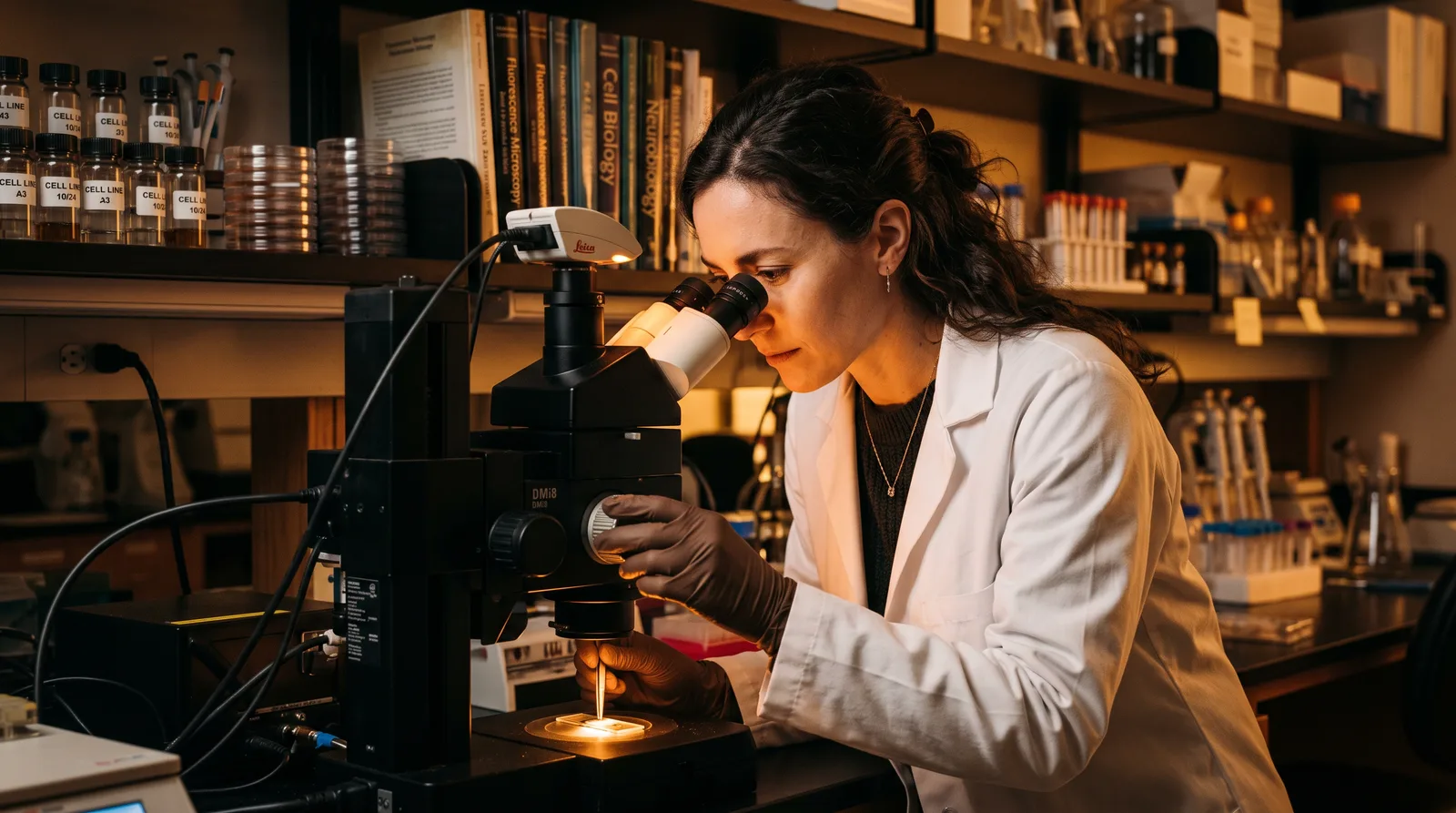
Immunology taught at the level it deserves — where every mechanism makes sense and the complexity becomes the satisfaction, not the obstacle.
— Tracy Burke
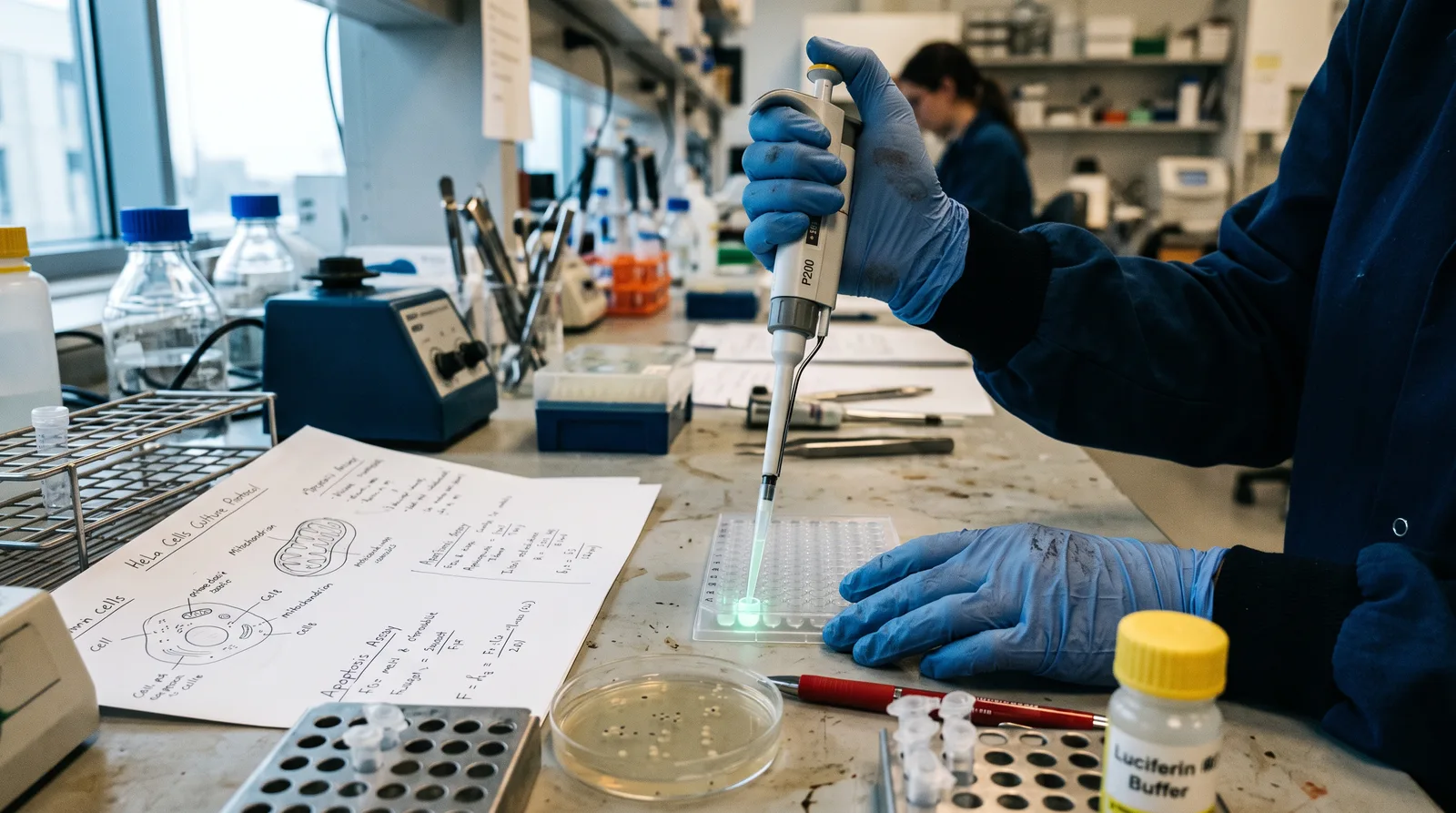
What you'll learn
What you'll be able to do
- Explain the full architecture of innate and adaptive immunity, including the roles of every major cell type and signaling molecule
- Trace antigen presentation pathways through MHC class I and II and predict the resulting T-cell responses
- Interpret how antibody isotypes, affinity maturation, and memory B cells underpin long-term humoral protection
- Analyze the immunological basis of autoimmune diseases, hypersensitivity reactions, and primary immunodeficiencies
- Evaluate how vaccines, monoclonal antibodies, and checkpoint inhibitors exploit immune mechanisms for therapeutic effect
- Read and critically assess primary immunology research literature using accurate mechanistic reasoning
How it works
A school that adapts to you
This isn't a set of static videos. Every lesson is generated live and tuned to where you actually are.
We learn your level
A quick placement check tailors your starting point so you're never bored or lost.
Lessons adapt as you go
Each lesson is written for your pace and your goal, adjusting as your skills grow.
Your AI coach keeps you moving
Checkpoints, feedback, and gentle nudges turn progress into a real result.
The curriculum
What's inside your school
6 modules · 30 lessons

Foundations of the Immune System
Establishes the cellular cast, anatomical organization, and core principles that underpin all subsequent immunology.
- 1.1The Immune System at a GlanceIncluded
- 1.2Immune Organs and TissuesIncluded
- 1.3Hematopoiesis and Leukocyte LineagesIncluded
- 1.4Pattern Recognition: PRRs, PAMPs, and DAMPsIncluded
- 1.5Cytokines and Chemokines: The Language of ImmunityIncluded
Innate Immunity and Inflammation
Covers the rapid first-line response, including phagocytosis, the complement system, innate lymphoid cells, and the inflammatory cascade.
- 2.1Phagocytes: Neutrophils and MacrophagesIncluded
- 2.2The Complement SystemIncluded
- 2.3Natural Killer Cells and Innate Lymphoid CellsIncluded
- 2.4Dendritic Cells: Bridging Innate and Adaptive ImmunityIncluded
- 2.5Acute Inflammation and ResolutionIncluded
Antigen Presentation and T-Cell Biology
Builds a mechanistic understanding of MHC-restricted antigen presentation, T-cell development, activation, and effector differentiation.
- 3.1MHC Class I: Endogenous Antigen PresentationIncluded
- 3.2MHC Class II: Exogenous Antigen PresentationIncluded
- 3.3T-Cell Development and Central ToleranceIncluded
- 3.4T-Cell Activation, Co-stimulation, and AnergyIncluded
- 3.5T Helper Subsets, Cytotoxic T Cells, and Regulatory T CellsIncluded
B Cells, Antibodies, and Humoral Immunity
Covers B-cell development, germinal center reactions, antibody structure and isotypes, and the cellular basis of immunological memory.
- 4.1B-Cell Development and Central ToleranceIncluded
- 4.2Antibody Structure, Isotypes, and Effector FunctionsIncluded
- 4.3T-Dependent B-Cell Activation and the Germinal CenterIncluded
- 4.4T-Independent Antigens and the Extrafollicular ResponseIncluded
- 4.5Memory B Cells, Long-Lived Plasma Cells, and Secondary ResponsesIncluded
Immune Dysfunction: Allergy, Autoimmunity, and Immunodeficiency
Analyzes how breakdowns in tolerance, regulation, or immune cell development lead to hypersensitivity, autoimmune disease, and immunodeficiency.
- 5.1Hypersensitivity Reactions: Types I–IVIncluded
- 5.2Mechanisms of AutoimmunityIncluded
- 5.3Autoimmune Disease Case Studies: SLE, RA, and MSIncluded
- 5.4Primary ImmunodeficienciesIncluded
- 5.5HIV and Acquired ImmunodeficiencyIncluded
Clinical and Translational Immunology
Connects immune mechanisms to vaccines, biologics, cancer immunology, and the skills needed to critically read primary research literature.
- 6.1Vaccine Design and Immunological MechanismsIncluded
- 6.2Monoclonal Antibodies as TherapeuticsIncluded
- 6.3Tumor Immunology and Immune EvasionIncluded
- 6.4Checkpoint Inhibitors and CAR-T Cell TherapyIncluded
- 6.5Reading Immunology Research: From Data to MechanismIncluded
Who it's for
Is this you?

Pre-med students
Build a mechanistically rigorous immunology foundation that sets you apart in medical school interviews, coursework, and beyond.

Medical students
Go far deeper than board-review resources — understand the immune mechanisms behind the diseases you'll spend your career treating.

Nurses & clinicians
Make real mechanistic sense of the immunotherapies, biologics, and autoimmune conditions you encounter in clinical practice every day.

Biomedical PhD students
Sharpen the immunological reasoning that anchors your experimental design, grant writing, and engagement with the primary literature.

Research scientists
Build the cross-disciplinary immune-biology fluency to interpret findings, frame hypotheses, and collaborate across translational projects.

Biomedical science graduates
Fill the mechanistic gaps left by survey-level undergraduate teaching and arrive at graduate school or industry roles fully prepared.
Questions
Frequently asked
Your teacher
A note from your teacher

Tracy Burke
If you've made it to this page, I suspect you already know that most immunology instruction falls into one of two failure modes: it's either too shallow to be scientifically useful, or it's a wall of disconnected facts that you memorize for an exam and forget within a month. Neither version actually builds the mental model you need — the kind that lets you pick up a primary paper, trace an unfamiliar signaling pathway, and reason your way to a conclusion.
That gap is exactly why I built Immunology Unlocked.
I designed this school for people who are serious about understanding immunity at the level it actually operates — mechanistically, precisely, and with the clinical relevance that makes the science matter. That means we don't just name the players; we explain what they do, how they're regulated, what happens when they fail, and why the field's therapeutic strategies are designed the way they are. When we cover MHC class I presentation, you understand the proteasome, the TAP transporter, and the peptide-loading complex — not just the label. When we cover the germinal center, you follow somatic hypermutation and affinity-based selection step by step. When we get to checkpoint inhibitors, you understand precisely which molecular brakes are being released and what the immunological consequences are.
I also want to be direct about something: this school does not hold your hand through foundational biology. It does build from the ground up — we start with hematopoiesis, organ architecture, and pattern recognition before a single adaptive response is discussed. But the instruction moves with purpose, uses specialist vocabulary correctly from the start, and expects you to engage actively with mechanisms rather than passively receive information. That rigor is not a barrier; it's the point. It's what makes the knowledge durable.
Whether you're a pre-med student trying to build a genuine conceptual foundation, a medical student who wants to understand the immunology behind the diseases you'll treat, a nurse or clinician looking to make mechanistic sense of the immunotherapies showing up in your practice, or a research scientist who needs to think more fluidly across the literature — this curriculum was built with you in mind. The sequence is deliberate, the explanations are precise, and the translational modules at the end are designed to close the loop between bench science and bedside reality.
I genuinely believe that immunology, taught well, is one of the most intellectually satisfying fields in all of biomedicine. The system is elegant, the logic is deep, and the therapeutic implications are enormous. Come learn it the right way. I'll see you inside.
— Tracy Burke
Start your journey today
Get instant access — learn at your own pace with an AI coach in your corner.
$59/mo
Recurring billing · cancel anytime
Enrolling a child? Sign up as a parent — you'll add your student right here after.
Secure checkout · Instant access
- 6 modules, 30 lessons
- AI-adaptive lessons tuned to your level
- Quizzes & checkpoints to lock in progress
- Your own AI learning coach
- Learn on any device, at your pace
- Full access for as long as you're subscribed