Teach every high schooler — including the ones who need you most
Practical, proven strategies for anyone working with high school students with disabilities — so every student gets a real shot at success.
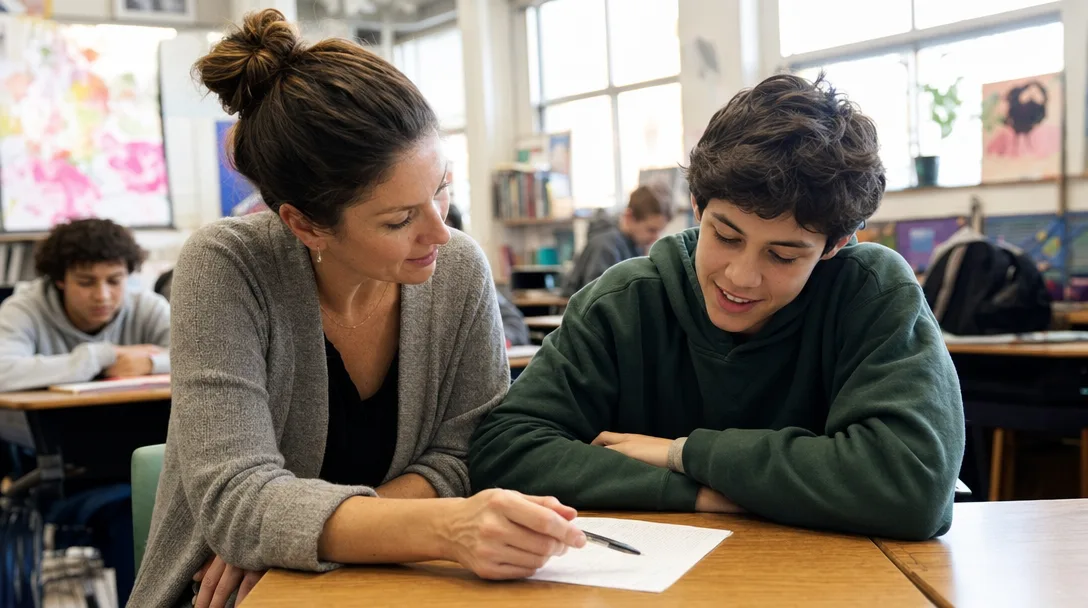
"The students who need the most skilled advocates are too often served by the least-prepared adults — I built this school to close that gap."— Cassi Gardei
What you'll learn
What you'll be able to do
- Write and confidently communicate legally compliant, meaningful IEP goals tailored to secondary students
- Apply evidence-based behavioral supports and de-escalation strategies in the high school setting
- Design and implement academic accommodations and modifications that genuinely close learning gaps
- Navigate co-teaching partnerships and inclusion models with clarity and shared purpose
- Lead student-centered transition planning that prepares students for life after high school
- Collect and use classroom data to drive decisions and document student progress with confidence
How it works
A school that adapts to you
This isn't a set of static videos. Every lesson is generated live and tuned to where you actually are.
We learn your level
A quick placement check tailors your starting point so you're never bored or lost.
Lessons adapt as you go
Each lesson is written for your pace and your goal, adjusting as your skills grow.
Your AI coach keeps you moving
Checkpoints, feedback, and gentle nudges turn progress into a real result.
The curriculum
What's inside your school
6 modules · 18 lessons

IEP Mastery: Writing Goals That Actually Work
Cut through the legal jargon and compliance anxiety. Teachers and support staff learn to write IEP goals that are legally sound, measurable, and genuinely meaningful for secondary students — and practice communicating them clearly to families and colleagues.
- 1.1Anatomy of a Legally Compliant Secondary IEPIncluded
- 1.2Writing SMART Goals for High School StudentsIncluded
- 1.3Communicating IEPs with ConfidenceIncluded
Behavioral Supports and De-Escalation in the High School Setting
High school students with disabilities face unique behavioral and emotional challenges. This module equips every adult in the building with proactive, evidence-based strategies to prevent crises, de-escalate effectively, and build the trusting relationships that make everything else work.
- 2.1Understanding Behavior as CommunicationIncluded
- 2.2Proactive PBIS Strategies for Secondary ClassroomsIncluded
- 2.3De-Escalation Techniques That Work in Real ClassroomsIncluded
Academic Accommodations and Modifications That Close Gaps
Accommodations written in an IEP only help if they're actually implemented well. This module moves from paperwork to practice — participants design, differentiate, and deliver academic supports that create genuine access to rigorous secondary content.
- 3.1Accommodations vs. Modifications: Knowing the Difference and When to Use EachIncluded
- 3.2Designing Scaffolded Instruction for Diverse LearnersIncluded
- 3.3Universal Design for Learning in the High School ClassroomIncluded
Co-Teaching and Inclusion Models That Actually Work
Co-teaching is one of the most powerful — and most misused — models in special education. This module gives general educators, special educators, and instructional coaches a shared framework for building co-teaching partnerships that genuinely serve students with IEPs in inclusive settings.
- 4.1The Six Co-Teaching Models: Choosing the Right OneIncluded
- 4.2Building a High-Functioning Co-Teaching PartnershipIncluded
- 4.3Inclusion Without Exclusion: Supporting IEP Students in General EducationIncluded
Student-Centered Transition Planning
Transition planning is a legal requirement — but more importantly, it's a student's first roadmap to adult life. This module equips every member of the team to lead planning that reflects the student's own voice, goals, and post-secondary vision.
- 5.1Understanding Secondary Transition Requirements and Best PracticesIncluded
- 5.2Putting the Student in the Driver's SeatIncluded
- 5.3Connecting Students to Post-Secondary PathwaysIncluded
Data Collection and Progress Monitoring That Drive Real Decisions
Data isn't bureaucracy — it's the most powerful advocacy tool educators have for students with IEPs. This module builds practical, sustainable systems for collecting, analyzing, and communicating student progress data in the real conditions of a high school.
- 6.1Designing Practical Data Collection SystemsIncluded
- 6.2Analyzing Progress and Adjusting InstructionIncluded
- 6.3Communicating Progress to Families, Teams, and StudentsIncluded
Who it's for
Is this you?

First-Year SpEd Teachers
Just assigned a caseload and IEP meetings are already on the calendar — needs real frameworks fast, not more theory.

General Ed Inclusion Teachers
Co-teaching a class with students on IEPs and unsure how to differentiate or what their legal responsibilities actually are.

Paraprofessionals
Working one-on-one or in small groups daily but never received formal training in de-escalation, prompting, or data collection.
Veteran SpEd Teachers
Experienced but looking to sharpen transition planning and data practices, or mentor newer colleagues with a shared framework.

School Counselors
Involved in IEP and 504 meetings and wants to understand accommodations, student rights, and how to advocate more effectively.
Instructional Coaches
Supporting teachers across a campus and needs a deep, practical understanding of inclusion models and co-teaching dynamics.
Questions
Frequently asked
Your teacher
A note from your teacher
Cassi Gardei
If you work with high school students with disabilities, I want to start by saying something I wish someone had said to me early on: the fact that you're here, looking for better tools, already makes you the kind of educator your students need.
I also know that's not enough to get you through Tuesday.
The high school setting is uniquely demanding for special educators and inclusion teachers. Your students are older, the stakes feel higher, and the gap between what the system promises and what actually happens in the classroom can be exhausting. IEPs that don't reflect the real student. Co-teaching partnerships that are co-teaching in name only. Behaviors that escalate because no one has a shared plan. Transition goals that are checked boxes, not real futures. I've seen all of it — and I've spent years building the kind of practical, specific tools that actually help.
This school is not about making you feel better about a hard job. It's about making you better at it. Every framework, every piece of language, every strategy here was chosen because it works in real secondary classrooms with real teenagers — not in an ideal scenario, not in a research paper.
Here's what I want you to know about the students you serve: they are paying attention to whether the adults in their lives believe in them. A teacher who shows up prepared, who writes goals that mean something, who de-escalates instead of escalates, who advocates loudly in an IEP meeting — that teacher changes the trajectory. That can be you, more consistently, with less guesswork.
I built this school because the students who need skilled, confident advocates the most are often served by the professionals who have had the least preparation. Let's fix that. Come in, do the work, and walk away with a toolkit you'll use every day.
— Cassi Gardei
Start your journey today
Join get instant access — learn at your own pace with an AI coach in your corner.
- 6 modules, 18 lessons
- AI-adaptive lessons tuned to your level
- Quizzes & checkpoints to lock in progress
- Your own AI learning coach
- Learn on any device, at your pace
- Full access for as long as you're subscribed