
Understand U.S.-Indigenous relations the way they actually happened
A rigorous, source-driven survey of Native nations and U.S. policy — from the treaty era to today — built on primary documents, Supreme Court rulings, and Indigenous voices, not myths or political shortcuts.
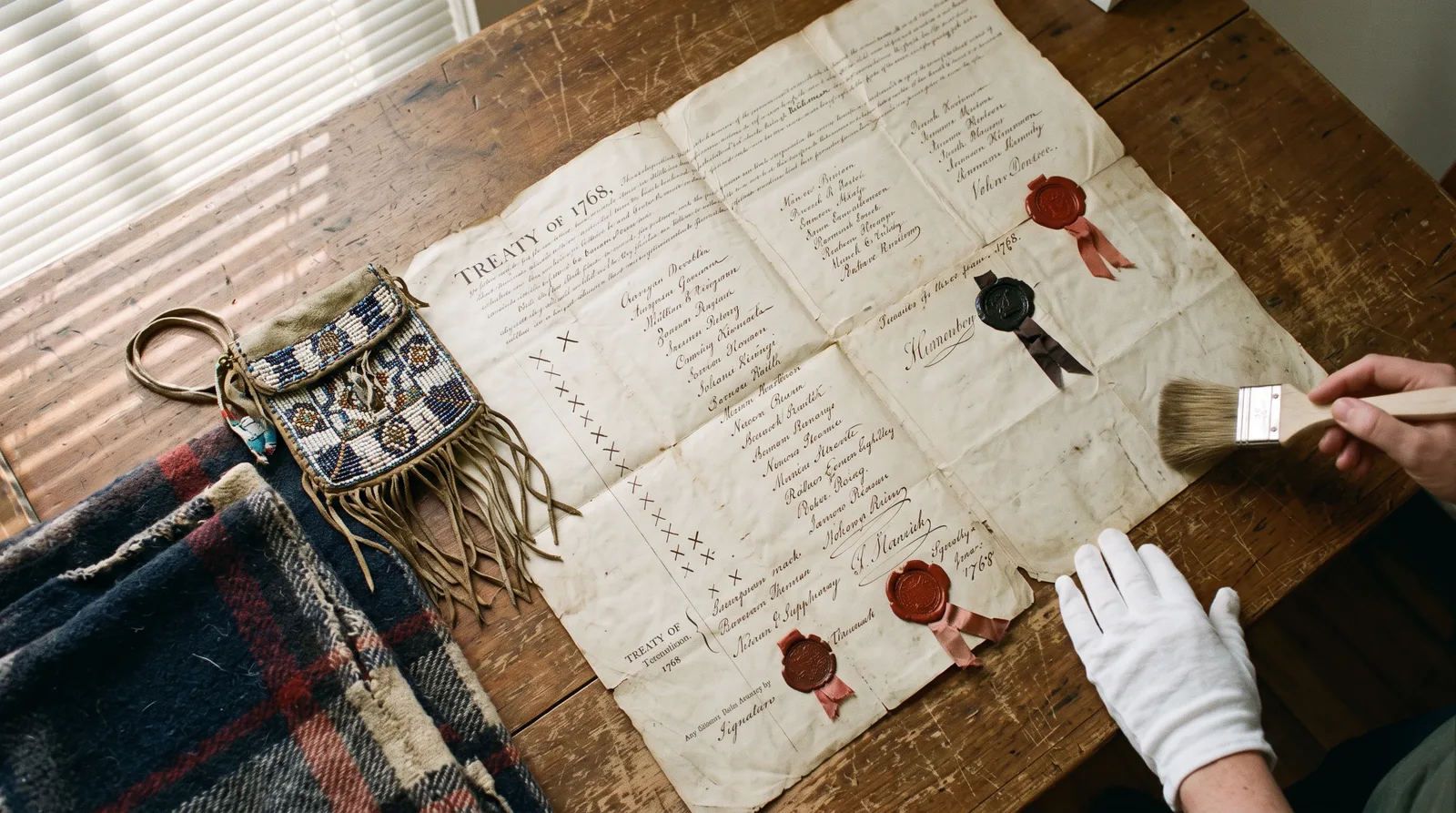
"The documents tell the story — my job is to make sure you know how to read them."
— Dale Porter
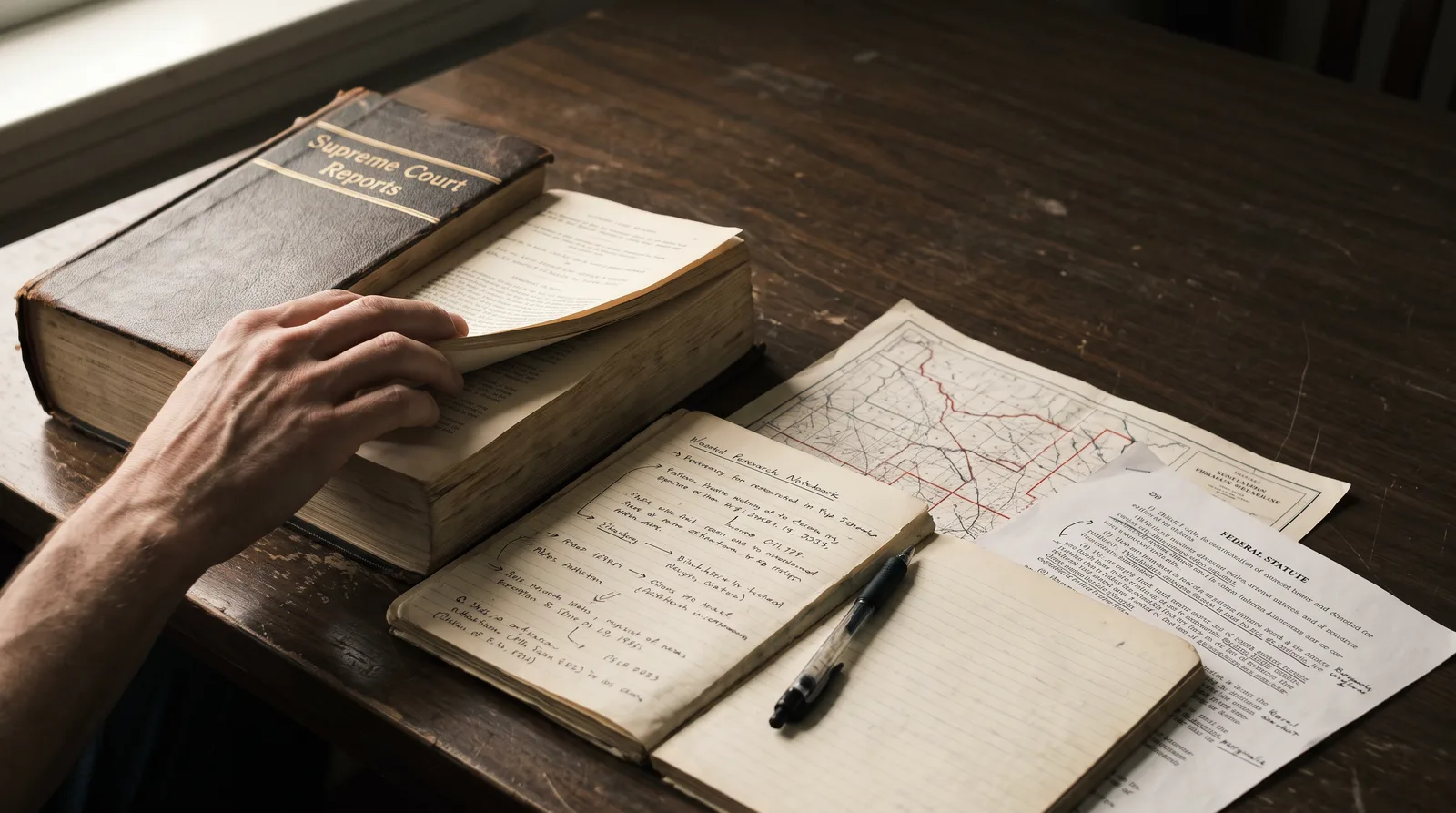
What you'll learn
What you'll be able to do
- Explain tribal sovereignty and the federal trust responsibility using specific treaties and Supreme Court rulings
- Distinguish among hundreds of distinct Native nations — their governments, geographies, and histories — rather than treating them as a single culture
- Trace the arc of U.S. Indian policy from the Founding era through removal, allotment, termination, and self-determination
- Analyze primary sources — treaties, legislation, court opinions, and firsthand accounts — to separate documented history from popular myth
- Connect historical policies such as the Dawes Act and boarding schools to measurable present-day conditions in Native communities
- Produce a research report on a specific federally or state-recognized Native nation covering homeland, treaties, land loss, and contemporary governance
How it works
A school that adapts to you
This isn't a set of static videos. Every lesson is generated live and tuned to where you actually are.
We learn your level
A quick placement check tailors your starting point so you're never bored or lost.
Lessons adapt as you go
Each lesson is written for your pace and your goal, adjusting as your skills grow.
Your AI coach keeps you moving
Checkpoints, feedback, and gentle nudges turn progress into a real result.
The curriculum
What's inside your school
12 modules · 55 lessons

Indigenous America Before European Settlement
Establishes the diversity, sophistication, and sovereignty of hundreds of distinct Native nations before European contact.
- 1.1Hundreds of Nations, Hundreds of HistoriesIncluded
- 1.2Governance, Trade, and DiplomacyIncluded
- 1.3Agriculture, Land, and SustainabilityIncluded
- 1.4Debunking the 'One Native Culture' MythIncluded
Colonization and Early Encounters
Examines the varied impacts of European colonization — disease, alliance-making, land conflict, and competing colonial systems — on Native nations.
- 2.1Trade, Alliance, and Early ContactIncluded
- 2.2Disease and Demographic CatastropheIncluded
- 2.3Mission Systems and Indigenous LifeIncluded
- 2.4Competing Colonial Powers and Native PeoplesIncluded
- 2.5Land Conflict and the Roots of DispossessionIncluded
The Founding Era and Federal Indian Policy
Analyzes how the new United States embedded Indigenous relations into its founding documents and earliest policies.
- 3.1Native Nations and the American RevolutionIncluded
- 3.2Indigenous Peoples in the ConstitutionIncluded
- 3.3Early Treaties as Nation-to-Nation AgreementsIncluded
- 3.4Washington and Jefferson: Civilization PolicyIncluded
Treaties, Tribal Sovereignty, and the Trust Responsibility
Establishes the legal and political foundations of tribal sovereignty, treaty rights, and the federal trust relationship.
- 4.1Native Nations as Political NationsIncluded
- 4.2How Treaties Were Made — and ManipulatedIncluded
- 4.3The Federal Trust ResponsibilityIncluded
- 4.4Broken Treaties and Surviving RightsIncluded
Indian Removal
Traces the legal, political, and human dimensions of forced removal of Eastern Native nations in the 1830s.
- 5.1The Indian Removal Act of 1830Included
- 5.2Cherokee Nation v. Georgia and Worcester v. GeorgiaIncluded
- 5.3The Trail of TearsIncluded
- 5.4Removal of the Choctaw, Creek, Chickasaw, Seminole, and OthersIncluded
Western Expansion, Warfare, and the Reservation System
Covers Manifest Destiny, military conflict, massacres, and the creation of reservations as tools of confinement and control.
- 6.1Manifest Destiny as Policy and IdeologyIncluded
- 6.2Military Conflicts and MassacresIncluded
- 6.3The Long Walk of the Navajo and the Dakota WarIncluded
- 6.4Destruction of the Buffalo and Economic WarfareIncluded
- 6.5The Reservation System: Confinement and ControlIncluded
Allotment and the Assault on Native Land
Examines the Dawes Act and allotment era as the legal mechanism that stripped Native nations of roughly 90 million acres.
- 7.1The Dawes Act of 1887Included
- 7.2How Allotment Worked — and Who ProfitedIncluded
- 7.3Loss of Territory and Government Control of ResourcesIncluded
- 7.4Lasting Legal and Economic ConsequencesIncluded
Boarding Schools and Forced Assimilation
Documents the federal boarding school system as a deliberate policy of cultural destruction, tracing its harms to the present day.
- 8.1The Boarding School System: Origins and DesignIncluded
- 8.2Carlisle and the Boarding School NetworkIncluded
- 8.3Suppression of Language, Religion, and IdentityIncluded
- 8.4Abuse, Deaths, and Unmarked GravesIncluded
- 8.5Intergenerational Trauma and Community ImpactIncluded
Citizenship, Religious Freedom, and Civil Rights
Traces the paradox of Native military service alongside denial of citizenship and religious freedom through the twentieth century.
- 9.1Native Military Service and the Citizenship QuestionIncluded
- 9.2The Indian Citizenship Act of 1924Included
- 9.3Suppression of Traditional CeremoniesIncluded
- 9.4The American Indian Religious Freedom Act and BeyondIncluded
Reorganization, Termination, and Relocation
Covers the 1934 Indian Reorganization Act, the post-WWII termination era, and urban relocation as contradictory swings in federal policy.
- 10.1The Indian Reorganization Act of 1934Included
- 10.2Native Service in World War IIIncluded
- 10.3Termination Policy: Ending Federal RecognitionIncluded
- 10.4Urban Relocation ProgramsIncluded
- 10.5Restoration of Terminated TribesIncluded
The Native Rights Movement and Self-Determination
Documents the organized Indigenous activism of the mid-twentieth century and the legal gains of the self-determination era.
- 11.1The National Congress of American IndiansIncluded
- 11.2The American Indian MovementIncluded
- 11.3Occupation of Alcatraz and Red PowerIncluded
- 11.4Wounded Knee 1973Included
- 11.5The Indian Self-Determination and Education Assistance ActIncluded
Indigenous Peoples Today
Surveys the contemporary landscape of tribal governance, economic development, cultural restoration, and unresolved justice issues — and introduces the course's final research project.
- 12.1Modern Tribal Governments and JurisdictionIncluded
- 12.2Economic Development, Gaming, and SovereigntyIncluded
- 12.3Environmental Justice and Water RightsIncluded
- 12.4Missing and Murdered Indigenous People, and Child WelfareIncluded
- 12.5Language Revitalization, Repatriation, and Land AcknowledgmentIncluded
- 12.6Final Project: A Nation-Specific Research ReportIncluded
Who it's for
Is this you?

High school history students
Gets the standard textbook version and suspects it's incomplete — ready for primary sources, real legal history, and a more honest account.

College students in history or poli-sci
Needs rigorous, cite-able grounding in federal Indian law, treaty history, and Indigenous sovereignty for coursework, papers, or civic engagement.

K–12 and college educators
Wants a well-structured, source-based curriculum to supplement or replace the thin coverage of Indigenous history in standard U.S. history courses.

History enthusiasts and lifelong learners
Reads widely, follows the news on tribal sovereignty disputes or land rights cases, and wants the deep historical context those stories assume you already have.

Civically engaged adults
Votes, volunteers, and advocates on issues touching Indigenous communities — and wants evidence-grounded knowledge, not talking points, to inform that engagement.

Native students and community members
Wants to see their nations' histories documented, named, and examined with the legal and political precision that community experience has always known they deserve.
Questions
Frequently asked
Your teacher
A note from your teacher

Dale Porter
If you've ever sat in a U.S. history class and felt that something was missing — that the story moved too quickly from "early contact" to "westward expansion" without really reckoning with what happened in between, or why — you're not wrong. The standard survey has gaps that aren't accidental. They reflect choices about whose knowledge counts, whose losses register, and whose governments get to be treated as real.
This course exists to fill those gaps with evidence. Not with guilt, not with a simplified counter-narrative, but with the actual documents: the treaty texts, the court opinions, the legislative records, the firsthand accounts from Indigenous people who lived through removal, allotment, boarding schools, termination, and the long fight for self-determination. I designed this course because I believe students — whether they are seventeen or fifty-seven — are capable of handling complex, well-sourced history. The question has never been whether this material is too difficult. It's whether we're willing to look at it honestly.
What you will find here is precision. We do not talk about "Native Americans" as a single culture, because there is no single culture — there are hundreds of distinct nations, each with its own government, geography, diplomatic history, and experience of U.S. policy. The Haudenosaunee Confederacy and the Diné Nation and the Muscogee (Creek) Nation are not interchangeable. Their treaties are different. Their legal situations are different. Their histories with the federal government are different. Learning to make those distinctions is one of the most important things this course will give you.
We move through the full arc: Indigenous governance before European arrival, the diplomatic and military complexity of the colonial period, the Founding era's legal frameworks for dealing with Native nations, the treaty system and how it was systematically manipulated, removal, the reservation era, the Dawes Act and its catastrophic land theft, the boarding school system and its documented abuses, the mid-twentieth-century termination policy, the Native rights movement, and the realities of Indigenous life and governance today. None of these chapters is a footnote. Each connects to the next, and each connects to the present.
I want to be straightforward about what I'm asking of you. This is not a passive course. You will read primary sources and be expected to analyze them. You will complete a capstone research report on one specific Native nation. You will encounter documented history that is difficult — not because it is sensationalized, but because it is true. What I can promise is that the rigor is consistent, the sourcing is transparent, and the goal throughout is understanding, not ideology. Come ready to read carefully and think precisely. That's the work, and it's worth doing.
— Dale Porter
Start your journey today
Get instant access — learn at your own pace with an AI coach in your corner.
$59.99/mo
Recurring billing · cancel anytime
Secure checkout · Instant access
- 12 modules, 55 lessons
- AI-adaptive lessons tuned to your level
- Quizzes & checkpoints to lock in progress
- Your own AI learning coach
- Learn on any device, at your pace
- Full access for as long as you're subscribed
Optional add-ons inside
- Community Access Pass$5/month
Available in the school store after you join.