Understand 2,000 Years of Christian History
From Pentecost to Pentecostalism, this is the complete story of the Church — taught with scholarly precision and the warmth of a professor who genuinely loves the material. No theology degree required; just bring your curiosity.
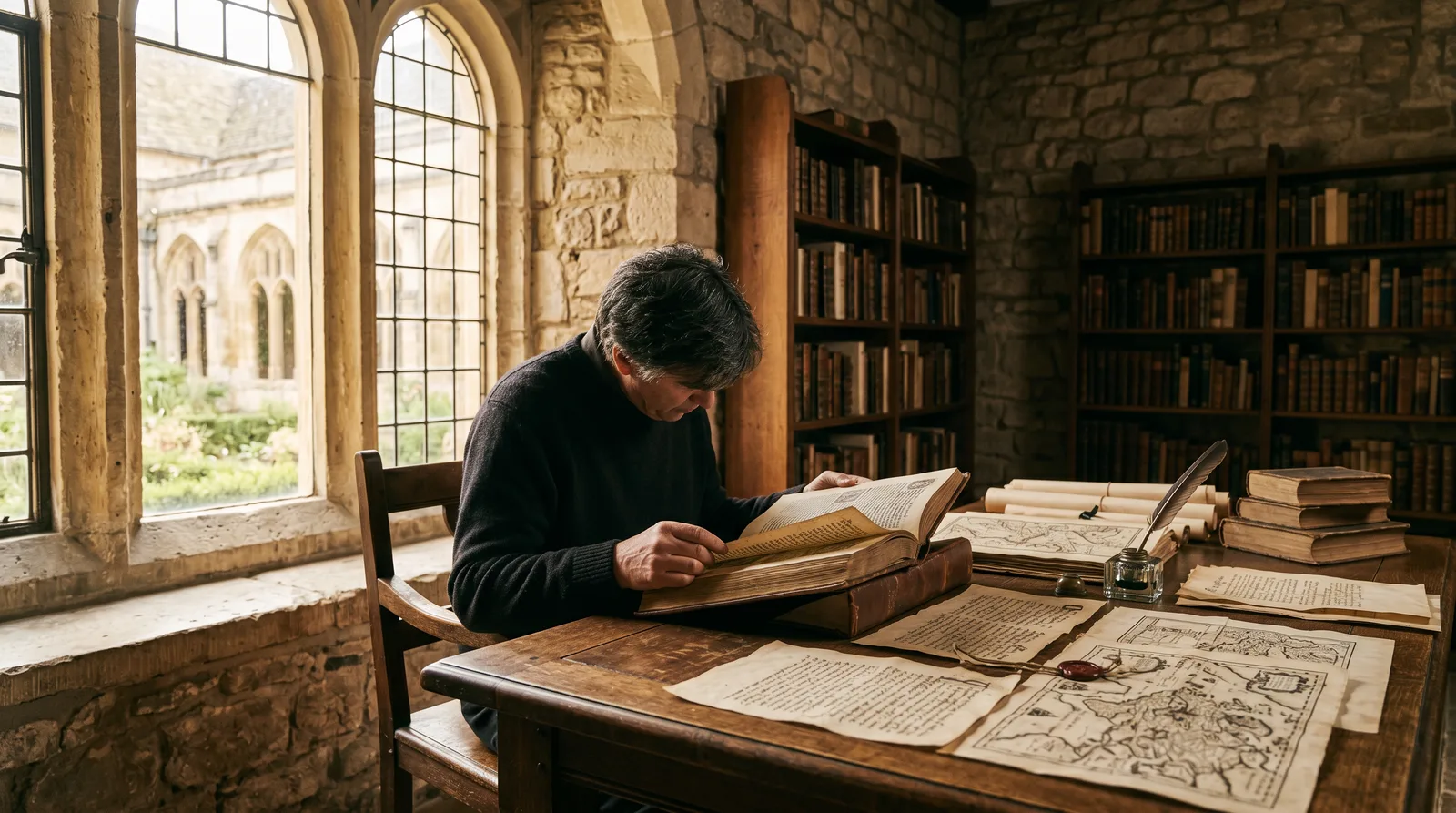
"Church history isn't a footnote to the faith — it's the story of how the faith survived, spread, argued, suffered, and arrived at your doorstep."— Carla Paton
What you'll learn
What you'll be able to do
- Trace the major eras of Christian history from the first-century Church through the modern global Church in confident chronological order
- Identify the key figures — from Ignatius of Antioch to Martin Luther to William Carey — and explain their lasting theological and institutional impact
- Describe how the biblical canon was formed and how the great ecumenical councils defined core Christian doctrine
- Explain the causes, key figures, and consequences of the Protestant Reformation and its splintering effects on Western Christianity
- Recognize how monasticism, medieval Christianity, and global missionary movements each reshaped the Church's worship, structure, and mission
- Apply historical context to read theology and Scripture more richly, and to understand the roots of the diverse Christian traditions alive today
How it works
A school that adapts to you
This isn't a set of static videos. Every lesson is generated live and tuned to where you actually are.
We learn your level
A quick placement check tailors your starting point so you're never bored or lost.
Lessons adapt as you go
Each lesson is written for your pace and your goal, adjusting as your skills grow.
Your AI coach keeps you moving
Checkpoints, feedback, and gentle nudges turn progress into a real result.
The curriculum
What's inside your school
6 modules · 24 lessons

The World That Shaped the First Church
Before the Church could be born, a world had to be ready for it. This foundational module examines the two great streams — Jewish faith and Greco-Roman civilization — that formed the cradle of early Christianity. Students gain the historical, religious, and cultural literacy they need to understand everything that follows, fulfilling the essential prerequisite of contextual grounding for beginners.
- 1.1The Jewish Roots of ChristianityIncluded
- 1.2The Greco-Roman World and the Pax RomanaIncluded
The Early Church: Birth, Growth, and Persecution (AD 30–313)
Traces the explosive first three centuries of Christian history — from the outpouring of the Spirit at Pentecost through the apostolic mission to the ends of the earth, the flowering of early Christian writing, the fires of imperial persecution, and the bold intellectual defense of the faith by the Apologists. Students meet the Church at its most dynamic and vulnerable, and begin to identify key figures whose legacies endure. This module directly supports the outcomes of tracing major eras in chronological order and identifying key figures and their impact.
- 2.1Pentecost to the Ends of the Earth: Apostolic ExpansionIncluded
- 2.2The Apostolic Fathers and Early Christian WritingIncluded
- 2.3Persecution, Martyrdom, and the Church's ResponseIncluded
- 2.4Defending the Faith: The Early ApologistsIncluded
Canon, Councils, and Creed: Defining the Faith (AD 313–500)
The Edict of Milan transforms the Church's situation overnight, and with newfound freedom comes urgent new pressure: the faith must be precisely defined. This module walks students through Constantine's revolution, the painstaking process by which the biblical canon was recognized, the great ecumenical councils that hammered out Trinitarian and Christological orthodoxy, and the towering Patristic theologians who gave those decisions lasting intellectual form. This module directly addresses the outcome of describing how the canon was formed and how the councils defined doctrine.
- 3.1Constantine, Christendom, and the Church's New WorldIncluded
- 3.2The Formation of the Biblical CanonIncluded
- 3.3The Ecumenical Councils: Defining Who Jesus IsIncluded
- 3.4The Great Theologians of the Patristic AgeIncluded
Desert, Monastery, and Cathedral: The Medieval Church (AD 500–1400)
From the fall of Rome to the eve of the Reformation, this module traces nearly a millennium of Christian history across the rise of monasticism, the defining rupture of the Great Schism, the interwoven politics and piety of the medieval papacy, the Crusades, and the voices of pre-Reformation reformers who sensed that something was breaking. Students achieve the outcome of recognizing how monasticism and medieval Christianity reshaped the Church's worship, structure, and mission.
- 4.1The Rise of Monasticism: Desert Fathers to BenedictIncluded
- 4.2The Great Schism of 1054: East Meets WestIncluded
- 4.3The Medieval Church: Power, Piety, and the PapacyIncluded
- 4.4Pre-Reformation Reformers and the Cracks in the SystemIncluded
Reformation and Fracture: The Sixteenth-Century Revolution (1517–1648)
The most transformative century in Western Christianity since Constantine. This module traces the Reformation's spark in Luther's challenge to indulgences, its rapid spread and fracture into Lutheran, Reformed, Radical, and Catholic streams, and its violent aftermath in the Wars of Religion. Students achieve the outcome of explaining the causes, key figures, and consequences of the Protestant Reformation and its splintering effects on Western Christianity. The English Reformation is added as a gap-filling lesson, given its distinct institutional causes and its outsized influence on the English-speaking world.
- 5.1Luther, Indulgences, and the Reformation's SparkIncluded
- 5.2The Reformation Spreads: Zwingli, Calvin, and Reformed ChristianityIncluded
- 5.3The English Reformation: A Crown, a Conscience, and a ChurchIncluded
- 5.4The Radical Reformation: Anabaptists and the Left WingIncluded
- 5.5The Catholic Reformation and the Council of TrentIncluded
- 5.6The Reformation's Aftermath: Wars, Settlements, and Lasting FracturesIncluded
From Awakening to Global Church: Modern Christianity (1648–Today)
The final module carries students from the post-Reformation settlement to the explosive global Christianity of the twenty-first century — through Pietism, the Enlightenment challenge, the Great Awakenings, the age of global missions, the collision of liberalism and fundamentalism, and the Pentecostal revolution that has made the Global South the new center of Christian gravity. Students achieve the outcomes of tracing the modern era in chronological order, identifying key modern figures, recognizing the global missionary movement's reshaping of the Church, and applying historical context to understand the diverse Christian traditions alive today.
- 6.1Pietism, Enlightenment, and the Great AwakeningsIncluded
- 6.2Global Missions and the Expansion of World ChristianityIncluded
- 6.3The Modern Church: Liberalism, Fundamentalism, and the Ecumenical MovementIncluded
- 6.4Pentecostalism, Charismatic Renewal, and Global Christianity TodayIncluded
Who it's for
Is this you?

Curious Lay Christians
You've been in the pew for years and want to finally understand the history behind the creeds, councils, and traditions you've inherited.

Bible Study Leaders
You want the historical and theological depth to lead richer discussions and answer the 'where did this come from?' questions your group keeps asking.

Seminary Inquirers
You're considering formal theological education and want a solid chronological and conceptual foundation before you apply.

New or Recent Converts
You've come to faith and want to understand the full story of the tradition you've joined — not just Sunday mornings, but twenty centuries of Church life.

Tradition Explorers
You're navigating between denominations or traditions and want honest, grounded history to help you understand what each stream actually believes and why.

Lifelong Learners
You read broadly, love history, and want the same rigorous but accessible treatment for the Church that you'd expect from a great narrative history book.
Questions
Frequently asked
Your teacher
A note from your teacher

Carla Paton
Dear fellow traveler in the Christian story,
If you've ever sat in church, heard a reference to the Council of Nicaea or the Protestant Reformation, and felt that quiet, nagging sense that you should understand this — that this history is somehow yours — then you already know why I built Church History Academy. That feeling isn't ignorance. It's hunger. And it deserves to be fed properly.
Here's what I've found, again and again: the moment someone sees that the Arian controversy wasn't a dry theological squabble but a passionate, generation-long argument about whether Christ could actually save them — something lights up. When they realize that the monks who copied manuscripts in cold scriptoria were, in their own way, holding the faith together for centuries — they see the medieval Church differently. When they trace how Luther's hammer blow in 1517 rippled into the English Civil War, the Anabaptist communities, and eventually the free churches of today — their own tradition suddenly has a story. That's what historical fluency does. It doesn't just inform; it transforms how you read, how you worship, and how you understand what you believe.
This course is my attempt to give every curious, serious Christian — regardless of formal education — the kind of grounding that used to require a seminary library and years of graduate study. We move chronologically through sixteen lessons, from the Jewish and Greco-Roman world that shaped the first apostles all the way to the global Pentecostal and charismatic movements of today. We use precise historical language, because the words matter — but I never drop a term like "homoousios" or "conciliarism" without stopping to unpack it, place it in its human drama, and show you why it's worth knowing. The goal is not to impress you with complexity; it's to give you the tools to think historically about the faith.
I want to be honest with you about something: I am not promising that this course will settle your theological debates or tell you which tradition to belong to. What I am promising is that by the time you finish, you will understand — at a level of genuine depth — how the Church became what it is today. You will be able to read the Church Fathers, trace the Reformation's fractures, and place your own community in the long story of Christianity with confidence and clarity. And perhaps most importantly, you will see that the Christians who came before us were real people, wrestling with real questions, at real cost — and that their wrestling has everything to do with ours.
Come join us. The story is better than you think.
— Carla Paton
Start your journey today
Join get instant access — learn at your own pace with an AI coach in your corner.
$19/mo
Recurring billing · cancel anytime
Secure checkout · Instant access
- 6 modules, 24 lessons
- AI-adaptive lessons tuned to your level
- Quizzes & checkpoints to lock in progress
- Your own AI learning coach
- Learn on any device, at your pace
- Full access for as long as you're subscribed