
Learn to work wood like a professional
From your first chisel cut to a finished, trade-standard joinery piece — this structured diploma-level course gives complete beginners and keen DIYers a no-nonsense, practical path into real carpentry and joinery.
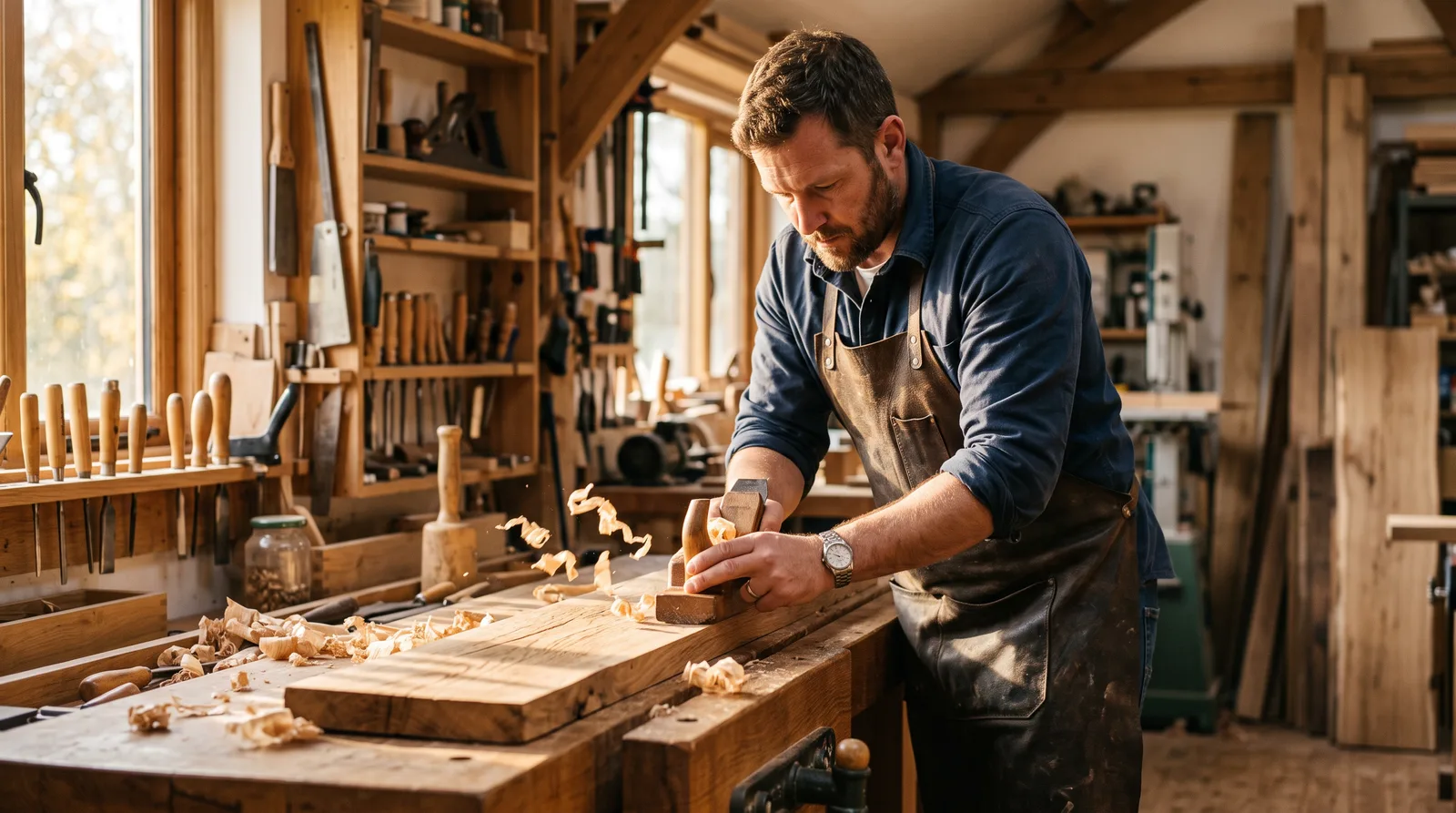
"Give me someone who's willing to slow down and do it right, and I'll show them how to build anything."
— Renstay College
What you'll learn
What you'll be able to do
- Select, assess, and correctly store timber and sheet materials for any carpentry project
- Safely set up and operate essential hand tools and power tools with professional technique
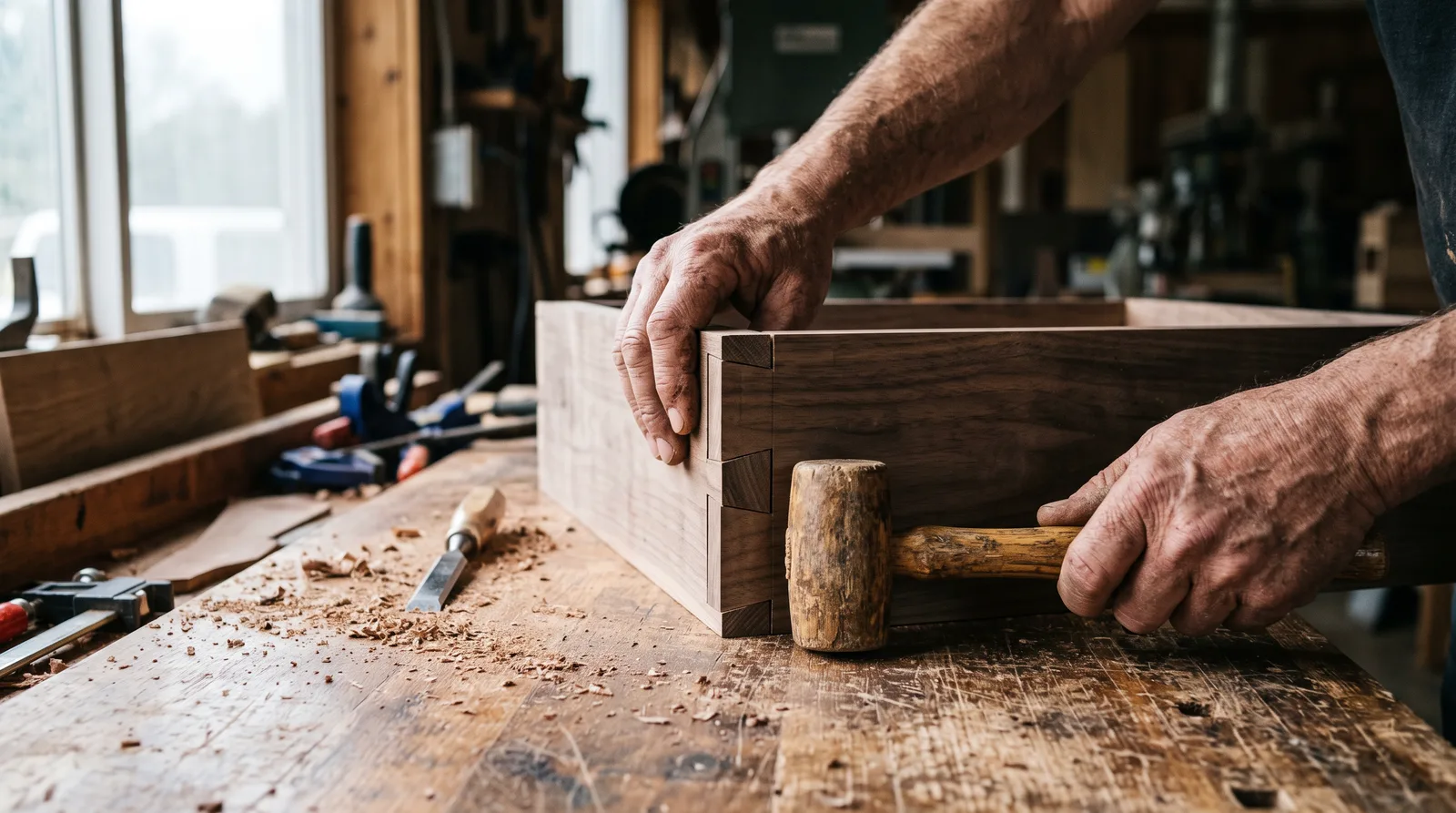
- Cut, fit, and execute the six foundational wood joints — mortise & tenon, dovetail, bridle, housing, butt, and lap
- Read and produce accurate workshop drawings and cut lists from architectural or design briefs
- Build and finish a standalone joinery piece — drawer unit, frame-and-panel door, or fitted shelf — to a trade standard
- Understand building regulations, site safety procedures, and client brief management for employed or self-employed carpentry work
How it works
A school that adapts to you
This isn't a set of static videos. Every lesson is generated live and tuned to where you actually are.
We learn your level
A quick placement check tailors your starting point so you're never bored or lost.
Lessons adapt as you go
Each lesson is written for your pace and your goal, adjusting as your skills grow.
Your AI coach keeps you moving
Checkpoints, feedback, and gentle nudges turn progress into a real result.
The curriculum
What's inside your school
6 modules · 29 lessons

Timber, Materials & the Workshop
Covers how to identify, assess, and correctly store timber and sheet materials, and how to set up a safe, organised workshop environment.
- 1.1Understanding Wood: Species, Grain & PropertiesIncluded
- 1.2Sheet Materials & Engineered TimberIncluded
- 1.3Selecting & Grading Timber for a ProjectIncluded
- 1.4Storing & Conditioning MaterialsIncluded
- 1.5Workshop Setup, Housekeeping & Personal SafetyIncluded
Hand Tools & Power Tools — Technique & Safety
Builds confident, safe, and accurate use of the core hand tools and power tools used in professional carpentry and joinery.
- 2.1Essential Hand Tools: Saws, Chisels & PlanesIncluded
- 2.2Marking & Measuring ToolsIncluded
- 2.3Sharpening & Maintaining Edged ToolsIncluded
- 2.4Portable Power Tools: Drill, Jigsaw & Circular SawIncluded
- 2.5Stationary Machines: Planer-Thicknesser & Bench SawIncluded
Workshop Drawings, Cut Lists & Project Planning
Teaches students to read architectural and design briefs, produce accurate workshop drawings, and generate cut lists ready for the bench.
- 3.1Reading Architectural & Design DrawingsIncluded
- 3.2Producing Workshop Drawings by HandIncluded
- 3.3Writing a Cut List & Material ScheduleIncluded
- 3.4Project Planning & Sequencing WorkIncluded
The Six Foundational Wood Joints
Guides students through cutting and fitting all six core joints by hand, building accuracy and understanding of joint selection.
- 4.1Butt Joint & Lap JointIncluded
- 4.2Housing JointIncluded
- 4.3Bridle JointIncluded
- 4.4Mortise & Tenon JointIncluded
- 4.5Dovetail JointIncluded
Building a Trade-Standard Joinery Piece
Applies all prior skills in a structured build project — a drawer unit, frame-and-panel door, or fitted shelf — completed to a professional finish.
- 5.1Choosing Your Project & Producing the Working DrawingIncluded
- 5.2Milling, Cutting & Preparing ComponentsIncluded
- 5.3Assembly, Glue-Up & ClampingIncluded
- 5.4Fitting, Trimming & Hardware InstallationIncluded
- 5.5Surface Preparation & Applied FinishesIncluded
Professional Practice: Regulations, Site Safety & Client Work
Prepares students for employed or self-employed carpentry work through building regulations, site safety law, and client brief management.
- 6.1Building Regulations Relevant to Carpentry & JoineryIncluded
- 6.2Site Safety, COSHH & Working at HeightIncluded
- 6.3Reading & Responding to a Client BriefIncluded
- 6.4Estimating, Quoting & Managing a JobIncluded
- 6.5Career Pathways & Continuing Professional DevelopmentIncluded
Who it's for
Is this you?

Career changers
Ready to swap the desk for the workshop and want a structured, credible starting point into a real trade.

Serious DIY enthusiasts
Tired of guessing their way through projects and determined to build proper skills that last.

Aspiring tradespeople
Preparing for an apprenticeship or NVQ and want solid theoretical and practical grounding before day one.

Self-employed renovators
Already doing home improvements but ready to add joinery to their service offering and quote it with confidence.

Craft & furniture makers
Want to move beyond basic woodworking and cut clean, professional-grade joints in their own furniture builds.

Workshop returners
Once learned the basics years ago and want a structured refresher to rebuild good habits and fill in the gaps.
Questions
Frequently asked
Your teacher
A note from your teacher

Renstay College
If you've picked up this course, I'm guessing you've been thinking about getting into carpentry for a while. Maybe you've watched a few videos, maybe you've had a go at something and it didn't come out the way you pictured it, or maybe you've just reached the point where you want to learn this properly — not patched together from the internet, but structured, solid, and real. I understand that feeling completely. That's exactly the gap this course exists to close.
Here's what I know from years at the workbench and teaching others to find their feet in this trade: the difference between a hobbyist who stays frustrated and a carpenter who builds with confidence isn't talent. It's foundation. It's knowing your timber before you touch it, holding your tools correctly before you cut, understanding why a joint is designed the way it is before you attempt to cut it. That's what this course gives you — the right order, the right habits, the right grounding.
We start where every good joiner starts: in the workshop, with the materials. You'll learn how wood actually behaves — why it moves, how grain affects strength and workability, how to select and store timber so it's still straight when you come to use it. From there we move into tools, and I want to be straight with you: we don't rush this section. Safe, correct tool technique is the foundation everything else is built on, and we treat sharpening, maintenance, and machine safety with the same seriousness a professional would. Nobody gets sawdust on their boots by skipping the basics — and nobody gets good work out either.
By the time you reach the joints and the project build, you'll have the skills to do them properly. We cover all six foundational wood joints — butt, lap, housing, bridle, mortise and tenon, and the dovetail — with the same step-by-step discipline that a master craftsman would show an apprentice. And your final project isn't a practice piece. It's a real, finished item of joinery built to a trade standard: something you can look at, use, and show to a future employer or client.
The final section of this course is one I'm particularly proud of, because it's often the part that's missing from woodworking education aimed at beginners. Building regulations. Site safety. Reading a client brief. Writing a quote. Understanding your career options. This isn't just a craft course — it's preparation for work. Whether you want to get a job on the tools, start taking paid projects on the side, or eventually go fully self-employed, the professional practice section gives you the context to step into that world with your eyes open.
Pull on your apron. Let's get to work.
— Renstay College
Start your journey today
Get instant access — learn at your own pace with an AI coach in your corner.
$29/mo
Recurring billing · cancel anytime
Enrolling a child? Sign up as a parent — you'll add your student right here after.
Secure checkout · Instant access
- 6 modules, 29 lessons
- AI-adaptive lessons tuned to your level
- Quizzes & checkpoints to lock in progress
- Your own AI learning coach
- Learn on any device, at your pace
- Full access for as long as you're subscribed