K9 Drug Detection Academy: The Field-Tested Training System
From first odor imprint to certification-ready team — this is the field-tested, law-enforcement methodology that takes you and your dog through every critical phase of narcotics detection training, with the precision and operational discipline the work demands.
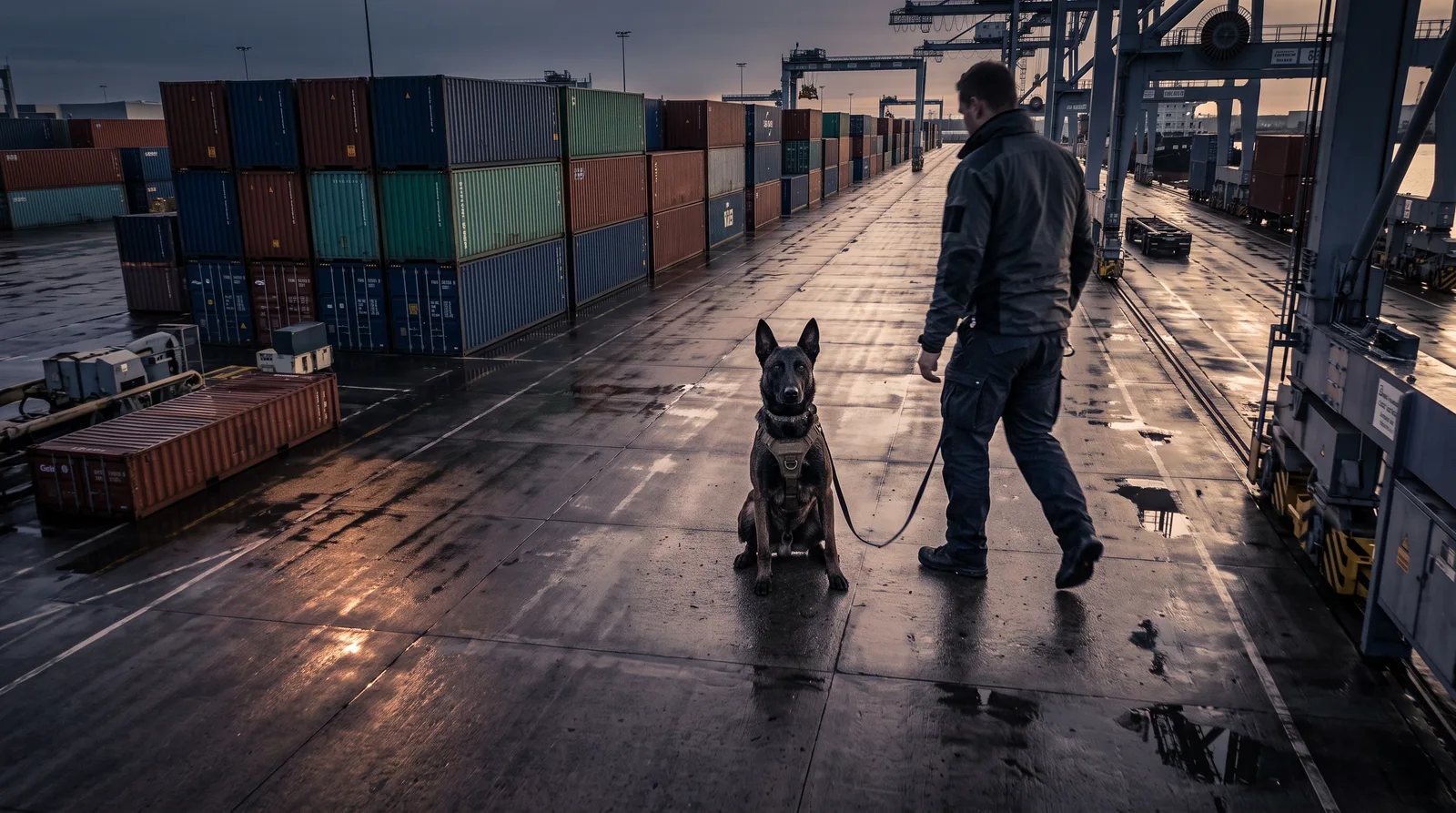
"A detection dog is only as reliable as the handler who built it — so we train both, to the same standard."
— Stephen B. Phillips
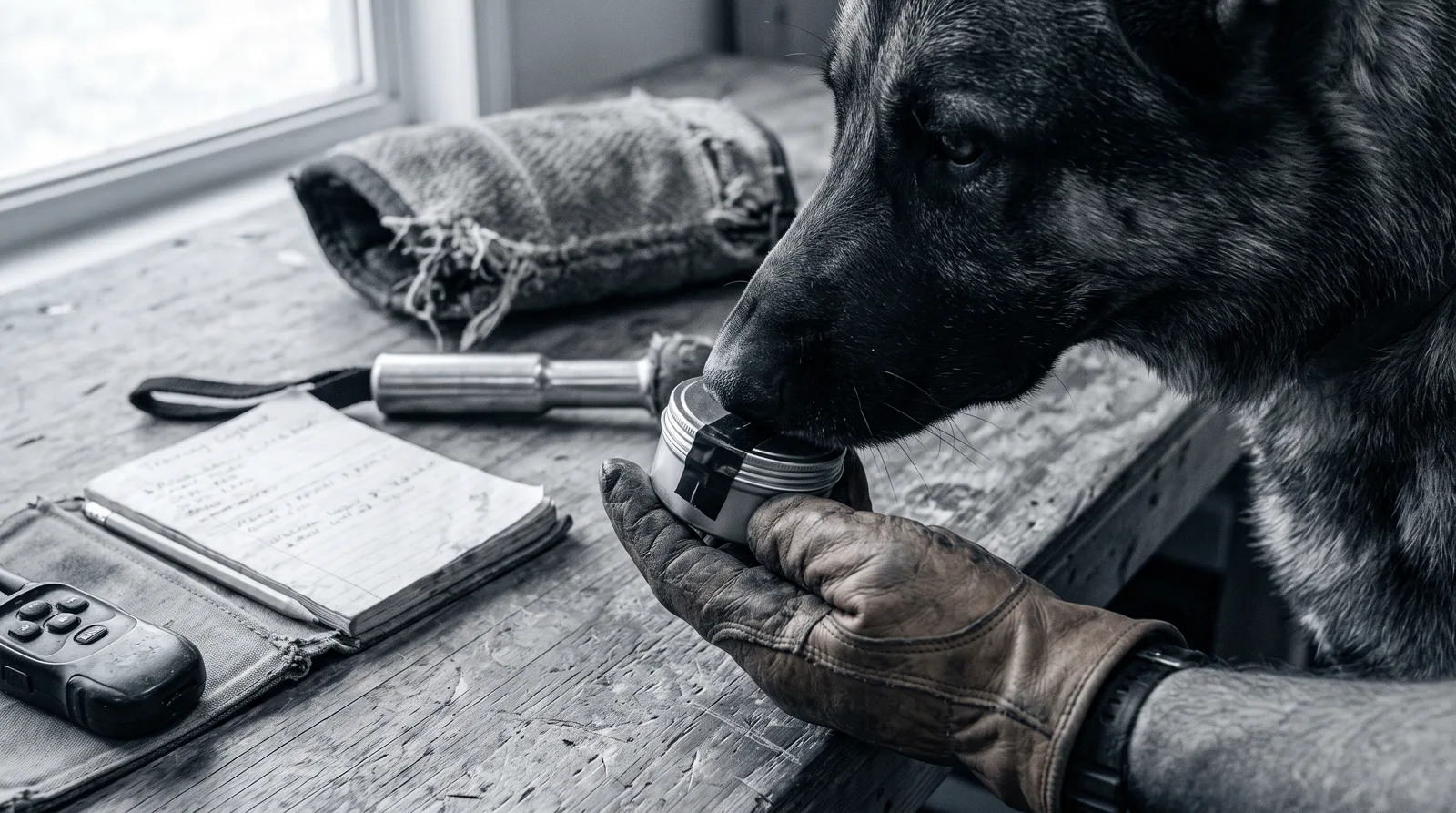
What you'll learn
What you'll be able to do
- Select and evaluate a candidate dog for narcotics detection work using proven temperament and drive assessments
- Execute a complete odor imprinting protocol for primary target narcotics including cocaine, heroin, methamphetamine, and cannabis
- Build and proof a reliable alert behavior — passive or active — under real-world distraction and environmental conditions
- Apply systematic search patterns for vehicles, buildings, luggage, and open-area searches with operational efficiency
- Recognize and correct common handler errors, dog stress signals, and false alert behaviors before they become ingrained
- Prepare a K9 team for certification testing and maintain peak detection performance through structured maintenance training
How it works
A school that adapts to you
This isn't a set of static videos. Every lesson is generated live and tuned to where you actually are.
We learn your level
A quick placement check tailors your starting point so you're never bored or lost.
Lessons adapt as you go
Each lesson is written for your pace and your goal, adjusting as your skills grow.
Your AI coach keeps you moving
Checkpoints, feedback, and gentle nudges turn progress into a real result.
The curriculum
What's inside your school
6 modules · 30 lessons

Candidate Selection & Handler Foundations
Teaches handlers how to scientifically evaluate and select the right dog, and establish the handler mindset and record-keeping habits that underpin all future training.
- 1.1What Makes a Detection Dog: Traits, Drives, and Deal-BreakersIncluded
- 1.2Temperament and Drive Assessment ProtocolsIncluded
- 1.3Breed and Source Considerations: Shelters, Vendors, and Working LinesIncluded
- 1.4Handler Mindset, Mechanics, and Training LogsIncluded
- 1.5Health, Fitness, and Pre-Training Veterinary ScreeningIncluded
Odor Theory and Primary Imprinting
Builds the dog's fundamental odor associations with cocaine, heroin, methamphetamine, and cannabis using legally compliant, scientifically grounded imprinting methods.
- 2.1How Dogs Detect Odor: Anatomy, Physiology, and Scent TheoryIncluded
- 2.2Legal Handling of Training Aids: DEA Licensing, Chain of Custody, and AlternativesIncluded
- 2.3Imprinting Cocaine and MethamphetamineIncluded
- 2.4Imprinting Heroin and CannabisIncluded
- 2.5Proofing Odor Recognition: Single Odor Confirmation Before GeneralizationIncluded
Alert Behavior Development and Proofing
Shapes, strengthens, and stress-tests a single, unambiguous alert behavior — passive sit or active scratch — until it holds under realistic operational pressure.
- 3.1Passive vs. Active Alerts: Choosing the Right Behavior for Your MissionIncluded
- 3.2Shaping a Clean, Consistent Alert ResponseIncluded
- 3.3Introducing Distractors: Food, Animals, Crowds, and TrafficIncluded
- 3.4Proofing Alerts Across Surfaces, Temperatures, and Weather ConditionsIncluded
- 3.5Recognizing and Eliminating False Alerts EarlyIncluded
Systematic Search Patterns and Operational Techniques
Trains handlers to run efficient, legally defensible search patterns across all common operational environments — vehicles, buildings, luggage, and open areas.
- 4.1Search Mechanics: Leash Handling, Wind Reading, and Coverage ZonesIncluded
- 4.2Vehicle Searches: Exterior Passes, Interior Access, and DocumentationIncluded
- 4.3Building and Room Searches: Patterns, Pinch Points, and SafetyIncluded
- 4.4Luggage, Parcels, and Controlled-Environment SearchesIncluded
- 4.5Open-Area and Perimeter Searches: Grid Patterns and Wind ManagementIncluded
Handler Errors, Dog Stress, and Behavioral Troubleshooting
Equips handlers to self-diagnose and correct the most common training breakdowns — from unconscious cuing to stress-induced avoidance — before they compromise operational reliability.
- 5.1The Cueing Handler: Identifying and Breaking Unconscious Body LanguageIncluded
- 5.2Reading Canine Stress: Calming Signals, Avoidance, and ShutdownIncluded
- 5.3Diagnosing and Correcting Fringe and False Alert PatternsIncluded
- 5.4Drive Maintenance: Keeping Motivation High Across a Long CareerIncluded
- 5.5Transitioning a Problem Dog: When to Remediate vs. Wash OutIncluded
Certification Preparation and Ongoing Operational Maintenance
Prepares the K9 team for recognized certification standards and establishes the structured maintenance program that keeps detection performance mission-ready throughout the dog's career.
- 6.1Major Certification Standards: NAPDDA, NPCA, and State POST RequirementsIncluded
- 6.2Building a Pre-Certification Training PlanIncluded
- 6.3Simulating Certification Tests: Blind Hides, Time Limits, and Evaluator ExpectationsIncluded
- 6.4Post-Certification Maintenance: Weekly Schedules, Proficiency Records, and RequalificationIncluded
- 6.5Courtroom Readiness: Testifying on K9 Evidence and Maintaining Legal DefensibilityIncluded
Who it's for
Is this you?

Law Enforcement K9 Officer
Needs a structured, certifiable training framework that meets NAPDDA, NPCA, or state POST standards and holds up from the field to the witness stand.

Military Working Dog Handler
Brings operational discipline to the table and wants a narcotics detection curriculum that matches that rigor with field-tested protocols and no filler.

Private Security K9 Trainer
Developing detection assets for a private security or corporate environment and needs professional-grade methodology without relying on a government training program.

Civilian Working Dog Trainer
Serious about building a detection dog to a law-enforcement standard and wants a complete, honest roadmap — including the legal framework around training aids.

K9 Unit Supervisor
Responsible for the performance and certification readiness of multiple handlers and teams, and needs a consistent methodology to establish across the unit.

Experienced Dog Trainer Expanding Into Detection
Has a strong obedience and behavior foundation and is ready to cross into narcotics detection work with a curriculum that respects what she already knows.
Questions
Frequently asked
Your teacher
A note from your teacher
Stephen B. Phillips
Stephen B. Phillips is the owner of The Dog Guy, NY LLC dba/Phillips Command Dogs. He is a Professional Dog Trainer with over 45 years of experience in all types of dog training. His website is www.thedogguy.net.
If you're reading this, you already know that training a narcotics detection dog is not a weekend seminar and a certificate of completion. You've probably seen teams that look polished in a controlled environment and fall apart the moment conditions change — a different vehicle type, a crowded building, a handler who telegraphs the hide before the dog ever gets to work. Maybe you've been part of a team like that. Maybe you're trying to make sure you never are.
That's exactly what this academy was built to address.
I designed this curriculum from the methodology I've used in real K9 operations — not from theory borrowed from a textbook, but from the structured, field-tested approach that produces detection dogs you can actually stake an operational decision on. Every protocol in here exists because it solves a real problem: handlers who don't know they're cueing their dogs, imprinting sequences that skip confirmation and create odor confusion, alert behaviors that were never truly proofed against the conditions they'll face in the field. This course closes those gaps, in order, with precision.
What you'll find here is not a motivational program. It's a technical roadmap. You'll work through candidate evaluation the right way — temperament, drive, deal-breakers — before you've invested months in the wrong dog. You'll understand the physiology behind how your dog detects odor, because that understanding changes how you structure every training session. You'll execute imprinting protocols for cocaine, methamphetamine, heroin, cannabis, and MDMA (Ecstasy) that are built on single-odor confirmation before generalization — because a dog that "kind of" has a target odor is a liability, not an asset. You'll proof alert behaviors across distractors, environments, and weather. You'll run search patterns with the systematic discipline that holds up under operational pressure and in court.
I also didn't skip the hard parts. The section on handler errors and behavioral troubleshooting is in here because the handler is usually where the breakdown starts — unconscious body language, poor mechanics, misreading stress signals, avoiding the wash-out conversation that should have happened three months ago. That's not a criticism. It's just operational reality, and this course gives you the diagnostic tools to see it clearly and correct it.
If you're serious about building a K9 team that performs to a certifiable, legally defensible standard — in the vehicle search, in the courtroom, and everywhere in between — this is the place to build it. The work is rigorous. So is the methodology. Let's get to work.
— Stephen B. Phillips
Start your journey today
Get instant access — learn at your own pace with an AI coach in your corner.
$597/yr
Recurring billing · cancel anytime
Secure checkout · Instant access
- 6 modules, 30 lessons
- AI-adaptive lessons tuned to your level
- Quizzes & checkpoints to lock in progress
- Your own AI learning coach
- Learn on any device, at your pace
- Full access for as long as you're subscribed