Master implant dentistry from first consult to final crown
Dr. J of Anacapa Dental Art Institute delivers a cinematic, no-shortcuts masterclass covering every clinical, biological, and communication milestone of the modern implant journey — built for dental professionals and educated patients who demand the real picture.
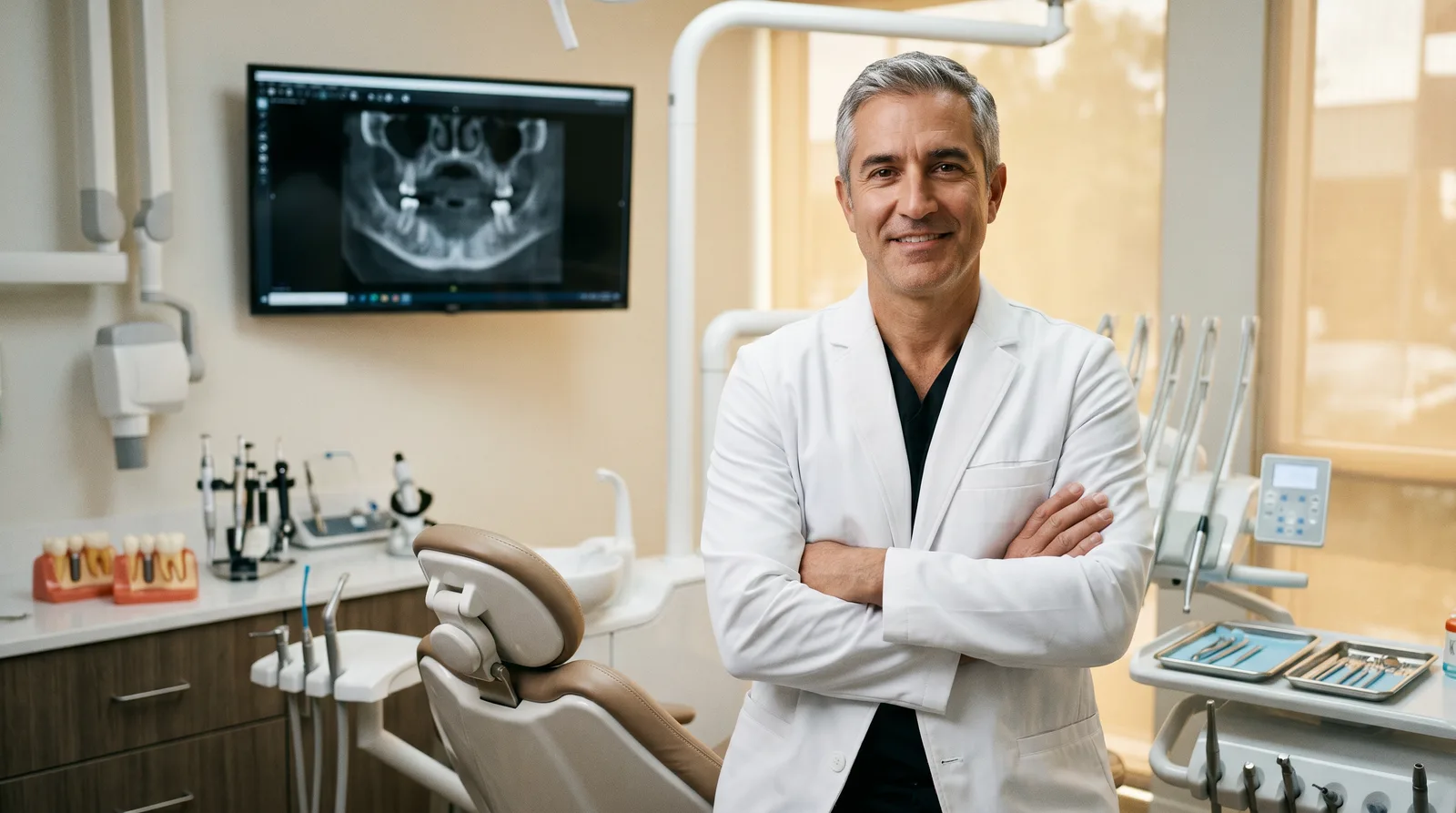
"The surgery is almost never where a case is won or lost — it's won or lost in the thinking that happens before the first incision."— Tim Devolve
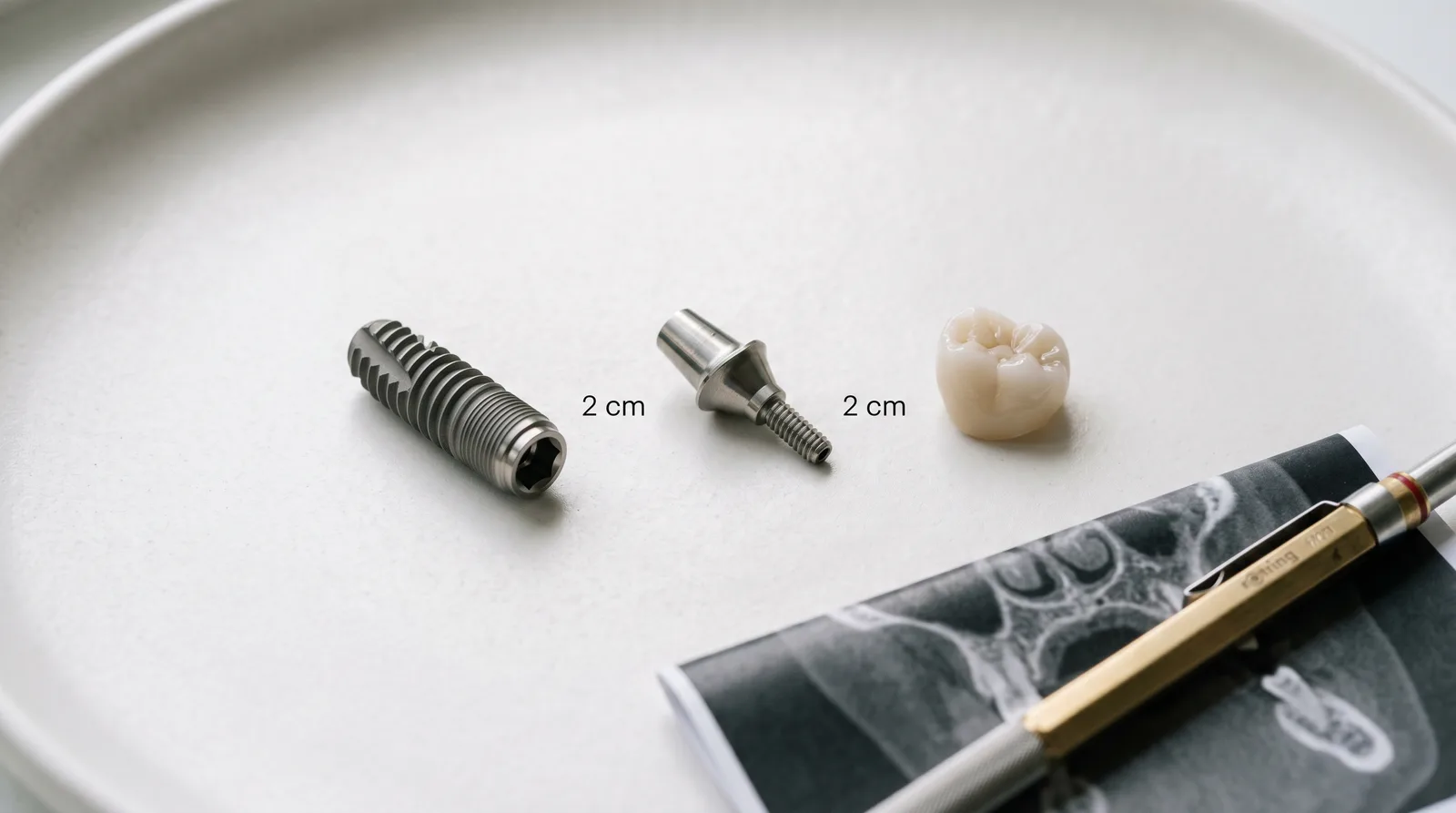
What you'll learn
What you'll be able to do
- Evaluate a patient's medical history, bone quality, periodontal status, and risk factors to determine implant candidacy with clinical confidence.
- Interpret panoramic X-rays and CBCT scans to identify critical anatomical landmarks — nerves, sinuses, bone volume — and understand how they drive implant planning decisions.
- Explain the full implant journey — consultation through final restoration and maintenance — clearly and accurately to patients, colleagues, or referral partners.
- Recognize the biological and technical causes of implant failure, including peri-implantitis, occlusal overload, and insufficient bone or soft tissue, and understand how they are prevented and managed.
- Distinguish between treatment options (implants, bridges, partials, dentures, no treatment) and articulate the clinical and quality-of-life trade-offs of each in plain language.
- Apply a structured, ethical framework for implant case documentation, patient communication, and treatment coordination that reflects evidence-based standards of care.
How it works
A school that adapts to you
This isn't a set of static videos. Every lesson is generated live and tuned to where you actually are.
We learn your level
A quick placement check tailors your starting point so you're never bored or lost.
Lessons adapt as you go
Each lesson is written for your pace and your goal, adjusting as your skills grow.
Your AI coach keeps you moving
Checkpoints, feedback, and gentle nudges turn progress into a real result.
The curriculum
What's inside your school
10 modules · 35 lessons

The Big Picture of Dental Implants
This foundational module establishes the 'why' before the 'how.' Students gain a panoramic understanding of what dental implants are, how they evolved, what problems they solve, and how they compare to every alternative. Dr. J sets the tone: authoritative, honest, and patient-centered. No clinical decision-making yet — just the conceptual foundation every learner needs before going deeper. DISCLAIMER: This course is for educational purposes only and does not constitute clinical advice, diagnosis, or a substitute for licensure or supervised training.
- 1.1What Is a Dental Implant, Really?Included
- 1.2Why Implants Changed Dentistry ForeverIncluded
- 1.3Implants vs. Bridges, Partials, Dentures, and No TreatmentIncluded
The Ideal Implant Candidate
Before any implant is planned, the patient must be evaluated holistically. This module teaches students to think like a clinician by examining the medical, lifestyle, anatomical, psychological, and financial factors that determine whether a patient is a good, borderline, or poor implant candidate. Dr. J emphasizes that saying 'not yet' or 'not for you' is a sign of clinical excellence, not failure. Risk stratification is the central skill of this module.
- 2.1Medical History, Systemic Risk, and Red FlagsIncluded
- 2.2Lifestyle Factors: Smoking, Hygiene, and Patient ComplianceIncluded
- 2.3Bone Quality, Quantity, and Age ConsiderationsIncluded
- 2.4Psychosocial Readiness, Expectations, and Financial CandidacyIncluded
The Implant Consultation
The consultation is where trust is built or lost. This module trains students to run a world-class implant consultation: listening deeply to the patient's story, performing a structured clinical evaluation, and presenting options with honesty and clarity. Dr. J models his own consultation philosophy — patient-first, evidence-based, and never transactional. Students learn what to examine, what questions to ask, and what to never promise. DISCLAIMER: Clinical evaluation and treatment recommendations must be performed by licensed dental professionals.
- 3.1Listening First: The Chief Complaint and Patient StoryIncluded
- 3.2Clinical Evaluation: What to Examine and WhyIncluded
- 3.3Presenting Options Without OverpromisingIncluded
Imaging, Records, and Diagnosis
Accurate diagnosis is impossible without complete records. This module teaches students how to prescribe, interpret, and use every diagnostic tool in the implant workflow: panoramic and periapical radiographs, CBCT scans, intraoral digital scans, impressions, bite records, smile analysis, and periodontal charting. Dr. J emphasizes that records are not paperwork — they are the clinical argument for every decision that follows. DISCLAIMER: Radiograph prescription, interpretation, and diagnosis must be performed by licensed dental professionals.
- 4.1Panoramic and Periapical X-Rays: What to See and What to Never MissIncluded
- 4.2CBCT Scanning: The Full PictureIncluded
- 4.3Digital Scans, Impressions, Bite Records, and Smile AnalysisIncluded
- 4.4Periodontal Charting and Systemic Diagnosis IntegrationIncluded
Bone, Gums, and Foundations
Implants do not succeed in inadequate sites — they succeed in prepared ones. This module is the biological heart of the course. Dr. J teaches the anatomy and biology of bone and soft tissue as it relates to implant success, the full spectrum of bone grafting procedures, sinus augmentation, and soft tissue management. Students learn to recognize when a site is ready and when it needs to be built. DISCLAIMER: Surgical procedures described in this module require licensure, formal surgical training, and supervised clinical experience.
- 5.1Bone Biology and What Bone Loss Really MeansIncluded
- 5.2Bone Grafting: Socket Preservation, Ridge Augmentation, and Block GraftsIncluded
- 5.3Sinus Lifts: Lateral Window and Crestal ApproachesIncluded
- 5.4Soft Tissue: Keratinized Gingiva, Tissue Biotype, and Esthetic Zone ManagementIncluded
Implant Planning
Planning is where surgery is performed — mentally and digitally — before a single incision is made. This module teaches the principles of prosthetically driven implant planning: starting with the final restoration and working backward to determine ideal implant position, angulation, depth, and spacing. Dr. J covers digital planning workflows, surgical guides, esthetic zone risk management, and the critical anatomical safety zones every implant surgeon must respect.
- 6.1Prosthetically Driven Planning: Starting with the CrownIncluded
- 6.2Position, Angulation, Depth, and SpacingIncluded
- 6.3Guided Surgery, Surgical Stents, and Digital WorkflowsIncluded
- 6.4Esthetic Zone Planning: Managing Risk Where It Shows MostIncluded
The Surgery Day
This module walks students through everything that happens on implant surgery day — from pre-operative setup and patient preparation through the placement procedure itself and post-operative management. Dr. J narrates the surgical process with clinical precision and pedagogical clarity, ensuring students understand not just what is done but why each step exists. DISCLAIMER: Implant surgery requires a dental license, formal surgical training, and supervised clinical experience. This module is educational only.
- 7.1Before the First Incision: Setup, Sterility, and Patient PreparationIncluded
- 7.2Implant Placement: Drilling Sequence, Torque, and Critical DecisionsIncluded
- 7.3Post-Operative Care, Instructions, and Managing the Healing PhaseIncluded
Healing, Osseointegration, and the Restorative Phase
The implant is placed — now begins the biology. This module covers osseointegration science, loading protocol selection, and the complete restorative workflow from abutment selection through final crown delivery. Dr. J connects biology to clinical decisions at every step, showing students that the restorative phase is not just technical — it is biological, esthetic, and communicative. DISCLAIMER: Restorative procedures require licensure and clinical training.
- 8.1Osseointegration: The Biology Behind the BondIncluded
- 8.2Loading Protocols: Immediate, Early, and ConventionalIncluded
- 8.3Abutments, Impressions, and Delivering the Final RestorationIncluded
Complications, Failures, and How to Prevent Both
Even in the best hands, complications occur. This module prepares students to recognize, understand, prevent, and manage the full spectrum of implant complications — biological, mechanical, esthetic, and surgical. Dr. J teaches that most failures are predictable and preventable, and that knowing when to refer or stop is as important as knowing how to proceed. Ethical disclosure of complications is addressed throughout. DISCLAIMER: Management of implant complications requires clinical licensure, training, and appropriate patient-specific judgment.
- 9.1Biological Complications: Peri-Implant Mucositis and Peri-ImplantitisIncluded
- 9.2Mechanical and Technical ComplicationsIncluded
- 9.3Esthetic Failures and Surgical ComplicationsIncluded
- 9.4When to Refer, When to Stop, and When to Remove an ImplantIncluded
Maintenance, Long-Term Success, and Advanced Implant Solutions
Implant dentistry does not end at crown delivery — it begins a lifelong relationship between patient, implant, and clinician. This capstone module covers implant maintenance protocols, the full spectrum of full-arch implant solutions, and the communication skills needed to present implant dentistry clearly to patients, staff, and referral partners. Dr. J closes the course with the big picture: what it means to be a steward of long-term implant success. DISCLAIMER: All clinical protocols described require implementation by licensed dental professionals.
- 10.1Implant Maintenance: The Clinical ProtocolIncluded
- 10.2Full-Arch Implant Solutions: Overdentures, Fixed Bridges, and All-on-XIncluded
- 10.3Communicating Implant Dentistry: Scripts for Patients, Staff, and Referral PartnersIncluded
Who it's for
Is this you?

Dental students
Build the clinical reasoning framework for implant dentistry before you ever step into a residency or associateship, so the cases make sense from day one.

General dentists expanding into implants
Close the gap between CE hours and real clinical judgment — from candidacy evaluation and CBCT interpretation to surgical execution and complication management.

Treatment coordinators
Understand the biology and clinical rationale behind every case you present, so your patient conversations carry genuine authority instead of scripted talking points.

Dental assistants
Speak the full language of implant dentistry — from grafting and osseointegration to peri-implantitis — and become the most knowledgeable person in the room.

Educated patients
Understand exactly what's being recommended for your jaw, why it matters, and how to evaluate whether your treatment plan reflects a genuine standard of care.

Referral partners
Get a clear, clinically grounded picture of Dr. J's philosophy, standards, and decision-making process so you can refer with confidence and explain the journey to your patients.
Questions
Frequently asked
Your teacher
A note from your teacher
Tim Devolve
If you've been in or around implant dentistry for any amount of time, you already know the gap I'm talking about.
There are courses that teach you the drilling sequence. There are courses that show you the shiny digital workflows. There are weekend seminars where you place implants in a plastic jaw and leave with a certificate. And there's everything you pick up in the fog of clinical experience — often learning what not to do only after something goes wrong for a patient.
What has never quite existed — at least not in one place — is a course that takes the full arc of implant dentistry seriously. The consultation. The candidacy evaluation. The imaging interpretation. The bone biology. The prosthetic planning. The surgery. The healing. The complications. The maintenance. The communication. The ethics. Everything that a clinician who actually loves this discipline thinks about before, during, and after every case.
That's what I set out to build here. I've been practicing implant dentistry long enough to have seen the full spectrum — the straightforward cases that still required careful planning, and the complex reconstructions that required knowing exactly when to refer. What I've learned is that clinical outcomes are downstream of clinical thinking. The surgery is almost never where cases are won or lost. They're won or lost in the consultation, in the planning, in the conversation with the patient about what's realistic — and in the maintenance protocol that most people treat as an afterthought. This course follows that same logic, in that same order.
I also built this for people who aren't clinicians — for the treatment coordinators who present implant cases every day and deserve to understand the biology behind what they're recommending. For the referral partners who want to know what kind of standard of care they're sending their patients to. And for the patients — the ones who refuse to make a significant health decision without understanding exactly what's being done to their body and why. Those patients are not obstacles. They are the best patients. This course is for them too.
If you're looking for shortcuts, this isn't your course. If you're looking for the clearest, most complete picture of modern implant dentistry taught by someone who still finds this discipline genuinely fascinating — welcome. Let's get to work.
— Tim Devolve
Start your journey today
Join get instant access — learn at your own pace with an AI coach in your corner.
$197/mo
Recurring billing · cancel anytime
Secure checkout · Instant access
- 10 modules, 35 lessons
- AI-adaptive lessons tuned to your level
- Quizzes & checkpoints to lock in progress
- Your own AI learning coach
- Learn on any device, at your pace
- Full access for as long as you're subscribed