Turn everyday moments into your child's greatest learning adventures
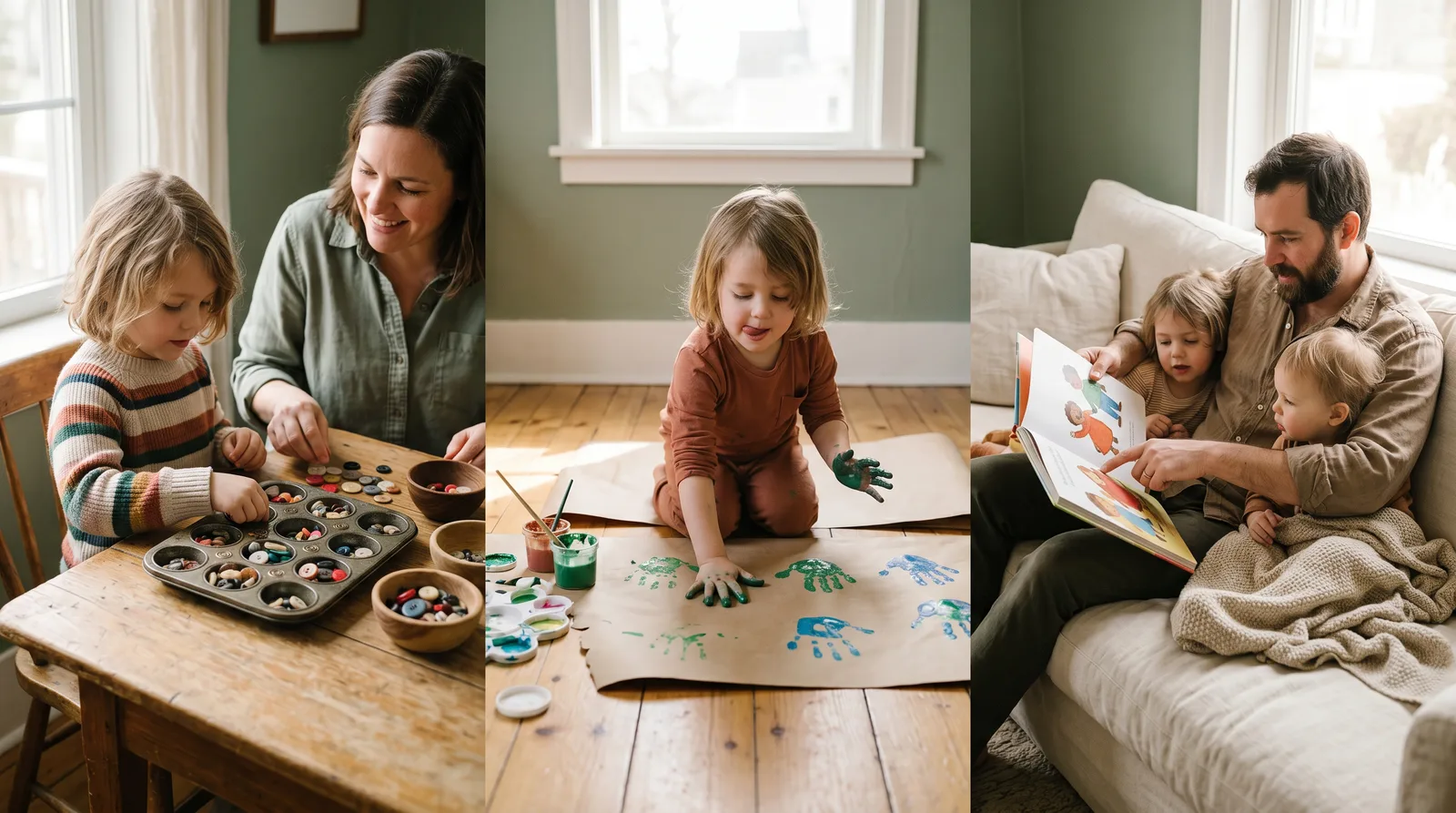
Learning Through Play gives parents of 2–7 year olds a research-backed, joyfully simple roadmap — 52 weekly play plans, activity ideas using what's already in your home, and the coaching language that makes it all stick. No teaching degree. No expensive toys. Just you, your child, and the power of intentional play.

Every time you sit down on the floor to play, you're not just having fun — you're building a brain, and I'm here to show you exactly how.— confidentreadersacademy
What you'll learn
What you'll be able to do
- Use everyday household materials to design purposeful play activities that build your child's literacy and early reading skills, grounded in the Science of Reading.
- Confidently weave math, science, language, and social-emotional learning into your child's natural daily routines — from bath time to grocery shopping.
- Adapt any activity in minutes for your child's specific age (2–3, 4–5, or 6–7) and developmental stage, including children with learning differences or delays.
- Build a play-friendly home environment that sparks curiosity and supports focused, independent exploration without expensive toys or equipment.
- Follow and personalize 52 ready-made weekly play plans so you always know what to do next — and understand exactly why it works.
- Ask the right questions and use coaching language during play that deepens your child's thinking, vocabulary, and love of learning.
How it works
A school that adapts to you
This isn't a set of static videos. Every lesson is generated live and tuned to where you actually are.
We learn your level
A quick placement check tailors your starting point so you're never bored or lost.
Lessons adapt as you go
Each lesson is written for your pace and your goal, adjusting as your skills grow.
Your AI coach keeps you moving
Checkpoints, feedback, and gentle nudges turn progress into a real result.
The curriculum
What's inside your school
10 modules · 36 lessons

Why Play Matters: The Science Behind the Joy
This foundational module sets the stage for everything that follows. Parents discover why play is not just fun — it is the primary engine of early childhood development. Grounded in neuroscience and child development research, this module builds parents' confidence by showing them that the interactions they already have with their children are powerful teaching moments. By the end, parents understand the 'why' behind intentional play and feel equipped to step into their role as their child's most important teacher.
- 1.1How Play Builds the BrainIncluded
- 1.2You Are Your Child's Most Powerful TeacherIncluded
- 1.3Understanding Your Child's Developmental StageIncluded
- 1.4Play Is the Work: Dispelling Myths and Building a Play PhilosophyIncluded
Language & Literacy Through Play
This is the heart of the academy's literacy mission. Deeply grounded in the Science of Reading — the body of research spanning cognitive science, linguistics, and educational neuroscience — this module gives parents a complete, sequenced literacy roadmap they can deliver entirely through play. Parents learn how oral language feeds into phonological awareness, which unlocks phonics, which enables reading comprehension. Every lesson is filled with joyful, low-cost activities that build genuine reading brains without flashcards, drills, or pressure.
- 2.1Talk More, Read More: Building Oral Language and VocabularyIncluded
- 2.2Phonological Awareness: The Sound Foundation of ReadingIncluded
- 2.3Phonics and Print Awareness Through PlayIncluded
- 2.4Storytime Strategies That Build Reading BrainsIncluded
- 2.5Writing Through Play: Early Mark-Making to Emergent WritingIncluded
Math Through Play
Math is everywhere in a young child's day — in sorting laundry, climbing stairs, and sharing snacks. This module helps parents see and harness these hidden math moments while also intentionally introducing core early math concepts through joyful, hands-on play. Grounded in early math research, parents build their child's number sense, spatial reasoning, patterning, measurement, and data literacy — the foundational skills that predict long-term math achievement far more reliably than rote memorization of number sequences.
- 3.1Number Sense: More Than Just CountingIncluded
- 3.2Patterns, Sorting, and Spatial ReasoningIncluded
- 3.3Math in Everyday RoutinesIncluded
- 3.4Measurement, Data, and Early Geometry Through PlayIncluded
Science Through Play
Children are born scientists — endlessly curious, naturally experimental, and wired to ask 'why?' This module helps parents nurture and direct that innate curiosity rather than accidentally shutting it down with quick answers. Grounded in the practices of real scientists, parents learn to facilitate observation, questioning, prediction, investigation, and reflection — all through low-cost, mess-friendly activities that happen at home, in the yard, and out in the world.
- 4.1Raising a Little Scientist: Observation and CuriosityIncluded
- 4.2Simple Science Investigations at HomeIncluded
- 4.3Nature as the Ultimate ClassroomIncluded
- 4.4Engineering and Design Thinking Through PlayIncluded
Social-Emotional Learning Through Play
Social-emotional skills — self-awareness, emotional regulation, empathy, and relationship-building — are the foundation that every other learning skill rests upon. A child who cannot manage frustration, read social cues, or persist through difficulty will struggle academically regardless of their intellectual ability. This module gives parents research-backed, play-based tools for growing emotionally intelligent, resilient, connected children — and along the way, parents often do some of their own emotional growing too.
- 5.1Feelings First: Building Emotional LiteracyIncluded
- 5.2Self-Regulation and Executive Functioning Through PlayIncluded
- 5.3Friendship Skills, Empathy, and CooperationIncluded
- 5.4Building Resilience, Persistence, and a Growth Mindset Through PlayIncluded
Fine & Gross Motor Development Through Play
Physical development is not separate from academic development — it is foundational to it. Fine motor control directly enables writing, drawing, cutting, and self-care. Gross motor development builds spatial awareness, coordination, balance, and the body regulation that makes sitting, focusing, and learning in any setting possible. This module gives parents a full toolkit of playful, progressive activities that build physical competence while also developing the brain's architecture for learning.
- 6.1Fine Motor Skills: Hands That Are Ready to WriteIncluded
- 6.2Gross Motor Play: Big Bodies, Big LearningIncluded
- 6.3Sensory Play and Sensory Processing: Supporting All LearnersIncluded
Creative Play: Art, Music, and Imagination
Creative play is the domain where children make sense of the world, process emotions, develop their identity, and discover the joy of making something new. This module reframes art, music, and dramatic play from 'extras' to essential developmental experiences. Parents learn to create conditions for genuine creative exploration — not Pinterest-perfect crafts — and discover how creativity develops executive function, language, social-emotional skills, and early literacy and math skills simultaneously.
- 7.1Process Art: Creating Without a Finished ProductIncluded
- 7.2Music, Movement, and Dramatic PlayIncluded
- 7.3Building Creative Confidence and a Maker MindsetIncluded
Learning in Everyday Life
This module is where everything parents have learned comes together in the real, imperfect, busy context of family life. Parents discover that the richest learning experiences are not the ones they plan — they are the ones they notice and intentionally extend during the daily routines that already fill their days. From the breakfast table to the grocery store to the car ride home, this module shows parents how to see their whole life as a learning environment.
- 8.1Kitchen and Mealtime LearningIncluded
- 8.2Errands, Car Trips, and the OutdoorsIncluded
- 8.3Bedtime and Morning Routines as Learning RitualsIncluded
Creating a Play-Friendly Home
The physical and emotional environment of the home is not just the backdrop for learning — it is an active participant in it. A thoughtfully arranged, resource-rich (not expensive), emotionally safe home environment can dramatically increase the quality, duration, and depth of children's independent play. This module gives parents a practical, budget-conscious guide to setting up their home as a learning environment — and just as importantly, to creating the emotional climate that makes curiosity, risk-taking, and joyful exploration possible.
- 9.1Designing Spaces That Spark CuriosityIncluded
- 9.2Fostering Independent PlayIncluded
- 9.3Screen Time, Balance, and Creating a Play-First CultureIncluded
Your 52-Week Play Plan: A Full Year of Intentional Play
This capstone module transforms everything parents have learned into a living, breathing practice. The 52-Week Play Plan gives parents a structured, flexible framework for sustaining intentional, joyful, learning-rich play throughout an entire year — without burnout, boredom, or having to think too hard about what to do next. Each week builds on the last, cycles through all developmental domains, and includes a full set of downloadable weekly plans that parents can personalize for their child's age, interests, and developmental stage.
- 10.1How to Use Your Weekly Play PlansIncluded
- 10.2Weeks 1–12: Building the FoundationIncluded
- 10.3Weeks 13–52: Growing, Deepening, and CelebratingIncluded
Who it's for
Is this you?

The stay-at-home parent
You're with your child all day and want those hours to matter — this gives every routine a purposeful, playful learning layer.

The working parent
With limited time together, you want your evenings and weekends to be intentional — the weekly plans make that easy with zero prep stress.

The early literacy worrier
You've heard about the Science of Reading and want to give your child a strong foundation before school — this membership explains it and shows you exactly what to do.

The parent of a child with learning differences
You want strategies that meet your child where they are — the sensory play module and adaptation frameworks are designed with every kind of learner in mind.

The grandparent caregiver
You're raising or helping raise young grandchildren and want fresh, research-backed ideas that work — written in plain language with no jargon in sight.

The homeschooling parent
You've chosen to teach at home and want a joyful, developmentally sound framework for the early years that goes far beyond worksheets.
Questions
Frequently asked
Your teacher
A note from your teacher
confidentreadersacademy
If you've ever watched your child play and thought, "I wish I knew how to make this count more" — I want you to know that feeling is completely normal, and it brought you exactly to the right place.
I see so many parents who are already doing so much: reading bedtime stories, doing puzzles, singing in the car. They care deeply. But they've been told, somewhere along the way, that "real" learning happens at a desk, with a workbook, run by someone with a degree. And so they second-guess themselves. They wonder if they're doing enough. They Google "how to teach a 4-year-old to read" at midnight and end up more confused than when they started.
Here's what I want you to hear: you are already your child's most powerful teacher. The research on early childhood development is breathtakingly clear on this. The interactions you have with your child in the first seven years — the conversations, the stories, the hands-on exploring — are literally building the architecture of their brain. The question was never whether you were teaching your child. It's always been how to do it with more intention and more joy.
That's what this membership gives you. Not a curriculum to replace your child's childhood with drills and flashcards — but a warm, practical, science-grounded toolkit that helps you see the learning that's already hiding inside your everyday life, and gently shape it. You'll understand why counting the stairs every morning builds number sense. You'll know how to turn a walk to the park into a science investigation. You'll have the exact words to say during play that stretch your child's thinking without turning into a pop quiz.
I built this membership because I believe every family deserves access to the knowledge that early childhood specialists have — not locked behind a university degree, but sitting right there at your kitchen table, in language that feels like a conversation with a friend. Every module, every activity, every weekly play plan was built for real parents, with real kids, in real homes.
You don't need to do this perfectly. You just need to start. Come on in — I'm so glad you're here.
— confidentreadersacademy
Start your journey today
Join get instant access — learn at your own pace with an AI coach in your corner.
$49/mo
Recurring billing · cancel anytime
Secure checkout · Instant access
- 10 modules, 36 lessons
- AI-adaptive lessons tuned to your level
- Quizzes & checkpoints to lock in progress
- Your own AI learning coach
- Learn on any device, at your pace
- Full access for as long as you're subscribed