
Read the ocean like a strategist!
Maritime Trade, Logistics, Geoeconomics is a graduate-level seminar for seaborne trade professionals and policy analysts who need a single, rigorous theory cum praxis framework — one that connects freight rate cycles and chokepoint geography to sanctions regimes, BRI port investments, and climate stress — so you can diagnose what's really happening when global supply chains move, stall, or break.
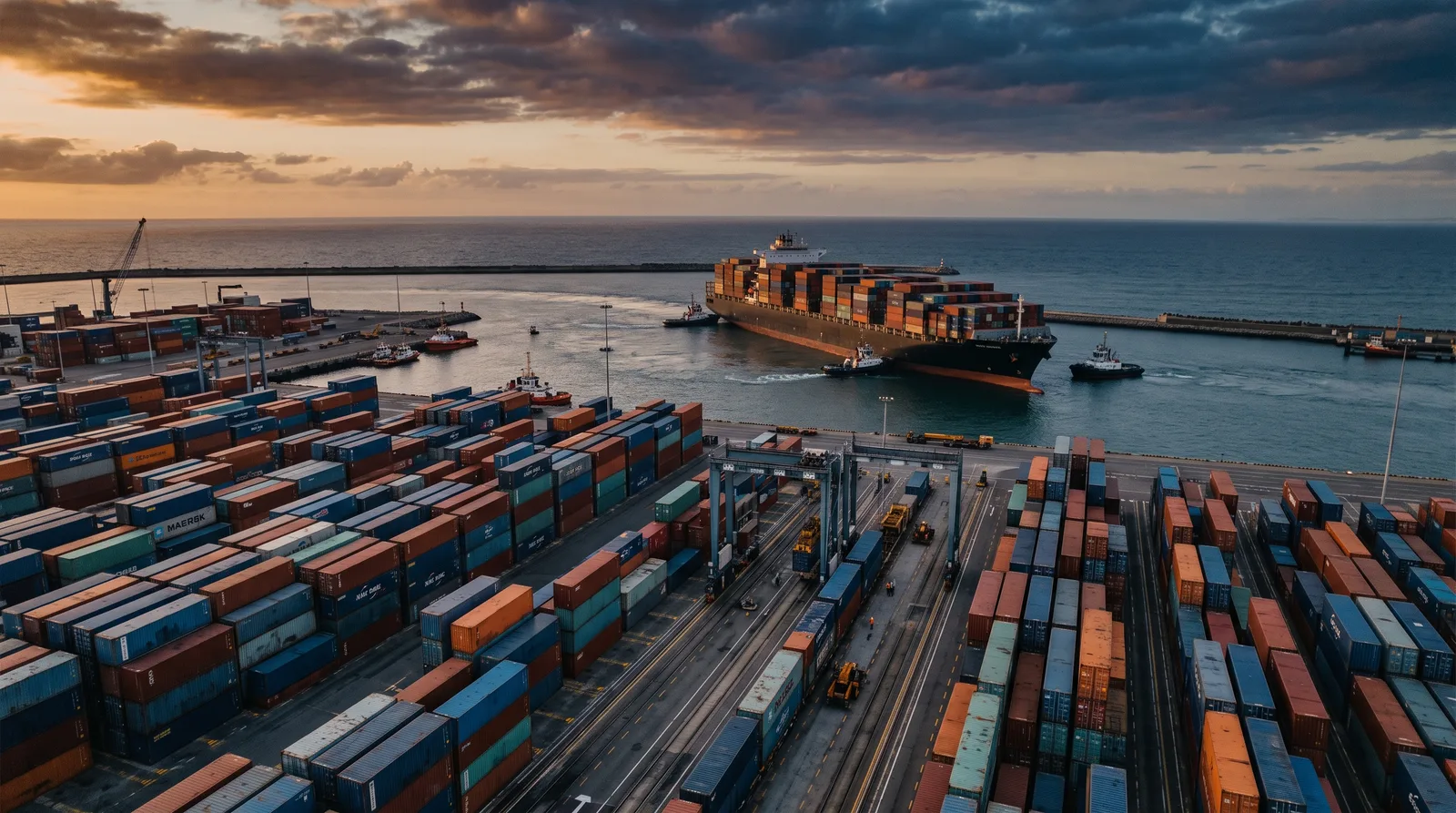
"The ocean is not a backdrop to global trade — it is the critical system, and learning to read it strategically changes everything you thought you understood about how the world economy actually works."
— Val (Valdas) Samonis

What you'll learn
What you'll be able to do
- Map the world's major shipping corridors, transshipment hubs, and strategic chokepoints; and explain their operational and geoeconomic significance
- Interpret real-world shipping and port data — freight rate indices, vessel traffic flows, port throughput statistics — to diagnose the state of global maritime markets
- Analyze the structure of container shipping alliances, bulk and tanker markets, and terminal operator hierarchies and assess how they shape supply chain power and cost
- Evaluate the geoeconomic strategies of major state and corporate actors — including China's Belt and Road Initiative, Canada’s NorthWest Passage, Western port investment coalitions, and sanctions regimes — and their effects on trade flows
- Assess how acute disruptions (Red Sea conflicts, Panama Canal drought, pandemic shocks) and structural pressures (decarbonisation, cyber risk, climate change) reshape global supply chain resilience
- Construct integrated analytical frameworks that connect maritime logistics operations with trade policy, energy security, and strategic competition to inform professional decision-making
How it works
A school that adapts to you
This isn't a set of static slides or videos. Every lesson is generated live and tuned to where you actually are.
We learn your level
A quick placement check tailors your starting point so you're never bored or lost.
Lessons adapt as you go
Each lesson is written for your pace and your goal, adjusting as your skills grow.
Your AI coach keeps you moving
Checkpoints, feedback, and gentle nudges turn progress into a real result.
The curriculum
What's inside your school
5 modules · 25 lessons
The Ocean as Infrastructure: Physical Architecture of Global Seaborne Trade
Establishes the physical and conceptual foundation of the global maritime system — its corridors, hubs, chokepoints, and port hierarchies — as the baseline geography every later analysis builds on.
- 1.1How the World Ships: Scale, Structure, and Significance of Maritime TradeIncluded
- 1.2Major Shipping Corridors and Trade RoutesIncluded
- 1.3Transshipment Hubs and Port HierarchiesIncluded
- 1.4Strategic Chokepoints: Geography, Throughput, and VulnerabilityIncluded
- 1.5Reading Maritime Data: Vessel Traffic, Port Throughput, and Trade StatisticsIncluded
Markets, Carriers, and Logistics Chains
Unpacks the commercial machinery of maritime trade — containerization, shipping alliances, bulk and tanker markets, terminal operators, and freight rate dynamics — and how these structures distribute cost and power across supply chains.
- 2.1Containerization and the Architecture of Modern Supply ChainsIncluded
- 2.2Container Shipping Alliances: Structure, Power, and Market EffectsIncluded
- 2.3Bulk and Tanker Markets: Dry Bulk, Crude Oil, LNG, and Chemical TradesIncluded
- 2.4Terminal Operators and Port Ownership: Who Controls the Quay?Included
- 2.5Freight Rate Dynamics: Indices, Cycles, and Market SignalsIncluded
Geoeconomics and Strategic Competition on the Seas
Applies a geoeconomic lens to state and corporate maritime strategies — infrastructure investment competition, chokepoint politics, energy trade, critical minerals, sanctions, and naval posture — revealing the ocean as an arena of structured power rivalry.
- 3.1Geoeconomics and Maritime Power: A Conceptual FrameworkIncluded
- 3.2China's Maritime Strategy: BRI, Port Investment, and the COSCO NetworkIncluded
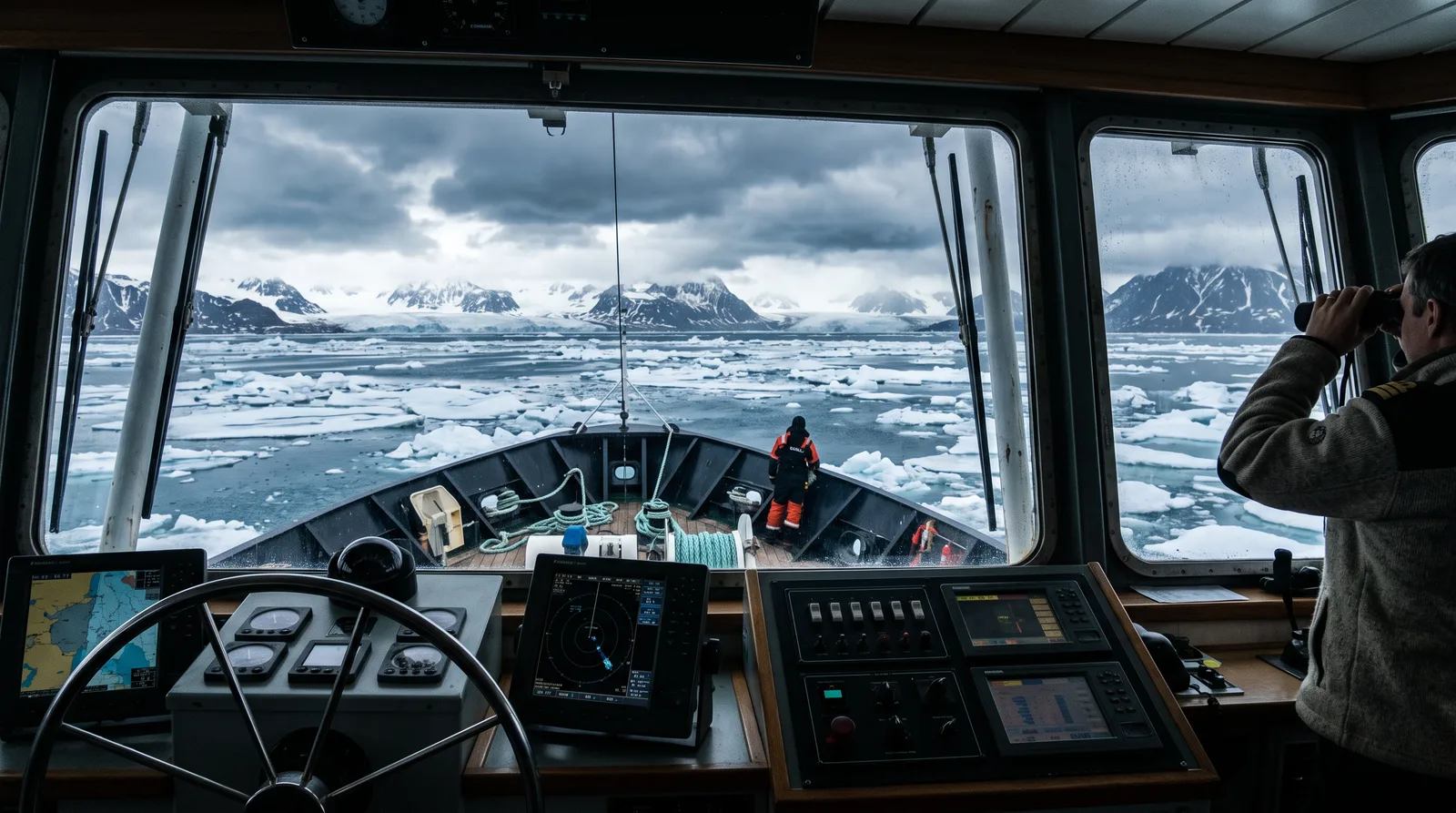
- 3.3The Arctic Opening: Canada's Northwest Passage and Competing Polar RoutesIncluded
- 3.4Energy Trade, Critical Minerals, and Maritime DependencyIncluded
- 3.5Sanctions, Export Controls, and the Weaponization of Maritime TradeIncluded
Risk, Disruption, and Supply Chain Resilience
Diagnoses how acute shocks and structural pressures — conflict, climate, cyber threats, and decarbonisation — stress the seaborne trade system and what resilience frameworks look like for states, firms, and logistics professionals.
- 4.1Anatomy of a Maritime Disruption: Frameworks for Shock AnalysisIncluded
- 4.2Case Studies in Acute Disruption: Red Sea, Panama Canal, and COVID-19Included
- 4.3Climate Change, Sea-Level Rise, and Infrastructure StressIncluded
- 4.4Decarbonisation of Shipping: Regulation, Fuels, and Strategic ImplicationsIncluded
- 4.5Cyber Risk and the Digitalization of Maritime LogisticsIncluded
Integrated Analysis: Connecting Logistics, Strategy, and Professional Practice
Synthesizes all prior modules into applied analytical frameworks and professional decision-making tools, culminating in scenario-based exercises that mirror real-world practitioner challenges.
- 5.1Building an Integrated Maritime Analytical FrameworkIncluded
- 5.2Digital Mapping Workshop: Visualizing Trade Flows and Chokepoint ExposureIncluded
- 5.3Scenario Analysis: A Strait Closure, a Sanctions Escalation, a Climate EventIncluded
- 5.4Practitioner Perspectives: Shipping, Port Management, and Trade PolicyIncluded
- 5.5Capstone: Strategic Assessment of a Maritime Trade System Under PressureIncluded
Who it's for
Is this you?

Supply Chain Analysts
You manage logistics decisions daily but need a rigorous framework to connect freight market signals to geopolitical risk before the next disruption catches you flat-footed.

Trade Policy Professionals
You work on sanctions, export controls, or trade agreements and need to understand how maritime infrastructure and carrier markets translate policy into real economic effects.

Energy & Commodities Traders
You trade crude, LNG, or dry bulk and want the structural market logic — tanker dynamics, chokepoint exposure, sanctions-driven fleet shifts — that sharpens your positional analysis.

Graduate Researchers
You're writing on geoeconomics, maritime security, or global supply chains and need a single integrated framework that holds logistics operations and state strategy in the same analytical lens.

Port & Shipping Executives
You operate inside the industry and want the strategic vocabulary — BRI competition, alliance market power, decarbonisation regulation — to advise leadership at the level the moment demands.

Defense & Security Analysts
You assess naval strategy, critical infrastructure risk, or great-power competition and need the commercial and operational layer of maritime trade to make your strategic analysis complete.
Questions
Frequently asked
Your teacher
A note from your teacher

Val (Valdas) Samonis
If you work in international trade, logistics, supply chain, or policy, you already know the deep frustration: you're reading a freight rate spike, a port closure, a sanctions announcement — and you have the data in front of you, but you're not quite sure what it means at the strategic level. Or you're following a geopolitical development — a Chinese port acquisition in the Mediterranean, an Arctic route claim, a new sanctions regime — and you understand the politics, but the operational and commercial implications stay blurry.
That gap between the logistics layer and the strategic layer is the problem this course was built to solve.
I designed Maritime Power & Trade because the best analysts I've seen in this space — the ones who genuinely move the needle in oceanic shipping companies, government agencies, think tanks, and trading firms — don't live in one silo. They can read a Baltic Exchange Index and a foreign ministry press release in the same breath, and they understand how each one speaks to the other. That capacity isn't intuition. It's a trained analytical framework. And it can be taught.
What we do in this seminar is build that framework systematically. We start with the physical world: the corridors, hubs, and chokepoints that make the ocean an infrastructure — because geography doesn't negotiate. Then we work through the commercial machinery: how alliances concentrate market power in container shipping, how dry bulk and tanker markets behave differently and why, who actually controls the quays at the world's critical terminals. Then we turn to state strategy: China's port investment network, sanctions as a maritime weapon, the Arctic's emerging competitive geometry. And finally we stress-test everything against real disruptions — Red Sea, Panama Canal, COVID — and structural forces — decarbonisation, cyber risk, climate — that are already reshaping the system.
I want to be direct about what this course asks of you: it is a graduate-level seminar, not a survey. You will be expected to engage with real data, argue from evidence, and build analytical products — including a scenario exercise and a capstone strategic assessment — that reflect the complexity of actual professional problems. If you're willing to do that work, the payoff is a genuinely integrated way of thinking about global trade that very few practitioners in any field currently possess.
If you're ready to stop seeing maritime trade as either a logistics puzzle or a geopolitics story — and start seeing it as both, simultaneously, the way the world actually works — I'd be glad to have you in the seminar.
— Val (Valdas) Samonis
Start your journey today
Get instant access — learn at your own pace with an AI coach in your corner.
$100/mo
Recurring billing · cancel anytime
Secure checkout · Instant access
- 5 modules, 25 lessons
- AI-adaptive lessons tuned to your level
- Quizzes & checkpoints to lock in progress
- Your own AI learning coach
- Learn on any device, at your pace
- Full access for as long as you're subscribed