Master the ICU
This critical care course and tutoring program gives nurses and nursing students a clinically rigorous, protocol-by-protocol command of every high-stakes skill in the ICU — from hemodynamic monitoring and vasoactive drips to mechanical ventilation, neuro emergencies, and life-support technology — aligned to 2026 evidence-based standards. This is an AI-Adaptive learning course and tutoring program that takes you through the lessons, quizzes, flashcards, and study guides based on your individual responses and questions. It was created by a ICU/ER R.N. who loves using technology to solve real world problems.
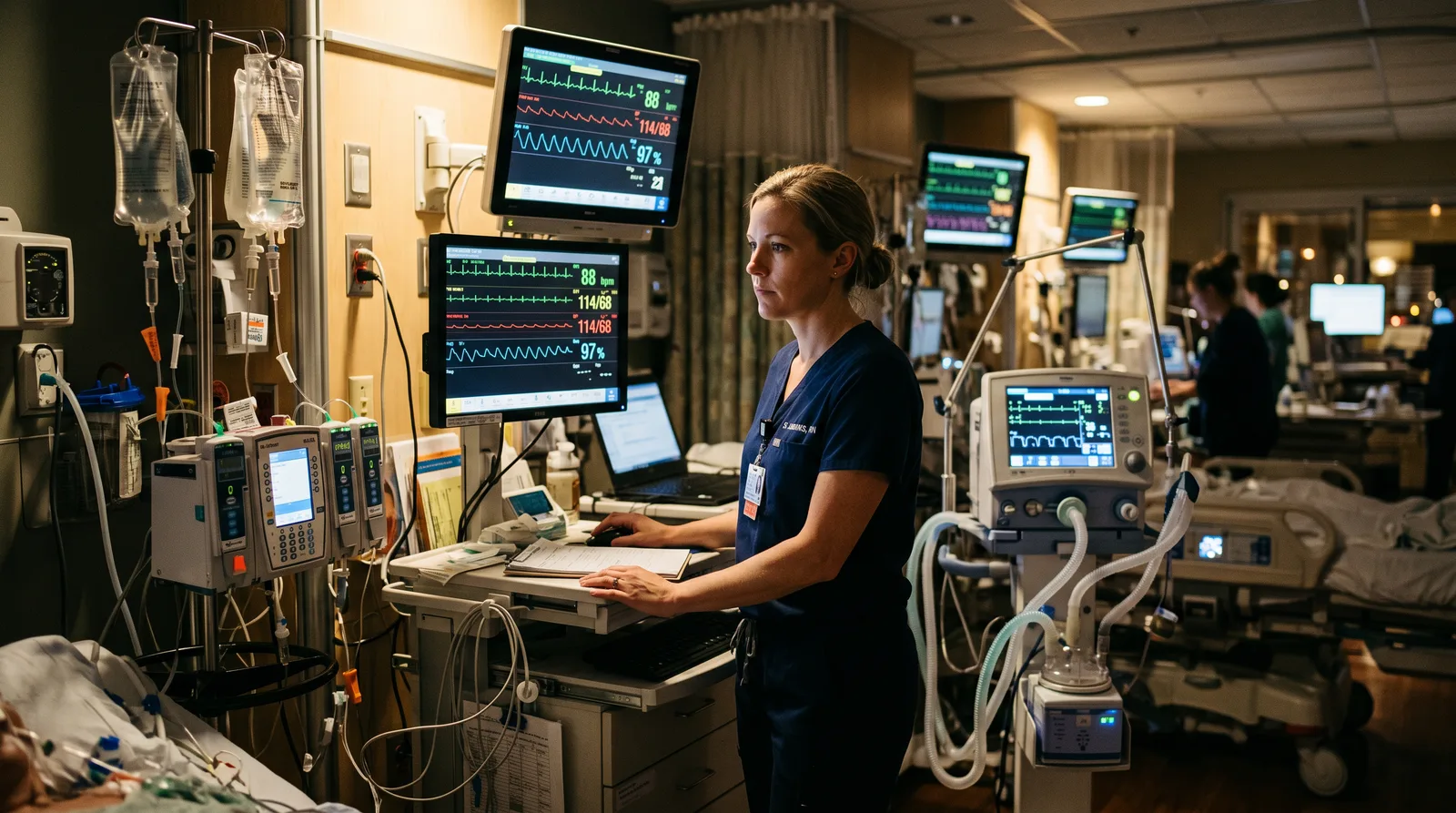
"The ICU doesn't reward guessing — it rewards nurses who built their knowledge the right way, and that's exactly what we're going to do here."— AIAdaptiveSchool
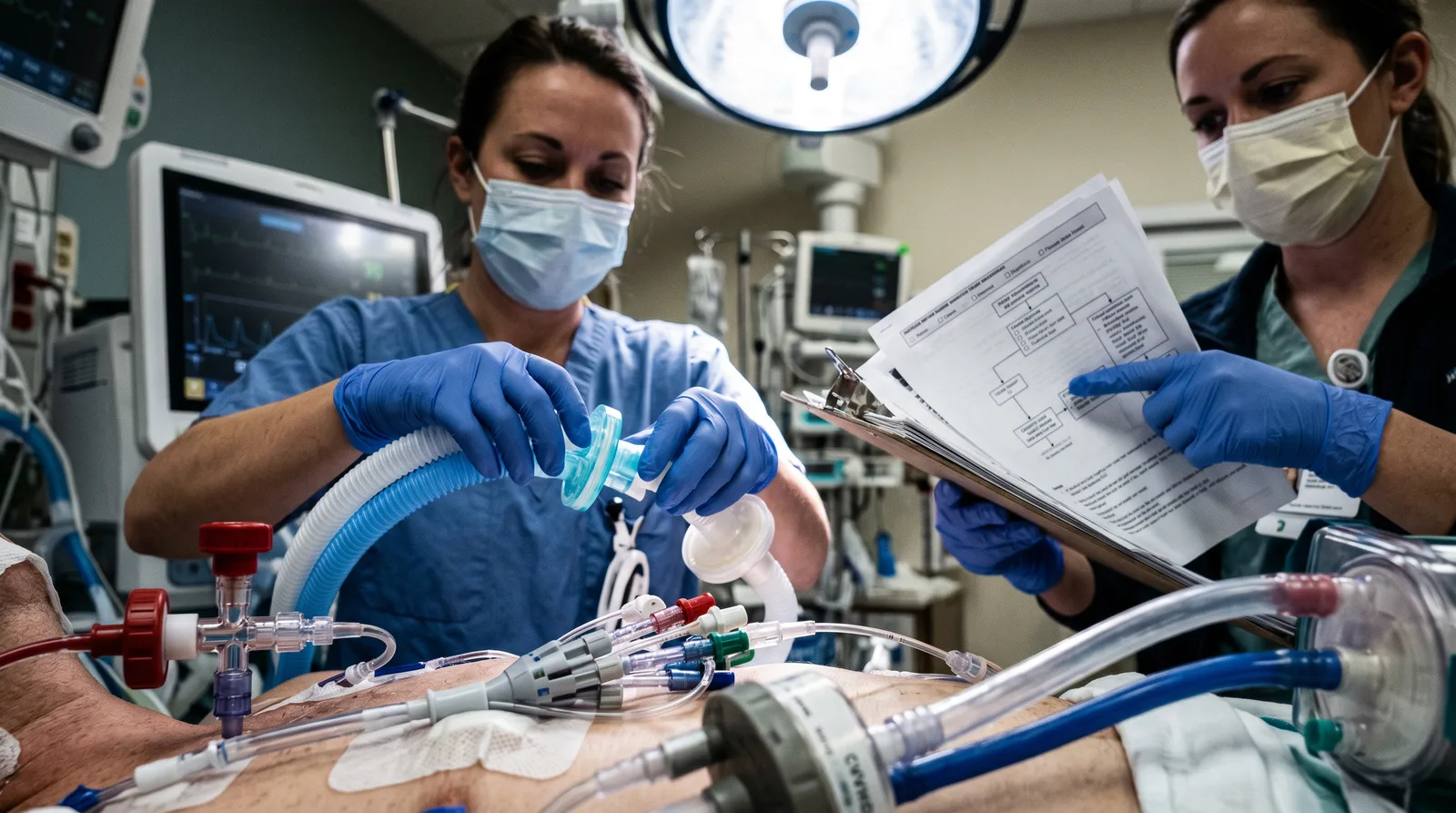
What you'll learn
What you'll be able to do
- Perform a systematic, head-to-toe critical care assessment and accurately interpret hemodynamic data from arterial lines, Swan-Ganz catheters, and non-invasive monitors such as the FloTrac to guide real-time clinical decisions.
- Safely titrate vasoactive and sedation drips, apply train-of-four nerve stimulus monitoring during chemical paralysis, and manage all ventilator settings and modes — including inverse I:E ratio ventilation — for the mechanically ventilated ICU patient.
- Recognize and respond to life-threatening conditions exclusive to the ICU — including septic shock, cardiac arrest, brain herniation, intracranial hypertension, and acute neurological emergencies — using the latest 2026 BLS, ACLS, and PALS guidelines.
- Manage advanced ICU devices and procedures including intra-aortic balloon pumps, ventricular assist devices, CVVHD circuits, ventriculostomies, intracranial pressure bolts, chest tubes, and central venous pressure monitoring with confidence and competence.
- Execute rapid trauma protocols appropriate to Level 1, 2, and 3 trauma centers, administer targeted pharmacological interventions for life-threatening arrhythmias, perform synchronized cardioversion, and initiate external pacing with correct technique and timing.
- Safely transport and manage critically ill patients in off-unit diagnostic environments — including CT, MRI, and interventional radiology suites — while maintaining hemodynamic stability, airway patency, and continuous monitoring throughout all special procedures.
How it works
A school that adapts to you
This isn't a set of static videos. Every lesson is generated live and tuned to where you actually are.
We learn your level
A quick placement check tailors your starting point so you're never bored or lost.
Lessons adapt as you go
Each lesson is written for your pace and your goal, adjusting as your skills grow.
Your AI coach keeps you moving
Checkpoints, feedback, and gentle nudges turn progress into a real result.
The curriculum
What's inside your school
9 modules · 44 lessons

Foundations of Critical Care Nursing
Establishes the clinical mindset, systematic assessment framework, and professional standards every ICU nurse must master before touching a single device.
- 1.1The Critical Care Nurse's Role and ICU EnvironmentIncluded
- 1.2Systematic Head-to-Toe Critical Care AssessmentIncluded
- 1.3Neurological Assessment in the ICUIncluded
- 1.4Cardiovascular and Respiratory AssessmentIncluded
- 1.5Interpreting Critical Labs, ABGs, and Diagnostic DataIncluded
Hemodynamic Monitoring and Arterial Line Management
Builds competency in invasive and non-invasive hemodynamic monitoring so nurses can interpret data and act with precision.
- 2.1Arterial Line Insertion, Setup, and Waveform InterpretationIncluded
- 2.2Central Venous Pressure Monitoring and Central Line CareIncluded
- 2.3Swan-Ganz Catheter: Setup, Insertion, and Data InterpretationIncluded
- 2.4Non-Invasive Hemodynamic Monitoring: FloTrac and Emerging TechnologiesIncluded
- 2.5Translating Hemodynamic Data into Clinical ActionIncluded
Advanced Pharmacology and Vasoactive Drip Management
Develops safe, confident expertise in titrating life-sustaining infusions and applying targeted pharmacological interventions in the ICU.
- 3.1Vasopressors and Inotropes: Mechanisms and Safe TitrationIncluded
- 3.2Sedation and Analgesia Drips in the ICUIncluded
- 3.3Chemical Paralysis: Neuromuscular Blocking Agents and Train-of-Four MonitoringIncluded
- 3.4Antiarrhythmic Pharmacology and Emergency Cardiac DrugsIncluded
- 3.5Colloid Fluid Therapy: Hypertonic Solutions and AlbuminIncluded
Mechanical Ventilation and Advanced Airway Management
Provides complete mastery of ventilator modes, settings, and complex strategies including inverse ratio ventilation and weaning protocols.
- 4.1Ventilator Basics: Modes, Settings, and InitiationIncluded
- 4.2Advanced Ventilator Strategies: ARDS, High PEEP, and Prone PositioningIncluded
- 4.3Inverse Ratio Ventilation and Sedation–Paralysis ProtocolsIncluded
- 4.4Ventilator Alarms, Troubleshooting, and Patient–Ventilator DyssynchronyIncluded
- 4.5Ventilator Weaning, Spontaneous Breathing Trials, and ExtubationIncluded
Life-Threatening ICU Conditions and Emergency Responses
Prepares nurses to recognize and manage the highest-acuity conditions encountered exclusively in the intensive care environment.
- 5.1Sepsis and Septic Shock: 2026 Surviving Sepsis Campaign ProtocolsIncluded
- 5.2Cardiac Arrest Management: 2026 BLS, ACLS, and Post-Resuscitation CareIncluded
- 5.3Life-Threatening Cardiac Arrhythmias: Pharmacology, Cardioversion, and External PacingIncluded
- 5.4Pediatric Critical Emergencies: 2026 PALS GuidelinesIncluded
- 5.5Chest Tube Insertion Assistance, Management, and TroubleshootingIncluded
Neurological Critical Care and Intracranial Emergencies
Equips nurses to manage acute brain injury, rising intracranial pressure, herniation syndromes, and brain death determination protocols.
- 6.1Intracranial Pressure Monitoring: Ventriculostomy and ICP Bolt Setup and ManagementIncluded
- 6.2Recognizing and Treating Intracranial HypertensionIncluded
- 6.3Brain Herniation Syndromes: Recognition and Emergency ResponseIncluded
- 6.4Acute Neurological Emergencies: Stroke, Status Epilepticus, and Neurotoxic CrisisIncluded
- 6.5Brain Death: Clinical Criteria, Apnea Testing, and Family SupportIncluded
Advanced ICU Devices and Life-Support Technologies
Builds hands-on competency with the most complex mechanical support devices used to sustain life in the critically ill.
- 7.1Intra-Aortic Balloon Pump: Principles, Timing, and Nursing ManagementIncluded
- 7.2Ventricular Assist Devices: Types, Alarms, and Bedside ManagementIncluded
- 7.3Continuous Veno-Venous Hemodialysis: Circuit Setup, Troubleshooting, and Patient ManagementIncluded
- 7.4Managing the CVVHD and VAD Patient: Fluid Balance and Pharmacology AdjustmentsIncluded
Trauma Protocols and Multi-System Critical Care
Prepares nurses to execute rapid, protocol-driven trauma care across all trauma center designations and manage multi-system injuries.
- 8.1Trauma Center Designations: Level 1, 2, and 3 Roles and Nurse ResponsibilitiesIncluded
- 8.2Primary and Secondary Survey: Rapid Trauma Assessment ProtocolsIncluded
- 8.3Hemorrhagic Shock and Massive Transfusion ProtocolsIncluded
- 8.4Traumatic Brain Injury, Spinal Cord Injury, and Multi-Organ DysfunctionIncluded
- 8.5Thoracic and Abdominal Trauma: Nursing Management of Complex InjuriesIncluded
Off-Unit Transport and Diagnostic Suite Management
Trains nurses to safely maintain full critical care standards when patients leave the ICU for imaging or interventional procedures.
- 9.1Principles of Safe Critical Care TransportIncluded
- 9.2Managing the Ventilated Patient During CT and MRIIncluded
- 9.3Hemodynamic Monitoring Continuity During Off-Unit ProceduresIncluded
- 9.4Responding to Emergencies in Diagnostic AreasIncluded
- 9.5Special Procedures: Interventional Radiology, Angiography, and Procedural Sedation ManagementIncluded
Who it's for
Is this you?

New ICU Graduate Nurses
You accepted your first ICU position and need to close the gap between nursing school and the high-acuity reality of the bedside — fast.

Step-Down Nurses Moving Up
You know progressive care cold and you are ready for the ICU, but drips, vents, and advanced devices are the next frontier you need to own.

Critical Care Clinical Students
You are mid-rotation in the ICU and need the clinical reasoning framework to make sense of what you are seeing and contribute meaningfully at the bedside.

CCRN Exam Candidates
You want to earn your CCRN and need a deep, practice-grounded command of the clinical domains the exam — and the unit — actually tests.

Travel Nurses Entering New ICUs
You travel between facilities and need rigorous, standardized knowledge of critical care protocols and technology so you can function competently from day one.

Experienced Nurses Filling Skill Gaps
You have ICU time but specific areas — neuro monitoring, CVVHD, VADs, or off-unit transport — are gaps you are determined to close with real clinical depth.
Questions
Frequently asked
Your teacher
A note from your teacher
AIAdaptiveSchool
If you are reading this, you are probably standing at one of the most demanding transitions in nursing — or you are already in it. Maybe you have just accepted your first ICU position and the gap between what you learned in school and what is happening at that bedside feels enormous. Maybe you have been working in step-down for years and you are ready for a higher level of care, but you know there is a whole tier of complexity you have not yet had to own. Or maybe you are a nursing student mid-rotation in the ICU, trying to make sense of a Swan-Ganz catheter and a six-drip infusion board while staying out of everyone's way. I built this school for all three of you.
Critical care nursing is not harder because it is mysterious. It is harder because it demands that you hold an extraordinary amount of clinical knowledge in working memory and act on it quickly, accurately, and simultaneously. The nurse who manages a mechanically ventilated patient in septic shock on a norepinephrine-vasopressin combination while trending ICP values from a ventriculostomy is not a different species — they are a nurse who learned this material systematically, applied it repeatedly, and built genuine clinical confidence from the ground up. That process is exactly what this school is designed to give you.
Here is what I will not do: I will not water this down. The ICU does not water things down, and neither will I. What you will find in every lesson is clear, direct clinical reasoning — the kind a seasoned charge nurse uses to explain what is happening with a patient and why a decision needs to be made right now. Real scenarios. Explicit pathophysiology. Protocols you can actually apply, not just memorize. When we cover brain herniation syndromes, you will know what to look for, what it means, and what you do — in that order, every time. When we cover vasoactive drips, you will understand the receptor-level mechanisms behind the titration decisions you are making, so you are not just following an order — you are understanding why it matters.
There is also content here that most critical care courses do not touch. Off-unit transport of the ventilated patient. Managing emergencies in the CT scanner or the interventional radiology suite. The nursing management of ventricular assist devices and CVVHD circuits. Inverse ratio ventilation. External pacing. Train-of-four monitoring during chemical paralysis. These are the skills that separate a competent ICU nurse from a truly practice-ready one — and they are all here, taught with the same rigor as the foundational material.
If you are willing to do the work, this school will give you the clinical foundation to walk into that unit and function at the level it demands. The patients in the ICU are the sickest people in the hospital. They deserve nurses who are prepared. Let's make sure that is you.
— AIAdaptiveSchool
Start your journey today
Join get instant access — learn at your own pace with an AI coach in your corner.
$5/mo
Recurring billing · cancel anytime
Secure checkout · Instant access
- 9 modules, 44 lessons
- AI-adaptive lessons tuned to your level
- Quizzes & checkpoints to lock in progress
- Your own AI learning coach
- Learn on any device, at your pace
- Full access for as long as you're subscribed