Think deeper. Play stronger. Master the board.
Structured lessons in tactics, openings, strategy, and endgames give you a complete chess education — so every move you make is a choice, not a guess.
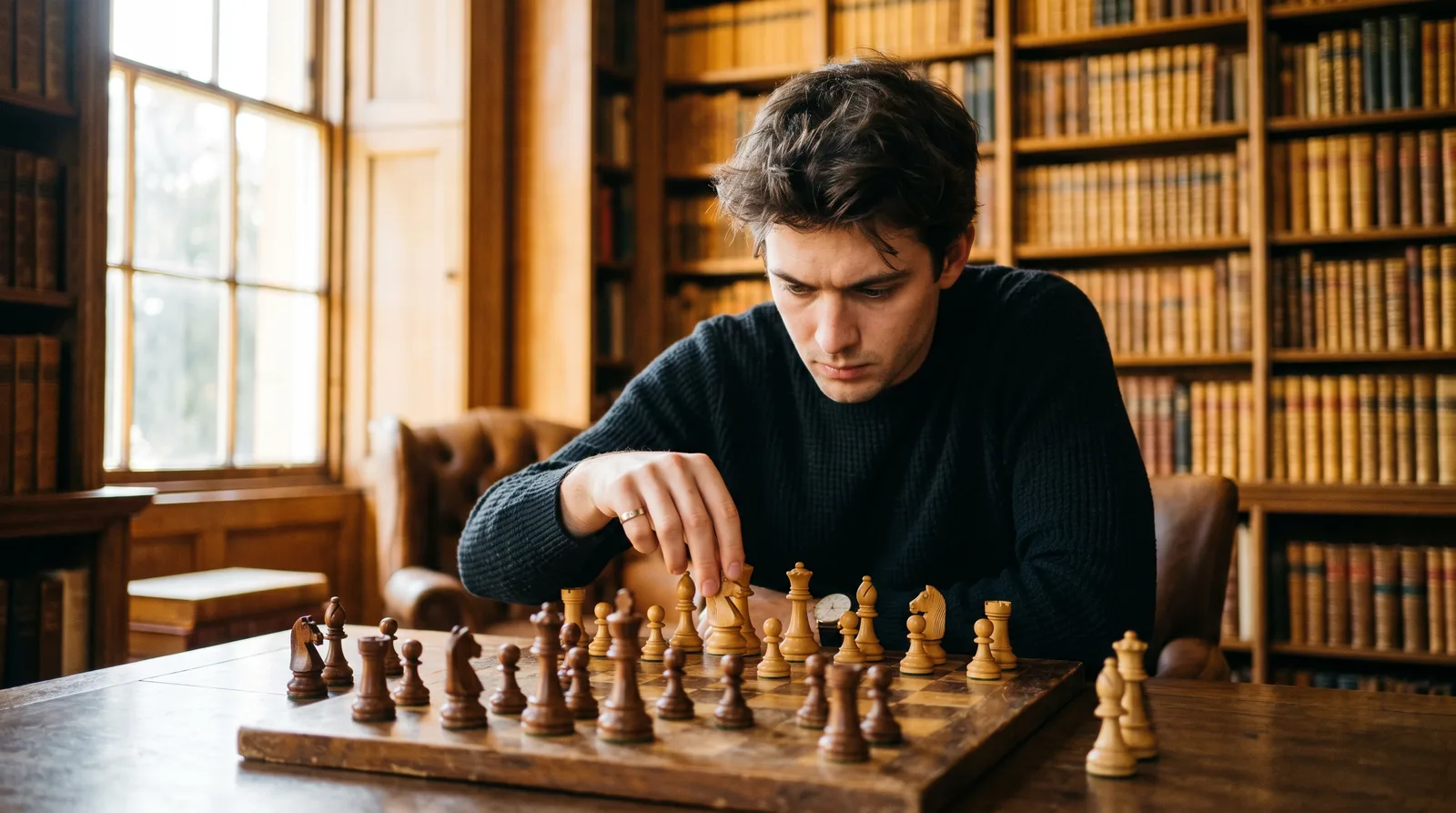
"Chess teaches you that every position has a logic to it — my job is to make that logic feel obvious to you."— Ivonne Ramos
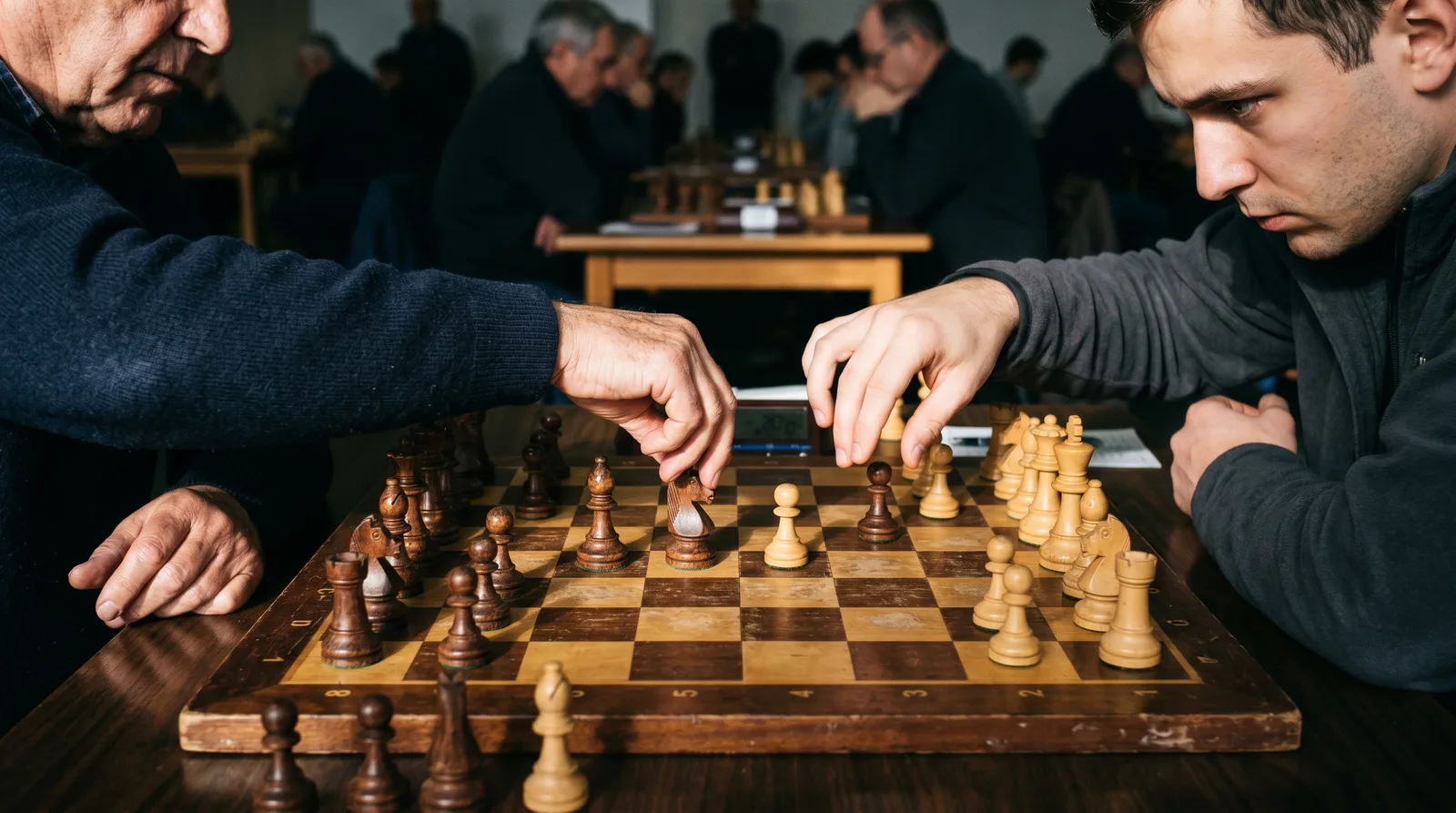
What you'll learn
What you'll be able to do
- Recognize and execute the 10 most powerful tactical patterns, including forks, pins, skewers, and discovered attacks
- Build a reliable opening repertoire for both White and Black based on sound positional principles
- Convert winning endgame positions confidently, mastering king-and-pawn, rook, and minor-piece endings
- Evaluate any position on the board by assessing material, piece activity, pawn structure, and king safety
- Spot and avoid common blunders under time pressure using structured calculation habits
- Analyze your own games to identify recurring weaknesses and build a targeted self-improvement plan
How it works
A school that adapts to you
This isn't a set of static videos. Every lesson is generated live and tuned to where you actually are.
We learn your level
A quick placement check tailors your starting point so you're never bored or lost.
Lessons adapt as you go
Each lesson is written for your pace and your goal, adjusting as your skills grow.
Your AI coach keeps you moving
Checkpoints, feedback, and gentle nudges turn progress into a real result.
The curriculum
What's inside your school
6 modules · 29 lessons
Chess Foundations & the Language of the Game
Establishes the rules, notation, and core principles every player must own before studying tactics or strategy.
- 1.1How the Pieces Move & the Rules of PlayIncluded
- 1.2Reading & Writing Chess: Algebraic NotationIncluded
- 1.3Core Opening PrinciplesIncluded
- 1.4What Is a Good Move? Introduction to EvaluationIncluded
- 1.5Spotting & Stopping Blunders: The Blunder-Check HabitIncluded
Tactical Patterns: The Power Moves
Trains recognition and execution of the 10 most decisive tactical motifs through focused pattern drills.
- 2.1Forks & Double AttacksIncluded
- 2.2Pins & SkewersIncluded
- 2.3Discovered Attacks & Discovered CheckIncluded
- 2.4Deflection, Decoy & Removing the DefenderIncluded
- 2.5Zwischenzug, Interference & X-Ray TacticsIncluded
Calculation & Decision-Making Under Pressure
Builds the mental discipline to calculate accurately, manage time, and avoid errors in critical positions.
- 3.1Candidate Moves: How to Think Like a Chess PlayerIncluded
- 3.2Visualizing Ahead: Training Your Board SightIncluded
- 3.3Time Pressure & Clock ManagementIncluded
- 3.4Practical Calculation DrillsIncluded
Opening Repertoire for White & Black
Guides students to build a sound, principled opening repertoire they can rely on in real games.
- 4.1Understanding Opening Theory: Why Openings MatterIncluded
- 4.2Building a White Repertoire: 1.e4 & Key ResponsesIncluded
- 4.3Building a Black Repertoire Against 1.e4Included
- 4.4Building a Black Repertoire Against 1.d4 & Flank OpeningsIncluded
- 4.5Transitioning from Opening to MiddlegameIncluded
Strategic Thinking & Positional Play
Develops the ability to evaluate positions deeply and form long-term plans based on structural factors.
- 5.1Pawn Structure: Strengths, Weaknesses & PlansIncluded
- 5.2Piece Activity: Good Pieces vs. Bad PiecesIncluded
- 5.3King Safety: Attack & DefenseIncluded
- 5.4Outposts, Open Files & the Role of RooksIncluded
- 5.5Formulating a Plan: Putting It All TogetherIncluded
Endgame Mastery & Self-Improvement
Converts winning positions through essential endgame technique and teaches players to coach themselves using game analysis.
- 6.1King & Pawn Endings: Opposition & PromotionIncluded
- 6.2Rook Endings: Lucena, Philidor & BeyondIncluded
- 6.3Minor-Piece Endings: Bishops & KnightsIncluded
- 6.4Analyzing Your Own GamesIncluded
- 6.5Building Your Personal Improvement PlanIncluded
Who it's for
Is this you?

The True Beginner
Just learned how the pieces move and wants a clear, structured path to actually understanding the game.
The Casual Weekend Player
Plays with friends or online for fun but is tired of losing to the same kinds of tricks and wants to play with real purpose.
The Club-Level Competitor
Already plays in tournaments but has hit a plateau and needs structured work on strategy, calculation, and endgames to break through.

The Ambitious Teen
A 12–17 year old who loves a mental challenge and wants to develop serious chess skills with clear, engaging lessons.

The Self-Taught Player
Has picked up bits and pieces from videos and forums but wants a coherent, principle-based system to replace the patchwork knowledge.

The Adult Returning to Chess
Played a little as a kid, rediscovered the game, and is ready to finally learn it properly from the ground up.
Questions
Frequently asked
Your teacher
A note from your teacher

Ivonne Ramos
If you've ever walked away from a chess game thinking, "I had that — how did I lose it?" — I made this school for you.
Maybe you learned the rules years ago and still feel like you're guessing when things get complicated. Maybe you've watched videos online, picked up a tip here and there, but never quite felt like it all clicked into a coherent system. Or maybe you're already playing club chess but keep hitting the same ceiling — the same types of positions where your thinking breaks down. I know that feeling intimately, and I know exactly where it comes from: a gap between knowing what pieces can do and understanding what they should do.
That gap is what Master the Board closes. I've built this curriculum the way I wish chess had been taught to me — starting with the language of the game, moving through the tactical patterns that decide most games at every level, and then building up to the strategic thinking and endgame technique that separate players who almost win from players who do. Every lesson uses concrete board positions and vivid analogies because abstract strategy means nothing until you can feel it on the board in front of you.
The calculation module is something I'm especially proud of. Time pressure is where good intentions fall apart — and most chess instruction ignores it completely. We address it head-on: how to generate candidate moves, how to train your board vision to see further, and how to manage the clock without letting it manage you.
And the endgame section is non-negotiable, even for beginners. I've seen more games won and lost in the endgame than anywhere else, yet it's the last thing most players study. King-and-pawn endings, Philidor and Lucena, bishop-and-knight positions — these are the positions where technique decides everything, and we cover them in full.
By the time you finish, you won't just be a better chess player. You'll think more clearly, see further ahead, and know how to keep improving on your own — because the final module hands you a personalized roadmap to do exactly that. Pull up a board. Let's get to work.
— Ivonne Ramos
Start your journey today
Join get instant access — learn at your own pace with an AI coach in your corner.
$29/mo
Recurring billing · cancel anytime
Secure checkout · Instant access
- 6 modules, 29 lessons
- AI-adaptive lessons tuned to your level
- Quizzes & checkpoints to lock in progress
- Your own AI learning coach
- Learn on any device, at your pace
- Full access for as long as you're subscribed