
Wire it yourself — safely, correctly, and to code
American Precision Trades will walk you through every skill a working electrician relies on — from killing a circuit and testing for live voltage to wiring panels, pulling conduit, and passing your inspection — in plain trade language you can actually use on the job.
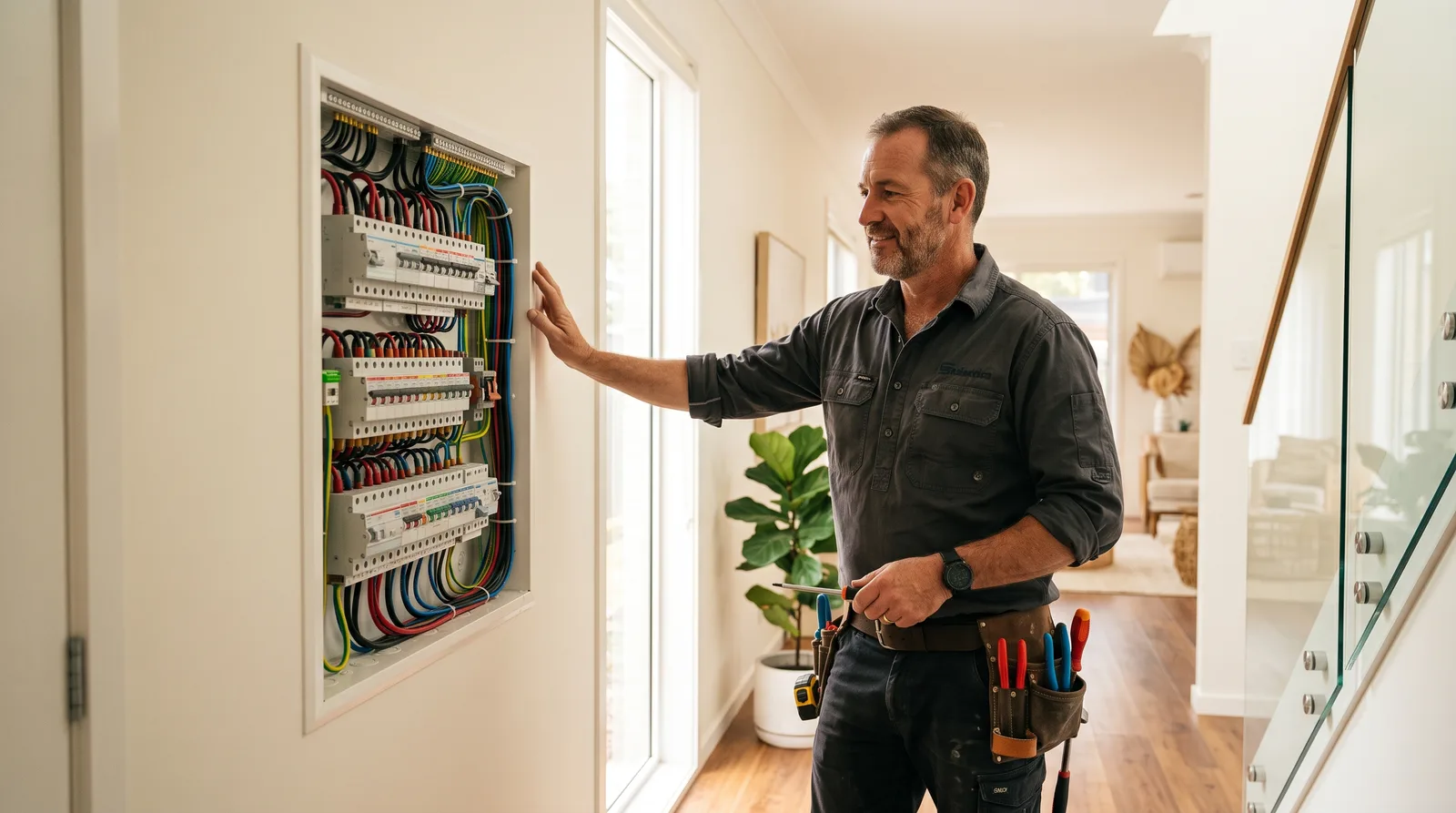
"Electricity isn't forgiving of guesswork, so I don't teach guesswork — I teach you exactly what to do, in what order, and why it's safe."
— Todd McFarland
What you'll learn
What you'll be able to do
- Safely shut off circuits, test for live voltage, and work without risk of shock or fire
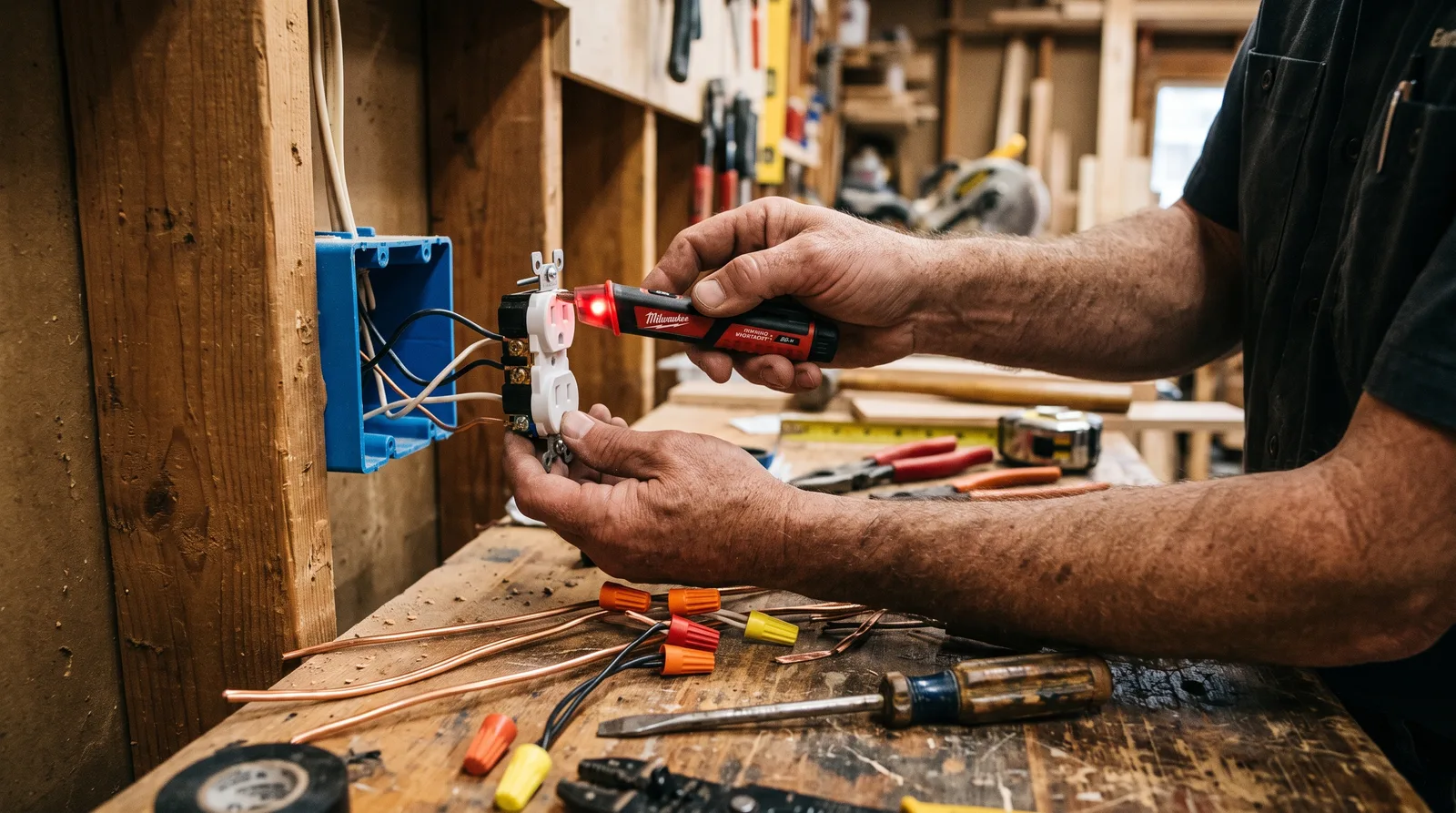
- Wire and replace outlets, switches, dimmers, and GFCI/AFCI breakers to code
- Read and interpret basic electrical blueprints and wiring diagrams
- Install and upgrade a residential breaker panel including load calculations
- Run conduit, pull wire, and complete rough-in work for new circuits
- Prepare a home for an electrical inspection and understand NEC code essentials
How it works
A school that adapts to you
This isn't a set of static videos. Every lesson is generated live and tuned to where you actually are.
We learn your level
A quick placement check tailors your starting point so you're never bored or lost.
Lessons adapt as you go
Each lesson is written for your pace and your goal, adjusting as your skills grow.
Your AI coach keeps you moving
Checkpoints, feedback, and gentle nudges turn progress into a real result.
The curriculum
What's inside your school
6 modules · 28 lessons

Electrical Foundations & Safety
Builds the essential knowledge base — how electricity works, how to read a circuit, and how to stay safe before touching anything.
- 1.1How Electricity Works: Voltage, Current, and ResistanceIncluded
- 1.2Residential Wiring Basics: Circuits, Conductors, and Color CodesIncluded
- 1.3Your Essential Electrical ToolkitIncluded
- 1.4Shutting Off Power and Testing for Live VoltageIncluded
- 1.5Shock, Fire, and Arc-Flash: Recognizing and Avoiding HazardsIncluded
NEC Code Essentials
Gives students the working knowledge of the National Electrical Code rules that govern residential and light commercial projects.
- 2.1How the NEC Is Organized and How to Use ItIncluded
- 2.2Wiring Methods, Box Fill, and Conductor SizingIncluded
- 2.3Grounding, Bonding, and GFCI/AFCI RequirementsIncluded
- 2.4Permit and Inspection Requirements for Homeowners and ContractorsIncluded
Reading Blueprints and Wiring Diagrams
Trains students to interpret the visual language of electrical plans so they can execute any project from paper to finished installation.
- 3.1Electrical Symbols, Legends, and Drawing ConventionsIncluded
- 3.2Reading a Residential Electrical Floor PlanIncluded
- 3.3Wiring Diagrams vs. Schematic DiagramsIncluded
- 3.4Takeoffs: Counting Materials from a BlueprintIncluded
Wiring Devices: Outlets, Switches, and Dimmers
Provides hands-on, code-compliant instruction for wiring and replacing the most common residential devices.
- 4.1Wiring a Standard 15A and 20A OutletIncluded
- 4.2Installing GFCI and AFCI Outlets and BreakersIncluded
- 4.3Single-Pole, 3-Way, and 4-Way Switch WiringIncluded
- 4.4Installing Dimmers and Smart SwitchesIncluded
- 4.5Troubleshooting Dead Outlets and Faulty SwitchesIncluded
Running Conduit, Pulling Wire, and Rough-In Work
Covers the physical work of installing raceway systems and pulling conductors to rough in new circuits from scratch.
- 5.1Conduit Types: EMT, PVC, and Flexible ConduitIncluded
- 5.2Measuring, Cutting, and Bending EMT ConduitIncluded
- 5.3Pulling Wire Through ConduitIncluded
- 5.4Rough-In: Mounting Boxes and Running Cable in Wood-Frame ConstructionIncluded
- 5.5Fishing Wire Through Finished WallsIncluded
Breaker Panels: Installation, Upgrades, and Load Calculations
Takes students inside the main panel — the most consequential part of any residential electrical system — covering load math, breaker installation, and inspection readiness.
- 6.1Anatomy of a Residential Breaker PanelIncluded
- 6.2Residential Load Calculations (NEC Article 220)Included
- 6.3Adding a Circuit and Installing a New BreakerIncluded
- 6.4Panel Upgrades: Replacing a Full or Undersized ServiceIncluded
- 6.5Preparing for and Passing Your Electrical InspectionIncluded
Who it's for
Is this you?

The hands-on homeowner
Wants to stop calling an electrician for every outlet, switch swap, or new circuit and finally handle it safely and correctly himself.

The serious DIYer
Already tackles plumbing and carpentry but has avoided electrical — this course gives her the code knowledge and confidence to add it to her skill set.

The apprenticeship-bound
Heading into an electrician's apprenticeship program and wants a real head start on conduit, blueprints, NEC basics, and panel work before day one.

The rental property owner
Manages properties and needs to understand electrical systems well enough to oversee work, spot problems, and handle compliant repairs himself.

The career changer
Exploring the trades as a career path and wants practical, code-grounded skills that demonstrate real readiness to a future employer.

The fix-it retiree
Has done his own home repairs for decades and is ready to finally demystify the one system in the house he's always left to someone else.
Questions
Frequently asked
Your teacher
A note from your teacher
Todd McFarland
If you've ever stared at a breaker panel and felt like you were looking at a foreign language — or flipped a dead outlet three times hoping it would magically come back to life — I built this course for you.
Electrical work has a reputation for being dangerous and complicated, and honestly, the danger part is real. But the complicated part? That's mostly because nobody ever walked you through it in plain language with the steps in the right order. Once you know how a circuit actually behaves, how to confirm the power is off before you touch anything, and what the code requires and why — the work becomes logical. Methodical. Doable.
What you'll get in Master Electrical is the same practical knowledge a working electrician pulls from every day on the job, taught the way it makes sense on an actual jobsite: start with safety, understand the code behind the task, then execute it step by step. We're covering real work — wiring outlets, switches, dimmers, and GFCI/AFCI devices; bending and running conduit; fishing wire through finished walls; reading blueprints and doing material takeoffs; and working safely at the panel, including load calculations and adding new circuits. Nothing is skipped because it seemed too advanced. I'd rather you learn it correctly from me than guess at it on a live circuit.
The NEC runs through everything we do, but I'll never just hand you a code reference and wish you luck. I'll show you how the codebook is organized, which sections matter for residential work, and how to translate a code requirement into the actual decision you make at the wall. When an inspector walks through your project, you'll know exactly what they're looking for.
Whether you're a homeowner who's tired of paying for every outlet swap, a DIYer who wants to take on bigger projects with confidence, or someone heading into a trade apprenticeship who wants a head start — you're in the right place. Come in ready to think carefully and work precisely, and by the time you're done, you'll have the skills to back it up.
— Todd McFarland
Start your journey today
Get instant access — learn at your own pace with an AI coach in your corner.
$49/mo
Recurring billing · cancel anytime
Secure checkout · Instant access
- 6 modules, 28 lessons
- AI-adaptive lessons tuned to your level
- Quizzes & checkpoints to lock in progress
- Your own AI learning coach
- Learn on any device, at your pace
- Full access for as long as you're subscribed