Speak Clinical Spanish with Confidence
A field-ready language course built specifically for healthcare professionals — so you can conduct intakes, explain diagnoses, and give discharge instructions in Spanish from your very first patient encounter.
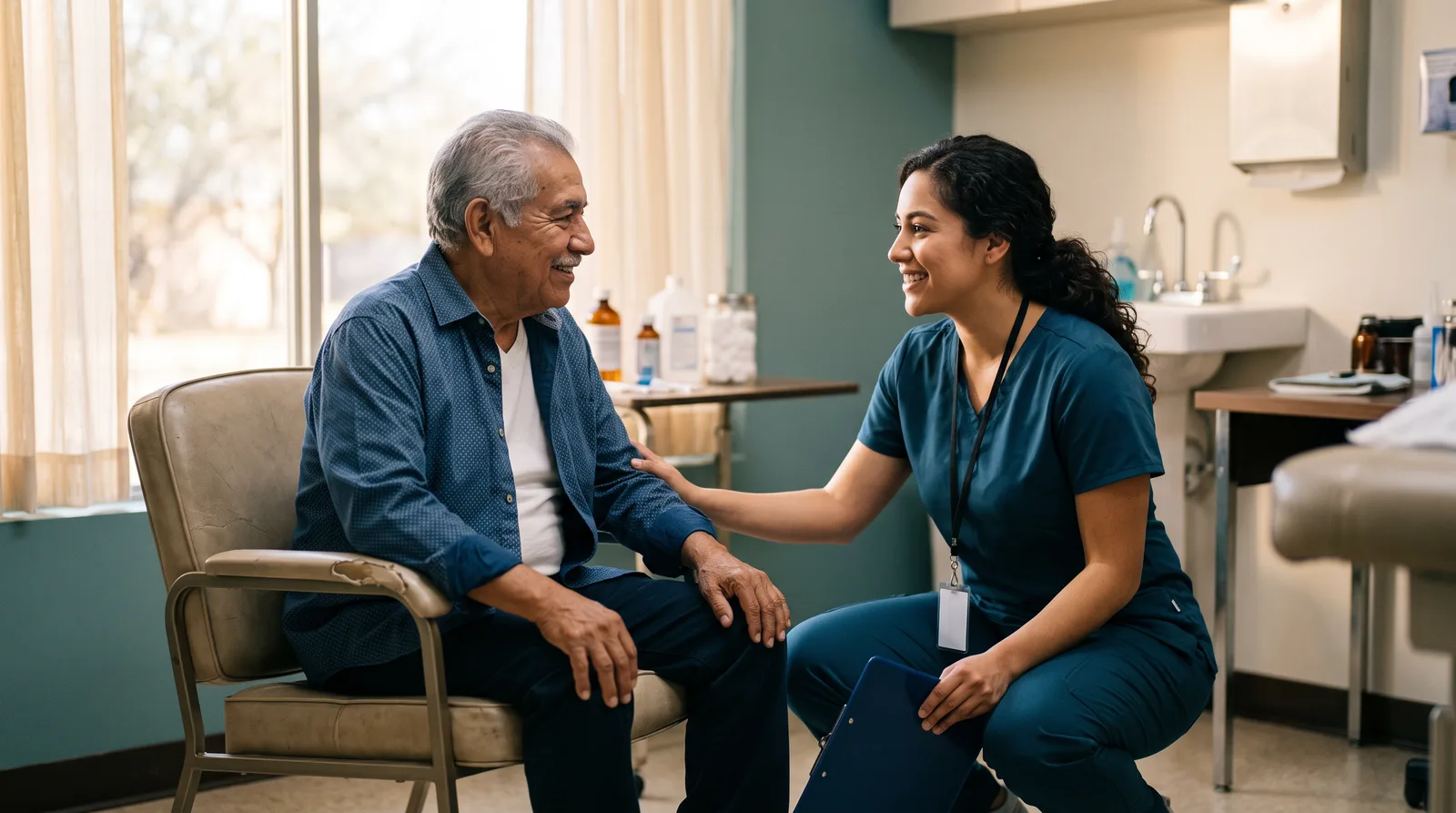
Every lesson in this course is built around a single question: is this the Spanish you'd actually need in the room with a patient right now?— Tracy Burke
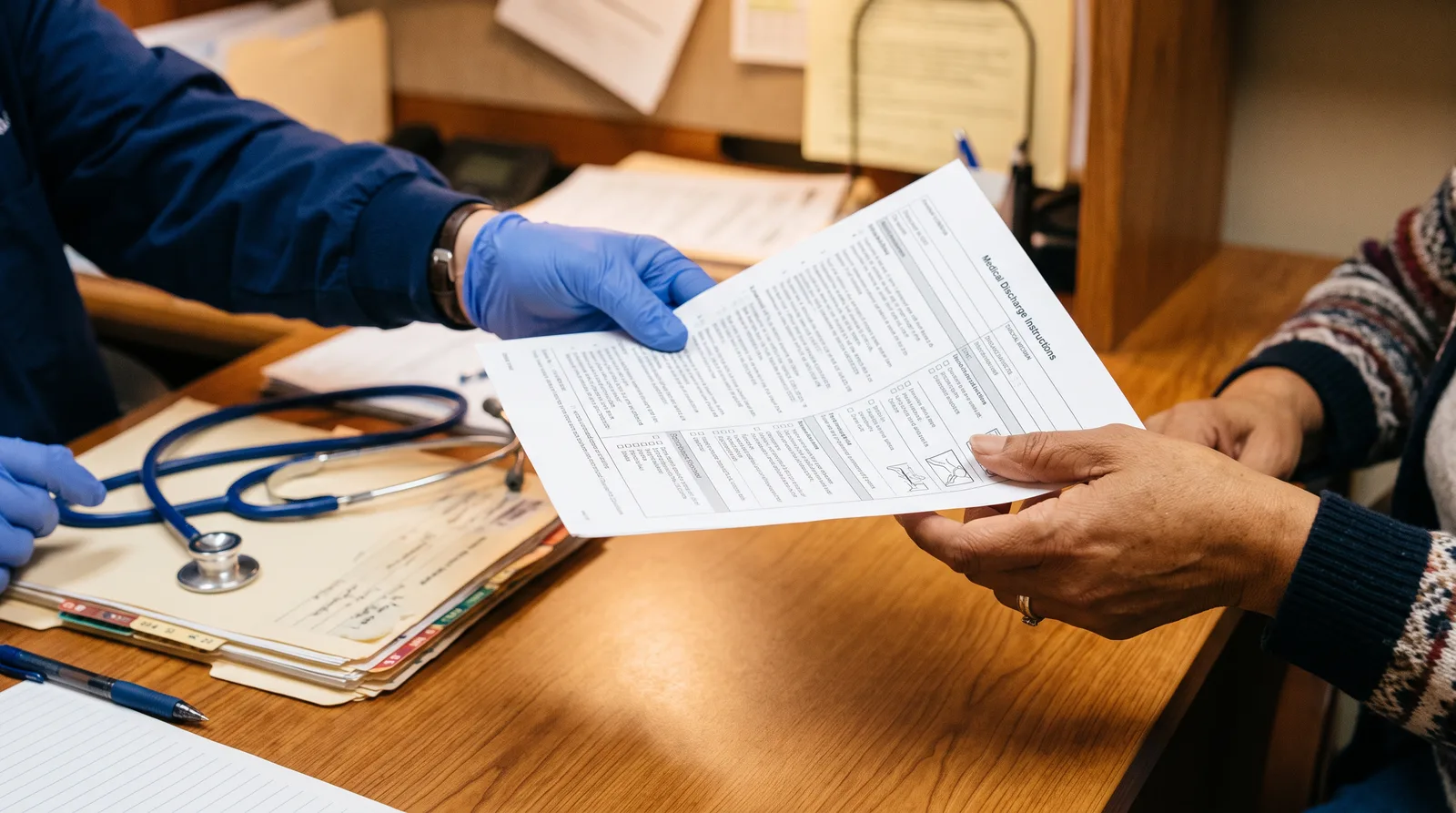
What you'll learn
What you'll be able to do
- Conduct a full patient intake interview — chief complaint, pain scale, medical history, and allergies — entirely in Spanish
- Explain diagnoses, treatment plans, and discharge instructions clearly to a Spanish-speaking patient
- Master 400+ high-frequency clinical terms across body systems, symptoms, medications, and procedures
- Navigate high-stakes emergency conversations, including trauma assessment and informed consent
- Apply culturally competent communication strategies that build patient trust and reduce miscommunication
- Document patient-reported symptoms accurately by understanding spoken Spanish in a clinical setting
How it works
A school that adapts to you
This isn't a set of static videos. Every lesson is generated live and tuned to where you actually are.
We learn your level
A quick placement check tailors your starting point so you're never bored or lost.
Lessons adapt as you go
Each lesson is written for your pace and your goal, adjusting as your skills grow.
Your AI coach keeps you moving
Checkpoints, feedback, and gentle nudges turn progress into a real result.
The curriculum
What's inside your school
6 modules · 25 lessons

Spanish Foundations for the Clinical Setting
Builds the essential pronunciation, grammar, and everyday clinical phrases healthcare professionals need before entering patient-facing conversations.
- 1.1Spanish Sounds and Pronunciation for Clear Patient CommunicationIncluded
- 1.2Clinical Small Talk and Professional GreetingsIncluded
- 1.3Essential Grammar for Asking and Answering Clinical QuestionsIncluded
- 1.4Numbers, Time, and Vital Measurements in SpanishIncluded
Patient Intake and Chief Complaint
Equips clinicians to conduct a complete intake interview — from the moment the patient arrives through documenting their chief complaint, pain level, and history.
- 2.1Welcoming the Patient and Gathering Demographic InformationIncluded
- 2.2Asking About the Chief ComplaintIncluded
- 2.3The Pain Scale and Describing SymptomsIncluded
- 2.4Medical History, Medications, and AllergiesIncluded
- 2.5Understanding Spoken Spanish: Listening for Intake DocumentationIncluded
Body Systems and High-Frequency Clinical Vocabulary
Builds a 400+ word clinical vocabulary organized by body system so clinicians can discuss anatomy, symptoms, diagnoses, and procedures with precision.
- 3.1Head, Neck, Cardiovascular, and Respiratory VocabularyIncluded
- 3.2Gastrointestinal, Urological, and Reproductive System TermsIncluded
- 3.3Musculoskeletal, Neurological, and Skin VocabularyIncluded
- 3.4Medications, Dosage Instructions, and Common ProceduresIncluded
Emergency and High-Stakes Clinical Conversations
Prepares clinicians for urgent, high-pressure scenarios — trauma assessment, acute distress, and obtaining informed consent — where language errors have serious consequences.
- 4.1Rapid Trauma and Emergency Assessment (SAMPLE History in Spanish)Included
- 4.2Communicating in Acute Distress SituationsIncluded
- 4.3Explaining Procedures and Obtaining Informed ConsentIncluded
- 4.4Pediatric and Geriatric Patient CommunicationIncluded
Diagnosis, Treatment Plans, and Discharge Instructions
Trains clinicians to explain what is wrong, what will happen next, and what the patient must do at home — reducing errors and improving adherence.
- 5.1Explaining a Diagnosis in Plain SpanishIncluded
- 5.2Presenting Treatment Options and Next StepsIncluded
- 5.3Medication Instructions and Side Effect CounselingIncluded
- 5.4Discharge Instructions and When to ReturnIncluded
Culturally Competent Communication and Real-World Fluency
Integrates cultural awareness, professional interpreter protocol, and full-encounter simulations to produce confident, trust-building clinician communication.
- 6.1Cultural Humility and Health Beliefs in Latino Patient PopulationsIncluded
- 6.2Formal vs. Informal Register and Regional Language VariationIncluded
- 6.3Working Effectively with Professional Medical InterpretersIncluded
- 6.4Full Patient Encounter Simulation: Intake to DischargeIncluded
Who it's for
Is this you?

ER Nurses
You need rapid, accurate communication under pressure — this course covers emergency assessment, acute distress situations, and trauma conversations in Spanish.

Primary Care Physicians
Reduce your reliance on interpreters for routine visits by handling intakes, diagnosis explanations, and treatment discussions directly in Spanish.

EMTs & Paramedics
The SAMPLE history in Spanish and acute distress communication drills give you the field-ready language you need when every second counts.
Medical Assistants
Master the front-line intake conversations — demographics, chief complaint, medications, and allergies — so every patient encounter starts with clarity.

Hospitalists & Specialists
Walk patients through diagnoses, treatment options, medication counseling, and discharge instructions with the vocabulary and cultural grounding to make it land.

Patient Navigators & Care Coordinators
Build the trust that keeps Spanish-speaking patients engaged in their care — from explaining next steps to working effectively alongside professional interpreters.
Questions
Frequently asked
Your teacher
A note from your teacher

Tracy Burke
If you've ever called a family member to interpret a clinical conversation, typed symptoms into a translation app while a patient waited, or sensed that a patient nodded along without really understanding their discharge instructions — you already know exactly why you're here.
You didn't go into healthcare to let language be a barrier. And yet the tools most of us were given — a laminated phrase card, a general-purpose app, maybe a night class that taught us to order coffee — were never built for the work we actually do. The stakes are too high for that. Medication errors, missed symptoms, patients who leave without understanding their follow-up care: these aren't just communication failures, they're patient safety events.
Medical Spanish Pro was built around one premise: you already think and work like a clinician. What you need is language that maps directly onto that clinical thinking. So that's exactly how this course is structured. We move through a patient encounter the way you do — intake, assessment, diagnosis, treatment, discharge — and we build vocabulary inside real scenarios rather than in isolated word lists. When you learn how to ask about chest pain, you learn it in the context of a cardiovascular assessment, with the follow-up questions already in place. When you learn discharge instructions, you practice them as a complete, coherent conversation with a patient who has questions.
We also take seriously the parts of cross-cultural clinical communication that often get skipped: understanding that a patient might describe pain through metaphor rather than a number, knowing when the formal usted matters for trust, recognizing that regional vocabulary variation is real and navigable. Cultural competence isn't a soft add-on here — it's built into the clinical communication training from the start.
I want to be honest with you: this course will not make you fluent in six weeks. What it will do is give you the specific vocabulary, sentence structures, listening skills, and cultural grounding to handle the patient encounters on your floor, in your ED, or in your clinic — confidently, accurately, and with real connection. That's a meaningful, achievable outcome, and it's the one I've designed every lesson to deliver.
Whether you're a nurse seeing a high volume of Spanish-speaking patients, an EMT who needs trauma Spanish fast, or a physician who wants to reduce your dependence on interpreters for routine conversations — this course was built for the work you do. I'm glad you're here. Let's get started.
— Tracy Burke
Start your journey today
Join get instant access — learn at your own pace with an AI coach in your corner.
$59/mo
Recurring billing · cancel anytime
Secure checkout · Instant access
- 6 modules, 25 lessons
- AI-adaptive lessons tuned to your level
- Quizzes & checkpoints to lock in progress
- Your own AI learning coach
- Learn on any device, at your pace
- Full access for as long as you're subscribed