
Expand your scope. Extend your reach. Own the MIH-CP role.
A rigorous, field-grounded curriculum built for working EMTs, AEMTs, and Paramedics — covering everything from SDOH screening and home safety assessments to chronic disease coaching, behavioral health navigation, and billing G0320/G0321 to keep your program alive.
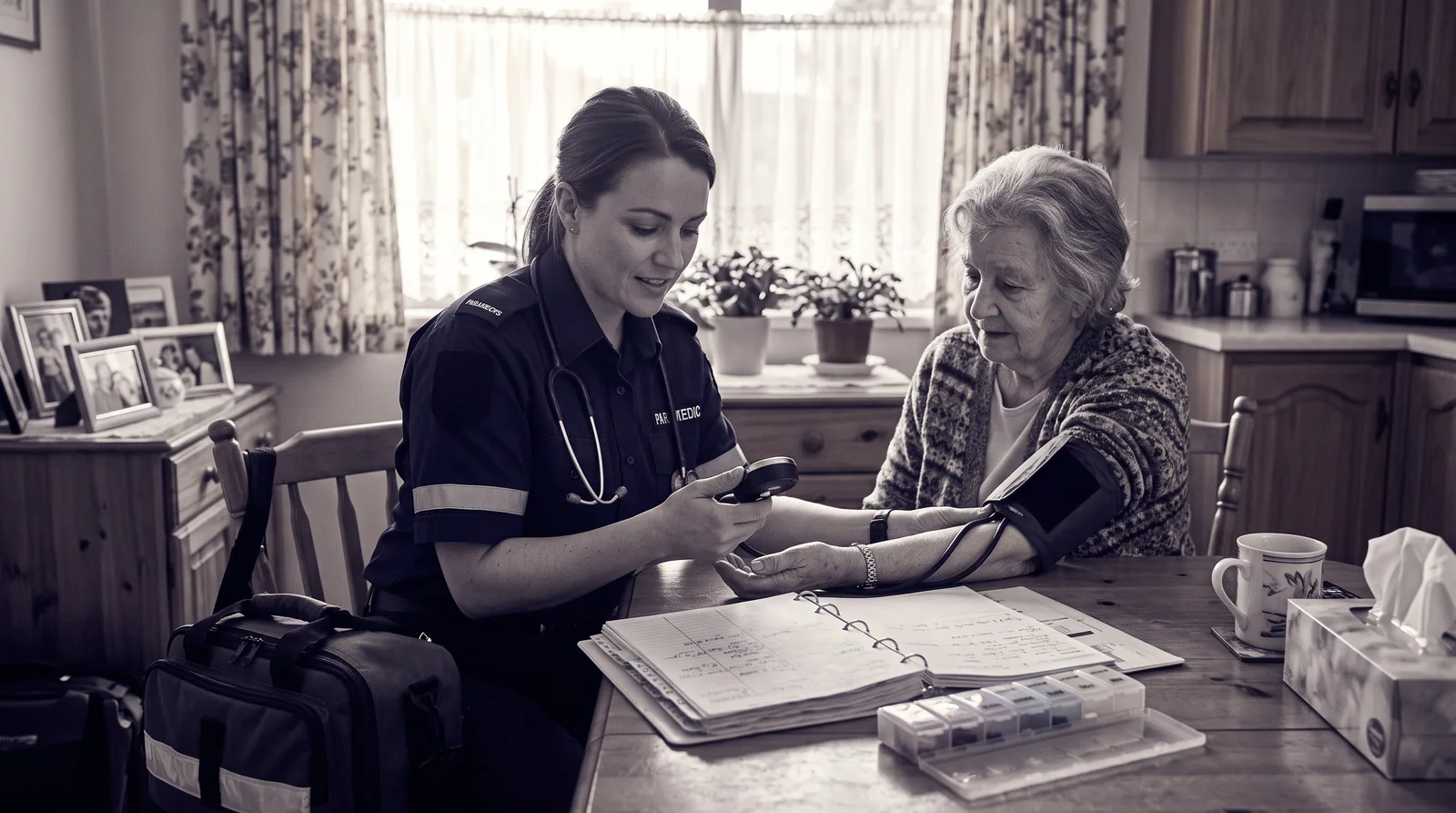
"The providers who change outcomes in MIH aren't just clinically sharp — they understand the system their patients are living inside, and they know how to move through it."
— Matthew Michaud
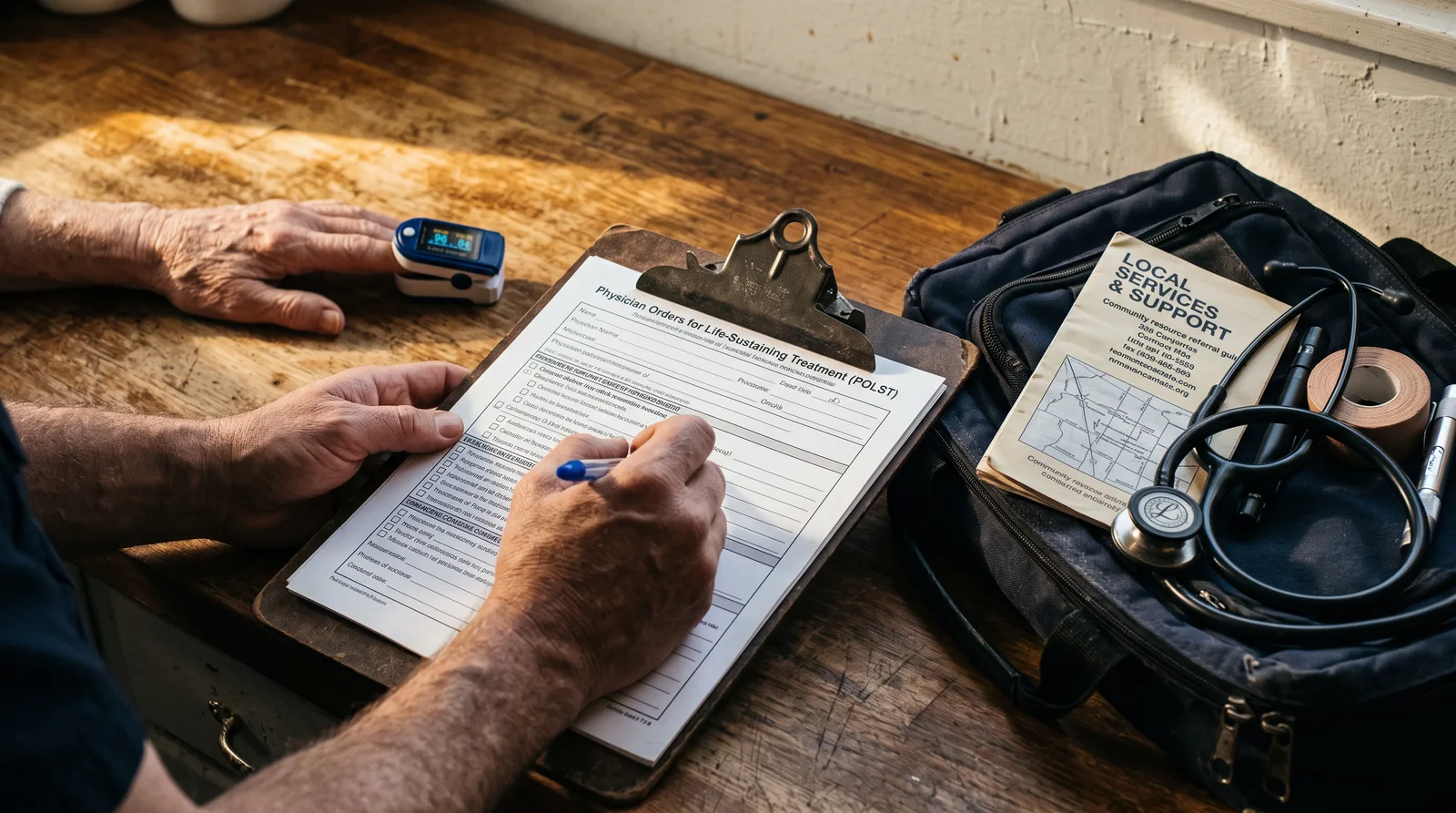
What you'll learn
What you'll be able to do
- Conduct a comprehensive community health needs assessment and document findings using standardized MIH screening tools
- Navigate social determinants of health and connect patients with appropriate community resources, benefits, and referral pathways
- Perform an evidence-based home safety evaluation and develop an individualized care plan in collaboration with the patient's primary care team
- Apply motivational interviewing techniques to support patient self-management of chronic conditions such as CHF, COPD, and diabetes
- Interpret and comply with the legal, ethical, and HIPAA-specific documentation requirements unique to the MIH-CP scope of practice
- Design and pitch a sustainable MIH program model to EMS leadership, including outcome metrics, billing codes (G0320/G0321), and stakeholder alignment strategies
How it works
A school that adapts to you
This isn't a set of static videos. Every lesson is generated live and tuned to where you actually are.
We learn your level
A quick placement check tailors your starting point so you're never bored or lost.
Lessons adapt as you go
Each lesson is written for your pace and your goal, adjusting as your skills grow.
Your AI coach keeps you moving
Checkpoints, feedback, and gentle nudges turn progress into a real result.
The curriculum
What's inside your school
6 modules · 30 lessons

Foundations of Mobile Integrated Health and Community Paramedicine
Establishes the history, national landscape, and core role definition of MIH-CP within the evolving EMS system.
- 1.1Evolution of EMS into MIH-CPIncluded
- 1.2National MIH-CP Landscape and Program ModelsIncluded
- 1.3The Community Paramedic Role and Expanded ScopeIncluded
- 1.4Legal, Ethical, and HIPAA Requirements in MIH-CPIncluded
- 1.5Interprofessional Collaboration and Medical OversightIncluded
Social Determinants of Health and Community Health Assessment
Builds the skills to identify community health needs, recognize upstream risk factors, and systematically document findings using validated MIH tools.
- 2.1Understanding Social Determinants of HealthIncluded
- 2.2Community Health Needs Assessment MethodsIncluded
- 2.3Standardized MIH Screening Tools and DocumentationIncluded
- 2.4Identifying and Mapping Local Community ResourcesIncluded
- 2.5Referral Pathways, Benefits Navigation, and Warm HandoffsIncluded
Home Safety Evaluation and Individualized Care Planning
Develops the practical skills to conduct structured home safety visits and co-create evidence-based care plans with patients and their primary care teams.
- 3.1Evidence-Based Home Safety Assessment FrameworksIncluded
- 3.2Conducting a Comprehensive Home VisitIncluded
- 3.3Fall Risk Reduction and Environmental ModificationIncluded
- 3.4Developing an Individualized Patient Care PlanIncluded
- 3.5Communicating Care Plans Across the Care TeamIncluded
Chronic Disease Management and Patient Self-Management Support
Equips MIH-CPs to monitor, educate, and coach patients managing CHF, COPD, diabetes, and other high-utilization chronic conditions.
- 4.1Pathophysiology and Clinical Monitoring: CHF, COPD, and DiabetesIncluded
- 4.2Chronic Disease Assessment in the Home SettingIncluded
- 4.3Motivational Interviewing FundamentalsIncluded
- 4.4Applying Motivational Interviewing to Self-Management CoachingIncluded
- 4.5Medication Reconciliation and Adherence SupportIncluded
Mental and Behavioral Health, Substance Use, and Vulnerable Populations
Prepares MIH-CPs to safely and effectively serve patients with mental health conditions, substance use disorders, and complex social vulnerabilities.
- 5.1Mental Health Screening and Crisis De-escalation in the FieldIncluded
- 5.2Substance Use Disorders and Harm Reduction ApproachesIncluded
- 5.3Caring for Geriatric and Homebound PatientsIncluded
- 5.4Pediatric and Maternal Health Considerations in MIHIncluded
- 5.5Trauma-Informed Care and Cultural HumilityIncluded
MIH Program Development, Billing, and Sustainability
Guides MIH-CPs through the business, operational, and advocacy competencies needed to design, pitch, and sustain an MIH-CP program.
- 6.1MIH Program Design and Needs-Based PlanningIncluded
- 6.2Medicare MIH Billing: G0320, G0321, and Reimbursement PathwaysIncluded
- 6.3Outcome Metrics, Data Collection, and Quality ImprovementIncluded
- 6.4Stakeholder Alignment and Community PartnershipsIncluded
- 6.5Pitching Your MIH Program to EMS LeadershipIncluded
Who it's for
Is this you?

The career paramedic ready to pivot
A seasoned field medic who's seen the gaps in episodic EMS care and wants a defined clinical pathway to address them proactively.

The AEMT formalizing MIH work
Already doing informal community follow-ups at her agency, she needs the structured framework, documentation standards, and compliance knowledge to make it official.

The EMS supervisor building a program
Tasked with standing up a new MIH unit, he needs the program design, billing, and stakeholder strategy tools to get leadership buy-in and keep it funded.

The EMT expanding scope
Positioned at an agency that runs MIH at the EMT level, he wants the community health and chronic disease coaching skills to perform confidently in the role.

The new-grad paramedic differentiating early
Fresh out of paramedic school and targeting MIH-CP positions, she wants the specialized credential and curriculum depth to stand out in a competitive hiring landscape.
The fire-based medic transitioning to MIH
A fire/EMS cross-trained provider whose department is launching a community health initiative and needs him ready to run solo home visits with confidence.
Questions
Frequently asked
Your teacher
A note from your teacher
Matthew Michaud
If you've been in EMS long enough, you've had the call that didn't need an ambulance — it needed a plan. The frequent flier whose CHF is blowing up every three weeks because nobody reconciled her meds. The elderly patient who fell again because the throw rug is still there and nobody from his care team has ever set foot in that apartment. The guy in behavioral health crisis who needed a warm handoff to a counselor, not a 5150 and a four-hour ED wait.\n\nYou already knew the system was missing something. MIH-CP is the answer the field has been building toward — and this course exists to get you there with the clinical rigor and operational grounding that role demands.\n\nI built MIH-CP Foundations for providers who are done waiting for someone else to formalize this work. Every module is written at the level of someone who already knows what a SOAP note is, already understands dispatch triage logic, and doesn't need EMS 101 repackaged as innovation. What you'll get here is the specific framework the MIH-CP role requires: community health assessment methodology, SDOH screening tools you can actually use, motivational interviewing techniques that translate to real chronic disease conversations, home safety evaluation standards, and the documentation and HIPAA compliance requirements that are unique to this scope — not recycled from your initial EMT course.\n\nI also know that clinical excellence alone doesn't keep a program running. That's why we go deep on program sustainability: how to structure an MIH model, how Medicare MIH billing works (and what your documentation needs to support a G0320 or G0321 claim), how to track the outcome metrics that matter to your medical director and your city council, and how to walk into a room with EMS leadership and make the case with data. A great program that loses funding in year two helped nobody.\n\nThe providers who do this work well are the ones who can move fluidly between clinical assessment and community navigation, between care plan documentation and a motivational conversation at a kitchen table. This curriculum builds that full range. If you're ready to expand your scope and your impact — in a sustainable, protocol-grounded, ethically sound way — I'm glad you're here. Let's get to work.
— Matthew Michaud
Start your journey today
Get instant access — learn at your own pace with an AI coach in your corner.
$79/mo
Recurring billing · cancel anytime
Secure checkout · Instant access
- 6 modules, 30 lessons
- AI-adaptive lessons tuned to your level
- Quizzes & checkpoints to lock in progress
- Your own AI learning coach
- Learn on any device, at your pace
- Full access for as long as you're subscribed