
5 Scholarship Application Mistakes That Are Costing You Free Money
MIKAEL DAVIS ACADEMY · September 8, 2026 · 4 min read
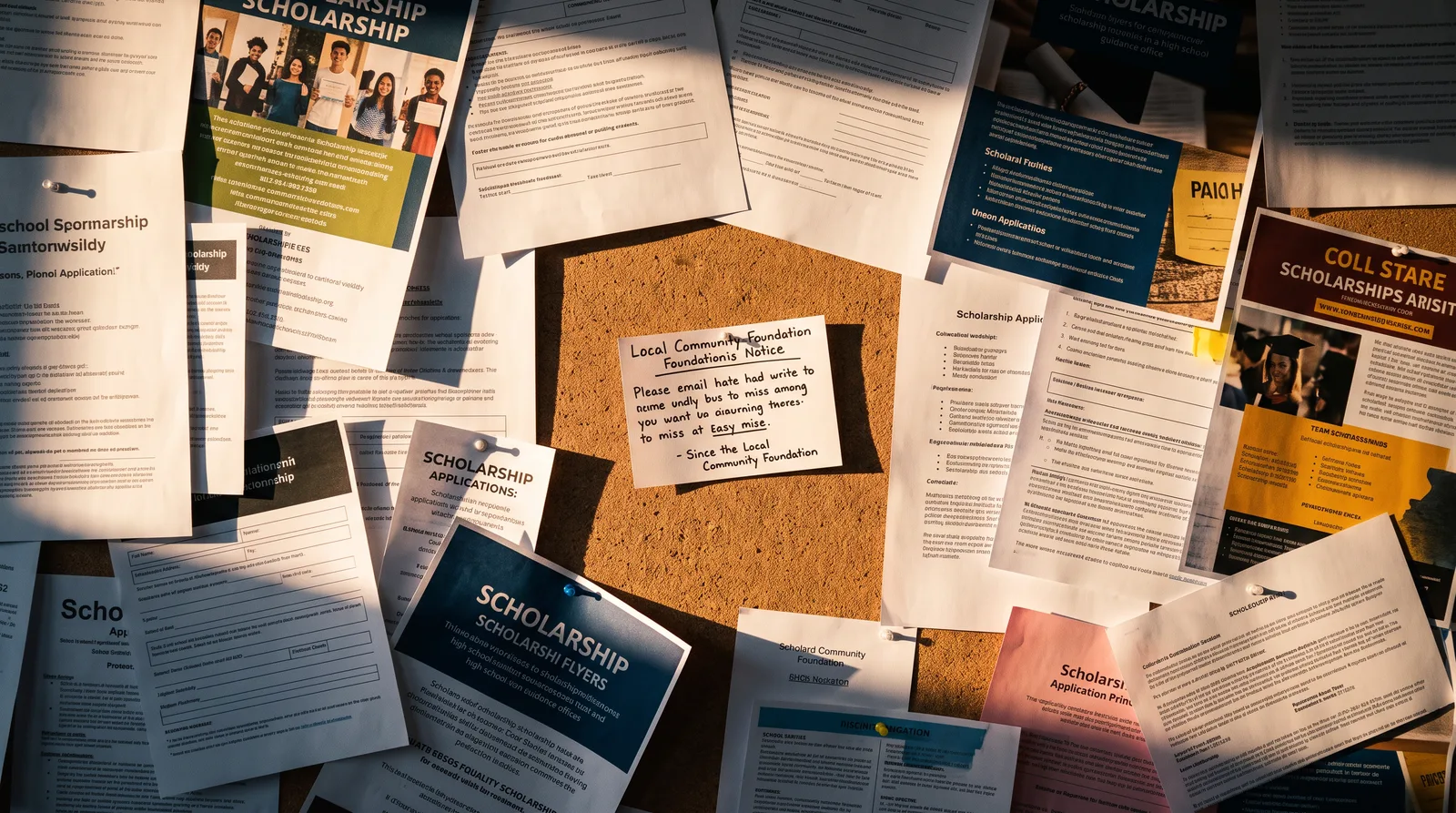
Every year, students leave billions of dollars in scholarship money unclaimed — not because they weren't eligible, but because they made avoidable mistakes in the application process. I've worked through enough scholarship applications to know that the same errors keep showing up, and every single one of them is fixable. Let's name them, understand why they happen, and fix them right now.
Mistake #1: Writing One Generic Essay for Every Application
You know the essay I'm talking about. It starts with something like, "Ever since I was young, I've had a passion for learning…" and then floats through a few vague goals before landing on a forgettable conclusion. Students write it once and blast it to every scholarship on their list.
Scholarship committees read hundreds — sometimes thousands — of applications. A generic essay doesn't just fail to stand out; it signals that you didn't care enough to engage with their mission.
The fix: Read each scholarship's mission statement before you write a single word. Ask yourself: What does this organization actually value, and where does my story intersect with that? You don't need a brand-new essay every time, but you do need a tailored opening paragraph and a closing that directly connects your goals to their purpose. A targeted 400-word response will beat a polished but generic 650-word one almost every time.
Mistake #2: Missing Deadlines (or Misreading Them)
This one seems obvious, but the nuance trips people up. Many students miss deadlines not because they forgot, but because they confused the postmark deadline with the submission deadline. Or they assumed a portal would stay open until midnight when it actually closed at 5:00 p.m. in the sponsor's time zone.
The fix: When you find a scholarship, add two calendar alerts: one two weeks out and one 48 hours out. And read the deadline instructions word for word. If the application requires a school counselor signature or a transcript request, build in an extra week — those pieces are on someone else's schedule, not yours.
Mistake #3: Ignoring Local and Regional Awards
National scholarships get all the attention, but they also get all the competition. A $10,000 national award might draw 50,000 applicants. A $1,000 award from your local Rotary Club, community foundation, or regional credit union might draw fifty.
The math is simple: your odds are dramatically better closer to home.
The fix: Start local and work outward. Check with your high school counselor for a list of scholarships specifically available to students in your district or county. Search "[your city or county] + community foundation + scholarship." Call local professional associations, churches, unions, and employers — many offer awards that are barely advertised because they trust word of mouth to fill the pool.
Mistake #4: Applying Only to Scholarships That Require Financial Need
It's a logical assumption: I need money, so I'll focus on need-based awards. But thousands of merit-based, identity-based, interest-based, and career-field scholarships exist that have nothing to do with your family's income — and far fewer students apply for them.
The fix: Build a scholarship list that includes at least three categories: need-based, merit/achievement-based, and affinity-based (awards tied to your heritage, hobbies, intended major, or community involvement). Free databases like Fastweb, Scholarships.com, and the College Board Scholarship Search are solid starting points for expanding beyond the obvious categories.
Mistake #5: Submitting Incomplete Applications
Missing a recommendation letter, forgetting to attach a transcript, skipping an optional short-answer question — any one of these can get your application disqualified before a human being ever reads your essay. "Optional" fields are rarely truly optional; they're opportunities to strengthen your case that most applicants skip.
The fix: Create a simple checklist for every application. List every required document, every question (including optional ones), and every third-party piece like recommendations or school forms. Check off each item and then have a parent, guardian, or trusted friend do a second pass before you hit submit. Two sets of eyes catch what one set misses.
Here's what I want you to take away: scholarship committees are not looking for reasons to reject you. They're looking for a reason to choose you. When you remove the avoidable mistakes — the generic essay, the blown deadline, the incomplete file — you let your actual story do the work.
If you're ready to stop guessing and start building a real scholarship strategy, my course SHOW ME THE MONEY: Maximizing Scholarships & Financial Aid walks you through the exact system I use with students to help them package their applications for maximum gift aid. Because free money shouldn't be this hard to get — and with the right approach, it doesn't have to be.