Think Clearly About Miracles — and Defend What You Believe
A philosophically rigorous, historically honest investigation into the nature and credibility of miracles — equipping Christians to engage the toughest skeptical objections without flinching, and without bluffing.
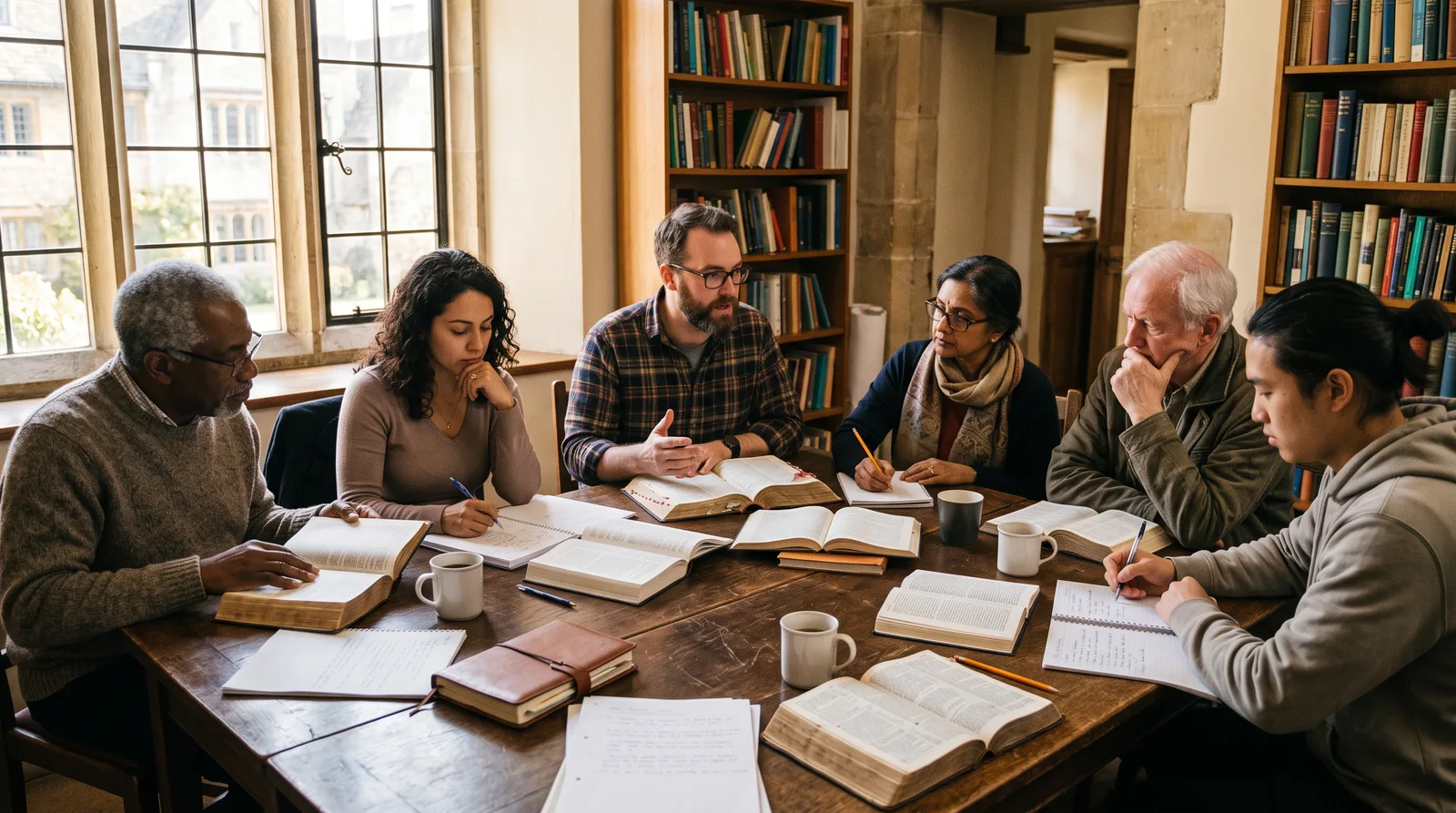
"A faith that welcomes rigorous inquiry is not a weaker faith — it is a more honest one, and I think a more worshipful one."
— Theoria

What you'll learn
What you'll be able to do
- Articulate a philosophically grounded definition of miracles that distinguishes them from superstition, coincidence, and mere anomaly
- Identify the theological purposes of key biblical miracles — from the Exodus and Elijah to the resurrection of Christ — within the overarching biblical narrative
- Critically engage David Hume's argument against miracles and the responses offered by contemporary philosophers and historians
- Evaluate eyewitness testimony and historical documentation of extraordinary events using responsible methods of historical reasoning
- Distinguish between legitimate philosophical objections to miracles and assumptions rooted in prior naturalistic commitments
- Respond to skeptical challenges about divine action with clarity, intellectual integrity, and well-reasoned arguments grounded in both evidence and theology
How it works
A school that adapts to you
This isn't a set of static videos. Every lesson is generated live and tuned to where you actually are.
We learn your level
A quick placement check tailors your starting point so you're never bored or lost.
Lessons adapt as you go
Each lesson is written for your pace and your goal, adjusting as your skills grow.
Your AI coach keeps you moving
Checkpoints, feedback, and gentle nudges turn progress into a real result.
The curriculum
What's inside your school
6 modules · 26 lessons

What Is a Miracle? Definitions, Distinctions, and the Theological Framework
Establishes a precise, philosophically grounded definition of miracles and situates them within a Christian theological understanding of God, nature, and divine action.
- 1.1Beyond Magic and Coincidence: Defining the MiraculousIncluded
- 1.2God, Nature, and Divine ActionIncluded
- 1.3Miracles as Signs: The Biblical VocabularyIncluded
- 1.4Superstition, Sensationalism, and DiscernmentIncluded
Miracles in the Biblical Narrative
Traces the major miraculous events of Scripture — from the Exodus through the Apostolic age — examining their theological purposes within the redemptive storyline.
- 2.1The Exodus: Power, Judgment, and the Birth of a NationIncluded
- 2.2Elijah, Elisha, and the Prophetic MiraclesIncluded
- 2.3The Miracles of Jesus: Signs of the KingdomIncluded
- 2.4The Apostolic Miracles and the Early ChurchIncluded
- 2.5The Resurrection: Miracle at the CenterIncluded
The Philosophical Challenge: Hume, Naturalism, and the Case Against Miracles
Engages the most influential philosophical arguments against miracles — especially Hume's — and examines the naturalistic assumptions that underlie modern skepticism.
- 3.1David Hume's Argument Against MiraclesIncluded
- 3.2Naturalism and Its AssumptionsIncluded
- 3.3Probability, Inference, and the Logic of Historical ExplanationIncluded
- 3.4Contemporary Responses to HumeIncluded
- 3.5Science, Miracle, and the Limits of Methodological NaturalismIncluded
Historical Reasoning and the Evaluation of Miracle Claims
Trains learners in the responsible methods historians use to assess extraordinary claims, including the role of testimony, documentation, and interpretive frameworks.
- 4.1How Historians Evaluate Extraordinary EventsIncluded
- 4.2Eyewitness Testimony: Strengths, Limits, and ReliabilityIncluded
- 4.3The Historical Case for the ResurrectionIncluded
- 4.4Prior Assumptions and the Historian's JudgmentIncluded
Miracles Today: Prayer, Healing, and Modern Reports
Brings the investigation into the present, examining modern miracle claims, answered prayer, and healing reports through the same careful lens applied to biblical and historical evidence.
- 5.1Continuationism, Cessationism, and the Church's Ongoing DebateIncluded
- 5.2Answered Prayer and Divine ProvidenceIncluded
- 5.3Healing Claims: Evaluating Modern Reports ResponsiblyIncluded
- 5.4Global Christianity and Miracle ReportsIncluded
Defending the Miraculous: Intellectual Integrity and Thoughtful Engagement
Synthesizes the course's philosophical, historical, and theological threads into a coherent, humble apologetic for divine action — equipping learners to engage skeptics with clarity and integrity.
- 6.1Philosophical Objections vs. Scientific Observations: Knowing the DifferenceIncluded
- 6.2Building a Cumulative Case for MiraclesIncluded
- 6.3Engaging Skeptics with Humility and ClarityIncluded
- 6.4Miracles, Faith, and the Christian WorldviewIncluded
Who it's for
Is this you?

Seminary students
Building the philosophical and theological vocabulary to engage miracle claims with the depth a graduate-level faith demands.

Lay apologists
Ready to move beyond rehearsed talking points and learn to engage Hume, naturalism, and skeptical objections with genuine rigor.

Thoughtful churchgoers
Long-time believers who want to understand the theological purpose of biblical miracles — not just affirm them, but grasp why they matter.

Serious independent learners
Intellectually curious adults who read widely and want a course that respects their intelligence and doesn't shy away from hard questions.

Campus ministry leaders
Equipping themselves to lead honest conversations about miracles, science, and faith with students who won't settle for easy answers.

Faith-and-doubt navigators
Wrestling with genuine uncertainty about divine action and looking for an intellectually honest path through — not around — the difficulty.
Questions
Frequently asked
Your teacher
A note from your teacher

Theoria
If you have picked up this course, I suspect you are someone who takes both your faith and your questions seriously — and who has found, more than once, that the two do not always sit comfortably together. Maybe you have encountered Hume's argument against miracles and felt the weight of it without quite knowing how to respond. Maybe you have heard a healing testimony and been unsure whether intellectual honesty required skepticism or openness. Maybe you simply want to think about this well — not just believe it, but understand it.
That is exactly the space this course was designed to inhabit.
What I have tried to build here is not a defense attorney's brief for miracles, assembled to win a predetermined verdict. It is something more like a careful, honest investigation — the kind where we define our terms before we deploy them, where we present the opposing arguments in their strongest form because anything less is a waste of everyone's time, and where we follow the reasoning wherever it leads. Hume gets a fair hearing. Naturalism gets a fair hearing. The biblical material gets read in its own theological context, not pressed into service as a collection of proof-texts. And the historical questions about the resurrection are engaged with the same methodological care we would want applied to any significant claim about the past.
I am also aware that this subject touches on territory that is sometimes handled with either credulous enthusiasm or reflexive dismissal — and that neither posture serves the truth well. So when we reach the material on modern miracle reports, healing claims, and global Christianity, we work through responsible frameworks for evaluation. Not cynicism dressed up as rigor, and not credulity dressed up as faith — but genuine discernment, informed by both theological categories and historical method.
My hope is that you leave this course not merely with better arguments, but with a more integrated faith: one that has looked at the hard questions without blinking, engaged the best objections without caricature, and arrived at conviction through honest inquiry rather than around it. That kind of faith, I believe, is more resilient, more intellectually honest, and ultimately more worshipful than one that has never been tested.
I am glad you are here. Let's think carefully together.
— Theoria
Start your journey today
Get instant access — learn at your own pace with an AI coach in your corner.
$39/mo
Recurring billing · cancel anytime
Secure checkout · Instant access
- 6 modules, 26 lessons
- AI-adaptive lessons tuned to your level
- Quizzes & checkpoints to lock in progress
- Your own AI learning coach
- Learn on any device, at your pace
- Full access for as long as you're subscribed