Graduate on your terms — mastery earned, diploma yours
MYcroSchool is a fully personalized, competency-based grades 6–12 program where every course, every benchmark, and every graduation requirement is mapped to you — not a one-size-fits-all schedule someone else designed.

"Every benchmark your student masters here is named, earned, and documented — because a diploma should mean something."— Joy Baldree
What you'll learn
What you'll be able to do
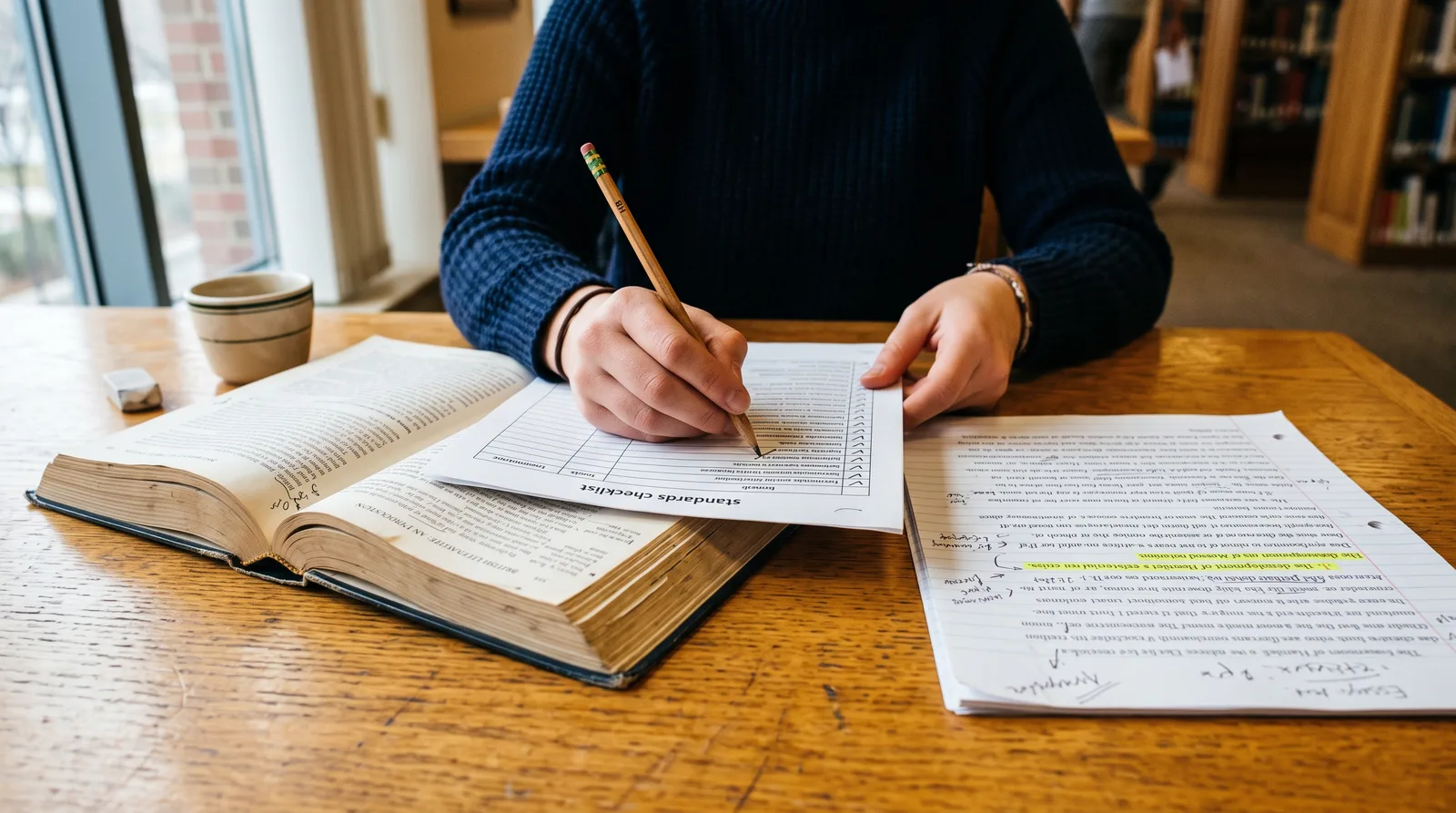
- Demonstrate mastery of every CPalms benchmark required for their assigned courses — proven through competency-based assessments, not seat time.
- Build and follow a personalized graduation plan that tracks only the courses each student actually needs to earn their diploma.
- Produce polished writing across narrative, argumentative, and expository forms that meets or exceeds grade-level standards such as ELA.9.C.1.2–1.4.
- Conduct and present research using credible, multi-source evidence in both oral and digital formats aligned to communication benchmarks.
- Apply standard English grammar, punctuation, and style conventions at grade level with continuous feedback from peers, adults, and editing tools.
- Progress through each course at their own pace, revisiting earlier-grade benchmarks as scaffolding and advancing only upon demonstrated mastery of each standard.
How it works
A school that adapts to you
This isn't a set of static videos. Every lesson is generated live and tuned to where you actually are.
We learn your level
A quick placement check tailors your starting point so you're never bored or lost.
Lessons adapt as you go
Each lesson is written for your pace and your goal, adjusting as your skills grow.
Your AI coach keeps you moving
Checkpoints, feedback, and gentle nudges turn progress into a real result.
The curriculum
What's inside your school
43 modules · 212 lessons

Welcome to MYcroSchool: Your School, Your Way
Orients every student and family to the MYcroSchool model, its competency-based philosophy, and the tools used to manage each personalized path.
- 1.1What Competency-Based Learning Means for YouIncluded
- 1.2How CPalms Standards Drive Every CourseIncluded
- 1.3Navigating Your Student DashboardIncluded
- 1.4Getting Support: Peers, Adults, and Digital ToolsIncluded
Building Your Personalized Graduation Plan
Walks students and their families through creating, understanding, and maintaining an individualized graduation plan tied to required courses and CPalms standards.
- 2.1Understanding Graduation RequirementsIncluded
- 2.2Selecting Only the Courses You NeedIncluded
- 2.3Mapping Your Benchmarks to Your GoalsIncluded
- 2.4Updating and Monitoring Your Graduation PlanIncluded
Demonstrating Mastery: Competency Assessments and Portfolio
Guides students through MYcroSchool's benchmark-by-benchmark assessment process and the creation of a mastery portfolio that proves readiness to advance.
- 3.1How Mastery Is Measured at MYcroSchoolIncluded
- 3.2Revisiting Earlier-Grade Benchmarks as ScaffoldingIncluded
- 3.3Building Your Mastery PortfolioIncluded
- 3.4Advancing to Your Next CourseIncluded
English 1 — Reading and Knowledge Building (ELA.9)
Develops 9th-grade reading literacy through universal themes, archetypes, and a wide range of knowledge-building texts aligned to CPalms ELA.9 benchmarks.
- 4.1Universal Themes and Archetypes in Classic LiteratureIncluded
- 4.2Reading Closely for Knowledge Across DomainsIncluded
- 4.3Analyzing Rhetoric in Essays and SpeechesIncluded
- 4.4Researching Questions with Multiple Reliable Sources (ELA.9.C.4.1)Included
English 1 — Writing Mastery Across Three Modes (ELA.9.C.1)
Builds demonstrated mastery of narrative, argumentative, and expository writing through structured practice aligned to ELA.9.C.1.2, 1.3, and 1.4.
- 5.1Narrative Writing: Techniques, Transitions, and Point of View (ELA.9.C.1.2)Included
- 5.2Argumentative Writing: Claims, Evidence, and Counterclaims (ELA.9.C.1.3)Included
- 5.3Expository Writing: Explaining and Analyzing from Multiple Sources (ELA.9.C.1.4)Included
- 5.4Revising for Clarity: Using Feedback to Strengthen Writing (ELA.9.C.1.5)Included
English 1 — Communication, Conventions, and Digital Presentation (ELA.9.C.2–5)
Develops oral communication, standard English conventions, and digital presentation skills to meet ELA.9.C.2.1, 3.1, and 5.1 benchmarks.
- 6.1Oral Presentations: Organizing Ideas and Building a Clear Perspective (ELA.9.C.2.1)Included
- 6.2Standard English Grammar, Punctuation, and Capitalization (ELA.9.C.3.1)Included
- 6.3Creating Coherent Digital Presentations (ELA.9.C.5.1)Included
English 2 — Writing Mastery Across Three Modes (ELA.10.C.1)
You will master all three major writing modes required for 10th grade — narrative, argument, and expository — using classic literature, historical speeches, and essays as mentor texts. Every lesson builds directly toward benchmarks ELA.10.C.1.2 through ELA.10.C.1.5, so your growth is visible, measurable, and yours.
- 7.1Reading Deeply: Literature and Informational Texts (ELA.10.R)Included
- 7.2Writing with Power: Argument, Narrative, and Exposition (ELA.10.C.1)Included
- 7.3Speaking, Listening, and Digital Presentation (ELA.10.C.4–5)Included
- 7.4Conventions, Style, and Voice at the Tenth-Grade Level (ELA.10.C.2)Included
- 7.5Crafting Narrative with Pace, Tension, and MoodIncluded
- 7.6Building a Winning Argument: Claims, Evidence, and RebuttalIncluded
- 7.7Expository Writing: Analyzing and Explaining with AuthorityIncluded
- 7.8Research, Evidence, and Source Literacy (ELA.10.C.3)Included
- 7.9Revising with Purpose: Feedback, Audience, and the Final PolishIncluded
English 3 — Reading, Rhetoric, and Knowledge Building (ELA.11)
In English 3, you step into the role of a serious literary scholar and rhetorician. You will read classic literature, speeches, essays, and poetry from across history to build deep knowledge, analyze universal themes and archetypes, master the full toolkit of rhetorical appeals and devices, and produce polished writing in multiple modes — all tied directly to your CPalms 11th-grade benchmarks.
- 8.1Universal Themes, Archetypes, and Layers of MeaningIncluded
- 8.2Juxtaposition, Allegory, and Figurative Language in Literary TextsIncluded
- 8.3Poetry, Literary Periods, and Contemporaneous AuthorsIncluded
- 8.4Rhetoric in Speeches and Essays from the Classical PeriodIncluded
- 8.5Research, Writing, and Digital Presentation Across ModesIncluded
English 4 — Reading, Rhetoric, and Knowledge Building (ELA.12)
In this capstone English course, you read widely and deeply across literary and informational texts — classic literature, landmark essays, and influential speeches — to build the broad knowledge base that higher literacy demands. You will analyze universal themes and archetypes, evaluate the rhetorical choices of skilled writers and speakers, and produce your most sophisticated writing yet: complex narratives, in-depth arguments, and thorough analytical essays grounded in credible research and presented across both oral and digital formats.
- 9.1Literary Texts: Universal Themes, Archetypes, and Layered MeaningIncluded
- 9.2Poetry in Historical Context and Classic Literature's Reach into the Contemporary WorldIncluded
- 9.3Rhetoric Across Texts: Appeals, Devices, and the Craft of PersuasionIncluded
- 9.4Writing Mastery: Narrative, Argument, and Analysis at the Senior LevelIncluded
- 9.5Research, Oral Presentation, and Digital CommunicationIncluded
Algebra 1-A — Linear Functions, Equations, Inequalities, and Data
Master the four cornerstones of Algebra 1-A: building and interpreting linear functions, solving equations and inequalities in one and two variables, analyzing systems of linear equations and inequalities, and representing real-world data through statistical models. Every benchmark is addressed through applied problem-solving so that mastery is earned through demonstrated understanding — not time spent.
- 10.1Expressions, Equations, and Formulas as ToolsIncluded
- 10.2Linear Equations and Inequalities in One VariableIncluded
- 10.3Building and Graphing Linear FunctionsIncluded
- 10.4Linear Inequalities and Systems of Equations and InequalitiesIncluded
- 10.5Data Analysis, Scatter Plots, and Financial ModelsIncluded
Algebra 1-B — Quadratic, Exponential, and Data Functions
In this module, you'll extend your algebraic toolkit into the curves and growth patterns that model the real world around you. You'll master quadratic and exponential functions — graphing them, writing their equations, solving problems with them, and interpreting what their key features actually mean in context. You'll also explore data displays, correlation, linear regression, and categorical frequency tables to make sense of real datasets. Every benchmark you master here is a concrete, named CPalms standard on your graduation plan — earned through what you can do, not how long you sat in a seat.
- 11.1Polynomial Operations, Exponents, and RadicalsIncluded
- 11.2Quadratic Functions — Writing, Graphing, and Key FeaturesIncluded
- 11.3Solving Quadratic EquationsIncluded
- 11.4Exponential Functions — Growth, Decay, and Financial ApplicationsIncluded
- 11.5Comparing Functions and Analyzing DataIncluded
Geometry — Proof, Transformation, Measurement, Circles, and Trigonometry (MA.912.GR)
Master the five cornerstones of Florida's B.E.S.T. Geometry course: building and writing formal proofs about lines, angles, triangles, and quadrilaterals; connecting congruence and similarity to rigid transformations on the coordinate plane; applying coordinate geometry and measurement formulas to two- and three-dimensional figures; analyzing circles and their equations; and solving right triangle problems with trigonometric ratios. Every benchmark is earned through demonstrated mastery — you move forward when you can show your work and explain your thinking.
- 12.1Logic, Lines, and Proof: The Language of GeometryIncluded
- 12.2Triangles and Quadrilaterals: Congruence, Similarity, and ProofIncluded
- 12.3Rigid Transformations and Symmetry on the Coordinate PlaneIncluded
- 12.4Coordinate Geometry and Measurement in Two and Three DimensionsIncluded
- 12.5Circles, Their Equations, and Right Triangle TrigonometryIncluded
Mathematics for Data and Financial Literacy
Master the five core areas of financial and data mathematics — ratios and functions in money contexts, economic and accounting principles, credit and loans, future planning through investments and insurance, and data analysis for real-world reports — all anchored to CPalms benchmarks MA.912.FL, MA.912.AR, MA.912.DP, and supporting standards. You will use spreadsheets and technology throughout to model, calculate, and communicate financial decisions the way professionals actually do.
- 13.1Money Math Foundations: Ratios, Percentages, and Functions in Financial ContextsIncluded
- 13.2Accounting, Budgeting, and Economic PrinciplesIncluded
- 13.3Credit, Loans, and the True Cost of BorrowingIncluded
- 13.4Investing, Insurance, and Planning for Your FutureIncluded
- 13.5Data Analysis, Reports, and Evidence-Based Financial DecisionsIncluded
Biology 1 — Matter, Energy, Heredity, Evolution, and Interdependence (SC.912.L Overview)
This module gives you a panoramic, benchmark-by-benchmark journey through every major domain of Biology 1 — from the chemistry of life and cell structure to genetics, evolution, and ecosystem dynamics. Each lesson ties directly to named SC.912.L standards so you always know exactly which competency you're working toward, and you advance only when you can demonstrate real mastery.
- 14.1Chemistry of Life and Cell Structure (SC.912.L.18 & SC.912.L.14.1–3)Included
- 14.2Cell Processes — Photosynthesis, Cellular Respiration, and Mitosis (SC.912.L.14.7–9 & SC.912.L.18.8–9)Included
- 14.3Heredity, Meiosis, and Biotechnology (SC.912.L.16.1–4 & SC.912.L.16.9–10)Included
- 14.4Evolution, Natural Selection, and Classification (SC.912.L.15.1–2 & SC.912.L.15.4–6)Included
- 14.5Ecology — Interdependence, Matter Cycling, and Human Impact (SC.912.L.17.1–2, SC.912.L.17.5, SC.912.L.17.8–9, SC.912.L.17.20)Included
Environmental Science — Earth's Systems, Ecosystems, Human Impact, and Sustainability
Master every Florida CPalms benchmark for Environmental Science (SC.912.E, SC.912.L, SC.912.P, and HE/SS crossover standards) by investigating real Earth systems, analyzing human-environment interactions, and proposing evidence-based solutions to environmental challenges — at your own pace, proven through competency assessments.
- 15.1Earth's Systems and Biogeochemical CyclesIncluded
- 15.2Ecosystems, Energy Flow, and BiodiversityIncluded
- 15.3Atmosphere, Climate, and Weather SystemsIncluded
- 15.4Human Impact on Natural Resources and Environmental SystemsIncluded
- 15.5Sustainability, Conservation, and Environmental SolutionsIncluded
Earth/Space Science — Earth's Structure, Atmosphere, Space Systems, and Universe (SC.912.E)
Master every CPalms SC.912.E benchmark through a hands-on, competency-based journey from the deep interior of Earth to the far edges of the observable universe. You will investigate Earth's geologic processes, dynamic atmosphere and ocean systems, the mechanics of our solar system, and the life cycles of stars and galaxies — earning mastery one standard at a time at your own pace.
- 16.1Earth's Structure, Plate Tectonics, and Geologic Processes (SC.912.E.6)Included
- 16.2Earth's Atmosphere, Weather, and Climate Systems (SC.912.E.7)Included
- 16.3Earth's History, Rocks, and Geologic Time (SC.912.E.6 & SC.912.E.8 crossover)Included
- 16.4The Solar System, Earth-Moon-Sun Interactions, and Space Exploration (SC.912.E.5)Included
- 16.5Stars, Galaxies, and the Expanding Universe (SC.912.E.5 continued)Included
World History — Human Civilization, Global Conflict, and the Modern World (SS.912.W)
Trace the full arc of human civilization — from the earliest societies through the interconnected modern world — as you master every CPalms SS.912.W benchmark at your own pace. Each lesson grounds you in the people, power structures, conflicts, and ideas that shaped history, and every standard you demonstrate moves you one step closer to a verified mastery record on your graduation plan.
- 17.1The Ancient World: Civilization, Culture, and Classical Empires (SS.912.W.1)Included
- 17.2Medieval Worlds and the Age of Encounter (SS.912.W.2)Included
- 17.3Revolution, Enlightenment, and the Making of the Modern State (SS.912.W.3)Included
- 17.4Industrialization, Imperialism, and Global Conflict (SS.912.W.4–5)Included
- 17.5The Contemporary World: Cold War, Decolonization, and Global Challenges (SS.912.W.6–9)Included
United States History — Foundations, Expansion, Conflict, and the Modern Nation (SS.912.A)
Trace the full arc of American history from colonial settlement through the twenty-first century, mastering every SS.912.A benchmark through primary source analysis, document-based writing, and competency assessments. Each lesson connects historical events to enduring themes — liberty, equality, power, and change — so you build not just content knowledge but the disciplined thinking skills historians use every day.
- 18.1Colonial Roots, Revolution, and the Birth of a Republic (SS.912.A.1, SS.912.A.2.1–2.7)Included
- 18.2Expansion, Reform, and the Road to Civil War (SS.912.A.3.1–3.15)Included
- 18.3Civil War, Reconstruction, and the Gilded Age (SS.912.A.4.1–4.21)Included
- 18.4Imperialism, Progressivism, and the World Wars (SS.912.A.5.1–5.24)Included
- 18.5Cold War, Civil Rights, and the United States in the Modern Era (SS.912.A.6.1–6.15, SS.912.A.7.1–7.17)Included
United States Government — Foundations, Institutions, Rights, and Civic Participation (SS.912.CG)
Master every CPalms benchmark for United States Government (SS.912.CG) as you explore the philosophical roots of American democracy, the structure and function of all three branches of federal and state government, the constitutional protections that define your rights, and your role as an informed, active citizen. Every lesson is tied directly to named SS.912.CG standards so your progress is always concrete and visible.
- 19.1Foundations of American Democracy and Constitutional Principles (SS.912.CG.1)Included
- 19.2The Three Branches of Federal Government: Structure, Powers, and Checks (SS.912.CG.2)Included
- 19.3Federalism: National, State, and Local Government Relations (SS.912.CG.3)Included
- 19.4Civil Liberties, Civil Rights, and Constitutional Protections (SS.912.CG.4)Included
- 19.5Political Participation, Elections, and Civic Responsibility (SS.912.CG.5–CG.6)Included
Economics — Markets, Money, Government, and Global Trade (SS.912.EC)
Master every CPalms Economics benchmark (SS.912.EC) as you explore how individuals, businesses, and governments make decisions about scarce resources — from the choices you make daily to the forces shaping the global economy. Each lesson ties directly to named standards so you always know exactly what you're proving you know.
- 20.1Scarcity, Choice, and Economic ReasoningIncluded
- 20.2Supply, Demand, and Market EquilibriumIncluded
- 20.3Business, Labor, and Market StructuresIncluded
- 20.4Money, Banking, and the Federal ReserveIncluded
- 20.5Government, Fiscal Policy, and Economic IndicatorsIncluded
- 20.6International Trade, Globalization, and Economic SystemsIncluded
Visual Technology 1 — Image Capture, Editing, Design Principles, and Digital Communication (#0107440)
Visual Technology 1 gives you the hands-on skills and vocabulary to create, edit, and communicate with images intentionally and professionally. Anchored to Florida's Visual Technology 1 standards, every lesson moves you from understanding how cameras and software work to producing a portfolio of original digital work that demonstrates real, measurable mastery — not just exposure.
- 21.1The Visual Language: Design Principles and ElementsIncluded
- 21.2Camera Fundamentals and Intentional Image CaptureIncluded
- 21.3Digital Image Editing and File ManagementIncluded
- 21.4Graphic Design for Digital CommunicationIncluded
- 21.5Portfolio Presentation and Visual Technology Mastery DemonstrationIncluded
Journalism 1 & 2 — Reporting, Storytelling, Ethics, and Media Production
Master the full arc of journalism — from your first interview to a published multimedia package — by working through every Florida Journalism 1 and 2 benchmark at your own pace. Each lesson ties directly to named CPalms standards and builds the real-world skills professional journalists use daily: accurate reporting, ethical decision-making, compelling writing across formats, and polished digital media production. You advance only when you demonstrate mastery, so every standard you check off is one you've genuinely earned.
- 22.1The Press and Its Purpose — History, Ethics, and the Role of JournalismIncluded
- 22.2News Reporting Fundamentals — Gathering, Verifying, and Writing the StoryIncluded
- 22.3Feature Writing, Opinion, and Specialized Story FormsIncluded
- 22.4Interviewing, Source Development, and Investigative TechniquesIncluded
- 22.5Multimedia Journalism — Digital Production, Visual Storytelling, and PublishingIncluded
Personal, Career, and School Development Skills 1 (#0500500)
Build the self-awareness, academic habits, career clarity, and life-ready skills you need to thrive at MYcroSchool and beyond. Every lesson in this course is anchored to Florida's 9–12 Personal, Career, and School Development standards (#0500500), so each skill you practice moves you measurably closer to graduation — and to the life you're designing for yourself.
- 23.1Know Yourself: Values, Strengths, and Learning StyleIncluded
- 23.2Goal Setting, Time Management, and Academic PlanningIncluded
- 23.3Career Exploration and the World of WorkIncluded
- 23.4Communication, Professionalism, and Workplace ReadinessIncluded
- 23.5Financial Literacy Foundations and Life-Ready Decision MakingIncluded
Personal, Career, and School Development Skills 2 — CLT-10 Language Arts Preparation
Build the vocabulary, reading, and grammar skills you need to perform with confidence on the Language Arts sections of the CLT-10. Each lesson targets a specific tested skill — close reading of complex literary and informational texts, grammar and usage in context, and vocabulary in context — while connecting your growth to the personal and academic development benchmarks you are working to master. Progress at your own pace, demonstrate what you know, and move forward ready for test day and beyond.
- 24.1Reading Complex Texts with Purpose and PrecisionIncluded
- 24.2Vocabulary in Context — Building the Word Power CLT-10 TestsIncluded
- 24.3Grammar and Usage in Context — The Way the CLT-10 Tests ItIncluded
- 24.4Rhetorical Skills — Analyzing How Authors Persuade and Structure MeaningIncluded
- 24.5Full-Length CLT-10 Language Arts Practice and Personalized Mastery PlanIncluded
Personal, Career, and School Development Skills 3 — Workforce Readiness, Career Planning, and Professional Success (#0500520)
You've built your graduation plan and sharpened your academic skills — now it's time to step into your future with intention. This module bridges school and the real working world by developing the professional mindset, career knowledge, and workforce-ready skills employers and post-secondary programs actually expect from Day 1.
- 25.1Knowing Yourself as a Worker: Values, Strengths, and Career IdentityIncluded
- 25.2Navigating the Labor Market: Career Research and Workforce TrendsIncluded
- 25.3Professional Branding: Résumés, Cover Letters, and Digital PresenceIncluded
- 25.4Interview Readiness and Workplace CommunicationIncluded
- 25.5Post-Secondary Planning and Launching Your PathwayIncluded
Personal, Career, and School Development Skills 4 — College Readiness, Application, and Academic Launch (#0500530)
You've built your graduation plan, explored careers, and sharpened your professional skills — now it's time to cross the finish line and launch into what's next. This module guides you through every concrete step of the college-readiness process: understanding admissions requirements, crafting a compelling application, securing financial aid, and developing the academic habits that will carry you through your first semester and beyond. Every lesson is tied to your personal goals and benchmarks, so your college readiness is demonstrated, not just declared.
- 26.1Mapping Your College Options: Research, Requirements, and Right FitIncluded
- 26.2The College Application: Personal Statement, Activities, and SubmissionIncluded
- 26.3Financial Aid, Scholarships, and the True Cost of CollegeIncluded
- 26.4College-Level Academic Skills: Reading, Note-Taking, and Time ManagementIncluded
- 26.5Launching Strong: Campus Resources, Advocacy, and Your First-Year Game PlanIncluded
Foundational Mathematics & CLT-10 Test Preparation
Build confidence and mastery in the core mathematical skills that show up most on the Classical Learning Test CLT-10 — number sense, algebra, geometry, and data reasoning — while developing the strategic test-taking habits that turn solid knowledge into a competitive score. Every lesson ties directly to the mathematical reasoning the CLT-10 rewards, so your preparation is always purposeful and measurable.
- 27.1Number Sense, Ratios, and Proportional ReasoningIncluded
- 27.2Algebraic Reasoning and Equation SolvingIncluded
- 27.3Geometry, Measurement, and Spatial ReasoningIncluded
- 27.4Data, Statistics, and Quantitative ReasoningIncluded
- 27.5Full CLT-10 Math Practice and Mastery VerificationIncluded
HOPE — Health Opportunities through Physical Education (Core) (#3026010)
This course fulfills Florida's required one-credit HOPE graduation requirement by building the knowledge, skills, and personal habits that support lifelong physical and mental wellness. You'll move through five connected areas — fitness principles, nutrition, mental health, personal wellness planning, and CPR/first aid — at your own pace, demonstrating mastery of each PE.912 and HE.912 benchmark before advancing. Every lesson ties directly to a named CPalms standard so your progress is concrete, documented, and genuinely yours.
- 28.1Foundations of Physical Fitness and the FITT PrincipleIncluded
- 28.2Nutrition, Hydration, and Fueling an Active BodyIncluded
- 28.3Mental Health, Stress Management, and the Mind-Body ConnectionIncluded
- 28.4CPR, First Aid, and Personal SafetyIncluded
- 28.5Personal Wellness Plan and Lifelong Fitness GoalsIncluded
Critical Thinking and Study Skills (#1700370)
Master the mental tools that power every course in your graduation plan — from analyzing an argument to managing your time like a pro. Each lesson targets a specific thinking or learning skill, so you can apply what you build here the moment you return to any other module in MYcroSchool.
- 29.1How You Learn: Metacognition and Growth MindsetIncluded
- 29.2Logic, Reasoning, and Argument AnalysisIncluded
- 29.3Reading to Think: Annotation, Synthesis, and InferenceIncluded
- 29.4Strategic Planning: Time Management, Goal-Setting, and Self-RegulationIncluded
- 29.5Problem-Solving and Decision-Making Across DisciplinesIncluded
African-American History — Resistance, Identity, Civil Rights, and the Ongoing Struggle for Equality (#2100340)
This course traces the full arc of African-American history — from the origins of the transatlantic slave trade through the Civil Rights Movement and into the contemporary fight for equity — anchored to CPalms SS.912.AA benchmarks and grounded in primary sources, Black voices, and evidence-based analysis. You will think historically, argue persuasively, and connect the past to the present at every turn.
- 30.1Origins, the Middle Passage, and the Architecture of Slavery in AmericaIncluded
- 30.2Resistance, Resilience, and the Road to EmancipationIncluded
- 30.3Reconstruction, Backlash, and the Long Shadow of Jim CrowIncluded
- 30.4The Harlem Renaissance, The Great Migration, and the Culture of ProtestIncluded
- 30.5The Civil Rights Movement, Black Power, and the Continuing Struggle for EquityIncluded
The History of the Vietnam War (#2100400)
Trace the full arc of the Vietnam War — from its colonial roots through the fall of Saigon — by examining primary sources, competing Cold War ideologies, military strategy, the home front, and the war's lasting legacy on American society and Southeast Asia. Every lesson is anchored to CPalms benchmarks in SS.912 and drives you toward demonstrated mastery through evidence-based analysis, not passive reading.
- 31.1Roots of Conflict: Colonialism, Cold War, and the Road to U.S. InvolvementIncluded
- 31.2Escalation and Combat: Strategy, Soldiers, and the Reality of WarIncluded
- 31.3The Home Front: Protest, Media, Race, and the Fracturing of American SocietyIncluded
- 31.4Endings and Reckonings: Paris Peace, the Fall of Saigon, and the War's LegacyIncluded
Multicultural Studies — Identity, Culture, Power, and Global Perspectives (#2104600)
Explore the rich diversity of human cultures, identities, and lived experiences through the lens of history, power, and social justice. Grounded in CPalms benchmark SS.912.MC standards, this course challenges you to examine how race, ethnicity, gender, class, religion, and other dimensions of identity shape individuals and societies — and to think critically about equity, representation, and belonging in the United States and around the world.
- 32.1What Is Culture? Defining Identity, Diversity, and PositionalityIncluded
- 32.2Power, Privilege, and Systems of OppressionIncluded
- 32.3Racial and Ethnic Identity in the United States — Histories and VoicesIncluded
- 32.4Intersectionality — When Identities OverlapIncluded
- 32.5Multicultural Perspectives in Action — Advocacy, Art, and Global CitizenshipIncluded
Women's Studies — Identity, Power, Movement, and Equity (#2104340)
Grounded in Florida's CPalms benchmarks for Women's Studies (#2104340), this module guides you through the history, contributions, and ongoing struggles of women across cultures and time periods. You will analyze how gender, race, class, and power intersect to shape women's lived experiences — and build the critical thinking, research, and communication skills to argue for equity with evidence, precision, and confidence.
- 33.1Defining Women's Studies: Gender, Identity, and IntersectionalityIncluded
- 33.2Women in History: From Ancient Roles to Suffrage and BeyondIncluded
- 33.3Waves of Feminism and the Women's Rights MovementIncluded
- 33.4Women, Work, and Economic EquityIncluded
- 33.5Women's Studies Today: Research, Advocacy, and Your VoiceIncluded
Social Media 1 (#1006375)
Build the skills, strategies, and ethical judgment to navigate, create, and communicate effectively across social media platforms — aligning every lesson to CPalms benchmarks so your digital presence becomes a measurable, portfolio-ready competency. You'll move from understanding how platforms work to producing original, audience-aware content that meets professional and academic standards.
- 34.1How Social Media Works: Platforms, Algorithms, and YouIncluded
- 34.2Digital Identity, Privacy, and Ethical ResponsibilityIncluded
- 34.3Audience, Voice, and Content StrategyIncluded
- 34.4Media Literacy: Misinformation, Credibility, and Source EvaluationIncluded
- 34.5Creating and Publishing a Capstone Social Media PortfolioIncluded
Driver Education / Traffic Safety — Classroom (#1900300)
Florida's state-approved classroom Driver Education course prepares you to become a safe, legal, and informed driver in the Sunshine State. You will master Florida-specific traffic laws, road signs, risk management strategies, and responsible decision-making behind the wheel — all aligned to the competencies required by the Florida Department of Education for course #1900300 and the Florida Driver License knowledge exam.
- 35.1Florida Road Rules, License Law, and the DHSMV SystemIncluded
- 35.2Traffic Signs, Signals, Pavement Markings, and Right-of-WayIncluded
- 35.3Safe Driving Practices, Space Management, and Crash PreventionIncluded
- 35.4Impaired, Distracted, and Aggressive Driving — Florida Laws and ConsequencesIncluded
- 35.5Florida's Unique Driving Environments — Weather, Highways, Special Zones, and Vehicle ResponsibilityIncluded
Intensive Reading 1 — Comprehension, Vocabulary, and Strategic Reading (#1000412)
9th Grade - Intensive Reading 1 is a targeted, benchmark-driven course designed for students who are ready to sharpen their reading skills from the inside out. Aligned to CPalms ELA.6–8 and ELA.9 foundational reading benchmarks, every lesson builds the specific strategies, vocabulary tools, and text-analysis habits you need to read harder texts with greater confidence and independence — one demonstrated skill at a time.
- 36.1Know Where You Stand: Reading Diagnostic and Goal SettingIncluded
- 36.2Unlocking Meaning: Vocabulary Strategies and Context CluesIncluded
- 36.3Reading for Structure: How Texts Are Built and Why It MattersIncluded
- 36.4Reading Closely: Inference, Evidence, and Author's PurposeIncluded
- 36.5Mastery Check: Independent Reading and Benchmark PortfolioIncluded
Intensive Reading 2 — Inference, Analysis, and Vocabulary Expansion (#1000414)
Designed for 10th-grade readers who are building stamina and sophistication, this course deepens your ability to read complex literary and informational texts with precision. Every lesson targets specific ELA.10 benchmarks so you can track exactly where you are, prove what you know, and advance when you're ready — on your schedule.
- 37.1Reading Complex Texts: Inference and Implicit Meaning (ELA.10.R.1.1–1.2)Included
- 37.2Theme, Central Idea, and Author's Purpose Across Genres (ELA.10.R.1.3, ELA.10.R.2.1–2.2)Included
- 37.3Vocabulary in Context: Academic and Domain-Specific Words (ELA.10.V.1.1–1.3)Included
- 37.4Argument, Evidence, and Evaluating Sources (ELA.10.R.2.3–2.4)Included
- 37.5Reading Stamina, Fluency, and Independent Reading Mastery (ELA.10.R.3.1, ELA.10.R.3.2)Included
Intensive Reading 3 — Critical Analysis, Synthesis, and Advanced Vocabulary (#1000416)
Designed for 11th-grade readers who are ready to move beyond comprehension and inference into the high-stakes reading work that college and career demand — this course builds your ability to critically evaluate complex literary and informational texts, synthesize ideas across multiple sources, and command the sophisticated vocabulary found in grade-level and above-grade-level texts. Every lesson is anchored to specific CPalms benchmarks so you always know exactly what mastery looks like and where you stand.
- 38.1Reading Complex Texts with Purpose and PrecisionIncluded
- 38.2Critical Evaluation of Author's Argument and RhetoricIncluded
- 38.3Synthesis Across Multiple TextsIncluded
- 38.4Advanced Vocabulary: Context, Connotation, and Academic LanguageIncluded
- 38.5Demonstrating Mastery: Independent Reading Analysis and Competency PortfolioIncluded
Intensive Reading 4 — Argumentation, Synthesis, and College-Ready Comprehension (#1000418)
Intensive Reading 4 is a 12th-grade course designed for students who need targeted, accelerated support to reach full grade-level reading independence before graduation. Every lesson is anchored to specific ELA.12 CPalms benchmarks and pushes you to read complex literary and informational texts with precision — evaluating arguments, synthesizing across multiple sources, and articulating your thinking in writing and discussion. Mastery here means you are genuinely ready for college, career, and civic life.
- 39.1Reading Complex Texts with Purpose and PrecisionIncluded
- 39.2Evaluating Arguments and Identifying Rhetorical StrategiesIncluded
- 39.3Synthesizing Information Across Multiple SourcesIncluded
- 39.4Vocabulary Mastery for College-Level ReadingIncluded
- 39.5Demonstrating College-Ready Reading MasteryIncluded
American Sign Language 1 (#0717300)
Develop real communicative competency in American Sign Language (ASL) by building foundational vocabulary, grammar, and conversational skills rooted in Deaf culture and community. Every lesson ties directly to Florida's ASL 1 benchmarks, so your progress is always concrete, standards-aligned, and mastery-proven — not just time-served.
- 40.1Deaf Culture, Community, and the ASL MindsetIncluded
- 40.2Handshapes, the Manual Alphabet, and FingerspellingIncluded
- 40.3Core Vocabulary and Everyday ExpressionIncluded
- 40.4ASL Grammar: Spatial Grammar, Non-Manual Markers, and Sentence StructureIncluded
- 40.5Conversational ASL: Dialogue, Comprehension, and Cultural InteractionIncluded
American Sign Language 2 (#0717310)
Building on your ASL 1 foundation, this course expands your expressive and receptive signing skills through intermediate vocabulary, more complex grammatical structures, and authentic Deaf cultural knowledge. Every lesson is anchored to Florida's ASL 2 benchmarks, so your mastery is visible, measurable, and yours to own.
- 41.1Expanding Vocabulary Across Everyday DomainsIncluded
- 41.2Intermediate ASL Grammar: Classifiers, Spatial Agreement, and TenseIncluded
- 41.3Expressive and Receptive Conversations: Asking, Responding, and ClarifyingIncluded
- 41.4Deaf Culture, Community, and Identity at an Intermediate LevelIncluded
- 41.5Intermediate Fluency Showcase and Competency PortfolioIncluded
Spanish 1 — Listening, Speaking, Reading, and Writing in the Real World (#0708340)
Build a functional foundation in Spanish by developing all four language skills — listening, speaking, reading, and writing — through real-world contexts, culturally authentic situations, and benchmark-aligned communication tasks. Every lesson connects directly to Florida's World Languages benchmarks (WL.K12.NM–NH), so your progress is always measurable and your growing proficiency is always visible.
- 42.1Sounds, Greetings, and Who You Are (WL.K12.NM.1–2)Included
- 42.2Everyday Life: Numbers, Time, Calendar, and Classroom (WL.K12.NM.3–5)Included
- 42.3Describing People, Places, and Things: Nouns, Adjectives, and Ser vs. Estar (WL.K12.NM.6, WL.K12.NH.1)Included
- 42.4Actions and Interactions: Present-Tense Verbs and Everyday Conversations (WL.K12.NM.7, WL.K12.NH.2–3)Included
- 42.5Culture, Proficiency, and Portfolio: Pulling It All Together (WL.K12.NM.8, WL.K12.NH.4–5)Included
Spanish 2 — Conversation, Grammar Expansion, and Cultural Fluency (#0708350)
Spanish 2 builds on your Spanish 1 foundation by expanding your communicative range, deepening grammatical accuracy, and connecting language to the rich, diverse cultures of the Spanish-speaking world. You will move beyond survival phrases into authentic conversations, extended reading and writing, and culturally informed expression — all aligned to World Language proficiency benchmarks at the Novice-High to Intermediate-Low range.
- 43.1Reviewing and Expanding Your Spanish 1 FoundationIncluded
- 43.2Narrating the Past — Preterite and Imperfect TensesIncluded
- 43.3Future, Conditional, and Expressing HypotheticalsIncluded
- 43.4Subjunctive Mood — Expressing Doubt, Emotion, and WishesIncluded
- 43.5Cultural Fluency — Spanish-Speaking World, Identity, and Authentic CommunicationIncluded
Who it's for
Is this you?

Homeschooling Families
You want rigorous, standards-aligned structure without surrendering the flexibility that makes homeschooling work — MYcroSchool gives you both.
Micro-School Educators
You're running a small cohort of mixed-grade learners and need a credentialed curriculum backbone that adapts to each student individually.
Self-Directed High Schoolers
You're ready to own your education, set your own pace, and build a graduation plan that reflects your actual goals — not someone else's default.

Students Returning to Academics
Whether you've had a gap or struggled in a traditional setting, competency-based learning lets you start from a solid foundation and advance on your own terms.
Advanced Middle Schoolers
You've outpaced your grade level and need courses that meet you where you are — including high-school ELA benchmarks you're already ready to master.

Parents Seeking Accountability
You love the idea of personalized learning but want concrete proof of progress — MYcroSchool's named benchmarks and mastery portfolio give you exactly that.
Questions
Frequently asked
Your teacher
A note from your teacher
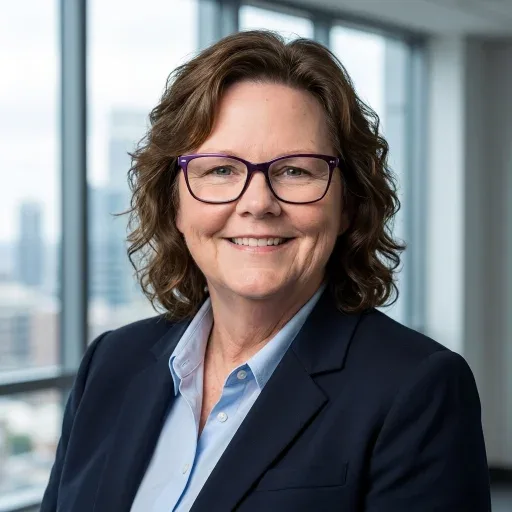
Joy Baldree
If you're reading this, there's a good chance you already know that the traditional school model wasn't built for your student. Maybe the pacing is wrong — too fast in some places, too slow in others, with no room to go deep on what actually matters. Maybe your student is ready for rigor, but the system keeps measuring "progress" by whether they sat in the right seat for the right number of hours. Maybe you've tried to make it work, and you're tired of fitting a real human learner into a system designed for statistical averages.
I built MYcroSchool because I believe every student deserves a graduation plan that was actually designed for them — not inherited from a district calendar. Here, we start by asking a simple but powerful question: what does this student need to earn their diploma? From that answer, we build a course map tied to official CPalms benchmarks, so every standard your student works toward is named, tracked, and credentialed. No guessing. No busywork. No "trust us, they're on track."
The English 1 track we've built together is a good example of what this looks like in practice. Your student doesn't just "do writing" — they work through narrative technique, argumentation, and expository analysis, each tied to a specific ELA.9 benchmark. They read closely, analyze rhetoric, conduct multi-source research, build oral presentations, and produce polished, revised writing with real feedback from peers, adults, and digital tools. And they advance when they've demonstrated mastery — not when the week ends. If a foundational standard needs revisiting first, we do that. The portfolio they build along the way is a real record of real skills.
I also want to be honest about what this requires from your student: it requires engagement, reflection, and a willingness to own their own learning. The student dashboard, the graduation plan, the mastery portfolio — these are tools, but they work because the student uses them. This isn't a passive program. It's a partnership between the learner, their support system, and a curriculum that respects their intelligence at every grade level.
If your student is in grades 6–12 and you're looking for something rigorous, flexible, and genuinely personalized — something that produces a diploma your student actually earned, benchmark by benchmark — I'd love for you to explore what MYcroSchool can offer. Your school. Your way. Let's build it together.
— Joy Baldree
Start your journey today
Join get instant access — learn at your own pace with an AI coach in your corner.
$79/mo
Recurring billing · cancel anytime
Secure checkout · Instant access
- 43 modules, 212 lessons
- AI-adaptive lessons tuned to your level
- Quizzes & checkpoints to lock in progress
- Your own AI learning coach
- Learn on any device, at your pace
- Full access for as long as you're subscribed