
Master the food math of civilizational collapse — and survive it!
A rigorous, evidence-based seminar that takes you from global supply chain failure through nuclear winter agronomy to a working community food resilience plan — no sensationalism, no survival fantasy, just documented science and actionable strategy!
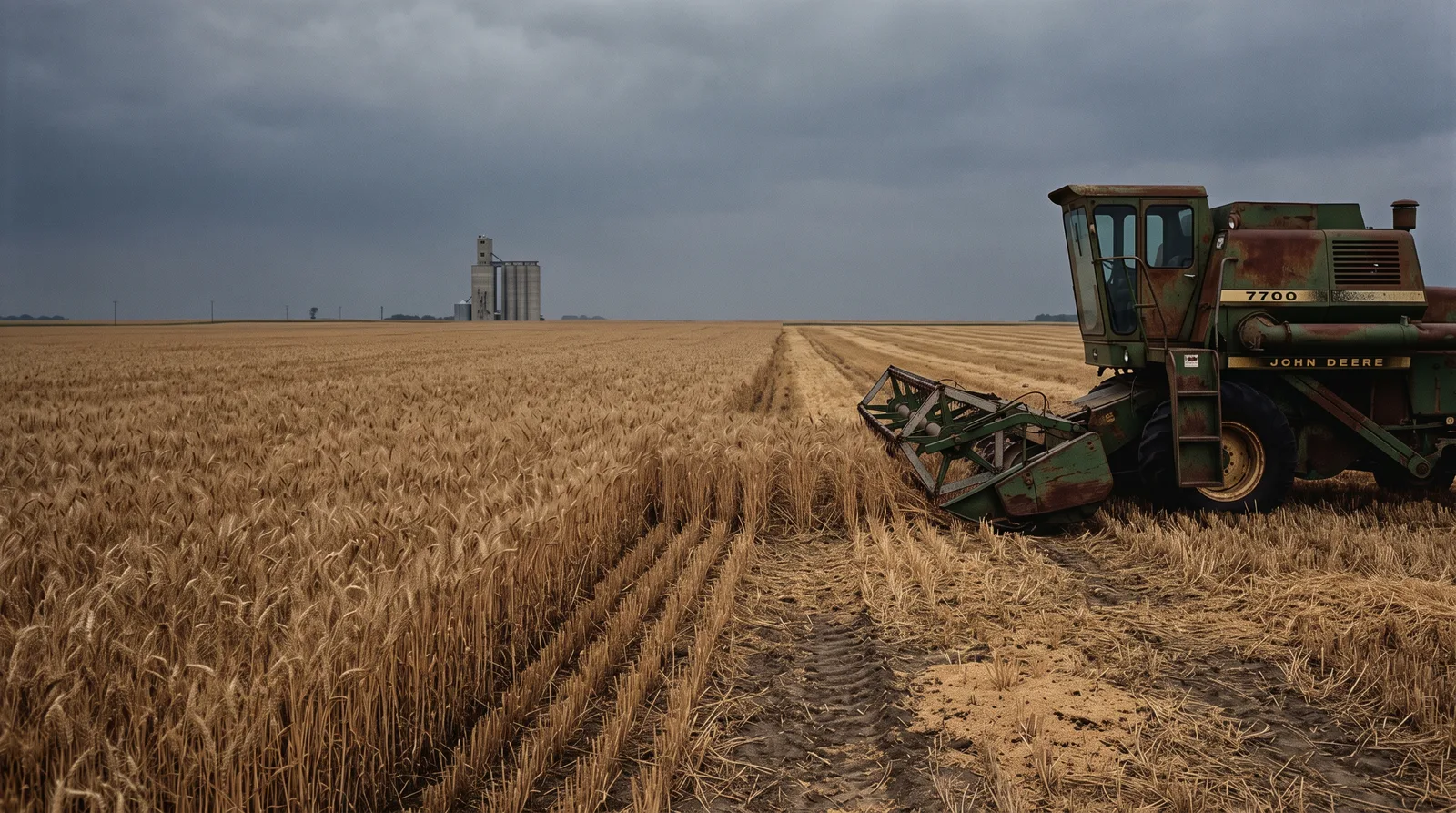
"The data on food system collapse under nuclear war scenarios is rigorous, documented, and largely unread — this course changes that, and then tells you exactly what to do about it."
— Val (Valdas) Samonis
What you'll learn
What you'll be able to do
- Analyze how nuclear exchange disrupts global trade networks and identify which food supply chains collapse first and why
- Estimate realistic crop yield losses under nuclear winter conditions using documented agronomic and climate models
- Identify the specific agricultural inputs — fertilizers, pesticides, fuel — most critical to maintain and how to source or replace them at low-technology levels
- Design a community-scale food resilience plan covering caloric production, seed saving, water access, and soil management without industrial inputs
- Evaluate historical precedents — Soviet famines, wartime rationing, siege agriculture — and extract transferable survival strategies
- Assess policy-level interventions and individual preparedness measures that meaningfully improve survival odds across 6-, 12-, and 36-month post-event timescales
How it works
A school that adapts to you
This isn't a set of static videos. Every lesson is generated live and tuned to where you actually are.
We learn your level
A quick placement check tailors your starting point so you're never bored or lost.
Lessons adapt as you go
Each lesson is written for your pace and your goal, adjusting as your skills grow.
Your AI coach keeps you moving
Checkpoints, feedback, and gentle nudges turn progress into a real result.
The curriculum
What's inside your school
6 modules · 30 lessons
The Nuclear Food Shock: Understanding the Threat Landscape
Establishes the scientific, geopolitical, and agronomic baseline for how nuclear exchange unravels global food systems from the first hours onward.
- 1.1How Nuclear Exchange Happens: Scenarios and ScalesIncluded
- 1.2The Global Food Trade Web and Its FragilityIncluded
- 1.3First-Order Destruction: What Gets Wiped Out ImmediatelyIncluded
- 1.4Which Supply Chains Collapse First and WhyIncluded
- 1.5Reading the Data: Key Studies on Food System CollapseIncluded
Nuclear Winter Agronomy: Crop Yield Loss Estimation
Applies documented climate and agronomic models to produce defensible, quantified estimates of regional and global crop yield losses.
- 2.1Nuclear Winter Physics: Soot, Cooling, and Sunlight ReductionIncluded
- 2.2Temperature, Precipitation, and Growing Season CompressionIncluded
- 2.3Estimating US Crop Yield Losses: The 70-Percent ScenarioIncluded
- 2.4Global Breadbasket Comparison: Which Regions Survive LongestIncluded
- 2.5Uncertainty, Assumptions, and Honest Confidence IntervalsIncluded
Agricultural Inputs at the Brink: What You Lose and How to Replace It
Identifies the fertilizers, pesticides, fuel, and mechanization that underpin modern yields and develops low-technology substitution strategies for each.
- 3.1The Fertilizer Dependency: Nitrogen, Phosphorus, and PotassiumIncluded
- 3.2Biological Nitrogen Fixation and Composting as ReplacementsIncluded
- 3.3Pesticide Loss and Integrated Pest Management Without ChemicalsIncluded
- 3.4Fuel, Mechanization, and the Return to Draft PowerIncluded
- 3.5Seed Supply, Genetic Diversity, and Saving Varieties That SurviveIncluded
Historical Precedents: What Catastrophic Food Crises Teach Us
Extracts transferable survival strategies from documented famines, wartime rationing, and siege agriculture across the twentieth century.
- 4.1Soviet Famines: State Failure, Hoarding, and Local AdaptationIncluded
- 4.2World War II Rationing: Organized Scarcity and Its LessonsIncluded
- 4.3Siege Agriculture: Leningrad, Sarajevo, and GazaIncluded
- 4.4Cuba's Special Period: A Near-Nuclear-Winter AnalogyIncluded
- 4.5Extracting the Pattern: What Survivors Did That Others Did NotIncluded
Community-Scale Food Resilience Planning
Provides the practical design framework for building a community food system that functions across 6-, 12-, and 36-month post-event timescales without industrial inputs.
- 5.1Caloric Math: How Much Land, How Many People, How Many CaloriesIncluded
- 5.2Crop Selection for Stressed Climates and Low InputsIncluded
- 5.3Water Access, Irrigation, and Soil Management Without the GridIncluded
- 5.4Food Preservation, Storage, and Anti-Spoilage at Community ScaleIncluded
- 5.5Governance, Labor, and Conflict: Managing a Stressed Food CommunityIncluded
Policy Interventions and Personal Preparedness: Acting Before and After
Translates the seminar's evidence base into actionable measures at the individual, community, and policy levels across pre-event and post-event phases.
- 6.1Pre-Event Policy: Strategic Reserves, Seed Banks, and Grid HardeningIncluded
- 6.2International Cooperation and Food-Sharing Frameworks Under CrisisIncluded
- 6.3Individual and Household Preparedness: What Actually Moves the NeedleIncluded
- 6.4The 6-, 12-, and 36-Month Survival Arc: Phased Resilience StrategyIncluded
- 6.5Capstone: Designing Your Own Food Resilience PlanIncluded
Who it's for
Is this you?

Emergency planners
Needs a credible, sourced framework for multi-year food system failure to brief local and state preparedness committees with authority.

Serious preppers
Has the instinct and the stockpile but wants the systemic, data-driven model that tells them what actually matters across a 36-month collapse timeline.

Policy researchers
Studies catastrophic risk professionally and needs the agricultural and agronomic specifics — yield models, input failure points, seed bank policy — in one rigorous place.

Agronomists & soil scientists
Wants to understand how their technical expertise maps onto low-input, post-collapse agricultural scenarios and what the historical precedents actually show.

Survivalists & community organizers
Moving beyond individual household prep toward building a community-scale food plan that can survive degraded climate, lost inputs, and social stress simultaneously.

Engaged citizens & educators
Wants an honest, non-sensationalized understanding of civilizational food risk to teach, write about, or act on at the local and civic level.
Questions
Frequently asked
Your teacher
A note from your teacher

Val (Valdas) Samonis
If you're here, you've probably already done enough reading to know that the global food system is far more fragile than official reassurances suggest. You understand, at least intuitively, that the interlocking dependencies — ammonia synthesis for fertilizer, diesel for harvesting, container shipping for distribution, GPS for precision agriculture — don't all have to fail permanently to produce a catastrophic outcome. They just have to fail long enough, in enough places, at the same time.
What you may not have found yet is a treatment of this problem that takes the data seriously without devolving into sensationalism on one end or bureaucratic reassurance on the other. That gap is what this seminar exists to fill. I built this course because the serious literature on nuclear food system collapse — the agronomic modeling, the atmospheric physics, the historical case studies — is genuinely rigorous and genuinely actionable, and almost none of it reaches the people who need it most: preppers who are planning at the household level without understanding the systemic drivers, policy researchers who understand the systemic drivers without connecting them to practical resilience, and serious citizens who simply want to think clearly about a catastrophic risk that, unlike most discussed in public life, has documented precedent and quantifiable mechanics.
The curriculum moves in a specific direction by design. We start with the physics and the trade network analysis because you cannot plan rationally for something you haven't accurately modeled. Over 70-percent yield loss in US staple crops is not a rhetorical device — it is a figure with assumptions, confidence intervals, and agronomic inputs that can be examined and challenged. We examine it honestly, including where the science is contested or incomplete. That rigor is what makes the planning that follows credible rather than theatrical.
From there, we work through the specific failure points — fertilizer supply, mechanized fuel, pesticide chemistry, commercial seed networks — and the documented replacements for each. Biological nitrogen fixation is not a romantic alternative; it is a chemistry with known limitations and real performance data. Draft animal power requires infrastructure that takes years to rebuild. These are not scare points — they are planning constraints, and treating them as such is the only way to build a response that survives contact with reality.
The historical case studies are where this course earns its authority. Leningrad's siege gardens, Cuba's organoponicos, the Soviet famine's lessons in what state failure actually looks like at the local level, the caloric engineering of World War II British rationing — these are not analogies. They are documented outcomes produced by real human communities under measurable stress. We analyze them the way a policy analyst reads a case file: looking for the variables that explain divergent outcomes, extracting what is transferable, and applying it forward.
The capstone is a working document. If you complete this course seriously, you leave with a community food resilience plan that reflects actual agronomic constraints, real caloric requirements, and a phased strategy across the timescales where preparation genuinely matters. Whether you use it to brief a local emergency planning committee, inform a policy memo, or make decisions for your own community, it will be grounded in something more durable than anxiety — it will be grounded in evidence. That's the only kind of preparation I'm interested in teaching.
— Val (Valdas) Samonis
Start your journey today
Get instant access — learn at your own pace with an AI coach in your corner.
$50/mo
Recurring billing · cancel anytime
Secure checkout · Instant access
- 6 modules, 30 lessons
- AI-adaptive lessons tuned to your level
- Quizzes & checkpoints to lock in progress
- Your own AI learning coach
- Learn on any device, at your pace
- Full access for as long as you're subscribed