Understand why patients get sick — and never just memorize again
An AI-Adaptive Tutoring School built exclusively for nursing students who need to truly understand pathophysiology — not just memorize it. Personalized lessons, AI Avatar explainer videos, infographics, and slides guide you from confusion to clinical confidence at the associate and bachelor's degree level.

"I don't teach you what diseases are — I teach you why they happen, so you can reason your way through anything the exam or the bedside throws at you."— AIAdaptativeSchool
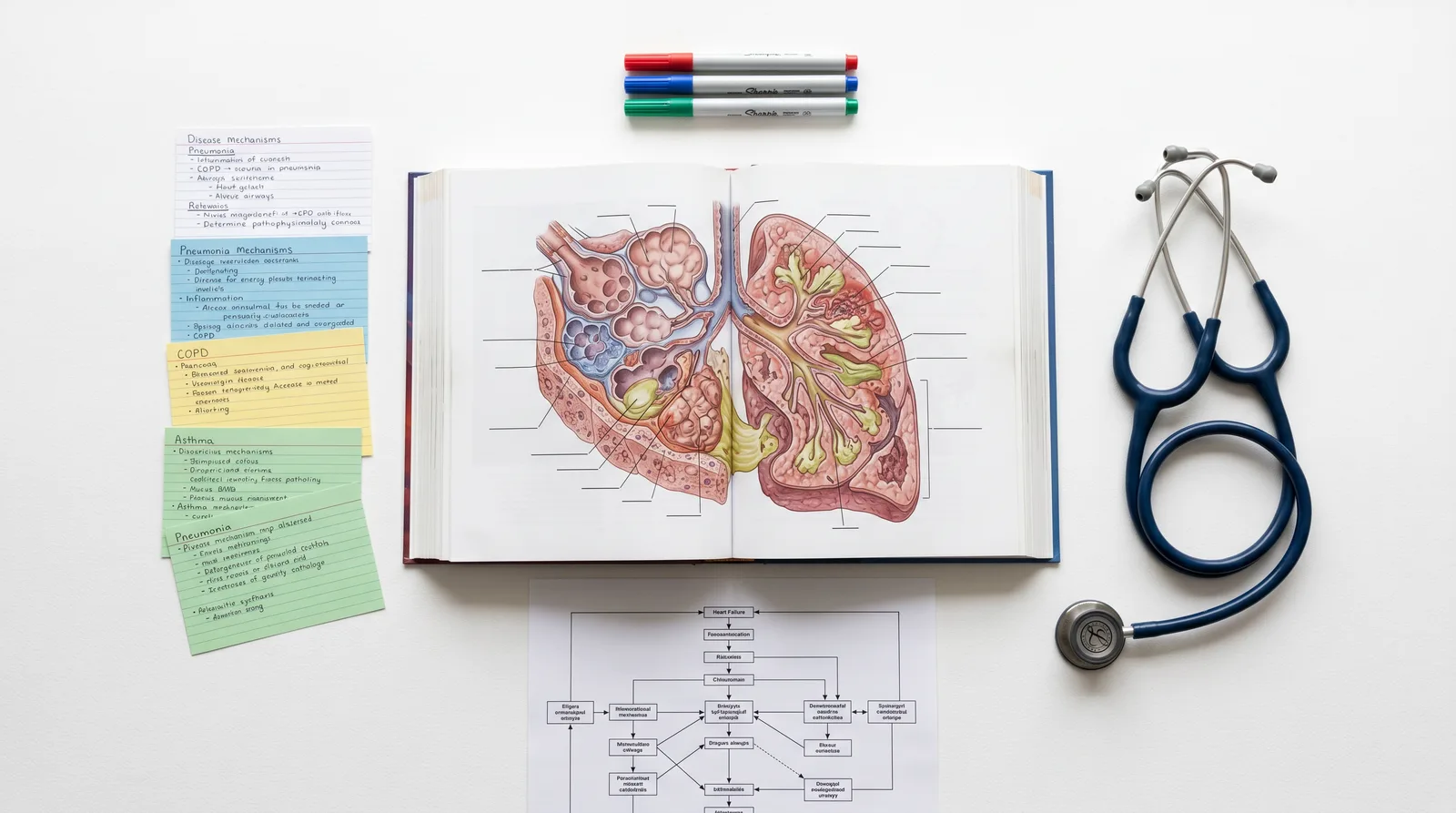
What you'll learn
What you'll be able to do
- Explain the cellular and systemic mechanisms underlying major disease processes — including cardiovascular, respiratory, renal, neurological, endocrine, and immune disorders — at an R.N. licensure level.
- Accurately trace the pathophysiological chain from initial cell injury through clinical signs and symptoms, enabling confident clinical reasoning at the bedside.
- Interpret and connect lab values, diagnostic findings, and patient presentations back to the underlying pathophysiological process for each major body system.
- Apply pathophysiology knowledge directly to NCLEX-style questions and case-based scenarios, improving exam performance and reducing test anxiety.
- Distinguish normal from abnormal physiological compensatory responses — such as the renin-angiotensin-aldosterone cascade or hypoxic vasoconstriction — and explain why the body responds the way it does.
- Use AI-adaptive self-assessment tools, explainer infographics, and structured slide decks to identify personal knowledge gaps and close them systematically before high-stakes exams.
How it works
A school that adapts to you
This isn't a set of static videos. Every lesson is generated live and tuned to where you actually are.
We learn your level
A quick placement check tailors your starting point so you're never bored or lost.
Lessons adapt as you go
Each lesson is written for your pace and your goal, adjusting as your skills grow.
Your AI coach keeps you moving
Checkpoints, feedback, and gentle nudges turn progress into a real result.
The curriculum
What's inside your school
6 modules · 26 lessons

Foundations of Pathophysiology: From Healthy Cell to Disease
This foundational module establishes the essential prerequisite knowledge every nursing student must master before approaching organ-system disease. Students begin at the cellular level — understanding how normal cells function, how they adapt to stress, and how they die — before progressing to whole-body responses such as inflammation, fluid shifts, and immune activation. Without this scaffolding, downstream modules on cardiovascular, respiratory, and renal disease cannot be fully understood. AI Avatar explainer videos walk students through each mechanism step by step, while explainer infographics visually map pathophysiological chains from initial injury to clinical sign. This module directly supports outcomes related to tracing the pathophysiological chain from cell injury through clinical signs and symptoms.
- 1.1Normal Cell Structure, Function, and HomeostasisIncluded
- 1.2Cell Injury, Adaptation, and DeathIncluded
- 1.3Inflammation and the Healing ResponseIncluded
- 1.4Fluid, Electrolyte, and Acid-Base ImbalancesIncluded
- 1.5Genetic and Immune Mechanisms in DiseaseIncluded
Cardiovascular Pathophysiology: Pump Failure to Vessel Disease
The cardiovascular system is the most heavily tested body system on the NCLEX-RN, and its pathophysiology underpins complications across renal, neurological, and pulmonary modules. This module moves sequentially from the vessel wall inward to the myocardium, then to the electrical conduction system — mirroring the progression from chronic vessel disease (atherosclerosis) to acute events (ACS, heart failure decompensation) to rhythm instability. A dedicated lesson on compensatory mechanisms — including the RAAS, the Frank-Starling law, and baroreceptor reflexes — has been added to the draft to ensure students can distinguish adaptive from maladaptive responses, a critical NCLEX reasoning skill. AI Avatar videos animate blood flow, perfusion pressure, and compensatory cascades in real time. Explainer infographics map the pathophysiological chain from coronary plaque rupture to cardiogenic shock.
- 2.1Cardiovascular Anatomy, Physiology, and Hemodynamic ReviewIncluded
- 2.2Atherosclerosis, Coronary Artery Disease, and Acute Coronary SyndromeIncluded
- 2.3Heart Failure: Left-Sided, Right-Sided, and Systolic vs. DiastolicIncluded
- 2.4Hypertension: Pathogenesis, Compensation, and End-Organ DamageIncluded
- 2.5Dysrhythmias and Conduction Pathway DisordersIncluded
Respiratory Pathophysiology: Oxygenation and Ventilation Failure
Respiratory pathophysiology is approached through the lens of two distinct failure modes — oxygenation failure (hypoxemia) and ventilation failure (hypercapnia) — because distinguishing between them is essential for correct clinical reasoning and NCLEX performance. The module opens with a prerequisite review of gas exchange physiology before advancing to obstructive and restrictive disease, infectious and inflammatory causes of respiratory failure, and finally vascular causes of pulmonary decompensation. Each lesson connects respiratory pathophysiology to the compensatory responses students learned in Module 1 (respiratory acidosis compensation) and Module 2 (right heart strain from pulmonary hypertension). AI Avatar videos animate V/Q mismatch and hypoxic vasoconstriction. Explainer infographics map the hypoxemia spectrum from mild V/Q mismatch to complete shunt.
- 3.1Gas Exchange Physiology and the Oxygenation-Ventilation FrameworkIncluded
- 3.2Obstructive vs. Restrictive Lung Disease: Asthma, COPD, and FibrosisIncluded
- 3.3Pneumonia, ARDS, and Respiratory FailureIncluded
- 3.4Pulmonary Embolism and Pulmonary HypertensionIncluded
Renal and Fluid Pathophysiology: Filtration Failure and Systemic Consequences
The kidney is simultaneously a filtration organ, an endocrine organ (erythropoietin, renin, active vitamin D), and the master regulator of acid-base and electrolyte balance — making renal failure a systemic disease. This module builds sequentially from the normal renal physiology prerequisites through the three categories of acute kidney injury, into the chronic progressive loss of renal function, and finally to immune-mediated glomerular disease and the RAAS-hypertension axis. Connections to Module 1 (acid-base compensation), Module 2 (RAAS in heart failure and hypertension), and Module 5 (endocrine functions of the kidney) are made explicit at each lesson. AI Avatar videos animate glomerular filtration and tubular reabsorption under normal and pathological conditions. Explainer infographics map the uremic syndrome consequences across every major organ system.
- 4.1Normal Renal Physiology: Filtration, Regulation, and Endocrine FunctionIncluded
- 4.2Acute Kidney Injury: Pre-Renal, Intra-Renal, and Post-RenalIncluded
- 4.3Chronic Kidney Disease and the Uremic SyndromeIncluded
- 4.4Glomerulonephritis, Nephrotic Syndrome, and the RAAS in Renal HypertensionIncluded
Neurological and Endocrine Pathophysiology: Signaling Gone Wrong
The nervous and endocrine systems share a common function — signal transmission and systemic regulation — and their pathological failures share a common consequence: loss of homeostatic control over every other organ system. This module addresses the highest-yield neurological and endocrine conditions tested on the NCLEX-RN, approached through their underlying signaling pathophysiology rather than symptom memorization. A prerequisite lesson on neural and hormonal signaling mechanisms is added to fill the draft's sequencing gap. Stroke and elevated ICP are taught as consequences of disrupted cerebral perfusion pressure. Diabetes is taught through the lens of insulin signaling failure, building to the life-threatening acute complications of DKA and HHS. Thyroid and adrenal disorders are approached through the concept of hormone excess and deficiency, with the HPA axis providing the organizational framework. AI Avatar videos animate hormone feedback loops and cerebral autoregulation failure.
- 5.1Neural and Hormonal Signaling: A Prerequisite BridgeIncluded
- 5.2Stroke, Increased ICP, and Neurovascular PathophysiologyIncluded
- 5.3Diabetes Mellitus: Type 1, Type 2, DKA, and HHSIncluded
- 5.4Thyroid and Adrenal Disorders: Hormone Excess and DeficiencyIncluded
Clinical Integration, NCLEX Mastery, and Adaptive Self-Assessment
This capstone module synthesizes all prior content through multi-system case reasoning, high-yield NCLEX strategy, and AI-powered adaptive assessment. It operationalizes the target outcomes that require students to trace pathophysiological chains across organ systems, interpret lab values and diagnostics in context, and perform confidently on NCLEX-style questions. Two new lessons have been added to the draft: a dedicated lesson on lab value and diagnostic interpretation as a cross-cutting clinical skill, and a NCLEX test-taking strategy lesson that addresses the cognitive and emotional dimensions of exam performance — including test anxiety reduction. The adaptive final assessment generates a personalized remediation roadmap, ensuring every student exits the course with a precise, actionable study plan for their high-stakes exam. AI Avatar videos model expert clinical reasoning aloud ('thinking out loud') through each case. Explainer infographics serve as rapid-review synthesis tools across all five prior modules.
- 6.1Lab Values and Diagnostic Findings Across Body SystemsIncluded
- 6.2Multi-System Case Reasoning: When One Disease Attacks EverythingIncluded
- 6.3NCLEX-Style Pathophysiology Questions: Strategy and Reasoning PatternsIncluded
- 6.4Adaptive Final Assessment and Personalized Exam Readiness PlanIncluded
Who it's for
Is this you?

Struggling ADN students
Overwhelmed by the pace of a two-year program, they need pathophysiology broken into clear cause-and-effect chains they can master before midterms.

BSN students building clinical depth
They're passing their course but want the mechanistic understanding that will make them sharp in clinical rotations and competitive on the NCLEX.

NCLEX repeat test-takers
They've sat the exam and know their pathophysiology reasoning needs work — this school gives them the systematic foundation to close those gaps for good.

Career-change nursing students
Coming from non-science backgrounds, they need the foundational cell-to-system scaffolding this school provides before the harder units make sense.

Visual and adaptive learners
Traditional textbooks leave them cold — the AI Avatar videos, infographics, and adaptive assessments match how they actually retain complex information.

Pre-clinicals prep students
About to start med-surge or critical care rotations, they want to arrive already able to connect patient presentations to the underlying pathophysiology.
Questions
Frequently asked
Your teacher
A note from your teacher
AIAdaptativeSchool
If you're reading this, there's a good chance pathophysiology feels like it's speaking a different language — one where every chapter introduces twenty new mechanisms, the textbook explains what happens but never quite explains why, and by the time your exam comes around, you're not sure if you understand the material or just temporarily memorized it.
I built this school for exactly that moment. Because here's the truth: pathophysiology isn't hard because you aren't smart enough. It's hard because it's almost never taught the way the human body actually works — as a series of logical, cause-and-effect chains that make elegant, predictable sense once you see them clearly. When you genuinely understand why the failing left ventricle backs fluid into the pulmonary circulation, or why the kidneys respond to low perfusion pressure by activating RAAS even when that compensation makes hypertension worse, the whole picture clicks into place. That understanding doesn't just help you pass your course — it travels with you to every clinical rotation and every patient you'll ever care for.
This school teaches pathophysiology the way it deserves to be taught: systematically, mechanistically, and visually. We start at the cell — injury, adaptation, inflammation, homeostasis — because every disease process, no matter how complex, begins there. From that foundation, we move through the cardiovascular, respiratory, renal, neurological, and endocrine systems, always tracing the same thread: what went wrong at the cellular level, how the body tried to compensate, and what that looks like in your patient's labs, vitals, and symptoms. AI Avatar explainer videos, carefully designed infographics, and slide decks translate dense mechanisms into clear, memorable frameworks you can actually use under pressure.
I also know that understanding the material and performing on high-stakes exams are two different challenges — and this school addresses both. The final unit is built entirely around clinical integration and NCLEX mastery: multi-system case reasoning, lab interpretation, and NCLEX-style question strategy. The adaptive self-assessment engine doesn't just quiz you — it maps your specific gaps and builds a personalized plan so your prep in the final stretch before exams is targeted and efficient, not panicked.
You don't have to white-knuckle your way through pathophysiology hoping something sticks. You can actually learn it — deeply, durably, and on your own terms. I'm glad you're here, and I'm ready to be your most reliable study partner from cell injury all the way to NCLEX readiness. Let's build the clinical reasoning foundation your patients will one day count on.
— AIAdaptativeSchool
Start your journey today
Join get instant access — learn at your own pace with an AI coach in your corner.
$1/wk
Recurring billing · cancel anytime
Secure checkout · Instant access
- 6 modules, 26 lessons
- AI-adaptive lessons tuned to your level
- Quizzes & checkpoints to lock in progress
- Your own AI learning coach
- Learn on any device, at your pace
- Full access for as long as you're subscribed