Enter the Church with conviction, not just ceremony
A rich, 32-lesson Catholic formation experience that guides seekers from first questions about faith all the way to the Easter sacraments — integrating doctrine, prayer, sacraments, discernment, and lived community. Everything you need to enter the Church with conviction, not just ceremony.
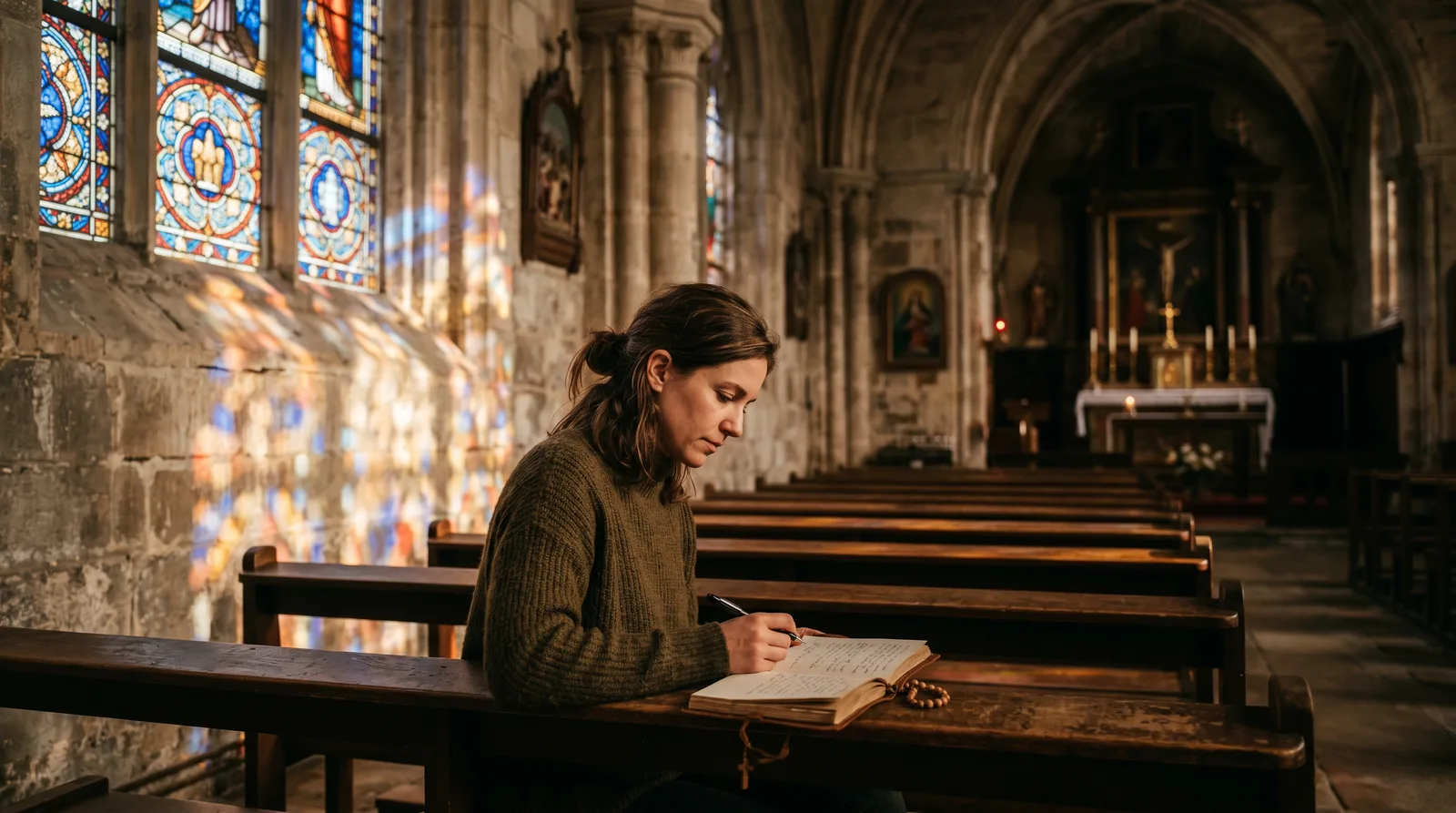
"I don't want to get you to Easter — I want to get Easter into you."— Leigh Baumann
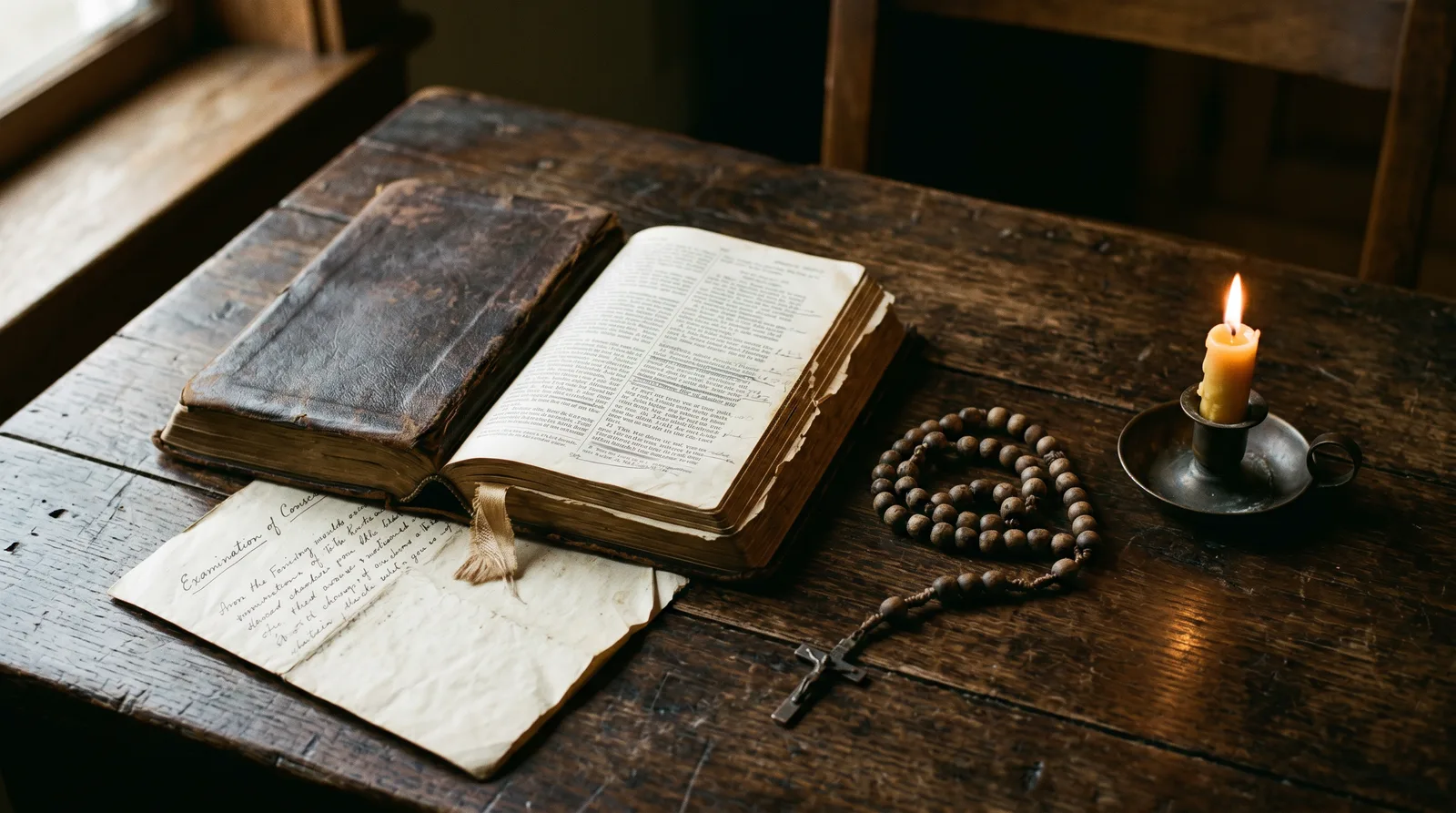
What you'll learn
What you'll be able to do
- Understand the core doctrines of the Catholic faith — God, Jesus, salvation, and the Church — well enough to articulate and personally own your belief.
- Navigate the full sacramental life of the Church, including the meaning, structure, and spiritual reality of Baptism, Confirmation, Eucharist, and Confession.
- Pray with confidence using the Church's foundational prayers, the Rosary, and a personal daily rhythm of interior prayer.
- Apply Catholic moral teaching to real decisions through a formed conscience, an understanding of sin and virtue, and discernment practices.
- Prepare spiritually and practically for the Easter Sacraments — including a thorough examination of conscience and a first Confession — with peace rather than anxiety.
- Embrace an ongoing life of faith beyond initiation, grounded in parish community, vocation, service, and the understanding that conversion is a lifelong pilgrimage.
How it works
A school that adapts to you
This isn't a set of static videos. Every lesson is generated live and tuned to where you actually are.
We learn your level
A quick placement check tailors your starting point so you're never bored or lost.
Lessons adapt as you go
Each lesson is written for your pace and your goal, adjusting as your skills grow.
Your AI coach keeps you moving
Checkpoints, feedback, and gentle nudges turn progress into a real result.
The curriculum
What's inside your school
7 modules · 36 lessons

Awakening & Foundations
Establishes the essential theological and personal foundations before any sacramental or doctrinal content is introduced. Learners are invited to examine their own search for meaning and then encounter God, Jesus, salvation, and the Church as living realities — not abstract concepts. This phase is prerequisite to everything that follows and intentionally moves from the universal human question to the specific Catholic response.
- 1.1The Search for MeaningIncluded
- 1.2Who Is God?Included
- 1.3Jesus: Historical and LivingIncluded
- 1.4The Story of SalvationIncluded
- 1.5What Is Faith?Included
- 1.6The Church as Living BodyIncluded
Sacraments & Sacred Life
Introduces the full sacramental economy of the Church — what sacraments are, why they matter, and how the three Sacraments of Initiation (Baptism, Confirmation, Eucharist) form the gateway into full Catholic life. Eucharist is explored in greater depth given its centrality to ongoing Catholic life. The Mass is unpacked in two dedicated lessons so learners can participate intelligently and spiritually from day one of attending. NOTE: A brief prerequisite lesson on Scripture and Tradition has been inserted as the opening lesson of this phase, because the sacramental theology covered here draws directly from both sources — learners must understand why the Church's teaching carries authority before they can receive it.
- 2.1Scripture, Tradition, and the Church's AuthorityIncluded
- 2.2Introduction to the SacramentsIncluded
- 2.3Baptism and New IdentityIncluded
- 2.4Confirmation and the Holy SpiritIncluded
- 2.5Eucharist: The Heart of the ChurchIncluded
- 2.6The Mass Explained: Structure and LiturgyIncluded
- 2.7The Mass Explained: Meaning and ParticipationIncluded
Prayer & Interior Life
Builds the learner's personal prayer life from the ground up — from foundational understanding through the Church's formal prayers, Marian devotion and the Rosary, the communion of saints, and finally a sustainable daily rhythm. Mary and the saints are treated not as isolated devotional topics but as integral dimensions of Catholic prayer life. The sequencing moves deliberately from public/formal prayer toward personal/interior practice.
- 3.1Introduction to PrayerIncluded
- 3.2Common Prayers of the ChurchIncluded
- 3.3The Rosary and Marian PrayerIncluded
- 3.4Mary and Spiritual MotherhoodIncluded
- 3.5The Communion of SaintsIncluded
- 3.6Building a Daily Prayer LifeIncluded
Discernment & Inner Transformation
Turns the lens inward — equipping learners to recognize God's movement in their lives, understand sin and conscience, navigate moral struggle, and grow through spiritual difficulty. This phase is deliberately sequenced after prayer is established (Phase 3) because discernment and moral formation require a functioning prayer life as their foundation. The phase moves from recognizing God's voice → understanding sin → forming conscience → navigating struggle → growing through dryness.
- 4.1What Is Discernment?Included
- 4.2Sin and Interior DisorderIncluded
- 4.3Conscience and Moral FormationIncluded
- 4.4Temptation, Freedom, and ChoiceIncluded
- 4.5Spiritual Dryness and GrowthIncluded
Sacraments of Healing & Grace
Focuses specifically on the Sacrament of Reconciliation — its theology, its structure, its practice, and its spiritual fruit — preparing learners to celebrate their first Confession with peace and readiness rather than fear. The phase also introduces Anointing of the Sick to complete the picture of the Church's sacraments of healing, which was a gap in the original draft. Sequencing note: this phase is deliberately placed after discernment and moral formation (Phase 4) because a meaningful Confession requires a formed conscience and a genuine examination of conscience.
- 5.1Confession (Reconciliation) ExplainedIncluded
- 5.2Preparing for ConfessionIncluded
- 5.3Mercy and Spiritual RenewalIncluded
- 5.4Anointing of the Sick and the Last ThingsIncluded
Lived Catholic Life
Grounds the learner's faith in the concrete realities of living as a Catholic in the world — moral decision-making, parish belonging, vocation, and active service. This phase is deliberately sequenced after the sacraments of healing because a person who has been through Confession and received mercy is now ready to engage the moral life not from fear but from gratitude and love. A lesson on Catholic social teaching has been added as a genuine gap — it is the Church's applied moral framework for life in society and was absent from the original draft.
- 6.1Moral Life and Christian FreedomIncluded
- 6.2Catholic Social TeachingIncluded
- 6.3The Church Community and Parish LifeIncluded
- 6.4Orders, Vocations, and Church RolesIncluded
- 6.5Service, Mission, and Living FaithIncluded
Integration & Mission
Brings the entire journey to a culmination — synthesizing everything learned, celebrating growth, preparing for the Easter Sacraments, and commissioning learners into ongoing life as Catholics. A lesson on the Easter Vigil has been added as a critical gap — the rite itself, its symbols, and its prayers are the literal destination of the entire OCIA process and deserve dedicated preparation. The phase ends with commitment, not just completion.
- 7.1Pilgrimage and Spiritual JourneyIncluded
- 7.2The Easter Vigil: Rite, Symbol, and PreparationIncluded
- 7.3Integration and CommitmentIncluded
Who it's for
Is this you?

First-time seekers
You have real questions about God and the Church and want a formation experience that takes them seriously rather than rushing you to a ceremony.

Returning Catholics
You were baptized but never truly formed — this program gives you the doctrinal, sacramental, and interior grounding you were never fully given.

OCIA sponsors
You want to accompany your candidate with genuine substance and find that walking through the full curriculum deepens your own faith alongside theirs.

Parish OCIA directors
You need a structured, modern, digitally-delivered formation backbone that reliably covers the full breadth of Catholic initiation for your team to build upon.

Spouses entering the Church
You are joining the Catholic Church partly for marriage and want your 'yes' to be fully informed, personally owned, and spiritually alive — not just logistical.

Lifelong learners of faith
Already Catholic, you sense gaps in your formation and want to walk the full OCIA arc to finally own your belief with clarity, depth, and confidence.
Questions
Frequently asked
Your teacher
A note from your teacher
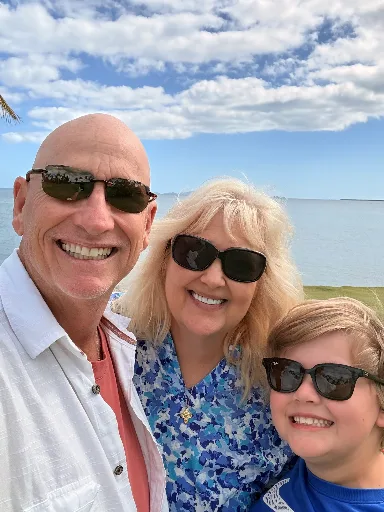
Leigh Baumann
Maybe you picked up this program because something has been quietly pulling at you — a question about God you can't dismiss, a longing for something more grounded and true, or simply the sense that there is a whole world of meaning inside the Catholic faith that no one has ever properly handed to you. I know that feeling. And I want you to know: you are not behind. You are not too late. You are exactly where the journey begins.
What I have tried to build here is the formation experience I wish existed when I first started asking these questions myself — not a crash course, not a box to check, but a real companion through the whole landscape of the faith. Thirty-two lessons that don't skip the hard questions or gloss over the mystery, but also never lose sight of the person doing the asking: you, with your real life, your real doubts, and your real longing.
What I find is that most people entering the Church — or returning to it — are not lacking intelligence or sincerity. They are lacking time, structure, and someone willing to explain things plainly and deeply at the same time. That is what I have tried to be in every lesson. We will talk about God and salvation and the sacraments in a way that is theologically serious. We will also talk about prayer, conscience, and discernment in a way that reaches into the actual interior of your life — not just your head, but your heart.
I want to be honest about one thing: this program will ask something of you. Not performance. Not perfection. But presence — the willingness to sit with difficult ideas, to pray when it feels unfamiliar, to examine your conscience with honesty, and to let the faith actually form you rather than just inform you. That is what OCIA has always been at its best: not a class, but a conversion.
My deepest hope is that by the time the Easter Vigil arrives, you will stand at that font — or before that altar — not with the nervous relief of someone who has finished a course, but with the quiet conviction of someone who has genuinely chosen something. Come and see. There is room for you here.
— Leigh Baumann
Start your journey today
Join get instant access — learn at your own pace with an AI coach in your corner.
$39/mo
Recurring billing · cancel anytime
Secure checkout · Instant access
- 7 modules, 36 lessons
- AI-adaptive lessons tuned to your level
- Quizzes & checkpoints to lock in progress
- Your own AI learning coach
- Learn on any device, at your pace
- Full access for as long as you're subscribed