Old School
The Old Ways School walks you through every skill your great-grandparents depended on — from copper-still fermentation and smoke-cured hams to root cellars, seed saving, hand-tool repair, and cooking on open fire — so the knowledge that nearly died with a generation lives on in your hands.
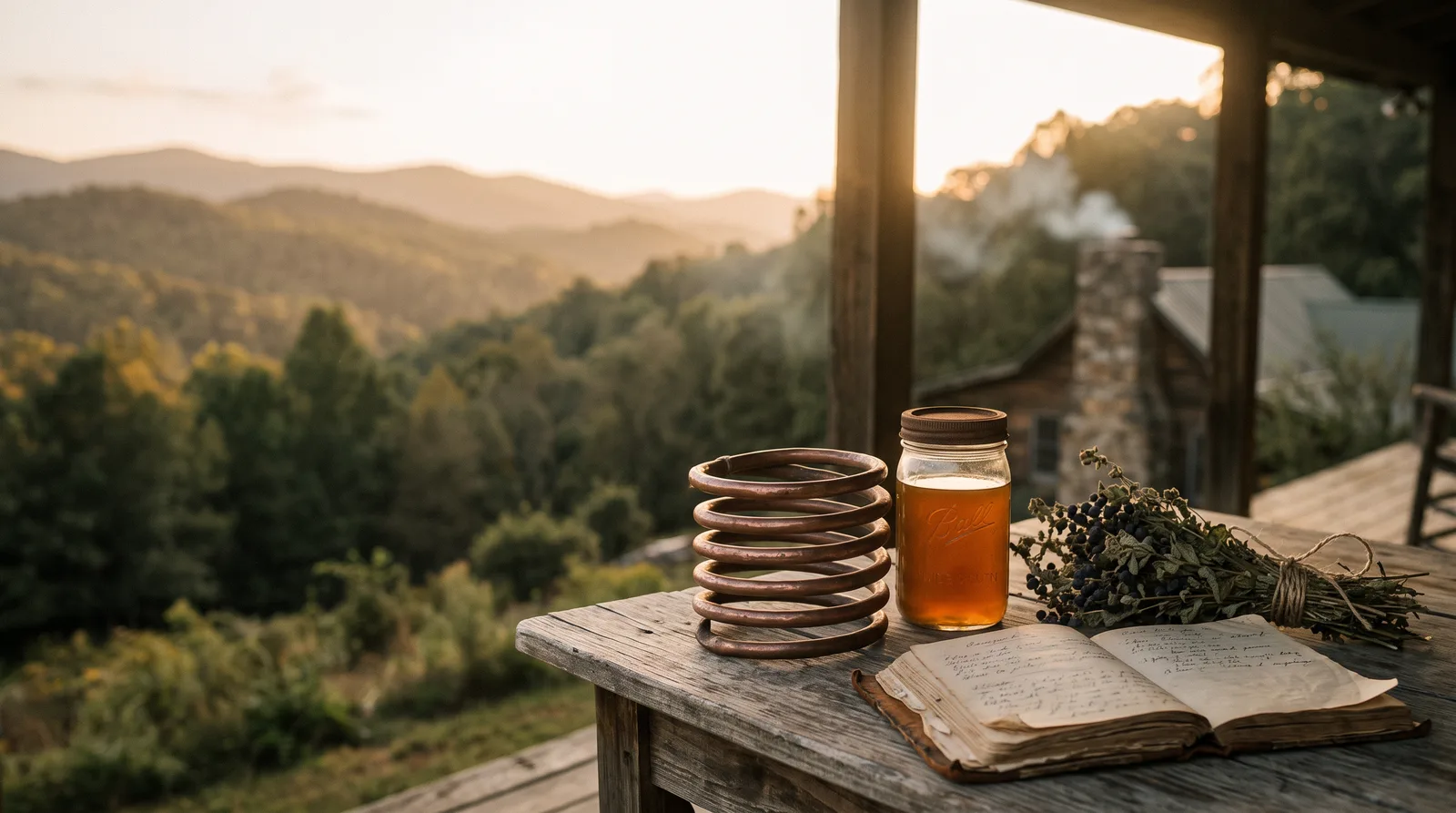
The knowledge your great-grandparents carried wasn't lost — it just needs someone willing to pass it on again, hand to hand, the way it always traveled best.
— Pappy
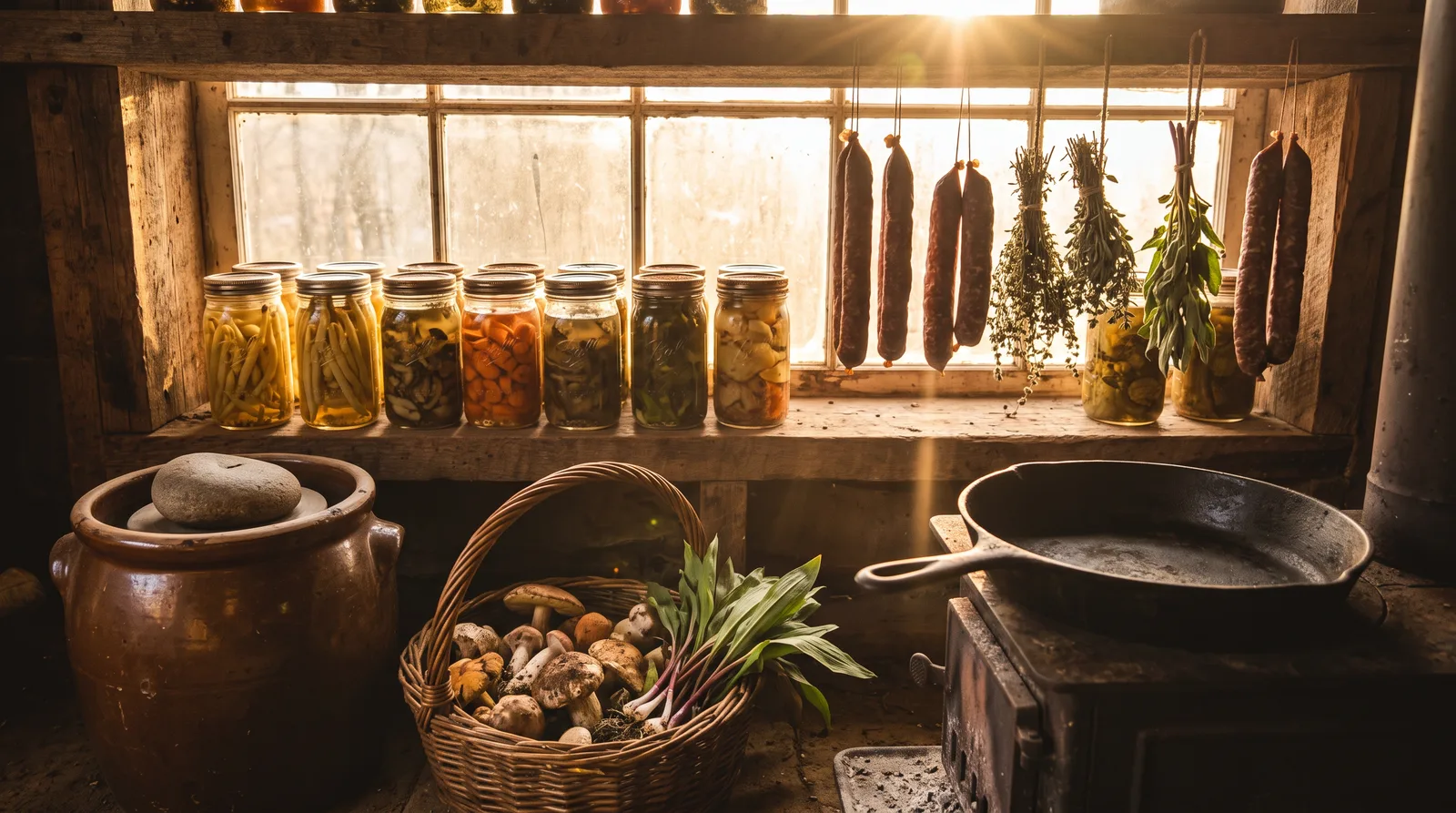
What you'll learn
What you'll be able to do
- Preserve a full season's harvest using canning, drying, smoking, fermenting, and root-cellar methods — without relying on a freezer
- Plan and work a kitchen garden using traditional planting signs, the Farmer's Almanac, and open-pollinated seed-saving techniques
- Butcher, cure, smoke, and make sausage from a whole animal, understanding salt ratios, smoke times, and safe preservation
- Build and maintain a working fire for heat and cooking, and execute scratch recipes — including old family dishes — on open flame or wood stove
- Forage, identify, and safely prepare wild foods and traditional plant remedies from your local landscape
- Practice the household economy of your great-grandparents: barter, reuse, repair with hand tools, make soap and candles, and stretch every resource to its limit
How it works
A school that adapts to you
This isn't a set of static videos. Every lesson is generated live and tuned to where you actually are.
We learn your level
A quick placement check tailors your starting point so you're never bored or lost.
Lessons adapt as you go
Each lesson is written for your pace and your goal, adjusting as your skills grow.
Your AI coach keeps you moving
Checkpoints, feedback, and gentle nudges turn progress into a real result.
The curriculum
What's inside your school
13 modules · 67 lessons

Moonshine, White Liquor, and Appalachian Fermentation Tradition
Explores the deep cultural history of Appalachian distilling, the science of fermentation and mash-making, copper-still craft, and the clear line between traditional knowledge and legal commercial distilling.
- 1.1The Culture and History of Mountain DistillingIncluded
- 1.2Fermentation Basics — Mash, Yeast, and SugarIncluded
- 1.3Copper Stills — How They Work and Why CopperIncluded
- 1.4Proof, Cuts, and Quality — Reading What Comes Off the StillIncluded
- 1.5Fuel Alcohol, Tractor Ethanol, and Legal Distilling TodayIncluded
Canning, Food Preservation, and the Root Cellar
Covers every method the old-timers used to keep food through winter — water-bath and pressure canning, drying, smoking, fermenting, and root-cellar management.
- 2.1Water-Bath Canning — High-Acid Foods Done RightIncluded
- 2.2Pressure Canning — Low-Acid Vegetables and MeatsIncluded
- 2.3Drying and Dehydrating the Old WayIncluded
- 2.4Fermenting — Kraut, Pickles, and Lacto-Fermented FoodsIncluded
- 2.5Root Cellar Storage — Temperature, Humidity, and Keeping OrderIncluded
Gardening, Seed Saving, and Planting by the Signs
Teaches traditional kitchen-garden planning, open-pollinated seed selection and saving, and using the Farmer's Almanac and zodiac planting signs the way old-timers did.
- 3.1Laying Out a Kitchen Garden the Old WayIncluded
- 3.2The Farmer's Almanac and Planting by the SignsIncluded
- 3.3Saving Seed — Selection, Drying, and StorageIncluded
- 3.4Heirloom Varieties and Why They MatterIncluded
Cooking from Scratch — Fire, Wood Stove, and Old Family Recipes
Puts students at the fire and the wood stove to master scratch cooking, open-flame techniques, and beloved old family dishes — including Nanny's Kitchen recipes like Yum Yum.
- 4.1Building and Managing a Cooking FireIncluded
- 4.2Wood Stove Cooking — Heat Zones, Timing, and BakingIncluded
- 4.3Scratch Pantry — Lard, Buttermilk, Stock, and CornmealIncluded
- 4.4Nanny's Kitchen — Old Family Recipes in PracticeIncluded
- 4.5Cooking Without Electricity — Hands-On ChallengeIncluded
Livestock, Butchering, and Meat Preservation
Walks through the full arc from live animal to finished, shelf-stable product — butchering, salt-curing, smoking, and sausage-making — with safe salt ratios and timing at every step.
- 5.1Raising Meat Animals the Old-Fashioned WayIncluded
- 5.2Butchering — Breaking Down a Whole AnimalIncluded
- 5.3Salt Curing — Dry Rubs, Brines, and Safe RatiosIncluded
- 5.4Smoking Meat — Cold Smoke, Hot Smoke, and Smokehouse ManagementIncluded
- 5.5Sausage-Making — Seasoning, Stuffing, and CasingIncluded
Foraging, Wild Foods, and Traditional Remedies
Teaches safe identification and preparation of wild edible and medicinal plants, and the practical first-aid and herbal remedy traditions passed down through generations.
- 6.1Foraging Safely — Identification Rules and Deadly LookalikesIncluded
- 6.2Seasonal Wild Foods — Spring Through FallIncluded
- 6.3Preparing and Preserving Wild HarvestsIncluded
- 6.4Old Remedies — Herbs, Poultices, and What Grandma Kept on the ShelfIncluded
- 6.5Sanitation and Practical Hygiene Before Modern ConveniencesIncluded
Fire, Wood Heat, and Water Skills
Covers the two most critical daily resources of traditional life — reliable heat and clean water — from fire-building and wood management to finding, storing, and treating water without modern infrastructure.
- 7.1Fire-Building — Tinder, Kindling, and Keeping It GoingIncluded
- 7.2Wood Heat — Splitting, Stacking, Seasoning, and Chimney SafetyIncluded
- 7.3Finding and Collecting Water — Springs, Rain, and StreamsIncluded
- 7.4Carrying, Storing, and Treating Water the Old WayIncluded
Sewing, Mending, and Making Textiles Last
Teaches the hand-sewing, mending, and repurposing skills that kept families clothed and warm before ready-made clothing was cheap or accessible.
- 8.1Hand Sewing Basics — Needles, Thread, and Essential StitchesIncluded
- 8.2Mending and Patching — Making Worn Clothes LastIncluded
- 8.3Cutting Patterns and Sewing Simple GarmentsIncluded
- 8.4Quilting, Rag Rugs, and Repurposing Old ClothIncluded
Soap, Candles, and Homemade Household Goods
Teaches the old formulas and processes for making lye soap, tallow and beeswax candles, and simple homemade cleaners from raw or recycled ingredients.
- 9.1Lye Soap from Ash — Making Lye and the Cold-Process MethodIncluded
- 9.2Tallow and Lard Soaps — Using What You HadIncluded
- 9.3Dipped and Molded Candles — Tallow, Beeswax, and BayberryIncluded
- 9.4Homemade Cleaners and Household CompoundsIncluded
Hand Tools, Traditional Equipment, and the Art of Repair
Introduces the hand tools and older farm and household equipment that built and maintained rural life, with emphasis on sharpening, maintaining, and using them instead of replacing them.
- 10.1The Hand-Tool Mindset — Maintain, Don't Throw AwayIncluded
- 10.2Sharpening and Caring for Cutting ToolsIncluded
- 10.3Traditional Farm and Household Equipment — How It WorkedIncluded
- 10.4Basic Repairs — Wood, Metal, Leather, and RopeIncluded
Weather Signs, Navigation, and Reading Nature
Teaches the observational skills old-timers used to predict weather, navigate land and water, and read the natural world before instruments, phones, or GPS.
- 11.1Reading the Sky — Clouds, Wind, and Old Weather ProverbsIncluded
- 11.2Plants, Animals, and Nature Signs as Weather PredictorsIncluded
- 11.3Land Navigation Without GPS — Sun, Stars, and LandmarksIncluded
- 11.4Communication Before Phones — Signals, Messengers, and Community AwarenessIncluded
Household Economy, Bartering, Community, and Passing It On
Ties the whole course together through the economics, community structures, and oral traditions that made self-sufficient rural life sustainable — and shows how to carry that knowledge forward.
- 12.1Stretching Every Resource — Old Household EconomicsIncluded
- 12.2Reusing Everything — Making Something From What You HadIncluded
- 12.3Bartering and Neighbors Helping NeighborsIncluded
- 12.4Oral Tradition and Family Knowledge — What Never Got Written DownIncluded
- 12.5Hands-On Final Challenge — Live the Old Way for a DayIncluded
Blacksmithing — Iron, Fire, and the Forge
The old art of shaping iron at the anvil — from lighting the forge and reading heat colors to hammering basic tools and understanding the metal beneath the scale. Grounded in the traditional forging methods passed down through working smiths.
- 13.1The Forge — Coal, Propane, and How a Smith's Fire WorksIncluded
- 13.2Building a Portable Brake Drum Forge — Part 1Included
- 13.3Building a Portable Brake Drum Forge — Part 2Included
- 13.4Reading Heat — Color, Scale, and What the Iron Is Telling YouIncluded
- 13.5Hammers, Tongs, and Anvil Work — The Basic Toolkit — Basic Blacksmith Shop Tools — David BurressIncluded
- 13.6Drawing Out, Upsetting, and Bending — The Three Foundation MovesIncluded
- 13.7Punching, Drifting, and Making a Handle EyeIncluded
- 13.8Forge Welding — The Old Way to Join IronIncluded
- 13.9Making a Simple S-Hook — First Project Start to FinishIncluded
- 13.10Forging a Tomahawk — Blade, Handle Eye, and FinishingIncluded
- 13.11Tongs, Hardy Tools, and Shop-Made EquipmentIncluded
- 13.12Tempering and Heat Treatment — Making a Tool That Holds an EdgeIncluded
- 13.13Care of the Shop — Coal Ash, Coal Storage, Anvil Maintenance, and Fire SafetyIncluded
Who it's for
Is this you?

The Appalachian roots keeper
He grew up hearing the stories and wants to finally learn the skills his grandparents lived by before that thread is gone for good.

The rural homesteader
She's got land, a garden, and ambition — and wants a structured, tradition-grounded curriculum to fill the serious gaps in her self-sufficiency.

The practical prepper
He's less interested in gear lists than in genuine old-fashioned skills that work when the power is out and the store shelves are empty.

The grandmother passing it on
She knows bits and pieces of the old ways and wants a complete, organized reference to help her teach her grandchildren what really matters.

The first-generation homesteader
He didn't grow up rural, but he's building that life now and needs the foundational knowledge no YouTube playlist has ever given him in one place.

The small-farm family cook
She raises animals, tends a kitchen garden, and wants to close the loop — curing, smoking, preserving, and cooking from scratch the way it was always done.
Questions
Frequently asked
Your teacher
A note from your teacher
Pappy
I know where you're sitting right now, because I've sat there too.
You've got a piece of land, or you're working toward one. Maybe you've got a garden going, maybe some animals, maybe just a strong feeling that the way most people live today is too fragile — too dependent on a supply chain, a power grid, a grocery store that's three towns away. And somewhere in the back of your mind there's this awareness that the people who came before you knew how to handle all of it. They put up enough food to last a winter. They fixed what broke. They kept warm on wood they split themselves, cooked on fire, and never needed a credit card to get through a hard month. You want to know what they knew. The problem is, most of them are gone — and the knowledge went quiet with them.
That's exactly why I built this school. Not to sell you a lifestyle or dress up the past as something prettier than it was. Those old ways were hard, and I'll tell you so plainly. But woven into that hardness was a kind of competence and dignity that I think is worth recovering. When you know how to put up a year's worth of food, how to work a copper still the way mountain families did for generations, how to break down a whole animal and cure it in salt and smoke, how to read a storm coming in the tree line — you carry something that can't be taken from you. That's what this school is about.
Every section of this curriculum is built around doing, not just knowing. We'll walk through water-bath canning and pressure canning until the process is second nature. We'll talk about mash, yeast, and fermentation not as a novelty but as the agricultural tradition it always was in Appalachian country. We'll get into seed saving, planting by the signs, running a wood stove, making lye soap from ash, sewing and mending clothes that last, sharpening a tool until it's right again. The full circle of how a self-sufficient household actually ran — and how it can run again.
I want to be honest with you about one more thing. I'm not here to tell you I have all the answers or that my way is the only way. What I carry is a deep respect for the people who worked this knowledge out over generations, and a genuine desire to pass it on as faithfully as I can — with the why behind each step explained clearly enough that you can adapt it to your own land, your own climate, your own situation. The old-timers were nothing if not adaptable. They made do with what was at hand, and that's what I'll teach you to do too.
Pull up a chair. Let's get to work.
— Pappy
Start your journey today
Get instant access — learn at your own pace with an AI coach in your corner.
$29/mo
Recurring billing · cancel anytime
Secure checkout · Instant access
- 13 modules, 67 lessons
- AI-adaptive lessons tuned to your level
- Quizzes & checkpoints to lock in progress
- Your own AI learning coach
- Learn on any device, at your pace
- Full access for as long as you're subscribed