
Crack O Level Commerce — and know exactly why every answer is right
A complete, syllabus-aligned programme that walks you through every Cambridge Commerce topic — from trade and banking to business documents and consumer law — with clear explanations, worked examples, and structured exam practice built for students aged 14–17.

"My job is to make every Commerce concept click before we ever talk about the exam — because when you genuinely understand it, the marks take care of themselves."
— Renstay College
What you'll learn
What you'll be able to do
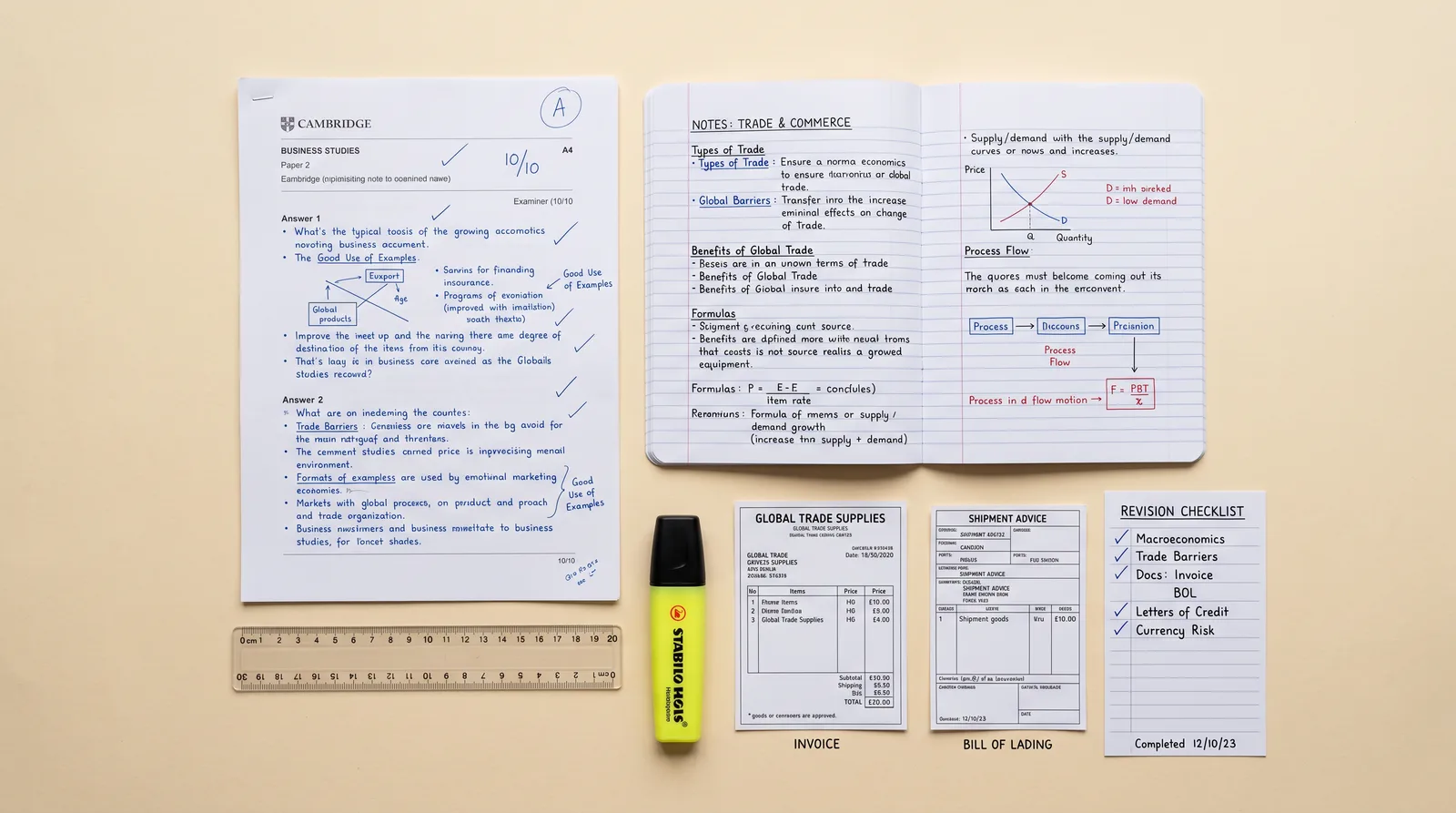
- Explain core commercial concepts — trade, production, communication, and finance — accurately using Cambridge syllabus terminology
- Interpret and complete key business documents such as invoices, credit notes, statements of account, and bills of lading
- Describe the functions of banks, insurance companies, and other financial institutions and apply them to exam scenarios
- Analyse the role of retailers, wholesalers, and e-commerce in modern channels of distribution
- Apply consumer protection laws, trade descriptions, and regulatory bodies to case-study questions with confidence
- Tackle structured O Level exam questions systematically, managing time and mark allocation to maximise your grade
How it works
A school that adapts to you
This isn't a set of static videos. Every lesson is generated live and tuned to where you actually are.
We learn your level
A quick placement check tailors your starting point so you're never bored or lost.
Lessons adapt as you go
Each lesson is written for your pace and your goal, adjusting as your skills grow.
Your AI coach keeps you moving
Checkpoints, feedback, and gentle nudges turn progress into a real result.
The curriculum
What's inside your school
24 modules · 80 lessons

Foundations of Commerce
Establishes core commercial vocabulary and the framework of trade, production, and the division of labour that underpins the entire syllabus.
- 1.1What Is Commerce?Included
- 1.2Production and Its FactorsIncluded
- 1.3Division of Labour and SpecialisationIncluded
- 1.4Home Trade and Foreign TradeIncluded
- 1.5Aids to TradeIncluded
Channels of Distribution
Traces the journey of goods from producer to consumer, examining every intermediary and the rise of modern retail formats.
- 2.1The Chain of DistributionIncluded
- 2.2Wholesalers — Functions and ServicesIncluded
- 2.3Retailers — Types and FunctionsIncluded
- 2.4Direct Distribution and E-CommerceIncluded
- 2.5Choosing the Right ChannelIncluded
Business Documents and Trade Procedures
Builds step-by-step mastery of every document in the buying-and-selling cycle, from enquiry to payment, including international trade paperwork.
- 3.1The Buying and Selling CycleIncluded
- 3.2Enquiries, Quotations, and OrdersIncluded
- 3.3Invoices, Credit Notes, and Debit NotesIncluded
- 3.4Statements of Account and Payment MethodsIncluded
- 3.5International Trade DocumentsIncluded
Banking, Finance, and Insurance
Covers the services of commercial and central banks, the range of financial institutions, and the principles of insurance that protect trade.
- 4.1Commercial Banks and Their ServicesIncluded
- 4.2The Central Bank and Monetary PolicyIncluded
- 4.3Other Financial InstitutionsIncluded
- 4.4Principles of InsuranceIncluded
- 4.5Types of Insurance and Their ApplicationIncluded
Communication, Transport, and Warehousing
Examines how goods are physically moved and how information flows through a business, covering all major modes and technologies.
- 5.1Methods of Business CommunicationIncluded
- 5.2Road, Rail, Sea, and Air TransportIncluded
- 5.3Containerisation and Freight ServicesIncluded
- 5.4Warehousing and StorageIncluded
Consumer Protection and Exam Mastery
Equips students with knowledge of consumer rights and regulatory bodies, then drills the exam skills needed to convert that knowledge into top marks.
- 6.1Consumer Rights and Protection LawsIncluded
- 6.2Regulatory Bodies and Consumer OrganisationsIncluded
- 6.3Advertising Standards and Ethics in TradeIncluded
- 6.4Structuring Answers to Exam QuestionsIncluded
- 6.5Full Syllabus Revision and Exam PracticeIncluded
Trade and commerce
- 7.1TradeIncluded
- 7.2Aids to trade and logisticsIncluded
- 7.3Types of commerceIncluded
- 7.4The relationship between production, trade and commerceIncluded
Production
- 8.1Sectors of production and specialisationIncluded
- 8.2In-house production and outsourced productionIncluded
- 8.3Global supply chainsIncluded
- 8.4Intermediaries in a supply chainIncluded
- 8.5Effects of digital technology on productionIncluded
- 8.6Costs involved in trade, commerce and productionIncluded
Commercial enterprises
- 9.1Private and public sector enterprisesIncluded
- 9.2Types of private and public sector enterprisesIncluded
- 9.3Multinational companies (MNCs) in the global economyIncluded
- 9.4FranchisesIncluded
- 9.5Physical and ecommerce location factorsIncluded
Outsourcing
- 10.1Growth of outsourcingIncluded
Retailing
- 11.1Types of retailersIncluded
- 11.2Retail selling techniquesIncluded
- 11.3Digital retail trendsIncluded
- 11.4Effects of ecommerce on traditional commerceIncluded
Wholesaling
- 12.1Functions and importance of the wholesalerIncluded
Trading documents
- 13.1Documents of home tradeIncluded
- 13.2Documents of international tradeIncluded
- 13.3Digital use of trading documentsIncluded
Communication
- 14.1Types of communicationIncluded
- 14.2Methods of communicationIncluded
- 14.3Factors that affect communicationIncluded
International trade
- 15.1Benefits of international trade to a countryIncluded
- 15.2Challenges of international trade to exporters and importersIncluded
- 15.3Balance of Trade and Balance of PaymentsIncluded
- 15.4Free trade, trading blocs, trade restrictions and sources of support for exportersIncluded
Global supply chain management
- 16.1Global supply chainsIncluded
- 16.2Global supply chain risksIncluded
Logistics in commerce
- 17.1TransportIncluded
- 17.2WarehousingIncluded
Advertising
- 18.1Types of advertisingIncluded
- 18.2Methods of traditional and digital advertising mediaIncluded
- 18.3Methods of appeal used in advertisingIncluded
- 18.4Sales promotionIncluded
Banking
- 19.1Banking servicesIncluded
- 19.2Digital technology in bankingIncluded
Insurance
- 20.1Purposes of insuranceIncluded
- 20.2Types of insurance riskIncluded
- 20.3How enterprises make use of insuranceIncluded
Sources of finance and commercial performance
- 21.1Ways in which entrepreneurs and commercial enterprises raise financeIncluded
- 21.2Commercial calculationsIncluded
- 21.3Improving commercial performanceIncluded
Sustainability
- 22.1Purpose of sustainability in the supply chainIncluded
- 22.2Actions to improve sustainabilityIncluded
Ethics
- 23.1Ethics and ethical issues in commerceIncluded
Consumer protection
- 24.1the reasons for consumer protectionIncluded
Who it's for
Is this you?

Exam-season students
You're approaching your O Level sitting and need a structured, syllabus-precise resource to consolidate every topic and sharpen your exam technique fast.

Home-schooled learners
You're studying independently without a classroom teacher and need a complete, self-contained programme that explains everything from first principles.

Private candidates
You're sitting the Cambridge exam as a private candidate and need structured, syllabus-aligned guidance that replaces the school experience entirely.

Struggling mid-course students
Topics like banking, insurance, and business documents never quite made sense in class — and you need someone to break them down clearly and patiently.

Grade-ambitious students
You're already passing but want to push for top marks by mastering exam technique, document interpretation, and the trickier consumer-protection questions.

Supportive parents
You're looking for a rigorous, trustworthy resource to supplement your teenager's school lessons and give them the structured practice they need to succeed.
Questions
Frequently asked
Your teacher
A note from your teacher
Renstay College
If Commerce feels like a jumble of terms you're expected to just memorise — trade, endorsement, containerisation, bill of exchange — I want you to know that feeling is completely normal, and it has nothing to do with how capable you are. The subject is almost always taught too fast, with too little time spent on why things work the way they do. That's exactly what this school is here to fix.
I built this programme because I know what it's like to stare at a past paper question about the functions of a central bank or the difference between a debit note and a credit note and feel completely stuck — not because you haven't studied, but because nobody ever made it click. My goal with every single lesson is to make it click. Plain English first, proper terminology second, exam application third. That's the order that actually works.
Here's what I want you to picture: you sitting down for your Commerce paper and recognising every question type. You know how to approach a question on channels of distribution. You can sketch out the chain of trade from producer to consumer and explain why a wholesaler might be cut out entirely in e-commerce. You can read a statement of account and explain every figure on it. You know your consumer rights, you know the regulatory bodies, and you know how to structure a six-mark answer so the examiner can see your thinking clearly. That's not a fantasy — that's where this school takes you.
I've covered every part of the Cambridge syllabus here, not just the popular topics. That means we go deep on insurance principles, on transport and warehousing, on international trade documents, on advertising ethics — all the areas where marks are left on the table because students run out of time or confidence. We don't skip anything, and we don't rush anything.
The last thing I'll say is this: Commerce is actually a fascinating subject once it stops being intimidating. When you understand how a letter of credit works, or why a central bank raises interest rates, or how consumer protection law actually protects you as a real person — it stops being a syllabus and starts being the world around you. I want you to have that experience, and I want it to show up in your grade. Come and join us — let's get you exam-ready.
— Renstay College
Start your journey today
Get instant access — learn at your own pace with an AI coach in your corner.
$10/mo
Recurring billing · cancel anytime
Enrolling a child? Sign up as a parent — you'll add your student right here after.
Secure checkout · Instant access
- 24 modules, 80 lessons
- AI-adaptive lessons tuned to your level
- Quizzes & checkpoints to lock in progress
- Your own AI learning coach
- Learn on any device, at your pace
- Full access for as long as you're subscribed