Learn to see Earth clearly — and help heal it
Six modules of grounded science, honest economics, and real-world action turn climate anxiety into clear-eyed understanding and a personal plan that actually matters.
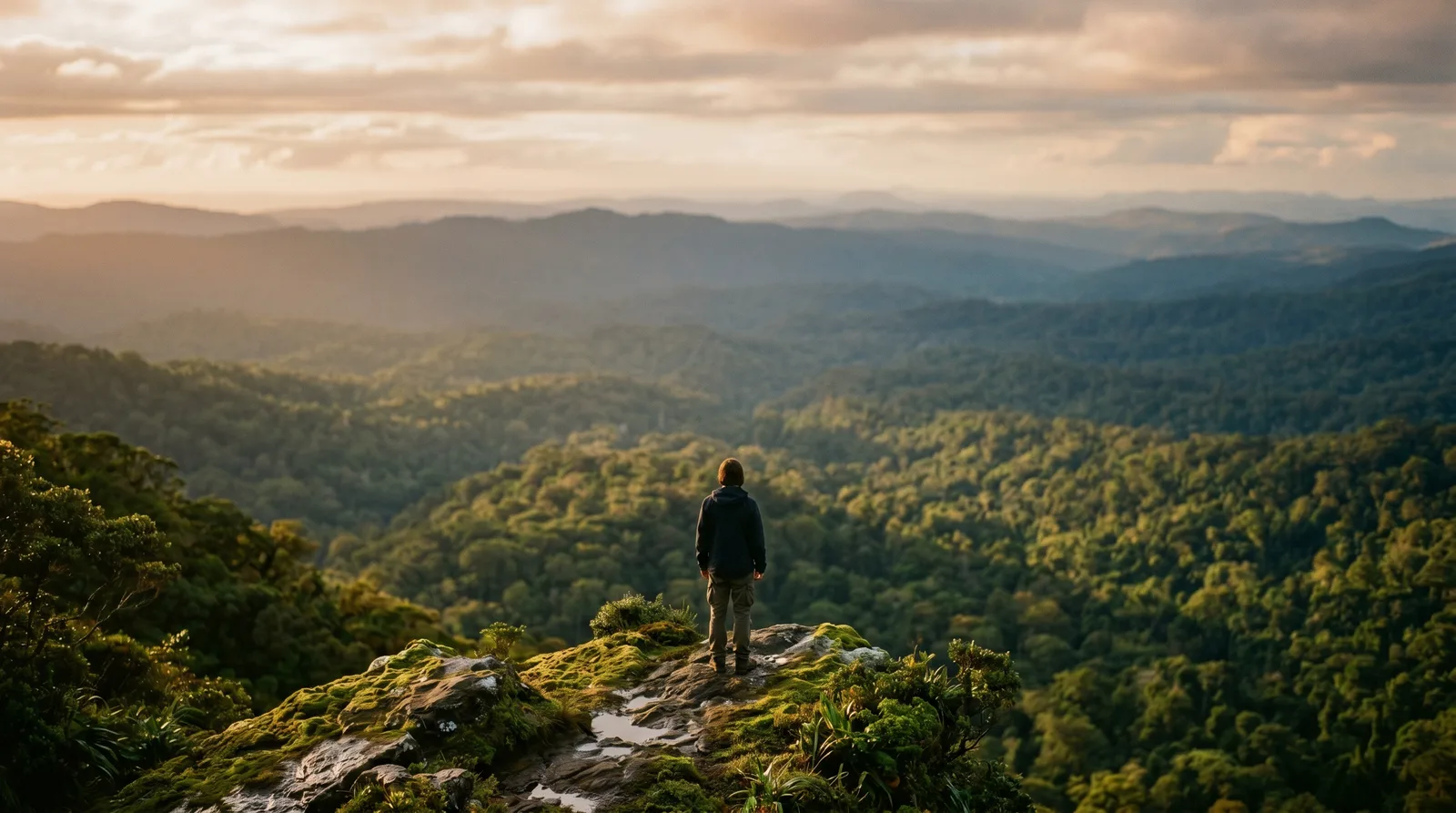
Real understanding is far less paralysing than the ambient dread of half-knowing — and that's exactly what this school is built to give you.— David Clilverd
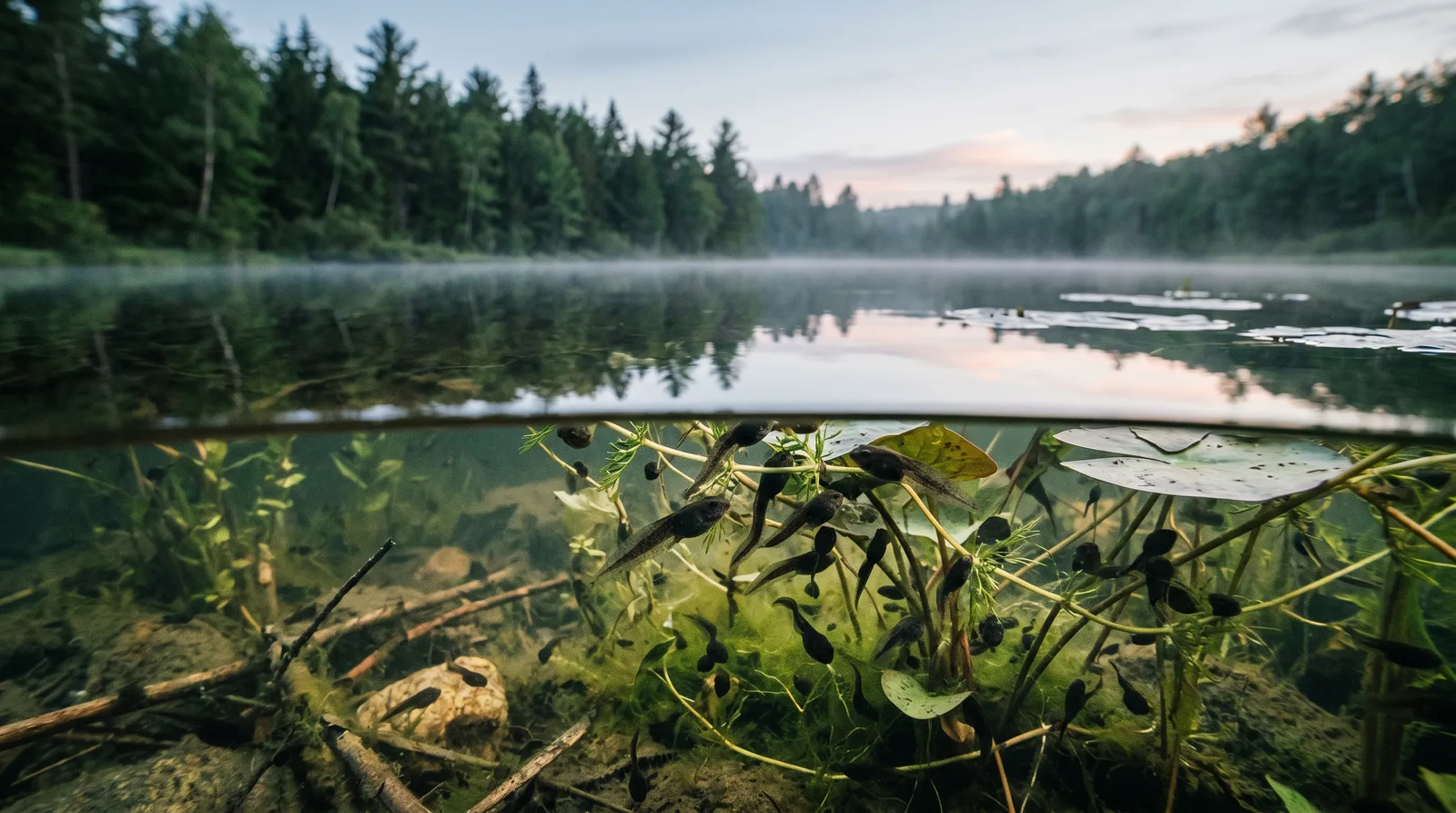
What you'll learn
What you'll be able to do
- Explain Earth's biosphere as an interconnected, finite system — and articulate precisely why current growth models threaten its stability.
- Trace the cascading consequences of deforestation, fossil-fuel extraction, and overconsumption on land, ocean, and atmosphere.
- Understand the relationship between human population dynamics and resource drawdown, and evaluate evidence-based pathways to voluntary reduction.
- Identify the most high-leverage levers for planetary healing — reforestation, renewable energy transition, rewilding — and how they work together.
- Critically assess 'green growth' and degrowth economic models, and argue confidently for policies that prioritise restoration over expansion.
- Design a personal and community action plan — from consumption choices to civic advocacy — that meaningfully reduces ecological footprint and supports biosphere recovery.
How it works
A school that adapts to you
This isn't a set of static videos. Every lesson is generated live and tuned to where you actually are.
We learn your level
A quick placement check tailors your starting point so you're never bored or lost.
Lessons adapt as you go
Each lesson is written for your pace and your goal, adjusting as your skills grow.
Your AI coach keeps you moving
Checkpoints, feedback, and gentle nudges turn progress into a real result.
The curriculum
What's inside your school
6 modules · 17 lessons

The Tadpole Pond — Understanding Earth as a Finite Living System
Establishes the essential conceptual foundation: Earth is a closed, finite system — a fragile bubble of life in deep space — and understanding its limits is the prerequisite for everything that follows. Using the user's own 'tadpole pond' metaphor as a recurring anchor, students internalise why boundaries matter before they examine how we are breaching them.
- 1.1A Pale Blue Dot — Earth's Place in the UniverseIncluded
- 1.2The Biosphere — Life's Paper-Thin SkinIncluded
- 1.3Interconnection and Tipping Points — Why Everything Talks to Everything ElseIncluded
Draining the Pond — Deforestation, Fossil Fuels, and the Costs of Extraction
With the systems foundation in place, students now trace the three primary mechanisms by which industrial civilisation is destabilising the biosphere: forest loss, fossil-fuel combustion, and runaway consumption. Crucially, this module tracks cascading consequences across land, ocean, and atmosphere simultaneously — not in isolated silos — so students see the full interconnected damage before moving to solutions.
- 2.1The Lungs and the Chainsaw — Why Forests Are Non-NegotiableIncluded
- 2.2Burning the Past — Fossil Fuels, Carbon, and a Destabilised AtmosphereIncluded
- 2.3Overconsumption and the Overshoot — How Growth Became the ProblemIncluded
Population, Consumption, and the Numbers Game
This module addresses the relationship between human population dynamics and resource drawdown with the honesty and nuance it demands. It explicitly rejects both alarmist scapegoating and dismissive denial — instead equipping students to read demographic data critically, understand the consumption-population interaction, and evaluate the evidence-based, rights-respecting pathways to voluntary demographic stabilisation. Sequenced after the damage module so students understand why it matters, and before solutions so they see it as one lever among many.
- 3.1Eight Billion and Counting — Reading the Demographic Data HonestlyIncluded
- 3.2The Kindest Lever — Education, Rights, and Voluntary Demographic ChangeIncluded
Healing the Pond — Reforestation, Rewilding, and the Renewable Transition
Having thoroughly examined the damage and its drivers, students now turn to the highest-leverage restoration levers available. This module is deliberately optimistic in evidence — not in wishful thinking — showing students what is already working at scale and why these three interventions (reforestation, rewilding, renewable energy) are most powerful when pursued simultaneously and systemically rather than as isolated projects.
- 4.1Bringing Back the Trees — The Science and Practice of ReforestationIncluded
- 4.2Rewilding — Letting Nature Lead Its Own RecoveryIncluded
- 4.3The Great Energy Switch — Renewable Transition at the Speed We NeedIncluded
Beyond Growth — Degrowth, Wellbeing Economies, and What We Must Stop Doing
This module delivers the hardest intellectual challenge in the curriculum: interrogating the growth imperative that underlies nearly all mainstream economic and political thinking, and rigorously evaluating the alternatives. Students move beyond slogans to grapple with real economic data, policy trade-offs, and political economy — developing the confidence to argue for degrowth and wellbeing economy frameworks with evidence rather than emotion.
- 5.1The Growth Trap — Why GDP Is Killing the PlanetIncluded
- 5.2Green Growth vs. Degrowth — The Argument We Must HaveIncluded
- 5.3Reduce, Reduce, Reduce — The Sectors That Must ShrinkIncluded
From Anxiety to Action — Personal, Community, and Civic Pathways
The final module translates the full arc of the curriculum — understanding, analysis, and economic critique — into concrete, hopeful, and psychologically grounded action. It begins by naming and validating ecological grief and anxiety before equipping students with personal consumption tools, community organising skills, and civic advocacy capabilities. The module ends by returning to the course's opening images and reflections, completing the loop and sending students out transformed rather than overwhelmed.
- 6.1Eco-Grief and Eco-Hope — Staying Psychologically Grounded in Hard TimesIncluded
- 6.2Your Ecological Footprint — Reducing What You Can ControlIncluded
- 6.3Collective Power — Community, Advocacy, and Civic ActionIncluded
Who it's for
Is this you?

The anxious news-watcher
You follow the headlines but feel overwhelmed and want a coherent, calm framework to replace the dread.

The engaged citizen
You already care deeply and vote accordingly — now you want the scientific and economic grounding to argue your case with confidence.

The nature lover
Forests, birds, and wild places matter to you personally, and you want to understand exactly what's threatening them and what's being done.

The lifestyle changer
You're already reducing, reusing, and rethinking — and you want to know which choices actually move the needle and why.

The community organiser
You work with local groups or grassroots initiatives and need a solid, science-backed foundation to inform your advocacy and outreach.

The curious late-starter
You've felt the urgency but never had a structured entry point — this school gives you the whole picture without needing a science degree.
Questions
Frequently asked
Your teacher
A note from your teacher
David Clilverd
If you're here, I suspect you've been carrying something heavy for a while.
Maybe it's the kind of dread that arrives with the morning news and doesn't fully leave. Maybe you've read enough to know the situation is serious, but not enough to feel anything other than overwhelmed. Or maybe you've been active and engaged for years, and what you need now isn't more alarm — it's a clearer map of the terrain. Wherever you're starting from, I recognise that feeling, and this school exists because of it.
What I've tried to build here is the course I wished existed when I first started grappling seriously with the state of the biosphere: one that begins with genuine wonder — Earth as this astonishing, impossibly thin film of life on a rock in space — and then follows the science honestly from there, without panic and without false comfort. The curriculum moves through the mechanisms of damage (deforestation, fossil fuels, overconsumption, population dynamics) and into the mechanisms of recovery (reforestation, rewilding, the renewable transition, degrowth economics) in a way that feels like a coherent story, because it is one.
I want to be honest with you about something: this material is not easy. The data on ecological overshoot and biodiversity loss is genuinely sobering. I haven't softened it. But I've found, over and over, that real understanding is far less paralysing than the ambient dread of half-knowing. When you can explain why tipping points matter, how the carbon cycle is being disrupted, and which levers actually have leverage — the anxiety doesn't disappear, but it transforms into something you can work with.
The modules on healing and action aren't optimism for its own sake. They're grounded in what the science and economics actually support: what reforestation can and cannot do, what degrowth really means in practice, what voluntary demographic change looks like when it's done right, and how a personal action plan connects to the larger civic and political work that nothing else can substitute for. I've also included something that most environmental education skips — a serious, compassionate module on eco-grief and psychological grounding, because you cannot sustain action from a place of burnout.
This is not a school for despair, and it's not a school for naive hope. It's a school for people who want to see clearly, think carefully, and act with purpose. I'd be genuinely glad to have you in it. Come in, take a breath, and let's look at this together.
— David Clilverd
Start your journey today
Join get instant access — learn at your own pace with an AI coach in your corner.
$19/mo
Recurring billing · cancel anytime
Secure checkout · Instant access
- 6 modules, 17 lessons
- AI-adaptive lessons tuned to your level
- Quizzes & checkpoints to lock in progress
- Your own AI learning coach
- Learn on any device, at your pace
- Full access for as long as you're subscribed