Read history through its most vulnerable witness
Trace twenty-five centuries of law, theology, and moral imagination — from Hammurabi's clay tablets to the digital age — through the one figure every civilization has had to reckon with: the orphan.
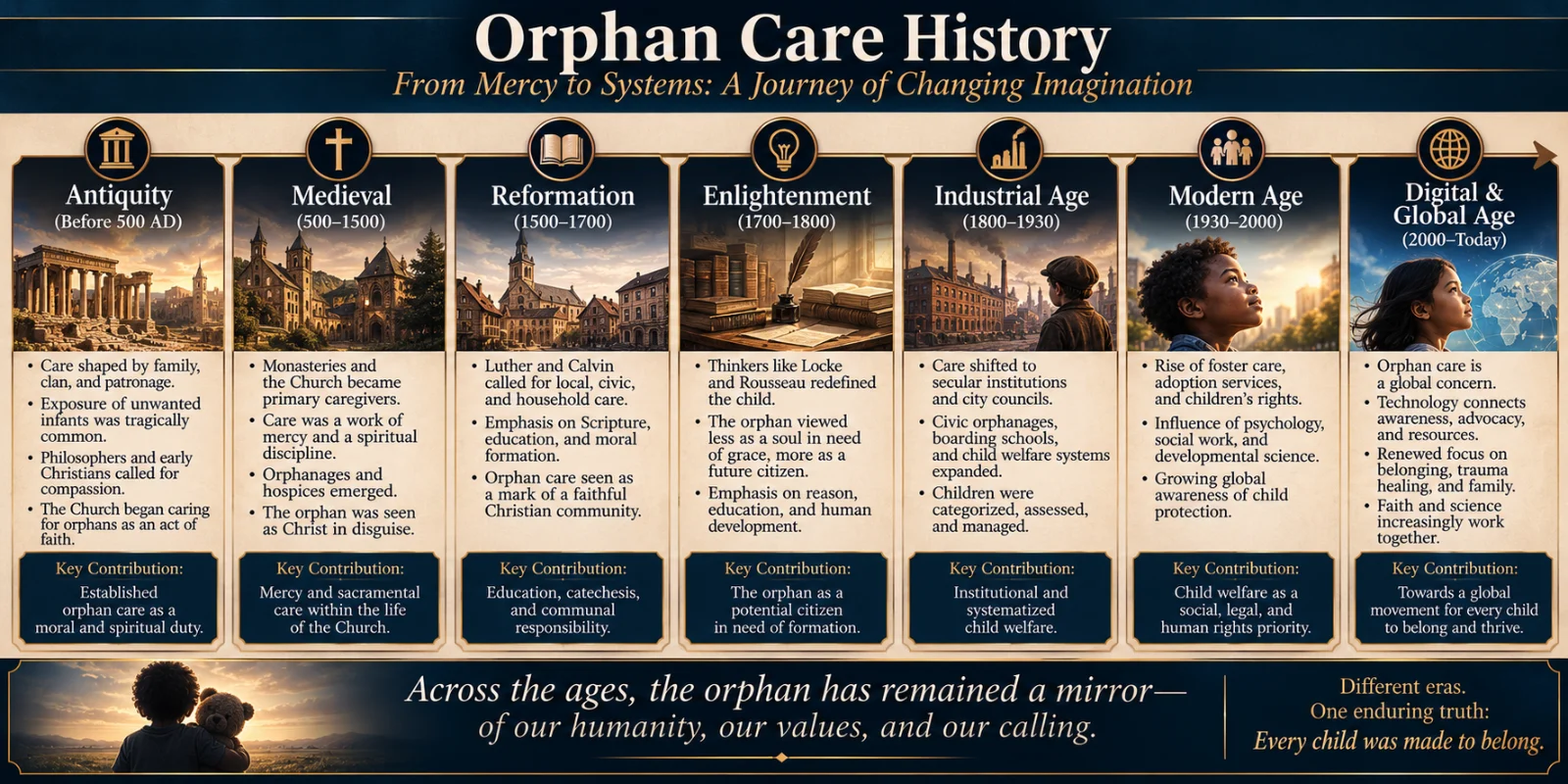
"The orphan is not a marginal figure in history — the orphan is the test by which every civilization's moral claims are either vindicated or exposed."
— Robert J. Day

What you'll learn
What you'll be able to do
- Trace the legal and moral status of orphans across ancient Near Eastern, Greek, and Roman civilizations using primary sources such as the Code of Hammurabi and classical civic records.
- Analyze the Hebrew Bible's construction of the orphan (yātōm) as a sacred moral test and explain how Israel's law diverged from neighboring cultures.
- Explain how medieval Church institutions — monasteries, convents, and foundling hospitals — institutionalized orphan care and entangled charity with moral formation.
- Articulate the theological metaphor of 'spiritual adoption' in Christian discourse and trace its roots from patristic writing through the Reformation.
- Compare how Catholic, Orthodox, and Protestant Reformation traditions diverged in their vision of institutional responsibility toward the orphan.
- Evaluate how shifting civilizational values — from antiquity to the digital age — are revealed through a society's treatment of its most vulnerable children.
- Understand the concept of the Orphan Age - because eventhough the physical buildings have mostely disappeared from the landscape, what they once represented has not. In fact, it has gorwn - spilled out into the culture and haunts every generation.
How it works
A school that adapts to you
This isn't a set of static videos. Every lesson is generated live and tuned to where you actually are.
We learn your level
A quick placement check tailors your starting point so you're never bored or lost.
Lessons adapt as you go
Each lesson is written for your pace and your goal, adjusting as your skills grow.
Your AI coach keeps you moving
Checkpoints, feedback, and gentle nudges turn progress into a real result.
The curriculum
What's inside your school
9 modules · 40 lessons
Antiquity: The Orphan as Sacred Trust
Throughout human history, the orphan has served as both a mirror and a measure of civilization. How a society treats its orphans reveals what it believes about compassion, how it defines responsibility, and how much it is willing to invest in community. From the beginning of time to the current digital age, the orphan has never been a marginal figure. In fact, the orphan’s plight has been a theological and moral test of what it means to be human.
- 1.1The Fatherless in the Earliest Law: Hammurabi and the Ancient Near EastIncluded
- 1.2Job and the Moral Imagination: The Orphan as Sacred TestIncluded
- 1.3The Yātōm in Torah: Israel's Law and Its Divergence from Neighboring CulturesComing soon
- 1.4The Orphan in Greece and Rome: Civic Duty and the Politics of LineageComing soon
The Medieval World: The Orphan as Object of Charity and Moral Formation
During the medieval and early modern eras, orphanhood became institutionalized under the aegis of the Church. Monasteries, convents, and later foundling hospitals emerged as expressions of caritas—love enacted through mercy. Yet charity was often entangled with discipline: the orphan was simultaneously pitied and reformed, molded to reflect the virtues of obedience and gratitude.
- 2.1Caritas and Its Institutions: Monasteries, Convents, and the Architecture of MercyComing soon
- 2.2The Foundling Hospital and the Institutionalization of PityComing soon
- 2.3Bernard of Clairvaux and the Monastic Imagination of the OrphanComing soon
- 2.4Spiritual Adoption: Metaphor, Promise, and the Theology of the Orphaned SoulComing soon
The Reformation Era: Diverging Visions of Orphanhood
The Protestant Reformation of the 16th century brought a dramatic theological reorientation, and with it, new conceptions of the orphan and the Church’s responsibility toward them. While Orthodox, Catholic, and Protestant traditions upheld the importance of caring for orphans, their approaches reflected broader doctrinal differences.
- 3.1Philanthropia and the Sacramental Orphan: The Orthodox VisionComing soon
- 3.2Meritorious Love: Orphan Care in the Catholic TraditionComing soon
- 3.3The Word and the Household: Luther, Calvin, and the Protestant Reimagining of OrphanhoodComing soon
- 3.4The Orphan as Mirror: Mercy, Doctrine, and the Soul of a TraditionComing soon
The Enlightenment: The Orphan as Rational Subject and Social Concern
The Enlightenment brought a decisive shift in how orphanhood was understood. As philosophical emphasis moved from divine revelation to human reason, the orphan became less a theological symbol and more a social subject: measurable, moldable, and instrumental to the future of society.
- 4.1The Blank Slate and the Orphan: Locke, Rousseau, and the Philosophical Reframing of ChildhoodComing soon
- 4.2From Monastery to Municipality: The Secularization of Orphan InstitutionsComing soon
- 4.3The Orphan as Citizen-in-Formation: Utility, Education, and the Politics of Child WelfareComing soon
- 4.4Statistical Subjecthood: The Orphan, Early Social Science, and the Shadow of the Industrial AgeComing soon
The Industrial Age: The Orphan as Laborer and Conscience
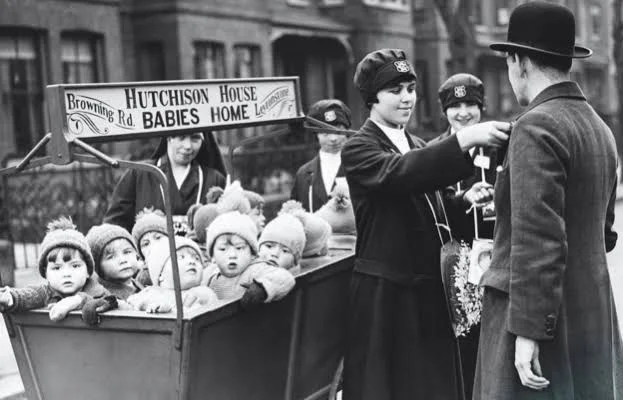
With industrialization came a harsher reality. Orphanages became reservoirs of cheap labor; children without parents were apprenticed into factories or sent to workhouses under the guise of moral rehabilitation. Yet literature of the period—Dickens’s Oliver Twist, Hugo’s Les Misérables—gave the orphan a prophetic voice. The orphan became the conscience of an age enthralled by progress, exposing the moral poverty beneath material wealth.
- 5.1Workhouses, Factories, and the Orphan as LaborComing soon
- 5.2The Literary Orphan as Prophet: Dickens, Hugo, and the Novel's Moral IndictmentComing soon
- 5.3Empire's Orphan: Colonial Missions and the Ideology of Civilizing ParenthoodComing soon
- 5.4Müller and Brace: Two Reformers, Two Visions of the Orphan's WorthComing soon
The Modern and Post-War Era: The Orphan as Global Symbol
The twentieth century transformed orphanhood into a global identity. Two world wars, the HIV/AIDS pandemic, and waves of displacement produced millions of literal orphans. The creation of UNICEF in 1946 and international child welfare legislation reframed the orphan as a subject of rights rather than charity.
- 6.1From Charity to Responsibility: The Progressive Movement and the 1909 White House ConferenceComing soon
- 6.2War, Displacement, and the Architecture of International Child WelfareComing soon
- 6.3Attachment, Deprivation, and the Psychological OrphanComing soon
- 6.4The Global Orphan: International Adoption, Cultural Meaning, and the Politics of RescueComing soon
- 6.5Birth of Foster Care and Child WelfareComing soon
The Digital and Global Age: The Orphan as Disembodied and Unrooted
The dawn of the digital and global age has introduced new expressions of orphanhood—less visible than physical displacement but equally profound. As technological expansion and global instability intersect, the orphan is no longer only the child without parents, but increasingly the human without a place.
- 7.1Stateless, Displaced, and Unclaimed: The Global Orphan in the Age of MigrationComing soon
- 7.2Orphanages, Foster Systems, and the Global South: Institutional Care After the Western RetreatComing soon
- 7.3The Ethics and Legacy of International AdoptionComing soon
- 7.4Digital Orphanhood: Connected, Curated, and UnknownComing soon
- 7.5Belonging as Vocation: Toward a Theology of PresenceComing soon
The Orphan Age: A New Condition of Belonging
In the twenty-first century, orphanhood has taken on a more pervasive and diffuse form. We live, in many ways, in what may rightly be called The Orphan Age—not merely as a metaphor, but as a cultural anthropology. This is not yet an established academic term, but it names a recognizable condition: the orphaning of the human spirit in an era of abundance, mobility, and fragmentation. Here, orphanhood is no longer defined solely by the absence of parents. It is marked, instead, by the erosion of identity, continuity, and covenant.
- 8.1Naming the Condition: What the Orphan Age Actually MeansComing soon
- 8.2The Data of Dislocation: Reading Modern Loneliness as Historical EvidenceComing soon
- 8.3Sociological and Psychological Dimensions: The Architecture of Unheld LivesComing soon
- 8.4Theological Resonance: Exile, Amnesia, and the Ache for HomeComing soon
- 8.5From Diagnosis to Invitation: Rebuilding Presence, Restoring CovenantComing soon
Theological Reflections: From Estrangement to Adoption
In both Jewish and Christian thought, the orphan is not an afterthought—it is a theological key. The prophets of Israel repeatedly declare that care for the fatherless is the measure of covenant faithfulness. To embrace the orphan is to reflect God's justice; to neglect the orphan is to reject His image.
- 9.1The Sacred Trust: Orphan Theology in the Hebrew ProphetsComing soon
- 9.2Orphaned Humanity: Paul, Adoption, and the Grammar of the GospelComing soon
- 9.3Patristic and Reformation Voices: A Theology of Restored SonshipComing soon
- 9.4Modern Theologians and the Orphan Spirit: Barth, Nouwen, Thurman, and ManningComing soon
- 9.5Spiritual Anthropology: To Be Human Is to Ache for HomeComing soon
Who it's for
Is this you?

Historians & scholars
Deepens your primary-source practice by applying it to an underexamined civilizational thread running from Hammurabi to the present.

Theologians & clergy
Traces the full arc of theological thinking on orphanhood — from patristic writing through Reformation fractures — with rigorous textual grounding.

Social workers & practitioners
Gives you the historical and ethical depth to understand why modern child welfare systems look the way they do — and what assumptions underpin them.

Educators & curriculum designers
Equips you with a sophisticated, cross-cultural framework for teaching justice, compassion, and human dignity through the lens of concrete historical evidence.

Policy thinkers & ethicists
Offers a twenty-five-century perspective on institutional responsibility — essential context for anyone shaping how societies respond to vulnerable children today.

Lifelong learners
For the intellectually serious reader who wants to engage great primary sources and big moral questions in the company of a patient, erudite guide.
Questions
Frequently asked
Your teacher
A note from your teacher

Robert J. Day
Welcome to The Orphan in History
Every civilization leaves behind a signature. Some build monuments. Others write constitutions, compose epics, or wage wars that reshape the world. Yet beneath every great civilization lies a quieter question—one rarely asked directly, but answered in law, theology, economics, and culture:
What do we do with the one who has no one?
The orphan has always stood at the edge of every society. Sometimes protected. Sometimes exploited. Sometimes ignored. Yet history reveals something remarkable: the way a civilization understands the orphan tells us how it understands humanity itself.
This course is not merely a history of orphan care. It is an excavation of the moral imagination of civilization. Together we will trace the story of the orphan from the earliest law codes of Babylon to the Hebrew prophets, from Greece and Rome to monasteries and foundling hospitals, from the Protestant Reformation through the Industrial Revolution, into the psychology of attachment, and finally into our own Digital and Global Age.
Along the way, we will discover that the orphan is far more than a vulnerable child. The orphan becomes a window through which every age reveals its deepest assumptions about justice, authority, family, dignity, citizenship, faith, and ultimately, what it means to be human.
The Hebrew Scriptures call the orphan (yātōm) a sacred trust. The prophets make the treatment of the fatherless a measure of covenant faithfulness. The early Church sees humanity itself as estranged, awaiting adoption into the household of God. The Enlightenment reframes the orphan as a citizen in formation. The Industrial Age transforms the orphan into labor, reform, and social conscience. The modern world increasingly understands the orphan through the language of rights, attachment, and trauma.
Yet beneath these historical developments lies an even deeper question.
What if orphanhood is not merely a social category, but one of history's great interpretive lenses? What if the recurring appearance of the orphan across civilizations is not accidental, but reveals humanity's enduring struggle with belonging itself?
That is the question guiding this course.
Rather than studying history as disconnected events, we will examine civilizations through the systems they created around those who were least protected. We will ask not simply what societies believed, but how those beliefs became institutions. We will explore how law becomes culture, how theology becomes practice, and how every generation constructs either places of belonging or architectures of orphanhood.
My hope is that by the end of this journey you will see more than the history of orphan care. You will see history itself differently. You will recognize that every civilization tells a story about who belongs, who matters, and who bears responsibility for the vulnerable. Those stories continue to shape our institutions, our politics, our churches, our families—and ourselves.
The orphan, it turns out, is not simply a figure from history.
The orphan is one of history's clearest mirrors.
Welcome to the journey.
— Robert J. Day
Start your journey today
Get instant access — learn at your own pace with an AI coach in your corner.
$9.99/mo
Recurring billing · cancel anytime
This school isn't accepting enrollments just yet. Check back shortly!
Secure checkout · Instant access
- 9 modules, 40 lessons
- AI-adaptive lessons tuned to your level
- Quizzes & checkpoints to lock in progress
- Your own AI learning coach
- Learn on any device, at your pace
- Full access for as long as you're subscribed
38 more lessons coming soon at no extra cost.