Stop memorizing orthopaedics. Start understanding it.
Structured, evidence-based orthopaedic education for registrars, residents and early-career surgeons—built for clinical practice and board examination preparation.COSECSA FCS Orthopaedics • FRCS (Tr & Orth) • ABOS • Orthopaedic residency & board examinations worldwide
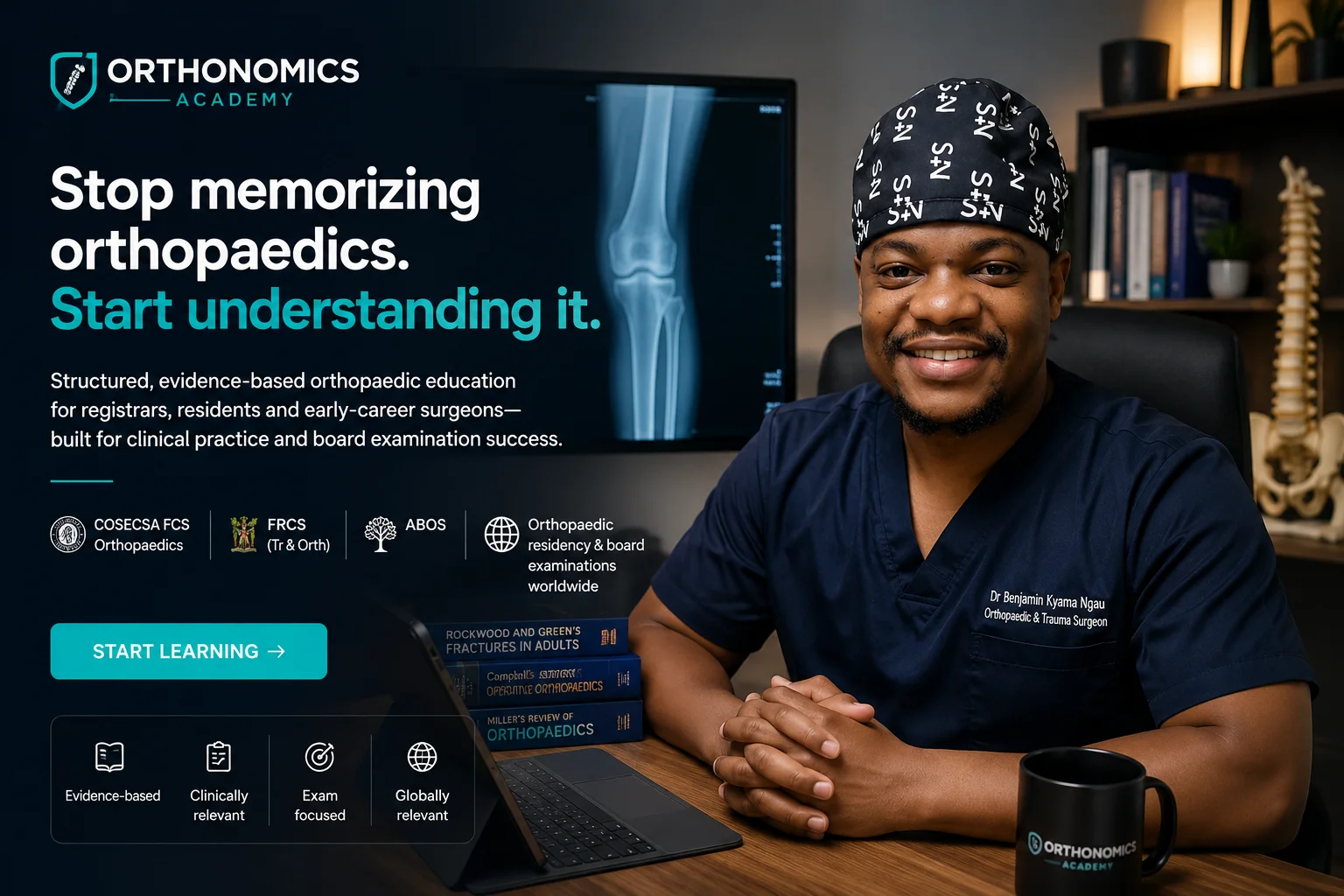
“Knowing the fact gets you started. Understanding the mechanism, predicting the consequence, and defending your reasoning is what makes you think like a surgeon.”
— Dr Benjamin K. Ngau Orthopaedic & Trauma Surgeon | Founder, Orthonomics Academy
From Basic Science to Better Clinical Decisions
Learn the science behind orthopaedics—and, more importantly, how to apply it in the operating room, clinic and examination.
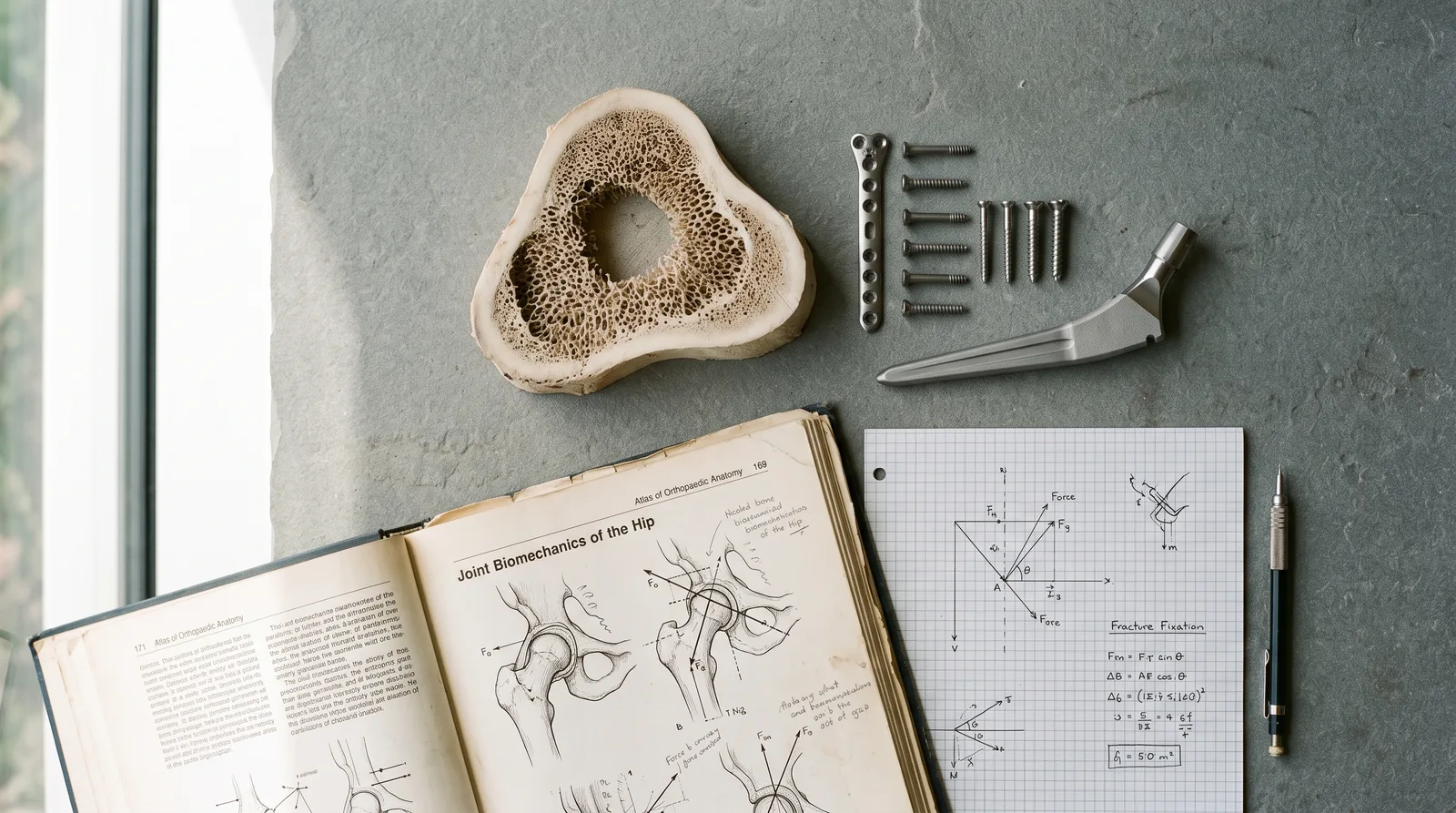
What you'll learn
What you'll be able to do
- 🦴 Understand the “why” behind orthopaedics Master bone biology, cartilage, biomechanics, fracture healing and musculoskeletal science without drowning in unnecessary detail.
- 🔩 Connect biomechanics to fixation and implants Understand stability, load sharing, construct design and implant principles so you can explain why a particular fixation strategy works—not simply name the implant.
- . 🩻 Apply basic science to real clinical problems Use biological and biomechanical principles to reason through fracture healing, nonunion, infection, metabolic bone disease and other common orthopaedic challenges.
- 🎓 Prepare for higher-level orthopaedic examinations Move beyond fact recall. Practice the mechanism → consequence → clinical application reasoning expected in written examinations, vivas and case discussions.
- The goal isn't to memorize another textbook. It's to build a framework you can use when an examiner—or a patient—puts you on the spot.
10 Modules - 52 Lessons
A structured 10-module, 51-lesson journey through the basic science every orthopaedic registrar should understand—from bone biology and fracture healing to biomechanics, implants, infection and examination preparation.
How it works
Learning that adapts to you
Not another library of videos. Orthonomics combines structured orthopaedic teaching with adaptive AI-supported learning, helping you understand difficult concepts, test your reasoning and progress at your own pace.
Start at your level
Your learning experience adjusts to your current knowledge, helping identify concepts that need more attention rather than treating every learner exactly the same.
Learn. Apply. Test yourself.
Work through focused lessons, clinical applications, checkpoints, quizzes and high-yield questions designed to turn basic-science knowledge into orthopaedic reasoning.
Your AI tutor learns with you
Ask questions when a concept isn't clear, explore topics more deeply and receive support as you progress—whether you're studying after theatre, between calls or preparing for an examination.
The curriculum
What's inside your school
10 modules · 51 lessons

Bone: Structure, Cells and Matrix
Builds a mechanistic understanding of bone's biological architecture — cells, matrix, and mineralisation — as the foundation for all fracture, metabolic and implant science that follows.
- 1.1Cortical and Cancellous Bone: Architecture and Functional AnatomyIncluded
- 1.2Bone Cells: Osteoblasts, Osteoclasts and OsteocytesIncluded
- 1.3Bone Matrix: Collagen, Mineralisation and Non-Collagenous ProteinsComing soon
- 1.4Bone Remodelling: The BMU, Coupling and Wolff's LawComing soon
- 1.5Woven vs Lamellar Bone: Clinical and Pathological SignificanceComing soon
Bone Metabolism and Metabolic Bone Disease
Connects calcium–phosphate homeostasis, hormonal regulation and vitamin D physiology to the diagnosis and management of osteoporosis, rickets, Paget disease and related disorders.
- 2.1Calcium, Phosphate and Hormonal Regulation of Bone MetabolismComing soon
- 2.2Vitamin D: Physiology, Deficiency and the Orthopaedic ConsequencesComing soon
- 2.3Osteoporosis: Pathophysiology, Assessment and Fracture RiskComing soon
- 2.4Osteoporosis: Pharmacological and Surgical Management PrinciplesComing soon
- 2.5Rickets, Osteomalacia, Paget Disease and Renal OsteodystrophyComing soon
Fracture Healing, Bone Grafts and Substitutes
Provides a mechanistic account of primary and secondary fracture repair, applies this biology to graft selection, and connects biological principles to operative fixation strategy and clinical decision-making.
- 3.1Secondary (Indirect) Fracture Healing: Biology and StagesComing soon
- 3.2Primary (Direct) Fracture Healing and Cortical RemodellingComing soon
- 3.3Factors Affecting Fracture Healing: Local, Systemic and IatrogenicComing soon
- 3.4Bone Grafts: Autograft, Allograft and the Biology of IncorporationComing soon
- 3.5Bone Graft Substitutes, Biologics and Growth FactorsComing soon
Cartilage, Synovial Joints and Arthritis
Establishes the unique biology and biomechanical properties of articular cartilage, explains why it fails to self-repair, and connects cartilage pathophysiology to the spectrum of arthritis encountered in orthopaedic practice.
- 4.1Articular Cartilage: Structure, Zones and Matrix CompositionComing soon
- 4.2Cartilage Biomechanics: Viscoelasticity, Lubrication and Load SharingComing soon
- 4.3Cartilage Injury and the Failure of Intrinsic RepairComing soon
- 4.4Osteoarthritis: Pathophysiology, Biomarkers and Imaging CorrelationComing soon
- 4.5Inflammatory Arthritis, Crystal Arthropathies and Septic ArthritisComing soon
Soft Tissues: Muscle, Tendon, Ligament and Meniscus
Covers the structure, mechanical behaviour, injury biology and healing capacity of the major periarticular soft tissues, with direct links to surgical decision-making and rehabilitation principles.
- 5.1Skeletal Muscle: Microstructure, Fibre Types and Contraction MechanicsComing soon
- 5.2Muscle Injury, Compartment Syndrome and DenervationComing soon
- 5.3Tendon: Structure, Mechanical Behaviour and Healing BiologyComing soon
- 5.4Ligament: Structure, Injury Classification and Healing CapacityComing soon
- 5.5Meniscus: Biology, Vascularity, Biomechanical Role and Repair PrinciplesComing soon
Nerve, Spinal Cord and Intervertebral Disc
Provides a clinically oriented account of peripheral nerve injury grading, nerve regeneration, spinal cord pathophysiology and disc biology, integrating these with imaging interpretation and surgical decision frameworks.
- 6.1Peripheral Nerve Anatomy, Axonal Transport and Wallerian DegenerationComing soon
- 6.2Nerve Injury Classification: Seddon, Sunderland and Clinical CorrelationComing soon
- 6.3Nerve Regeneration, Repair Principles and NeurotisationComing soon
- 6.4Spinal Cord Injury: Pathophysiology, ASIA Classification and Secondary InjuryComing soon
- 6.5Intervertebral Disc: Biology, Degeneration and Clinical SyndromesComing soon
Musculoskeletal Infection
Develops a pathogen-to-management framework for osteomyelitis, septic arthritis and periprosthetic joint infection, integrating microbiology, biofilm science, imaging and international classification systems.
- 7.1Pathogenesis of Osteomyelitis: Microbiology, Routes and Host ResponseComing soon
- 7.2Osteomyelitis Classification, Imaging and StagingComing soon
- 7.3Biofilm, Implant Infection and Periprosthetic Joint InfectionComing soon
- 7.4Septic Arthritis: Diagnosis, Synovial Fluid Analysis and Surgical PrinciplesComing soon
- 7.5Antimicrobial Principles and Surgical Site Infection PreventionComing soon
Biomaterials and Implant Science
Equips learners to select and justify orthopaedic implant materials by understanding their mechanical properties, failure modes, corrosion behaviour, biological response and tribology.
- 8.1Metals in Orthopaedics: Alloys, Properties and CorrosionComing soon
- 8.2Polymers and Ceramics: Ultra-High-Molecular-Weight Polyethylene and Bearing SurfacesComing soon
- 8.3Tribology: Wear, Friction and Particle DiseaseComing soon
- 8.4Implant Fixation: Biological Osseointegration and Cement Mantle ScienceComing soon
- 8.5Implant Failure: Fatigue, Fracture Mechanics and Stress ShieldingComing soon
Musculoskeletal Biomechanics
Develops quantitative and conceptual biomechanical reasoning — forces, moments, joint reaction forces and construct mechanics — and applies these directly to implant design, fracture fixation and joint reconstruction.
- 9.1Fundamental Mechanics: Forces, Moments, Equilibrium and Free Body DiagramsComing soon
- 9.2Joint Reaction Force: Hip, Knee and Shoulder as Worked ExamplesComing soon
- 9.3Bone Biomechanics: Stress, Strain, Stiffness and Fracture PatternsComing soon
- 9.4Fracture Fixation Biomechanics: Plates, Nails, Screws and External FixatorsComing soon
- 9.5Gait Analysis, Kinematics and Clinical ApplicationComing soon
Perioperative Science, Research Methods and Examination Preparation
Consolidates clinically applied perioperative science — coagulation, thromboprophylaxis, anaesthesia and transfusion — then builds the statistical literacy and structured examination technique needed for international board success.
- 10.1Coagulation, Haemostasis and Anticoagulation in Orthopaedic SurgeryComing soon
- 10.2Venous Thromboembolism: Pathophysiology, Risk Stratification and ProphylaxisComing soon
- 10.3Anaesthetic Considerations in Orthopaedic SurgeryComing soon
- 10.4Transfusion, Blood Conservation and Cell SalvageComing soon
- 10.5Research Methods, Levels of Evidence and Biostatistics for the Orthopaedic TraineeComing soon
- 10.6Examination Technique: Structured Viva, High-Yield Recall and Defending Clinical ReasoningComing soon
51 focused lessons • Clinical applications • High-yield concepts • Exam-focused reasoning • Evidence-based principles
Who it's for
Is this you?

Orthopaedic registrar
You are mid-training and need to build the mechanistic scientific foundation that will hold up in a structured viva — this curriculum gives you the 'why' behind every principle your examiner will probe.

Fellowship candidate
Preparing for a subspecialty fellowship assessment demands exam-level depth across implant science, biomechanics and perioperative reasoning — exactly the level at which every topic here is taught.

Board examination candidate
Whether facing the ABOS, FRCS(Tr&Orth), FRACS or an equivalent national board, you need integrated science that connects pathology to imaging to management — and this curriculum is structured precisely to that reasoning chain.
Early-career orthopaedic surgeon
As a newly appointed consultant or attending, closing gaps in your applied basic science — metabolic bone disease, infection biology, implant failure mechanics — translates directly into more confident operative and clinical decisions.

International trainee
Training in India, the Middle East, Africa, Asia or Europe and preparing for an international examination, you need a platform grounded in universal mechanistic science rather than a single country's syllabus — this is it.
Returning or career-gap surgeon
Returning to practice after a career break or transitioning between training systems, you need a systematic, authoritative rebuild of your scientific foundation — and this curriculum covers every domain, from bone biology to perioperative science.
Questions
Frequently asked
Your teacher
A note from your teacher
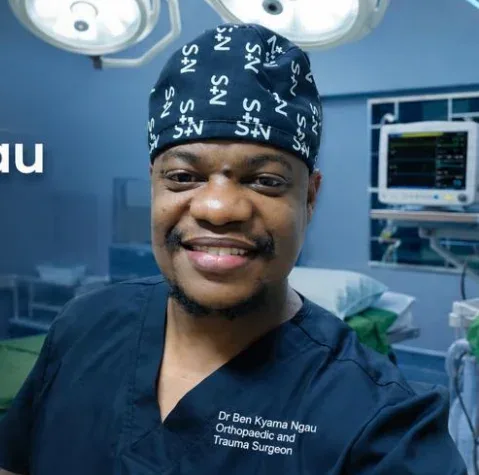
Dr. Benjamin Kyama Ngau
If you're reading this, you're probably balancing two demanding worlds: learning to become a better orthopaedic surgeon while preparing for examinations that expect you to understand an enormous amount of orthopaedics.
I know that challenge well.
During my own orthopaedic training, I discovered that memorizing facts was rarely enough. You might remember Wolff's law, the stages of fracture healing or the principles of fixation—but the real challenge comes when someone asks:
Why? What happens next? And how does that change what you do for the patient?
That is the gap Orthonomics Academy was created to address.
Here, we learn orthopaedics from first principles → mechanism → clinical consequence → decision-making. The aim is not simply to help you remember more facts, but to help you organise what you know, understand why it matters and defend your reasoning confidently in the clinic, operating room and examination.
I've designed Orthonomics around the kind of learning I believe every registrar deserves: structured, clinically relevant, evidence-based and focused on what matters.
Whether you're preparing for your next board examination or simply trying to become a more confident orthopaedic surgeon, I hope Orthonomics becomes part of that journey.
Dr Benjamin Kyama Ngau Orthopaedic & Trauma Surgeon Founder, Orthonomics Academy
Learn Orthopaedics. Think Like a Surgeon.
— Dr. Benjamin Kyama Ngau
Start your journey today
Get instant access — learn at your own pace with an AI coach in your corner.
$47/yr
Recurring billing · cancel anytime
This school isn't accepting enrollments just yet. Check back shortly!
Secure checkout · Instant access
- 10 modules, 51 lessons
- AI-adaptive lessons tuned to your level
- Quizzes & checkpoints to lock in progress
- Your own AI learning coach
- Learn on any device, at your pace
- Full access for as long as you're subscribed
49 more lessons coming soon at no extra cost.